

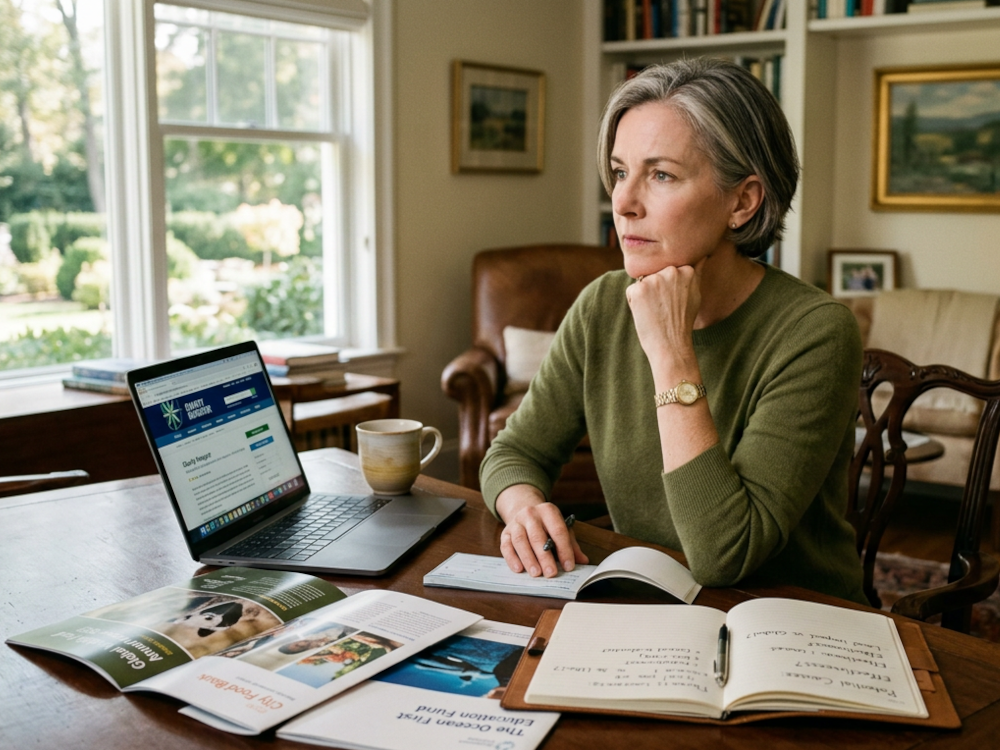
It’s not too hard to understand why some people choose to give their money away. Some feel they’ve been fortunate and want to “give back” to others. Some have been inspired by a cause, maybe through personal experience. Others simply want to reduce their taxable income.
What’s harder to fathom is why people with means and passion hesitate when it comes to acting on their generous impulses. Yet “it happens all the time,” says Bri Trypuc, principal and founder of Trypuc Philanthropic Office in Toronto.
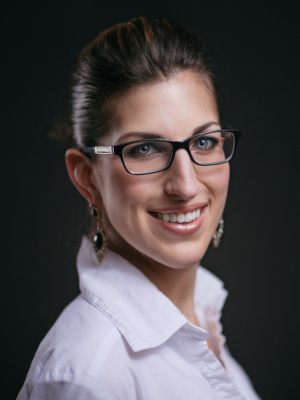
After two decades in the philanthropic arena, Trypuc says she’s learned that “not all delay is avoidance; sometimes it’s delay for discernment.”
Some potential donors hesitate because they need more information, she says. Families assessing grant applications often defer their decisions when “a budget wasn’t included, or the application was too big, or the organization might not have made a strong enough case for why this is the right intervention at the right time,” she says.
But donors can also hit a strategic roadblock when “they care a lot about the problem, but don’t know the landscape well enough to know how their capital can make a difference,” Trypuc says. “We encourage donors to find a focus and then narrow it: which geography, which intervention? It’s just as important to know what you will not fund as what you will fund.”
Another practical barrier is bandwidth, says Stephanie Boldt, partner, Tax, Philanthropic Advisory Services with PwC Canada in Edmonton.
For powerful visionaries who have spent years building their businesses, “taking on philanthropy at a meaningful level is, in effect, launching an entirely new complex undertaking, and finding the time and headspace to do that well alongside everything else can be a real challenge,” she says.
The solution? “Another family member—perhaps someone from the next generation who is eager to step into a leadership role, or a trusted advisor—comes alongside the principal to execute on those philanthropic goals,” Boldt says. “The key is that this person must understand the family’s values, priorities and vision deeply.”
The families who move forward with real energy and confidence are those who treat philanthropy as a shared journey rather than a single high-stakes decision.
Stephanie Boldt, PwC Canada
Timing is another potential obstacle. “We often see situations where a triggering event—a sale of a business, a liquidity event, some other form of windfall—creates both the capacity and a compelling tax incentive to make large charitable gifts within a very specific window. The problem is that there simply isn’t enough time to do the due diligence that gifts of that magnitude require,” she says.
In these cases, private or public foundations and donor-advised funds are invaluable tools that can “act as a conduit that resolves the tension between tax urgency and philanthropic thoughtfulness,” she says.
Then there’s what Boldt calls “the weight of getting it right.” The desire to make a meaningful impact “can actually create its own inertia,” she says, since “the stakes feel enormous. What if we pick the wrong cause? What if our giving doesn’t make a real difference?”
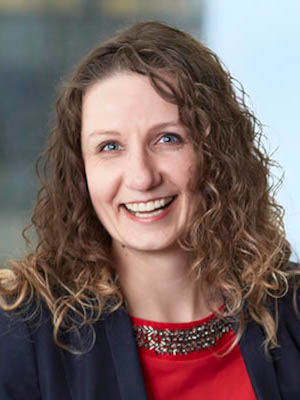
When it’s a family matter and more than one generation is involved, the initiative can easily stall; Boldt suggests two remedies.
“First, map the family’s shared values before ever discussing dollars or recipients. Second, get out of the boardroom. The fear of choosing the ‘wrong’ cause fades remarkably fast once families visit organizations firsthand and connect with the people doing the work on the ground. It helps connect everyone back to what matters most—their shared values.”
Boldt says “the families who move forward with real energy and confidence are those who treat philanthropy as a shared journey rather than a single high-stakes decision.”
She advises two specific approaches: first, giving emerging or next-generation family members a modest discretionary allocation to explore causes independently, which, she says, “builds confidence and philanthropic literacy without the pressure of a major commitment.” Second, of course, is “engaging a professional advisor to facilitate early family conversations.”
Sometimes the giving barrier is personal, says Erwin van Laar, president of ER Associates in Toronto, fund-raisers with 40 years of experience working with the faith-based, not-for-profit world.
“People give to people,” he says. “I would say that 80 per cent of the time, when people don’t want to work through the mechanics of giving a gift, it’s because people don’t like you. You think wealthy people are entitled? Well, talk to a fundraiser! They’re looking to be serving in the community that they’re working in, and they want to see that reciprocated.”

Potential donors don’t want a salesperson, van Laar says. “They don’t want to be sold; they’ve sold themselves on the project. They want to say yes. They don’t want this be a transaction. They want this to be transformational.”
Bri Trypuc says there’s an existential component, too. “They don’t want to be the first, the only or the largest donor. Maybe they don’t want the charity being only dependent on them.” Philanthropy, she says, “requires comfort with ambiguity.”
And the decision can be emotional.
“They’ve worked incredibly hard to build that wealth, so giving it away is not a casual thing for them. We have a values-based survey for people who really don’t know where to start,” she adds.
After all, the goal of philanthropy “isn’t just to move money quickly; it’s to move it meaningfully,” Trypuc says. Sometimes, would-be philanthropists “need fewer options and more clarity overall to get unstuck. I think they need the permission to take the time to think about what they want to do, to do something good.”
Stephanie Boldt says, “What we’re really looking at in most cases isn’t a problem of too many barriers; it’s an abundance of ambition and potential waiting for the right structure and conversation to unlock it. And every one of these barriers has a practical solution.
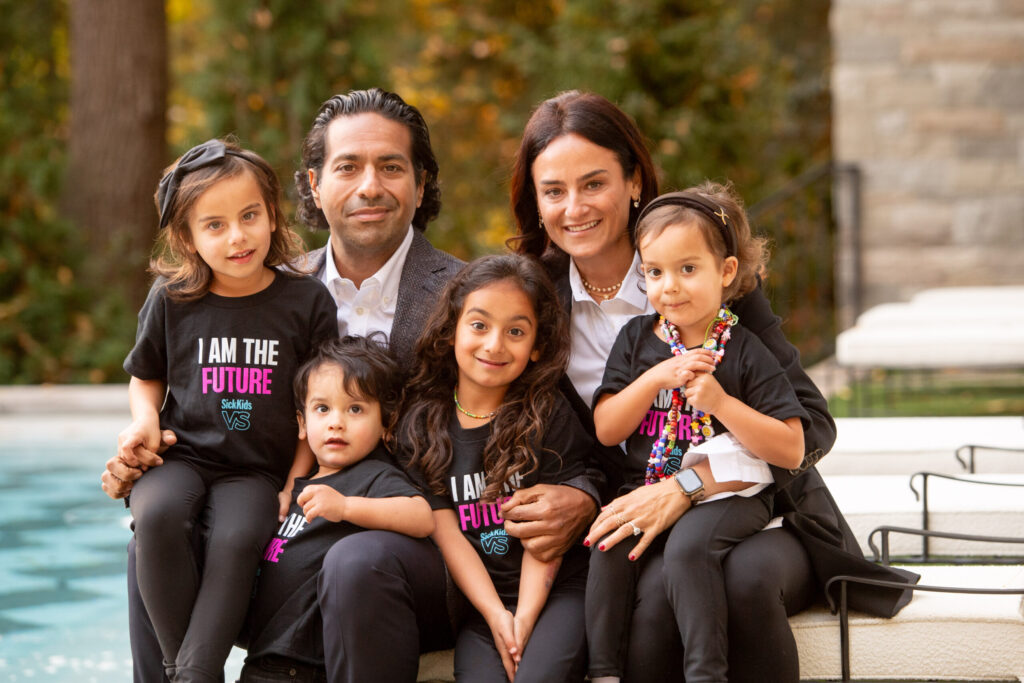
“The philanthropic landscape in Canada is having a moment, and it’s full of possibility,” she adds. “When families approach philanthropy with intention and good advice, the conversation shifts from ‘Where do we even begin?’ to ‘Look at what we can do together.’”
Sarah B. Hood is a Toronto-based writer and book author. She has served as editor of three national magazines and written weekly columns for the National Post. She also serves on the editorial board of Spacingmagazine. She writes frequently on business, urban affairs and culture. As a food writer, her work has been translated into Japanese and Arabic. She has taught writing at George Brown College for more than 20 years.
Get our new quarterly newsletter about philanthropy: Canadian Family Offices’ new newsletter brings you key insights, trends and expert perspectives on charitable giving, tailored to Canada’s wealth leaders and giving communities. Click here to subscribe.
Please visit here to see information about our standards of journalistic excellence.