

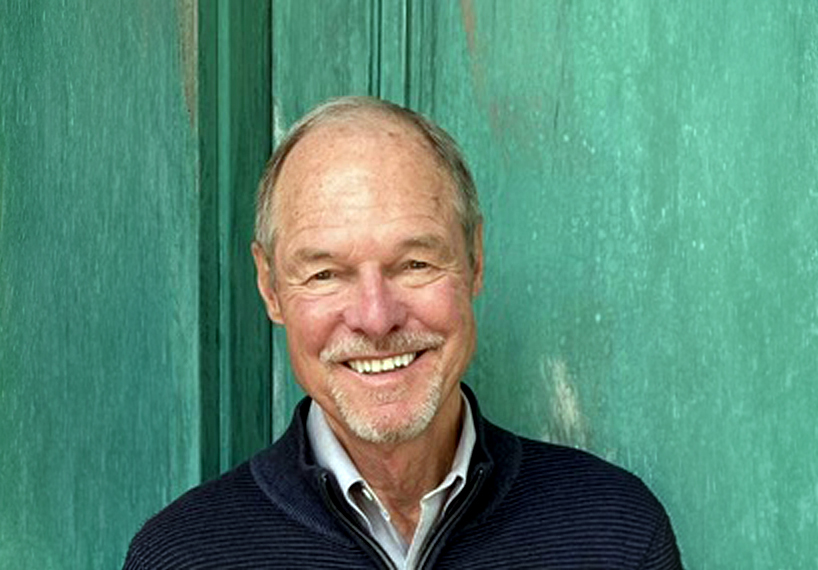
Peter Cavelti is a philanthropist, investment professional and author. Born and educated in Switzerland, he emigrated in 1972 to Canada, where he joined the Canadian banking group of Guardian Trustco International and became president and CEO in 1982. He later founded his own firm, Cavelti Capital Management Ltd., overseeing mutual fund and private client assets. He and his family members have championed charitable giving through the Cavelti Family Foundation, and among his published works is Thoughtful Giving: A Journey Through the Charitable Universe, a collection of essays offering practical advice on how to ensure philanthropic support achieves its intended impact efficiently.
Here, Mr. Cavelti talks about why donors should pay closer attention to the charities they support, the ways his own family foundation assesses giving opportunities, and how emotions often get in the way of the best intentions.
You’ve said that most charities are not worth your time or money because they’re poorly run and fail to maximize the benefits of donor funds.
It’s easy to become a charity. There are more than 85,000 registered charities in Canada. What people don’t realize when they start giving is that their intention alone, which may be very noble, very generous, does not guarantee that they’re dealing with an impeccable organization. A charity is a construct in which humans try to achieve a goal. And when you have a bunch of humans trying to achieve a goal, sometimes that never happens. Sometimes it’s brilliant, and it manifests very quickly. Sometimes it goes in the right direction and then there’s mission drift, which drains effort and money away from the direction in which it was initiated.
If we want to exercise judgment in choosing a charity to receive our donations, by what criteria should we judge them?
We can look at such factors as impact—how much of my dollar goes to the cause as soon as possible, and also how efficiently that’s being done. We look at high administrative costs, large executive salaries and a high percentage of funds being used to pursue fundraising. In some cases, you have charities that hoard cash. I believe that the reserve ratio—the ratio between what they have sitting in the bank and how much goes to annual expenditures—should ideally be no more than one to one.
What people don’t realize when they start giving is that their intention alone, which may be very noble, … does not guarantee that they’re dealing with an impeccable organization.
Charities are frequently called out for high administrative costs. Some charities respond that although their administrative costs are high, their impact also remains high.
Some charities have a high fundraising and admin ratio, but are still very effective. However, through the Cavelti Family Foundation, we look at that charity in the context of other organizations that are active in the same field. Are they more effective with a smaller admin and fundraising ratio? Making a comparison is a vital first step in charitable giving. Our challenge is always to find the ones who manage to have the greatest impact with a modest contribution to admin, fundraising and, in some cases, salaries.
What if you’ve been supporting a charity for some time, and some of these numbers now seem out of line?
We often try to engage with that charity and find out why this is happening. Sometimes the charity convinces me that they need to have a particular injection of fundraising that wasn’t there before, but it’s temporary or it makes sense for them to increase their reserve for a specified time.
How do donors wind up making sub-par decisions with their charitable donations?
Many donors, including family offices, act from a space of good intention, but also emotion. Something happened out there in the world, and they want to do something about it. They see an ad or something that relates to a well-known charity and they send a cheque and then another and another. That kind of giving can result in ultimate disappointment and resentment, stemming from the fact that you’re giving without any further investigation.
What sources of information do you rely on to determine the effectiveness of the charities you choose to support?
The Canada Revenue Agency has a website that lists registered charities and how much of each donation goes to the cause. There are SmartGiving.ca and charitydata.ca, which are maintained by the law firm Blumbergs Professional Corporation. Then there’s Charity Intelligence Canada, an organization we donate to, which offers information that many people can engage in without having to be accountants or mathematicians or financial experts.
You have these situations, very typical in family offices and family foundations, where the founder got married to a particular vision … but in the second generation, there are mixed emotions.
These analysis services really cut down the work dramatically. However, if a family office has a strong philanthropic commitment, or somebody runs a family foundation, you may want to get into it more deeply. For some charities that receive larger grants, you may want to get to know the people within the charity, investigate the details, and stay on top of them, which requires quite a bit more work but is incredibly rewarding.
There appears to be an inertia in ending one’s relationships with a charity, almost like breaking up with a romantic partner, when they fail to meet certain criteria.
I had a wealthy friend in the United States who had a list of charities that he was favouring in his will and he wanted my help. One of the first charities had modest revenue, and the founder and CEO paid himself US$700,000 a year. Other competitive charities achieved much more by keeping their administrative expenses under greater control. When I pointed this out to him, he said, ‘Peter, you don’t understand. We’ve known each other for 40 years. And when I was with a certain company, he was on our board.’ I asked him whether his intention was to be a loyal friend or to contribute to an effective, efficient charitable cause.
Following the publication of your book, Thoughtful Giving, you were approached by several families to review their charitable giving.
You have these situations, very typical in family offices and family foundations, where the founder got married to a particular vision and, as often as not, to a particular organization. In the second generation, there are mixed emotions because they want to spend more money somewhere else, the charity has lost its way or is spending too much money on fundraising. I had all these calls from family foundations asking me to sit down with them and provide some input on how they could give more effectively. Eight out of 10 times, they were very thankful for the input, but did not want to take the responsibility to make any changes because the matriarch or patriarch who started it was still very much involved. Somehow, the connection to the next generation was lost, and that’s a tragedy.
One of our mantras is that if the lion’s share of donations does not to the cause quickly, there is no point in granting.
You’ve also mentioned that giving effectively may require some effort on the giver’s part.
When these families seemed enthusiastic about an organization that matched their intentions, I offered to put them in touch with key people from the charity so they could go deeper and ask some questions. But quite often the family members said they wanted to do this anonymously and avoid that sort of contact. There was a reluctance to play a larger part than just writing the cheque.
What’s the Cavelti Family Foundation’s plan to avoid this sort of inertia?
The foundation includes my wife, Caroline, our daughter Melissa and even our three grandkids. We began with charitable segments we were interested in supporting, such as humanitarian relief, social initiatives, the environment or animal welfare. Then everybody had to agree on metrics for individual charities to receive funding. One of our mantras is that if the lion’s share of donations does not go to the cause quickly, there is no point in granting. Another is that administrative and fundraising costs must not exceed 27 per cent of revenue. Finally, we do not favour charities that compensate their executives excessively, but we do take into account the size and complexity of the operation. So far, everybody has done their job so well that we rarely disagree on a charity.


How do you know that your family foundation will continue to operate effectively through the next generation?
All of the family members are registered advisors to the foundation. If I pass on, the others will continue, with the skills they’ve developed through early involvement and decision-making.
What’s your advice to anybody who hasn’t reviewed their charitable giving in some time?
It’s probably fair to say that you should take a bit of responsibility by reviewing the effectiveness of those charities and perhaps comparing them to other charities in the same segment. It may sound condescending, but if your intention is truly to make a difference in what happens in our world, you need to look at your charitable options and choose the most effective ones.
Peter Kenter is a Toronto-based writer with a deep and abiding interest in how everything in the world works and how it got that way. He’s written about the economy, investing, financial services, cryptocurrency, pharmaceuticals, mining, energy, cannabis, agriculture, consumer electronics, education, sponsorship marketing, and entertainment. He’s the author of TV North: Everything You Wanted to Know About Canadian Television.
Please visit here to see information about our standards of journalistic excellence.