

Women’s health has long been perceived as a niche issue—with conditions from menopause to PMS, migraines and endometriosis underfunded and under researched.
But the conversation is starting to shift, with many recognizing that working to close the gap in women’s healthcare will not only improve outcomes and drive societal transformation, but represents a major economic opportunity — in terms of potential global GDP growth and the commercial market for new products and services, says the McKinsey Health Institute and the World Economic Forum.
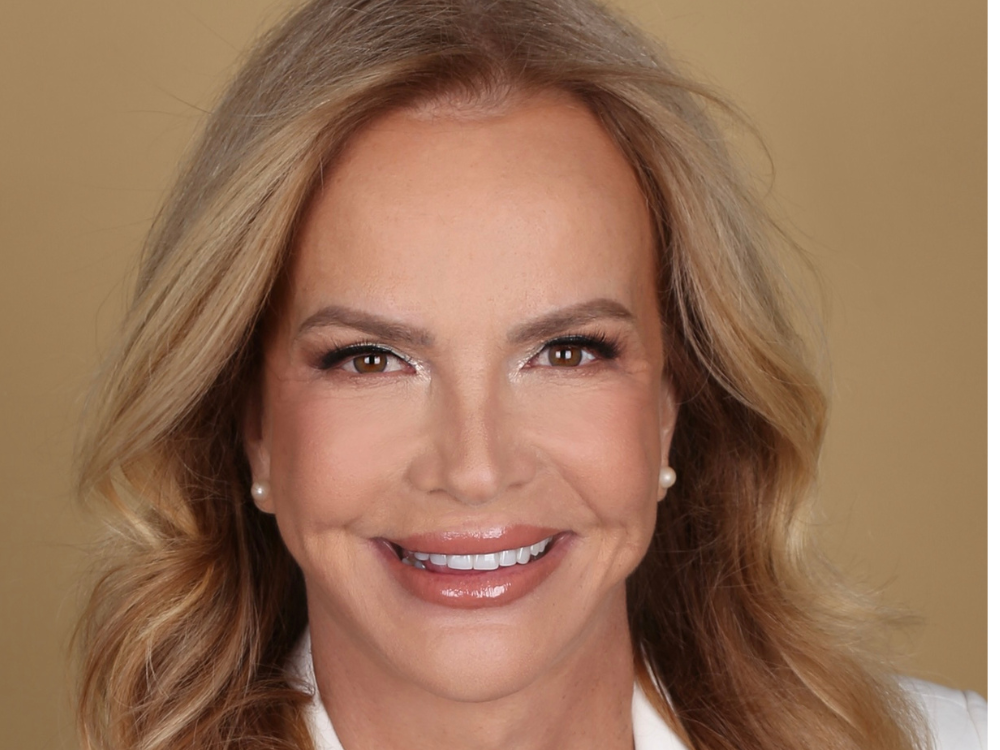
Joé Harvey noticed these issues firsthand during a decade building Cyclone Santé, a Québec-based company specializing in independent medical evaluations and tailored health expertise services for businesses, insurers and government agencies, which was acquired in 2022 by ExamWorks Canada.
While she still works with Cyclone Santé as a strategic consultant, Harvey has shifted her focus to the advancement of women’s health through Femmes en Santé, a community she co-founded with Québec business leader Isabelle Girard and Senator Danièle Henkel in 2025. The organization seeks to position women’s health not as a niche issue, but as a strategic, societal and economic priority by mobilizing women leaders from across the industry to make a collective impact.
In conversation with Canadian Family Offices, Harvey discusses her leadership journey in the health sector, how Femmes en Santé is working to amplify the conversation around women’s health and why family offices are ideally positioned to help drive change in this space.
How did you get involved in the health sector and in advancing progress on women’s health in particular?
I’ve always been drawn to building things that bring people together and solve real problems. My background is entrepreneurial, but over time I became increasingly involved in the health sector, particularly around medical expertise, organizational health and disability management.
Working closely with physicians, insurers and organizations, I saw firsthand how complex the health system can be—and how many gaps still exist, especially when it comes to women’s health.
That experience pushed me to focus more intentionally on this space. I realized that improving health outcomes isn’t only a medical issue; it’s also about leadership, collaboration and innovation across sectors.
Can you tell me about your journey leading Cyclone Santé, as well as the growth of the company?
Cyclone Santé was built around a very clear idea: bringing together high-level medical expertise to help organizations better navigate complex health and disability cases.
We created a model that connects organizations, insurers and legal environments with leading medical specialists. Those experiences taught me a lot about scaling healthcare services, building strong physician networks and structuring operations in a sector that is both highly regulated and deeply human.
Over time, the company grew quickly because there was a real need for trusted medical expertise and structured clinical processes.
In your experience, why has women’s health been historically underfunded and under-prioritized?
Historically, healthcare systems were built using research models and clinical frameworks that were largely based on male physiology.
For decades, women were underrepresented in clinical trials and research funding. As a result, many conditions that predominantly affect women were misunderstood, underdiagnosed or simply overlooked.
There has also been a tendency to frame women’s health as a niche topic rather than recognizing it as a major economic and societal issue.
Because we designed systems where women were not completely included, now we can see the consequences of that. When nearly half of the workforce is affected by health issues that are insufficiently addressed, the consequences extend far beyond healthcare, they affect productivity, economic growth and social well-being.
What do you think should be done to meaningfully address the gaps in women’s health?
First, we need better research and data. Many conditions affecting women still lack sufficient scientific investment.
Second, we need innovation in care delivery—more integrated models that consider the full life cycle of women’s health. Collaboration between sectors is also essential. Governments, healthcare systems, investors, employers and innovators all have a role to play.
And finally, we need more women in leadership positions where decisions about health priorities and investments are made.
Have you seen any positive developments in this regard recently?
Definitely. Over the past few years, we’ve seen a growing awareness around issues such as menopause, maternal health, mental health and hormone-related conditions.
There has also been a rise in what people call the FemTech sector, companies developing solutions specifically designed for women’s health. I was recently in Paris at PariSanté Campus and there were about 10 women pitching new products for women—the opportunity is huge.
But perhaps most encouraging is the shift in conversation. Women’s health is increasingly being recognized not just as a medical topic, but as an economic and strategic priority.
Femmes en Santé is playing a role in this shifting conversation — what is the organization’s goal?
Femmes en Santé was created with a very clear vision: to bring together women leaders across the health ecosystem and amplify their collective influence.
We realized that many extraordinary women were working in healthcare: physicians, executives, entrepreneurs, researchers, policy experts, but they were often operating in silos.
Our goal is to create a space where these leaders can connect, collaborate and shape the future of women’s health together.
The organization works as a leadership and strategic community. We host discussions, knowledge exchanges, events and partnerships that connect people from across sectors. But beyond networking, the ambition is to build an ecosystem that drives influence, ideas and solutions. We have members across Québec, and we are now also in partnership with Femmes de Santé in France.
How does this community aim to make an impact?
The impact comes from bringing together people who usually operate in different spheres: clinical practice, policy, finance, innovation and corporate leadership. When those perspectives meet, new ideas emerge and collaborations form that would not otherwise happen.
Femmes en Santé aims to accelerate conversations around prevention, innovation, access to care and investment in women’s health. We want to contribute to shaping both public dialogue and private sector engagement around these issues.
As we continue to grow, we are also reflecting on how to structure our long-term impact. Together with our network of experts and our advisory committee, we are currently exploring the creation of a foundation dedicated to advancing women’s health through ethical, credible and high-impact initiatives.
How are family offices uniquely positioned to help change the narrative around women’s health through intentional capital, influence and intergenerational stewardship?
I think they can invest where others hesitate. Family offices are uniquely positioned to bridge capital and impact in areas that remain underprioritized and women’s health is one of them.
This creates an opportunity to invest not only financially, but strategically supporting innovation, prevention, and systemic change while aligning with a growing recognition that women’s health is both a societal and economic lever.
Unlike many institutional investors, they are not always constrained by short investment cycles. They can support ideas and innovations that require patience and vision. They also often bring influence, networks and intergenerational perspectives that can shape how capital is deployed.
Have you seen a growing focus on women’s health investment from the next generation?
Yes, and it’s a very promising trend.
Many younger investors are deeply interested in impact investing. They want their capital to generate both financial returns and societal progress.
We are beginning to see a generation that views women’s health not only as a moral imperative, but as one of the most important investment opportunities of the coming decades.
Disclaimer: This story was created by Canadian Family Offices’ commercial content division on behalf of PBY Capital, a member and content provider of this publication.
PBY Capital Limited is registered as an exempt market dealer, portfolio manager and investment fund manager with Canadian provincial securities regulatory authorities, servicing family offices and their professionals. For more information, visit: www.pbycapital.com. The opinions and information provided in this article are solely those of the interviewee and the writer, and do not necessarily reflect the views of PBY Capital or its affiliates. This content is not to be construed as personal, legal, accounting, taxation, or investment advice, nor as an endorsement of any entity.