

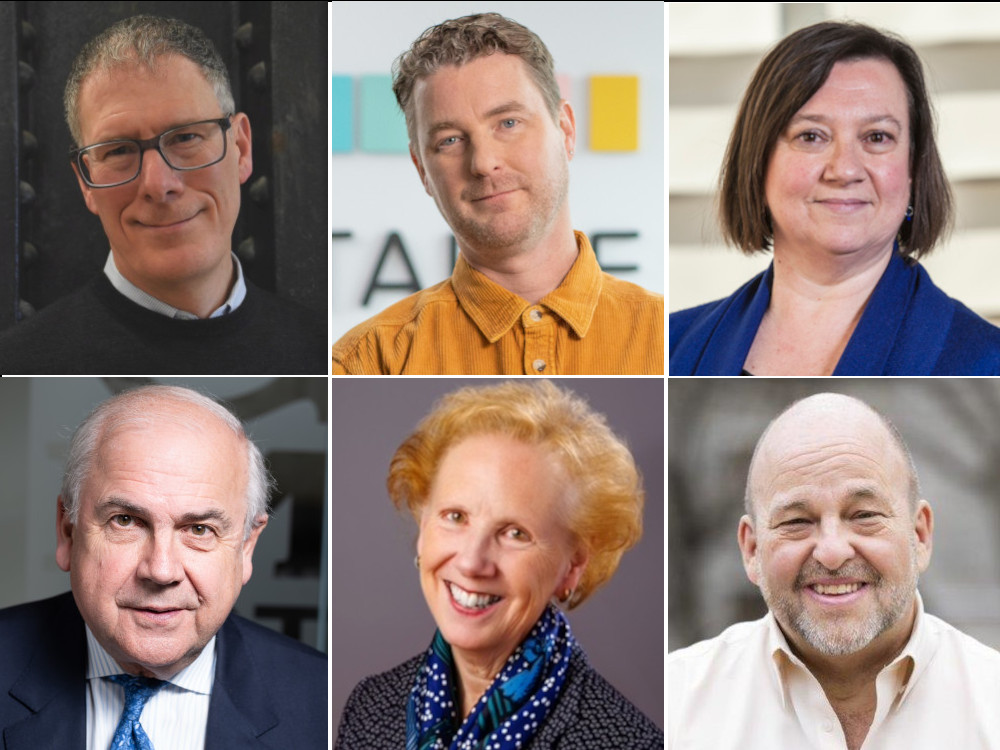
This article is the first in our February Special Report on Philanthropy in Canada.
When the U.S. government shuttered its international aid body USAID in mid-2025, the shockwaves reverberated around the world. Other national governments, including Canada, are also cutting back funding for international assistance, social initiatives and Indigenous services.
That’s just one of the many challenges facing Canada’s philanthropic givers, advisors and charitable foundations today.
In contrast, foundations are holding on to more money than ever in Canadian history, says Malcolm Burrows, founder and executive director of Aqueduct Foundation and head of philanthropic advisory services for Scotia Wealth Management in Toronto.
“Paradoxically, there’s a lot of money coming in but a lot of challenges to operating charities,” he says.
We asked the experts to shine a spotlight on the top issues this year, both positive and negative.
Decline in giving
“My primary concern is that there’s a continuing decline by Canadians in regard to charitable giving,” says John Bromley, founder of the Vancouver-based public foundation and donor-advised fund Charitable Impact. In 2013, 21.9 per cent of Canadian taxpayers claimed charitable donations, but in 2023, only 16.8 per cent did. That’s a decline of about 1.5 million people.
Ruth MacKenzie, president and CEO of the Canadian Association of Gift Planners (CAGP) in Ottawa, says that among the most likely explanations is that “we are living in pretty uncertain economic times, and that gives people pause in terms of their charitable giving.”
Canadian Family Offices Newsletter
Never miss an update! Subscribe to our newsletter and get new content straight to your inbox.
By clicking on the sign-up button, you consent to receive the above newsletters from NarrowContent Networks Ltd. You may unsubscribe any time by clicking on the unsubscribe link at the bottom of our emails or any newsletter. NarrowContent Networks Ltd | 100 York Blvd Suite 550, Richmond Hill, ON L4B 1J8 | info@canadianfamilyoffices.com
Demographic shifts
Older Canadians tend to give more than younger ones, which raises the risk that charities will lose their most generous donors simply through attrition. But demographic issues present other considerations as well.
“Causes and charities need to understand the demographic cohort,” MacKenzie says. She points out, for example, that the millennial generation—now aged about 30 to 45—prefers to support a cause rather than an organization. Somewhat surprisingly, she adds, “our research shows that it’s millennials who are the most interested in including a gift in their will.”
Keith Sjögren is chair of the advisory council for the Master of Philanthropy and Nonprofit Leadership (MPNL) program at Carleton University in Ottawa. He notes an increase in wealth controlled by women in Canada, a positive factor since “women in Canada are known to be more active donors than men.”
In fact, Carleton University has launched a three-year research project called Women in Philanthropy.
Also worth noting: a slight uptick in the number of Canadians who are religiously active. “There is plenty of evidence suggesting that participation in organized religion is consistent with a higher level of personal giving,” Sjögren says.
We’re in for a real moment of transition through pullback of government and other sources of funding.
Malcolm Burrows, founder and executive director of Aqueduct Foundation and head of philanthropic advisory services for Scotia Wealth Management
Future uncertainty
Today’s tremendous economic and political volatility has challenged many, but especially the charitable sector.
“Predictions are impossible,” says Hilary Pearson, former president of Philanthropic Foundations Canada (PFC) and chancellor at Brock University, who is based in Montreal. “There is uncertainty around endowments, financial markets, geopolitics and social cohesion in Canada.”
Decision-making and goal-setting demand leisurely reflection, but few charities can afford that luxury. Malcolm Burrows says funders and donors must ensure they understand the situation that charities are facing.
“We’re in for a real moment of transition through pullback of government and other sources of funding,” he says. “I think we’re in for a very challenging time.”
Leading social change
Times of change offer unique opportunities, and this is a moment when the charitable sector can demonstrate its value by addressing the pain points in Canadian society, says Jean-Marc Mangin, Ottawa-based president and CEO of Philanthropic Foundations Canada.
“On the positive side, there is a rising sense of national pride and an awareness of the risks that Canada is under,” he says. “How do we engage civil society and engagement in philanthropy so we’re more resilient to attack on our sovereignty?”
Regulatory climate
Pearson says Canada’s “pretty static regulatory framework” has a chilling effect on the sector. She would like to see a “systematic overhaul of the way charities are categorized and regulated.”
One aspect that will be reviewed, says Mangin, is the disbursement quota (DQ), the mandatory minimum that foundations must give away annually.
“The government updated the DQ regime in 2022 and made a commitment to update in 2027. It will be an important exercise to look not only at the returns of foundation portfolios over the last five years but also the cost of inflation.”
Philanthropic literacy
In recent surveys, about 80 per cent of respondents indicated trust in charities, says Keith Sjögren. But, he also noted, “charitable giving is not a financial priority in many Canadian households.”
John Bromley believes one issue is that fundraising campaigns are typically designed to raise dollars but not to advance an attitude of philanthropy. Future donors should be schooled in philanthropy like playing hockey or driving, he says.
How do we engage civil society and engagement in philanthropy so we’re more resilient to attack on our sovereignty?
Jean-Marc Mangin, president and CEO of Philanthropic Foundations Canada
“I think that if you create a pathway to nurture the charitable impulse, they will act in a benevolent way through their lifetime.”
Digital disruption
Especially since COVID-19, charities have had to adapt to the use of digital platforms. They’re also learning how to protect themselves from cyber-threats and explore the implications of artificial intelligence (AI) for working with data, among other adjustments.
“This is something the charitable sector in Canada is having trouble coming to grips with,” says Hilary Pearson.
She suggests more use of intermediaries like CanadaHelps, which acts as a one-stop connection to more than 85,000 charities. Organizations like this could improve data collection and analysis, among other functions, she adds.
Collaborative gains
Pearson sees potential in sharing among organizations.
At a time when innovation is called for, “the only way I think foundations could make a change is collaboration and maybe even pooling their funds. And I would have expected that we would see more mergers and alliances between charities with similar issues,” she says. “Why isn’t the sector more fluid?”
Donations of assets
Whereas 86 per cent of charitable gifts are made in cash, 89 per cent of Canadian wealth is held in assets, Ruth MacKenzie says. CAGP encourages Canadians to consider gifts of assets such as real estate, securities or business interests, as well as leaving a gift in their will.
“Canada has one of the most generous tax systems in the world in terms of incentivizing charitable giving,” she says. She suggests that charities build relationships with advisors to discuss options such as the donation of appreciated securities or life insurance.



Investing in Canada
Jean-Marc Mangin sees tremendous opportunity for foundations to effect real change by choosing to invest their holdings back into Canada through infrastructure projects, public utilities and long-term government bonds, as well as via involvement with municipalities, Indigenous partners, credit unions, pension funds, private investors or “public agencies aligned around measurable community vitality.” This topic will be explored at Philanthropic Foundations Canada’s fall conference in Winnipeg, which is open to all.
“Canada needs to transform its economy, and philanthropy has a role to play,” he says. “Our work continues to be guided by what endures: human needs, compassion, empathy and a profound sense of community. These are the constants that can help us move toward a future where giving and shared humanity remain powerful forces for good.”
Sarah B. Hood is a Toronto-based writer and book author. She has served as editor of three national magazines and written weekly columns for the National Post. She also serves on the editorial board of Spacing magazine. She writes frequently on business, urban affairs and culture. As a food writer, her work has been translated into Japanese and Arabic. She has taught writing at George Brown College for more than 20 years.
Join our philanthropy online panel discussion: Who Will Give? Philanthropy and the Next Gen on Feb. 26 at 1 p.m. Eastern. Click here to register.
Take our short philanthropy survey: Help us learn more about philanthropic giving in Canada by taking our short anonymous survey. No matter whether you are a donor, philanthropy advisor or executive of a family foundation, we would love to hear your opinions!
Get our new quarterly newsletter about philanthropy: Canadian Family Offices’ new newsletter brings you key insights, trends and expert perspectives on charitable giving, tailored to Canada’s wealth leaders and giving communities. Click here to subscribe.
Please visit here to see information about our standards of journalistic excellence.