

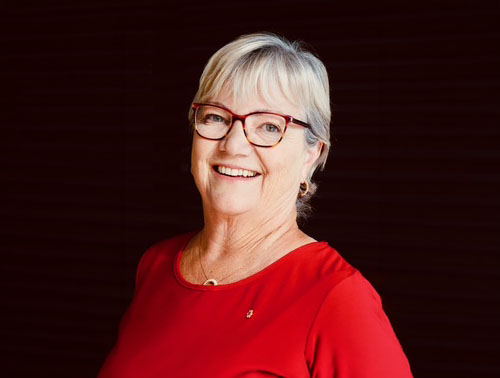
For Sheila Copps, community service and its most formal iteration—politics—runs in the family. Copps was born in Hamilton, Ont., into a prominent political family. Her mother, Geraldine Florence (Guthro) Copps, was a Hamilton city councillor and her father, Victor Kennedy Copps, served as Hamilton’s mayor from 1962 to 1976.
Even with that substantial family legacy, Ms. Copps was so driven by her interest in politics that she largely went about her achievements independently. And those achievements were remarkable. During a challenging time for women in politics in the 1980s and 1990s, she became a strong (and sometimes controversial) voice in opposition as a prominent member of the Liberals’ so-called Rat Pack, and she later served as Canada’s sixth Deputy Prime Minister while Jean Chrétien was Prime Minister. She also was the first sitting MP in Canada’s history to give birth while a member.
Throughout her career, Ms. Copps, who was appointed to the Order of Canada in 2012, lobbied for women’s legal rights, minority rights and education for those in lower-income families—causes that guide her philanthropic efforts to this day.
The supper table was a place to discuss politics, including all the issues of the day.
Sheila Copps
Here, she discusses growing up in Hamilton in a political dynasty, how her mother tried to protect her from the pressures of a career in government, and why being ridiculed as a woman in the House of Commons still fuels her desire to support women in all walks of life.
What are your memories of growing up in Hamilton?
Hamilton is such a great place to live. Everyone gets along, with multiple languages spoken on every street. Unlike bigger cities, neighbours are mixed and everyone gets to know everyone.
My family was always interested in a good political discussion. My father worked in radio before politics, so our earliest memories were running around the record library at 900 CHML. The supper table was a place to discuss politics, including all the issues of the day. I loved to campaign with my dad, too, as we would hit all the bingo halls for a campaign pit stop. My mother actually got involved in politics after me. I encouraged her and helped run her campaign. She was elected in her 60s, so it was a wonderful accomplishment.
Were you guided towards your education choices as you became interested in politics, or did you have independence?
As for education, I made my own choices without much guidance. Neither of my parents had been to university, but both encouraged me to go. In the years after my studies [at King’s College at the University of Western Ontario], my parents did not guide or mentor me.
As a second-generation member of a political family, how did you decide to become involved in politics and how did your parents influence you?
My mother was afraid that politics would take me too far from home, so she actually discouraged me when I decided to run for provincial and federal politics. My dad had brain damage from a heart attack, so could offer no advice.
It was considered normal as a woman to be ridiculed in the House, for the tenor of your voice or how you looked.
How did you feel as a woman in politics in the 1980s in such a male-dominated field?
Getting elected the only woman in the [Ontario] Liberal caucus in the 1981 election was daunting. I was 28 years old and the average age of my colleagues was 51, so it was quite a shock. My then leader, Dr. Stuart Smith, was very supportive and helped a lot. Likewise, in federal politics, I was only 31 when elected back in 1984, so that was quite strange.
It was considered normal as a woman to be ridiculed in the House, for the tenor of your voice or how you looked. I simply swallowed it and, when the opportunity arose, got in my own licks. When [Conservative Justice Minister] John Crosbie told me to ‘Settle down, baby,’ I answered with fearlessness: ‘I’m nobody’s baby.’ That retort gave me a title for my first book, which he kindly wrote an introduction to.
The most important thing was to have thick skin and a strong belief in what I was trying to achieve.
What are your proudest career milestones?
Career milestones, politically, include designing the Liberals pre-election campaign to guarantee 25 per cent of seats to women in 1993. Jean Chrétien was a great supporter, but many colleagues thought the number was simply too ambitious.


In terms of policy, conceptualizing and delivering on the UNESCO Convention on the Protection and Promotion of the Diversity of Cultural Expressions. It started as an idea in my head to fight the World Trade Organization attack on Canadian magazine policy, launched by the Americans, and became a Convention in seven years, partly because of my campaign with global artistic groups and key member-states of UNESCO.
You are known to give back to your community and beyond through philanthropy, particularly in support of women. What initiatives are closest to your heart?
In later years, I have worked to continue to support equality for women in political life, through organizations like Equal Voice [a charity dedicated to improving gender representation in Canadian politics] and the Famous Five Foundation [whose goal is to empower women and girls to lead change]. I have never thought of women being a shadow of male counterparts. Each person has their own voice, with their own vision and inner strength.
As women, we don’t always think alike, but by working together we can achieve political milestones that are important to all of us, like childcare, decent pensions, sound environmental policy.
The march to equality in the Canadian Parliament has not yet been completed, but since my election to the federal House in 1984, it is safe to say, ‘We have come a long way, baby.’
Natalya Anderson is a writer and former ballet dancer. She completed her master’s degree in creative writing at Anglia Ruskin University, Cambridge, England. Natalya has won several literary awards, including the Moth Poetry Prize for her poem ‘A Gun in the House’ and the Bridport Prize for her poem ‘Clear Recent History.’
Get our new quarterly newsletter about philanthropy: Canadian Family Offices’ new newsletter brings you key insights, trends and expert perspectives on charitable giving, tailored to Canada’s wealth leaders and giving communities. Click here to subscribe.
Please visit here to see information about our standards of journalistic excellence.