


This article is the third in our February Special Report on Philanthropy in Canada. To see all the articles so far, click here.
They’re the fastest growing tool for charitable giving in Canada, but only one-quarter of Canadians have heard of them. Even fewer understand what they are. It turns out donor-advised funds (DAFs), favoured for their flexibility and tax efficiency, have been used in Canada for decades but have been growing in popularity among donors in recent years.
DAFs have been around even longer south of the border. But in the U.S., some have raised concerns that these funds are amassing value without benefiting charitable institutions. Is the same happening in Canada, and should DAFs be subject to more regulation?
Research suggests that 77 per cent of Canadians have never heard of donor-advised funds, and only 7 per cent say they understand them, says Keith Sjögren, chair of the advisory council for the Master of Philanthropy and Nonprofit Leadership (MPNL) program at Carleton University in Ottawa.
In the simplest terms, Canadian DAFs are charitable funds set up through a philanthropic foundation. When donors contribute a sum of money, they receive a charitable tax receipt for the full amount, and the fund irrevocably becomes the property of the foundation. The donor, however, maintains the right to suggest where the assets will be directed for as long as the fund exists.

Malcolm Burrows is the founder and executive director of Aqueduct Foundation and the head of philanthropic advisory services for Scotia Wealth Management in Toronto. His 2025 discussion paper Improving the Regulation of Canadian Foundations With Donor Advised Funds explains that about 240 Canadian registered charities have active DAFs, and that foundations with DAFs hold $10.5 billion and make grants of more than $1 billion every year.
In 2021, this represented almost 10 per cent of all donations claimed for tax purposes.
In recent years, the IRS has moved toward regulating DAFs in the U.S., largely on the grounds that assets could be hoarded as they accrue through investment rather than distributed to charities. The question has been raised in Canada, but experts say the situation in the two countries is so different that those concerns do not apply here.
Sjögren says there are some 3.6 million DAFs in the U.S., mainly held by foundations associated with major investment firms. In Canada, as of 2024, the most recent year for which data is available, charities submitted reporting data to the Canada Revenue Agency for 82,300 DAFs. A far smaller proportion of these is connected with major investment firms.
Burrows says, “I think that the Canadian system and the legal obligations are very, very different than in the U.S.; the cultural situation is very different as well. We have different rules and different ways of regulating. We need to find our own solution. Many of the rules suggested by U.S. regulators either don’t apply or don’t work in Canada.”
Unlike their U.S. counterparts, Canadian foundations are already obliged to meet a disbursement quota (DQ) of, normally, 5 per cent of their assets annually. Each foundation may hold a great many DAFs, but it is not required to report separately on disbursements for each one.
Many of the rules suggested by U.S. regulators either don’t apply or don’t work in Canada.
Malcolm Burrows, founder and executive director of Aqueduct Foundation and head of philanthropic advisory services for Scotia Wealth Management
“The holding charities are all making the argument that they are proving a degree of transparency and meeting or exceeding the DQ,” says Hilary Pearson, the Montreal-based former president of Philanthropic Foundations Canada and chancellor at Brock University. “I’m not sure I would make an argument for applying a DQ fund by fund.”
John Bromley, founder of Charitable Impact in Vancouver, concurs: “It’s left up to the charity that’s running the DAF account to determine how much money actually has to go out the door. I think that’s fine,” he says.
In any case, says Jean-Marc Mangin, president and CEO of Philanthropic Foundations Canada in Ottawa, “we know that DAFs are in the 10 per cent to 12 per cent range, much more than the minimum.” Plus, he says that when the DQ comes up for review in 2027, “that will apply to DAFs as well.”
An important point is that CRA did not start collecting specific information on DAFs via the annual T3010 charity reporting forms until 2023, and the first wave of reporting included funds only with year-ends of Dec. 31, our experts said. Furthermore, some charities made mistakes in their initial submissions; for example, some included reports on funds that don’t meet the definition of a DAF. Others simply left parts of the form blank.
Researchers are looking forward to the submission of more—and more accurate— T3010s so they can begin to build a clearer picture of the Canadian DAF landscape.
Many also hope to see additional questions asked on the forms. “There is not enough information being collected,” Sjögren says. “There shouldn’t be regulation until the regulator understands more about them.”
Foundations currently must report the total number of DAFs they administer and list total assets, donations and grants. But some say that is not enough.
Our viewpoint at CAGP is that regulation doesn’t necessarily solve any issues or problems.
Ruth MacKenzie, president and CEO of the Canadian Association of Gift Planners (CAGP)
“There are a whole lot of data points that could be asked by the CRA but are not, and there’s very little research,” Sjögren says. He would like to know, for instance, “how many DAFs were opened and closed in a year.”
On the other hand, although the managing charities disclose their total grants to specific donees, there are reasonable grounds not to disclose which donors supported each recipient or how much they gave. Some donors may wish to remain anonymous for reasons of humility or ethics, and others who are supporting a legitimate but potentially controversial cause might be concerned that doing so could affect public opinion about them and their enterprises.
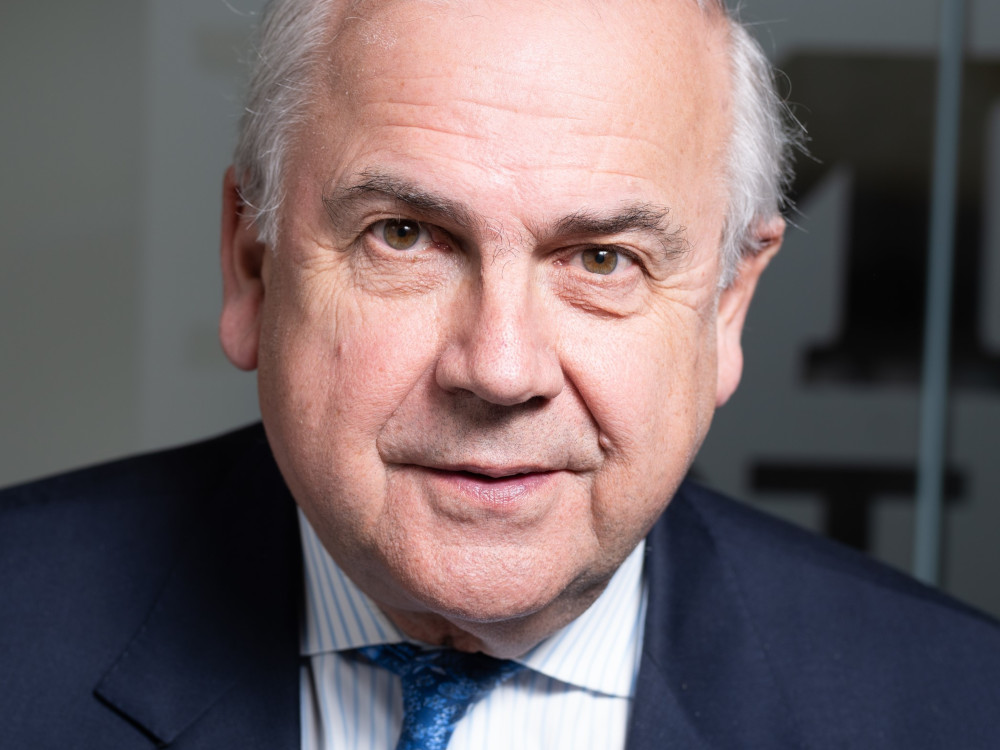
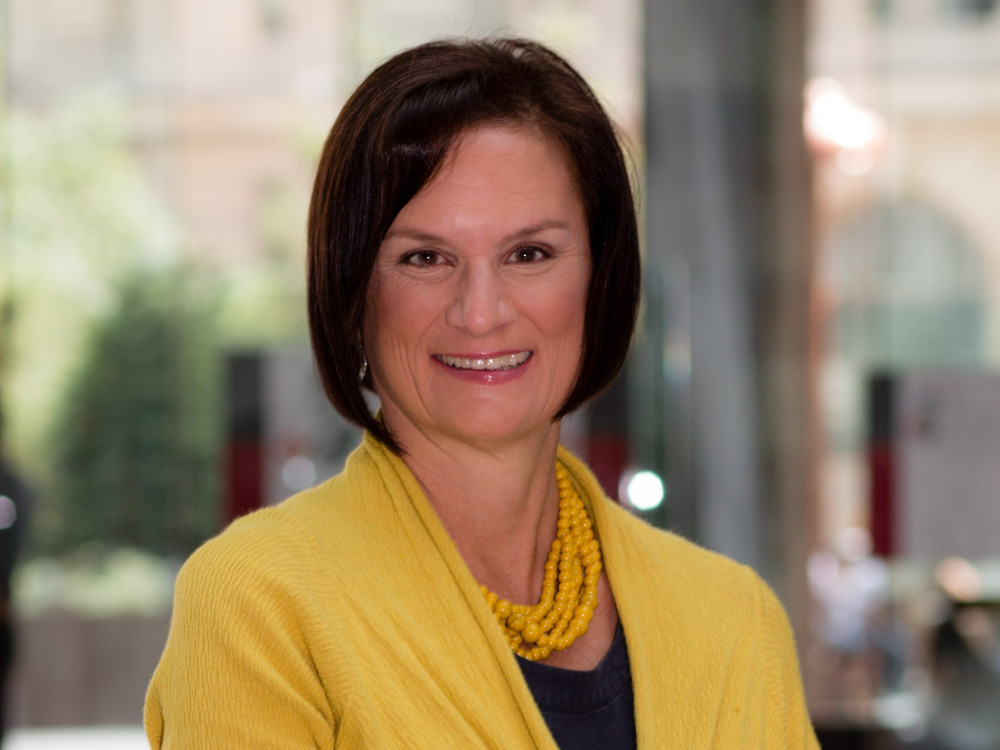

Another area that has come under scrutiny is fees charged to donors. However, “I haven’t heard any conversation that fees are excessive,” says Ruth MacKenzie, president and CEO of the Canadian Association of Gift Planners (CAGP).
Overall, she says, CAGP favours the approach of “conversation, discussion and setting guidelines and best practices in place, versus a more heavy-handed regulatory approach.” She points out that any legislation would need to accommodate a broad range of foundations, from those of major financial institutions with funds worth hundreds of thousands of dollars to small community organizations with considerably smaller amounts.
Since 2024, CAGP’s working group on DAFs has published a public document titled Empowering Philanthropy: An Overview of Donor-Advised Funds, along with complementary DAF resources for charities, donors, financial professionals and foundations.
“Our viewpoint at CAGP is that regulation doesn’t necessarily solve any issues or problems,” MacKenzie says.
“It’s the fastest-growing giving tool in Canada. Our interest is making sure that dialogue happens and that DAFs are supporting charities into the longer term.”
Sarah B. Hood is a Toronto-based writer and book author. She has served as editor of three national magazines and written weekly columns for the National Post. She also serves on the editorial board of Spacing magazine. She writes frequently on business, urban affairs and culture. As a food writer, her work has been translated into Japanese and Arabic. She has taught writing at George Brown College for more than 20 years.
Join our philanthropy online panel discussion: Who Will Give? Philanthropy and the Next Gen on Feb. 26 at 1 p.m. Eastern. Click here to register.
Take our short philanthropy survey: Help us learn more about philanthropic giving in Canada by taking our short anonymous survey. No matter whether you are a donor, philanthropy advisor or executive of a family foundation, we would love to hear your opinions!
Get our new quarterly newsletter about philanthropy: Canadian Family Offices’ new newsletter brings you key insights, trends and expert perspectives on charitable giving, tailored to Canada’s wealth leaders and giving communities. Click here to subscribe.
Please visit here to see information about our standards of journalistic excellence.