


Philanthropy in Canada is a relatively low-key affair. Ribbon cuttings and giant cheques lead to new hospital wings, but major donors don’t seek the spotlight and have long been spared the kind of backlash that is raging elsewhere about the outsized influence of billionaire giving.
That’s changing. South of the border, Bill Gates faces significant criticism from people who feel his heavy influence on global health priorities is undemocratic. And a similar unease is taking hold here at home. Between a growing wealth gap, a contemporary perspective that sees philanthropy as another form of colonization, and a suspicion that wealthy people are just dodging taxes, people are casting a cold eye on today’s wealthy donors, prompting a more critical look at who gives—and why.
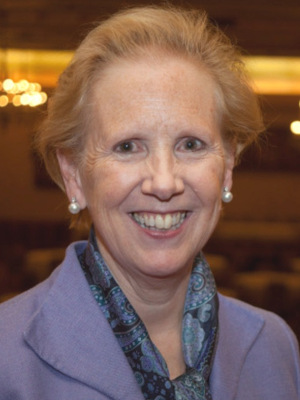
Montreal-based philanthropy expert Hilary Pearson says Canadians have always had a healthy suspicion of extreme wealth and people who wield it. What has changed is the environment around that perception. She says the rapid-fire pace of public discourse on social media has turned up the volume on the conversation.
“You are getting this kind of rapid circulation of anecdotes, myths, and some things that are just demonstrably not true, but they ricochet around in social media. You didn’t see that 25 years ago,” says Pearson, former president of Philanthropic Foundations Canada and chancellor at Brock University.
A lot of the dissent is just noise, says Pearson, but she’s quick to add that doesn’t mean the current state of philanthropy in Canada is problem-free. Social media amplifies myths, but also gives voice to valid critiques—about democratic accountability, transparency and the use of public tax benefits.
It’s important to note that distrust of philanthropy tends to be aimed at private foundations, Pearson says, rather than public ones. And it’s closely tied to broader discomfort with concentrated wealth and the influence it carries. Building hospital wings is great, but shouldn’t our elected representatives guide which hospital needs it?
“People feel that there is an anti-democratic aspect to philanthropy,” says Pearson. “Who are these foundations accountable to? They’re not elected. You know, we can’t get rid of them if we don’t like them. There’s no vote attached to them. There are no shareholders. And I think that’s fair criticism.”
People feel that there is an anti-democratic aspect to philanthropy.
Hillary Pearson
Another critique frames philanthropy as another form of colonization, where wealthy donors perpetuate power imbalances by imposing external agendas on marginalized communities while distributing wealth. Susan Phillips, professor of Philanthropy and Nonprofit Leadership at Carleton University’s School of Public Policy and Administration, says the term may be over-used, but it shines a light on the power imbalance that can be embedded in philanthropic giving.

“The term is batted about so much that I’m not sure people really appreciate what it means,” Phillips says. “I think it’s linked to justice, to social justice and intergenerational justice. You saw it reflected in the debates about the disbursement quota. About non-qualified donees helping marginalized communities. That is more a critique of process, about how philanthropy works, and how power is exercised, and it’s an important and valid critique.”
The disbursement quota is the minimum amount of money charities must spend each year on charitable activities or grants. After a lively public debate in 2022, the minimum donation was raised to 5 per cent of investments and unused assets (up from 3.5 per cent) for charities with assets over $1 million. That figure will be reassessed in 2027.
Pearson says most of Canada’s roughly 6,000 private foundations are small—73 per cent of charities hold less than $1 million in assets—making changes to the disbursement quota a potential challenge for them. For larger foundations, though, the conversation around the quota has sparked a shift in perspective.
“It got donors to question perpetuity, and I think this has been a big change,” says Phillips, explaining that donors are realizing that their gifts don’t have to last forever to have an impact, freeing them up to give larger amounts, and more quickly. It’s a big deal.
“I don’t think we’ve seen the full impact of that yet, because while there have only been a couple of major foundations that are in the process of spending down, I hear from a lot more saying they’re really thinking about it.”
Fundraising expert Paul Nazareth is fed up with nitpicking over the disbursement quota. In his view, philanthropy has a diversity problem and what it really needs is a “decency quota.” He sees traditional private foundations as woefully out of touch with the needs of their communities and much more interested in perpetuating a tired circuit of golf tournaments and charity dinners than effecting real change.
“I’m not interested in the Westons,” says Nazareth. “But the Chapmans. You know the ice cream? They’re not worth a billion dollars, but they’re worth like $50, $60 million. And as a family, they’re always in the news doing the right thing.”
That is more a critique of process, about how philanthropy works, and how power is exercised, and it’s an important and valid critique.
Susan Phillips
He’s also interested in the power of hyper-local giving and the philanthropic potential of younger generations, like the 11 per cent of millennials who have named a charity as a beneficiary of their RRSP. He sees promise in overlooked groups—young women, entrepreneurs and grandmothers—whom he calls the gangsters of social capital. They have funds to give, yet few are reached by today’s fundraisers, and many foundations wouldn’t know how to handle some of their gifts anyway.
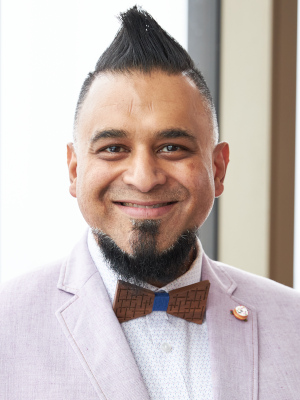
These donors can liquidate cryptocurrencies or real estate holdings on their smartphones and give instantly, Nazareth says, but most foundations neither approach them nor have the systems to accept such donations.
Do philanthropists care about these criticisms? It’s hard to say because we don’t have the data. Canada is the only G7 country without a data centre dedicated to philanthropy—a gap Phillips is working to fill by establishing one at Carleton University.
In the meantime, she says, educators, advisors and family offices all have a role to play in helping UHNW families give in ways that are both impactful and aligned with their values.
That critical push for intentional, values-driven giving is already shaping behavior. Foundations are expected to show that their giving is mission-driven and making a real impact. In response, many foundations are dialling up their communications strategies, sharing projects, highlighting partnerships and telling their stories.



“They created websites, and started proactively communicating about the kinds of things that they were involved in, and they were more willing to partner with each other,” says Pearson. “And I think all of that created a better understanding of what private foundations are, and possibly lessened the suspicion that people had.
“I mean, when there’s secrecy,” she says, “there is suspicion.”
Cindy McGlynn is a Toronto-based writer and editor who frequently writes about business, culture and the arts. In addition to holding communications roles at tech startups and writing for consumer and B2B publications, Cindy has edited two national magazines and served as a long-time columnist for the Toronto Star’s Eye Weekly magazine. She has been contributing to Canadian Family Offices for four years.
Get our new quarterly newsletter about philanthropy: Canadian Family Offices’ newsletter brings you key insights, trends and expert perspectives on charitable giving, tailored to Canada’s wealth leaders and giving communities. Click here to subscribe.
Please visit here to see information about our standards of journalistic excellence.