

This article is part of our February Special Report on Philanthropy in Canada. To see all the articles so far, click here.
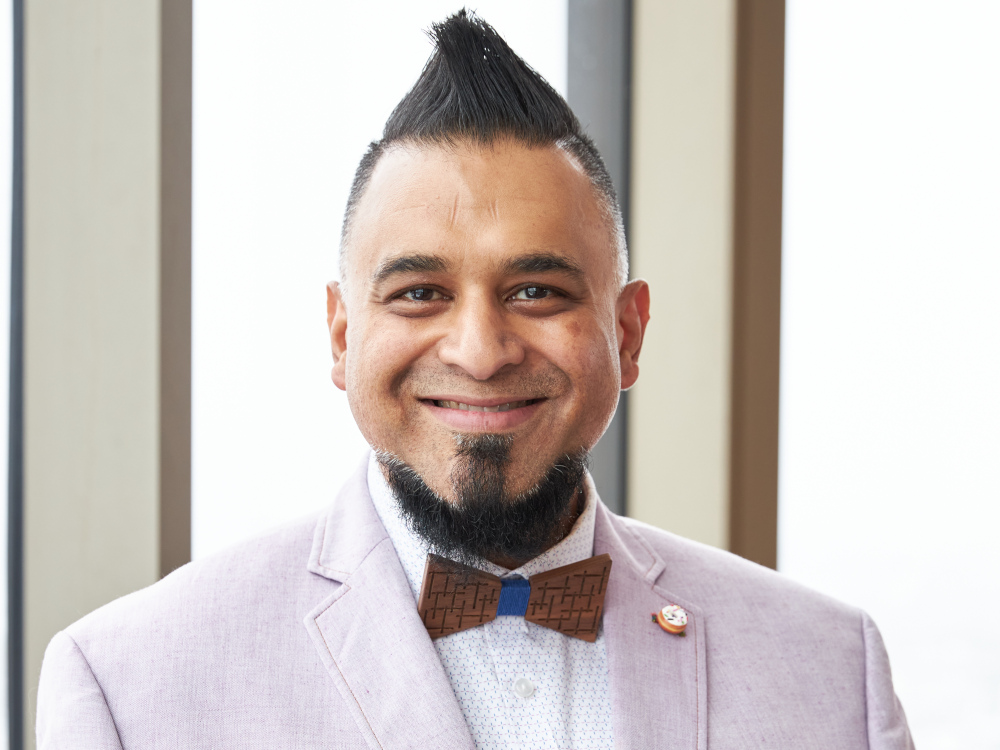
Paul Nazareth wants to talk.
After three decades of working in the nonprofit sector and raising funds for organizations large and small, today Nazareth calls himself a fundraising refugee—“the escaped professor who is speaking his mind.” And he’s got some strong messages for a charitable sector mired in old-style fundraising, for corporate foundations that have taken over the space, and for wealthy families that want to do good.
“It’s time to tell the truth about fundraising, philanthropy and generosity, because our neighbours are hungry, and golf tournaments and gala parties won’t cut it anymore,” he says.
The son of Ugandan immigrants who came to Canada in the 1970s to escape the Idi Amin crisis, Nazareth’s first experience of fundraising was as a child selling chocolate almonds to build Catholic churches in Mississauga, Ont. He flunked out of his first year at the University of Toronto, where he’d hoped to become an English teacher, but got an education as a student volunteer in a call centre soliciting donations for the institution. While his colleagues brought in perhaps a couple of hundred dollars a night, “I was raising $10,000-plus” by engaging targets with his suggestion that giving larger amounts would help pay to outfit student lounges and make life better at the university.
“People said, ‘You should do this for a living,’” he recalls.
Fundraising and fundraisers and charities are going to be extinct, because they have not kept up with technology and strategy.
Paul Nazareth
Nazareth first learned sales by driving hundreds of thousands of kilometres a year selling advertising for 1,000 weekly church bulletins around Southern Ontario. Then he worked in Toronto impresario Ed Mirvish’s call centre, moving his theatre patrons from cheque-by-mail subscriptions to credit-card payments.
He soon became a gift-planning officer for the missionary arm of the Catholic Church, worked on U of T’s first billion-dollar capital campaign, and became a giving manager for 230-plus churches in the Catholic Archdiocese of Toronto. He worked at Scotiabank as manager of philanthropic advisory services; became vice-president of community engagement at CanadaHelps, a charity that facilitates online donations; was vice-president of education for the Canadian Association of Gift Planners, and has sat on the boards of many charities. He taught at several universities and colleges, worked as an instructor for financial advisor networks and helped to develop the Master Financial Advisor – Philanthropy (MFA-P) designation, which hundreds of advisors across Canada now hold.
Canadian Family Offices Newsletter
Never miss an update! Subscribe to our newsletter and get new content straight to your inbox.
By clicking on the sign-up button, you consent to receive the above newsletters from NarrowContent Networks Ltd. You may unsubscribe any time by clicking on the unsubscribe link at the bottom of our emails or any newsletter. NarrowContent Networks Ltd | 100 York Blvd Suite 550, Richmond Hill, ON L4B 1J8 | info@canadianfamilyoffices.com
All the while he watched as some charities did better than others, finding success converting social capital to cash donations. They did this through evolving methods that include “tap to donate” technology, cryptophilanthropy, digital wallets and online wills, and especially by appealing to donor-advised funds (DAFs), tax-efficient charitable-giving accounts that act as holding tanks for donations that are granted over time.
“The problem is the people who are getting the most money aren’t the ones putting food into mouths or housing people. It’s universities, hospitals, disease-and-body-part charities and capital campaigns,” he laments. “There’s a big gap between what’s good and what’s right.”
Indeed, Nazareth found out for himself that “the charitable sector doesn’t pay” when he turned 50 with a great career and no personal capital. “Because I was doing the right thing, I would never earn enough to have a family and retire doing this work.”
He had also burned out from years of crossing the country teaching at conferences. So, 18 months ago, he quit and founded a company called ConnectWorking: Generosity, Education. With the title of “chief connector,” his roles include acting as a “generosity advisor” to private givers and their advisors. “Everybody who contacts me doubles their impact and triples the tax benefit,” he says.
People think the only way to do good is to have a special event to collect money. No.
Paul Nazareth
Nazareth calls his paid services “consulting” and his pro bono services “insulting,” promising—and delivering—straight talk. For instance, he tells charities with campaigns that involve exchanging trinkets or inviting donors to parties that they can’t survive. “I’m happy to let the board know where they’re losing money and why they’re not going to make it to 2030,” he says.
“We’re all going to get diabetes by the time people sell enough chocolate almonds to help churches do the right thing,” he adds. “Today they’re selling churches to condo developers.”
He also teaches financial, tax and estate advisors how to integrate philanthropy into their planning. “My big thing is the difference between fundraising, philanthropy, generosity and sharing,” he says.
He’s still attempting to make things better, as a bridge between philanthropy, tax, estate and financial planning, “but the bridge is on fire,” says Nazareth. “Fundraising is breaking down, because the big charities that do it well don’t have their heart in the right place, and the small charities with their heart in the right place don’t want to use technology.”
He noticed that in the tax-strategy courses he taught for charities: “Only hospitals, universities, DAFs and banks were turning up, not the YMCA, not the cat shelter,” he complains. “I have two cats. I love them, but cat shelters only take cash or cats. There’s stocks, there’s life insurance, there’s private securities, and the charities don’t even have to touch them, they just have to use third-party liquidators.”
Philanthropy is ‘lost in translation’
He stresses that philanthropy is not the same as fundraising.
“Fundraising is broken, and philanthropy gets lost in the translation of golf tournaments and chicken dinners,” he points out. “People think the only way to do good is to have a special event to collect money. No. You can just talk to the five wealthiest families in town, who probably already have foundations, to match something. Do a campaign that feels like a Go Fund Me. Just ask, then listen. Everybody gets a tax receipt—about 50 per cent back—and we don’t have to golf.”
Where charities today talk about donor fatigue, he sees a coming “DAF tsunami.” Rather than donations being down, donor money is going into these vehicles, he says, “so the water is being sucked out before it all comes back in a confusing tidal wave.” He says there are currently some 100,000 DAFs in Canada, and that number is predicted to grow to 250,000 by 2030.
“I call them the benevolent swarm,” Nazareth comments, although he did support the development of DAFs (“unwillingly”) and uses them in his own giving.
Charities also need to fully embrace the future. “I’ve got many entrepreneurs who say to me, ‘I’ve got a quarter of a million dollars, tell me what it’s going to take to solve hunger in Barrie, Ontario.’” While there are people in need in such communities, however, “the food banks won’t take stocks, they won’t take life insurance or mutual funds,” he points out. “Small nonprofits, grassroots charities doing work that truly touches the lives of everyday Canadians, are going bankrupt.”
Nazareth would like to see these groups accept such assets and better use technology, noting the existence of companies with “donation-tech, bequest-tech and insurance-tech” platforms that can quickly collect any format and size of donation made through a phone or other device. He believes every nonprofit should be using technology in its point-of-sale and cash flows. “There’s a whole new journey for the donor, and 90 per cent of charities don’t know about that journey.”
CanadaHelps, for instance, collected almost $75 million last year in stock donations through a system Nazareth helped introduce to the organization after a change to the capital gains exemption in 2007. “It liquidates stocks, puts the cash in all the charities’ bank accounts, and the donor gets one tax receipt,” he explains.
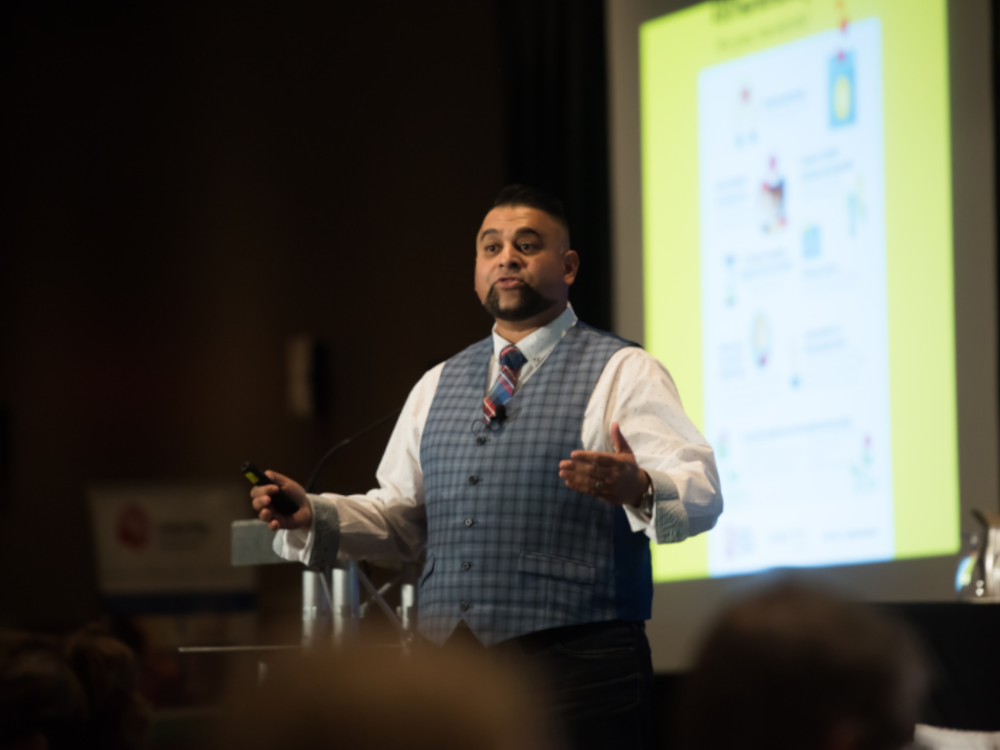
One of Nazareth’s biggest concerns is the use of such techniques by foundations that have been started by large corporations, including gas-station chains, vacuum-cleaner companies and newspapers. He calls these “fake charities,” but notes they raise much more money than traditional social-service organizations, with clever staff supporting them.
“Unfortunately, those foundations are stealing all the talent because they can afford it,” he says. “The world is shifting and the new corporate players all know how to use tax and technology to their benefit.”
How should high-net-worth donors get money to the people who need it most? “Give smarter and use Canada’s tax benefits. Especially if you’re an entrepreneur-giver, talk to an advisor before you donate over $10,000.” Those interested in technology can make donations by stocks, flow-through shares, cryptocurrency, DAFs and other means, he says. “Everything has a liquidation partner.”
A value-added proposition for family offices
What is his view on how family offices approach philanthropy?
“It’s just not integrated into financial, tax and estate conversations. That’s where the value-add is to the client,” Nazareth says. “Very few are using tax-smart donations to build social capital for their clients.”
He notes that “the key thing is the client has to already be generous. You can’t sell generosity.” Meanwhile, wealthy families often overlook the kind of advisors who can guide their donation strategies.
“They’re going to their brother-in-law or the guy their real estate agent knows. Those are the two most useless advisors. Find the right advisor for the right need.” These include finance, tax, estate and insurance specialists with designations such as Chartered Professional Accountants (CPAs), Certified Financial Planners (CFPs), Trust and Estate Practitioners (TEPs) and Chartered Life Underwriters (CLUs). “And if you have a foundation, find a local MFA-P.”
Wealthy families should integrate giving into their annual planning conversations. “Your CPA should be asking you about your donations,” he says, suggesting beneficiaries that might be favourites and figuring out ways of giving to them that suit your financial and tax-planning situation.
He tells charities about a new cadre of digitally inclined family members looking to support causes and public emergencies and who “want to do it through a portal, but they don’t have that yet.” Indeed, with amounts above $20,000, there’s often no way for digital-savvy donors to give.
Charities who are still focused on events, golf and tote bags, I can’t help them.
Paul Nazareth
“Fundraisers are hustling for 20 bucks using raffles,” he says, while nobody—and “certainly not charities”—is figuring out how to get larger and different kinds of donations from these new givers. Charities don’t know what to do with a 38-year-old who has done well in the market or made a bunch of money on crypto. If they call their local favourite organization—other than a hospital or a university—to donate publicly listed securities, it will tell them, ‘Go away, turn it into cash, pay all the taxes and then gift us whatever’s left.’”
Nazareth focuses on the role that philanthropy can play in life insurance and digital wills among donors younger than 40, which he notes is the largest group of Canadians without kids. Studies show this set already has designated $1 billion to beneficiaries through their RRSPs and TFSAs, he says.
“Charities don’t know how to let that billion dollars of under-40 money into their little party. This is a broken ecosystem.”
But his focus is on the givers, rather than the charities. “It makes me sad to say that, because I love the charities.”
A few words for donors
As for the donors, “I want them empowered to follow their heart, follow their head, use their hands, give smart. Use the tax benefits. Quadruple your money, 10 times your money, but it’s got to do good. There’s a hungry mouth: is it being fed? That’s all I care about anymore.”
Wealthy donors could have an impact right across the country, he notes, especially in smaller communities where there’s need, rather than focusing on Toronto and other big cities. “I believe that philanthropy has terroir,” he says. “Money needs to convert into hunger, housing, healthcare, planet and people.”
The impact of generational change on giving among these high-net-worth families is “very exciting,” Nazareth says. “The kids are all right.”
Does that make this “Gen X burnout” optimistic about the future when it comes to charitable giving?


“I am skeptical, not cynical or pessimistic,” he says. “I’m sad to say, fundraising and fundraisers and charities are going to be extinct, because they have not kept up with technology and strategy.” Banks and corporate foundations are going to “eat fundraising,” he predicts, leaving nonprofits to simply carry out good works, financed by grants from those larger players.
Beyond their failure to implement technology upgrades, charities today also “just don’t know how to talk to people,” complains Nazareth, who so long ago convinced those donors to increase their contributions to help pay for microwaves in lounges at U of T. “Yes, technology and AI and chatbots can help us, but there’s got to be humanity at the centre of it. Philanthropy has to be accessible to all.”
Nazareth fears that not far down the road, “all my fundraising colleagues will lose their jobs, and I’d like them to know that,” although causes for the most part will continue to receive money.
“That may not be so bad,” he quips, “but we seem to have stepped in a huge pile of shift.”
Mary Gooderham is a writer, editor and communication advisor based in Ottawa. She leads Cohen Gooderham Communications and has worked as a journalist for more than 40 years at The Globe and Mail, as a recording officer at the International Monetary Fund and as a custom content creator for online and print media. She’s been a contributing writer at Canadian Family Offices for four years, focusing on investment strategy, trusts, philanthropy, women in finance and estate planning.
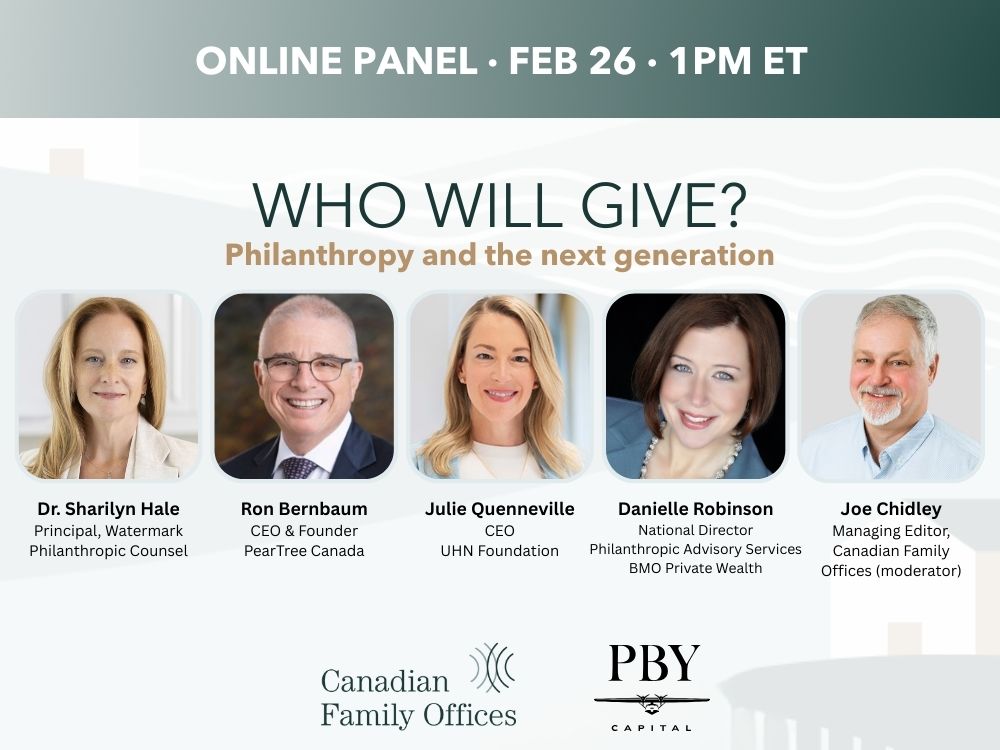
Join our philanthropy online panel discussion: Who Will Give? Philanthropy and the Next Gen on Feb. 26 at 1 p.m. Eastern. Click here to register.
Take our short philanthropy survey: Help us learn more about philanthropic giving in Canada by taking our short anonymous survey. No matter whether you are a donor, philanthropy advisor or executive of a family foundation, we would love to hear your opinions!
Get our new quarterly newsletter about philanthropy: Canadian Family Offices’ new newsletter brings you key insights, trends and expert perspectives on charitable giving, tailored to Canada’s wealth leaders and giving communities. Click here to subscribe.
Please visit here to see information about our standards of journalistic excellence.