

In this 11-part series, we explore the Ten Domains of Family Wealth, a comprehensive framework for understanding the issues facing wealthy families conceived by the Ultra High Net Worth Institute, headquartered in New York City. In this edition, we focus on the Family Dynamics Domain.
It’s right there in the name: a family enterprise is only partly a business concern; it’s also a family, and any advisor who’s not equipped to navigate the currents and tides of family dynamics will find themselves in deep water indeed.
The Family Dynamics Domain addresses the family’s history, structure and interrelationships in all their messy, emotional complexity, since these factors shape how family members relate to one another, to their wealth, and to the decisions and transitions they face together. Whether a family is characterized by kind cooperation or bad behaviour, its entrenched roles and systems play a critical part in determining financial success.
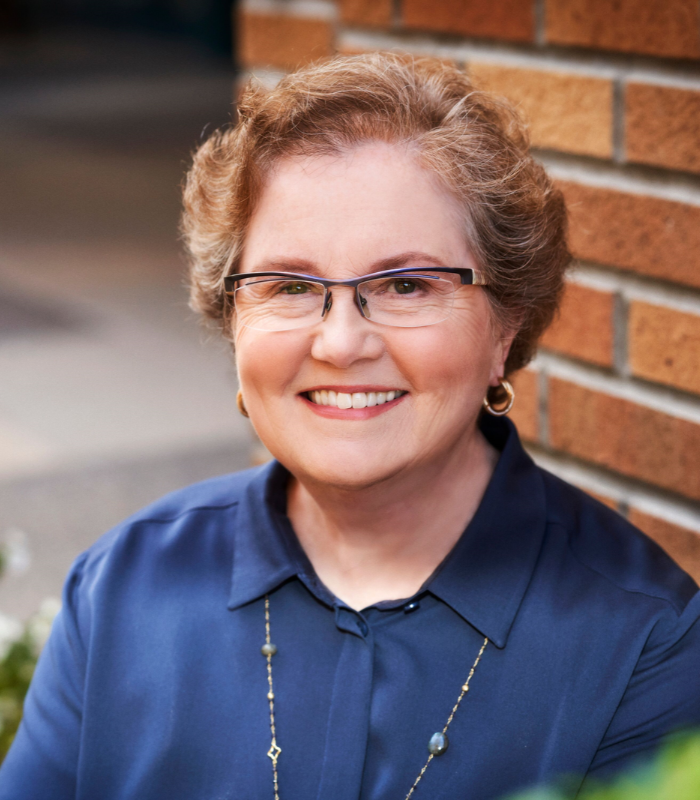
“We’re very interested in the idea of helping advisors pick up on and navigate cues about family dynamics that may indicate that there is a need for more exploration,” says Pat Armstrong, Domain Chair for Family Dynamics and a family wealth consultant with her own PMA Consulting, which is based in the San Francisco area.
Soft skills are difficult to acquire
“You will often hear people say that even though these are called ‘soft skills,’ they can be the most difficult to acquire,” she says, offering the example of a former colleague, a portfolio manager who took on a client family that had just sold their business. However, he had never been trained to facilitate difficult discussions, and reported that “their first family meeting to discuss their newfound wealth was a disaster,” Armstrong recalls.
“My approach was to work both with the advisor and with the family so that he had a new set of skills to be able to work with the family more comfortably moving forward.”
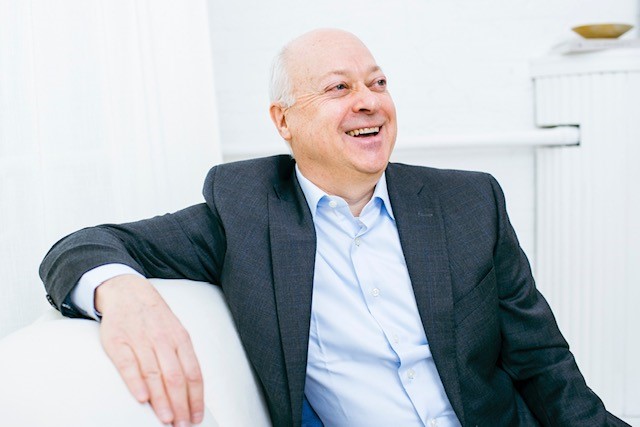
“There’s a knowledge-based side to the Domain, and there’s a skills side,” says Tom McCullough, a partner with Corient in Toronto, who serves as the UHNW Institute’s managing director of thought leadership and strategy.
Advisors need a grounding in many aspects of family life—“generational patterns about how individuals, couples and families think about finance and wealth, typical patterns of life transition, family hierarchy, the impact of money on family cohesion, the impact of different generations, gender, blended families,” McCullough enumerates.
“The skills for this Domain would be the ability to hold conversations with families about all these issues, the ability to skillfully guide clients while keeping their interests central, and to run family meetings,” he says.
Family dynamics and governance
Family legacy consultant Steve Legler, who is based in Montreal, says the field has been gaining acceptance. At one time, he says, “family dynamics” might have been addressed by calling in a family therapist. “But family dynamics and governance are very much intertwined,” he points out.
“I have seen tremendous gains in addressing the more qualitative aspects of wealth management,” Armstrong says. “I would say firms have been starting to recommend and integrate qualitative concerns for more than a decade, and the UHNW Institute brings together people who have been working on this for quite some time.”
Armstrong herself has spent more than a decade working with families around communication and decision-making, initially as the head of the family dynamics practice at a multi-family office in the U.S. and more recently through a personal consulting practice. She joined the UHNW Institute three years ago as a faculty member in Family Governance.
Educated in psychology, she says she has always been interested in community systems and organizations, and how people flourish in these different dynamics. Early in her career, she worked in an Employee Assistance Program within a corporation; from there she moved to a human-resources function within a wealth management organization, where she learned about the world of trusts and family offices, “working side by side with advisors who were developing their skills working with families.”
Eventually, “I found that working in a family office context would be a way to blend my interest in people flourishing within organizations and systems,” she says, adding that it offered “the really joyful opportunity to work with families with a complex team of advisors.”
Armstrong says the Domain faculty members are working on several papers to be released early in 2027 on topics such as recognizing and addressing family narratives, which she describes as “intergenerational stories, memories, and conversational traditions passed down through generations that define a family’s shared identity and foster psychological resilience or vulnerability.”



In June of 2025, the UHNW Institute conducted a webinar titled Conflict Transformation – Empowering Tools for Positive Change with Stacy Allred of JP Morgan Wealth Management (Domain Chair for Family Learning & Development), Arne Boudewyn of Insights Squared and Family-Advisory Relationships Chair Dr. Moira Somers. Available to members of the Institute, it touches on this growing area.
“We’re going to talk about and illustrate how storytelling can be useful in healing family narratives,” Armstrong says. “We’re also doing a couple of papers that overlap with the Estate and Legal Domain on fairness and trust discussions when you have different age cohorts.”
Also, in progress is work on family communication in the area of estate planning. “One of the best practices, and one of the things that family-wealth advisors can help families with a lot, is sharing their plans so they can build capability over time,” she says. “In the longer term, we hope to build more comprehensive tools for advisors that will be helpful in cultivating their understanding of and confidence in addressing family-dynamics topics.”
Reflecting on her own career, Armstrong says, “you can see the underlying theme of family dynamics: How can people and families flourish and do their best, and therefore how can the advisory community who are working with them support those objectives? How can we collaborate to support a family’s wishes and desires for themselves and their future generations?”
With the advent of “Wealth 3.0,” the conversation around family dynamics has evolved, she says: “I would say that significant gains have been made in broadening the conversation to all that’s possible.”
Sarah B. Hood is a Toronto-based writer and book author. She has served as editor of three national magazines and written weekly columns for the National Post. She also serves on the editorial board of Spacing magazine. She writes frequently on business, urban affairs and culture. As a food writer, her work has been translated into Japanese and Arabic. She has taught writing at George Brown College for more than 20 years.
The Canadian Family Offices newsletter comes out on Sundays and Wednesdays. If you are interested in stories about Canadian enterprising families, family offices and the professionals who work with them, but like your content aggregated, you can sign up for our free newsletter here.
Please visit here to see information about our standards of journalistic excellence.