


In this series, we explore the Ten Domains of Family Wealth, a comprehensive framework for understanding the issues facing wealthy families conceived by the Ultra High Net Worth Institute, headquartered in New York City. In this edition, we focus on the Financial Management Domain.
From time to time, the UHNW Institute fine-tunes its Domain system to better reflect how the functions of the various elements should be broken down into discrete categories. Over the past few weeks, a significant update has reconfigured the former—and hefty—Financial and Investment Management (FAIM) Domain into two separate entities: Financial Management and Investment Advisory.
“We’ve always meant it to be iterative rather than one-and-done,” says Tom McCullough, a partner with Corient in Toronto, who serves as the UHNW Institute’s managing director of thought leadership and strategy.
“The idea was to put something in place, learn from people and adapt to life,” he explains. “We realized FAIM encompassed too many things. We thought it was better to break it out into Financial Management and Investment Advisory.”
He points out that Financial Management doesn’t always relate to investment; it can encompass anything from estate planning to cash flow. On the other hand, “Investment Management is a very specific role of investing liquid capital.”
Creating what is in effect an 11th Domain has reconfigured the entire system, which now can be pictured as a wheel with five technical Domains relating to wealth creation and stewardship, such as Estate Planning and Legal Issues, and five that relate to cultivation of family capital, such as Health and Well-Being. These all radiate from the central hub, Family-Advisory Relationships (FAR).
“We are now not calling it a Domain, but a hub,” McCullough says. “We realized that the FAR Domain is much more than a content Domain; it’s really the proficiencies that advisors need to deal with families in each of the Domains. It’s not just ‘Advisory Relationships,’ but ‘Family-Advisory Relationships,’ so the family has to be involved as well.”
We have to think about cash flow needs before we can think about investment.
Brad Jesson
McCullough’s colleague Brad Jesson, also a partner with Corient in Toronto, is the incoming Domain Chair for Financial Management, which he says “is simply helping families organize, oversee and steward their financial lives and aligning their resources with their goals, objectives and values.”
Jesson was a member of the UHNW Institute prior to becoming a faculty member, and his career experience makes him a natural fit for the new role. His background in accounting first led him to working in a financial management capacity with Sharno Group, a single-family office in Toronto.
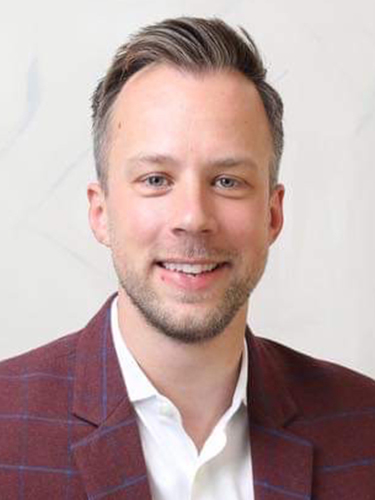
Today, he says, “I work at Corient, which is a multi-family office, so day-to-day I’m working with ultra-high-net-worth families, talking about financial management.”
As a Canadian working within a U.S.-based organization, Jesson is especially aware of the many differences in the ways financial matters are handled in the two countries. “The U.S. is ahead when it comes to bill-pay software; there’s a host of software that can manage that bill-pay process,” he says. “Maybe that will change over time,” he adds, noting that “there’s currently $1.8 billion of unclaimed funds in Canada in dormant accounts and estate accounts. People have forgotten about real money.”
He lists the many facets of the Domain, including “financial planning and projections, capital sufficiency, cash-flow management, as well as oversight—management of the balance sheet and net worth. There’s also financial administration: actually paying bills, reporting and of course integrating all this financial management with everything else.”
It relates to many other Domains. For instance, “when we think about how much we need, we ask how much we can give away, how much can we give to our children,” Jesson says. “We have to think about our cash flow needs before we can think about investment.”
Each Domain has a small volunteer group of associated faculty members; Jesson is currently setting up the new group and starting to plan the focus of future research projects, publications and events.
“The faculty is being built for the Domain,” Jesson says, explaining that “there is leadership that comes out of each Domain, everything from articles to webinars to practical tools and case studies.” Some of the work is done entirely within one Domain, he adds, while other projects may involve several working together.
Among potential research, he says, is a collaboration with Michael Kothakota, CEO of WolfBridge Wealth, who is also a UHNW Institute faculty member and former head of research at the CFP (Certified Financial Planner) Board.
Also under consideration is the development of practical resources such as financial administration and payment tools for families and solutions to address threats like phishing scams and wire fraud.
“And then, when you’re projecting your planning over longer periods, how does that align with our multigeneration and philanthropic goals? I think there’s an exciting angle to tie that to research,” Jesson says. “A lot of next-gens care about impact and how the family is invested—so that also ties into the financial management side of things.”
He mentions a recent conversation with Stacy Allred, Chair of the Learning and Development Domain: “We were thinking about next generation, and I gave her an interesting example of a family that was thinking about making a significant donation to an institution here in Canada, and their three children, who know this organization quite well, spent the summer working together and came to the family with a recommendation about whether to make the donation or not.”
Jesson intends to present some initial concepts at the annual UHNW Institute symposium in New York, which takes place this year on Nov. 16 and 17. “It’s a really interesting world, and I’m excited to shape the Domain,” he says.
The recent reconfiguration of the Domain structure will better enable the Institute to fulfill its mandate; the system may change again in the future. Ultimately, “each of these Domains is interconnected” says McCullough. “What we’re trying to do at the Institute is to train and develop advisors to help families think of these things in a more integrated way and then prepare them to deal with that. It’s really helping meet families where they are—even if families don’t realize where they are.”
Sarah B. Hood is a Toronto-based writer and book author. She has served as editor of three national magazines and written weekly columns for the National Post. She also serves on the editorial board of Spacing magazine. She writes frequently on business, urban affairs and culture. As a food writer, her work has been translated into Japanese and Arabic. She has taught writing at George Brown College for more than 20 years.
The Canadian Family Offices newsletter comes out on Sundays and Wednesdays. If you are interested in stories about Canadian enterprising families, family offices and the professionals who work with them, but like your content aggregated, you can sign up for our free newsletter here.
Please visit here to see information about our standards of journalistic excellence.