


With advances in healthcare and increasing longevity, some advisors now talk about Prince Charles Syndrome: the situation that arises when a family leader waits to pass on their legacy until the successor is already in their senior years. It’s just one of the challenges that the Family Learning & Development Domain (known until recently as Learning, Development and the Rising Generation) was created to address.
The Domain “recognizes the importance of lifelong learning for every family member, at every life stage,” says Domain Chair Stacy Allred, who is a managing director and the head of family engagement and governance at J.P. Morgan Wealth Management. Based in Bellevue, Wash. Previously, Allred’s background in taxation and financial planning led her to spend 20 years with Merrill Private Wealth Management, where she founded the Merrill Center for Family Wealth.
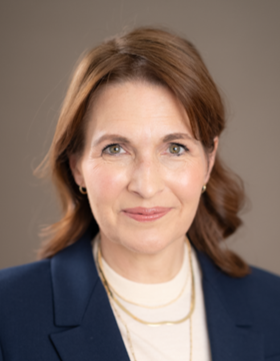
“This Domain encompasses learning activities that build skills as individuals, a family enterprise and family system,” Allred says. “This includes building on-ramps to bolster capabilities for current roles and readiness for future roles. We start with the mindset of being a lifelong learner, as mindset impacts behaviour, and behaviour impacts outcomes.”
“In today’s attention economy, we are also exploring creative ways to increase learning, including ‘edutainment,’ microlearning and the use of play,” she adds. “One example of this is using Lego Serious Play in family meetings. We are also seeing a greater openness in families who had a suboptimal experience with coming into an inheritance.”
A collaborative approach to learning
Executive coach and family enterprise advisor Paul Edelman, based in the Boston area, serves as a faculty member affiliated with the Domain. His background is in developmental psychology, and he has extensive experience working with the particular complexities of ultra-high-net-worth families.
Like many Domain chairs and faculty members, he was invited to join the UHNW Institute and subsequently interviewed with various Domain chairs to determine which area would be the best fit for him. Edelman explains that “the chairs help to convene the faculty, identify priorities, move projects forward and connect the work of their Domain with the other Domains. The faculty members bring different areas of expertise and contribute to the substance of the Domain’s work through articles, clinics and developing resources. It’s a collaborative model, and the chair is not expected to be the sole expert.”
For instance, Edelman is currently collaborating with Allred and Social Impact & Philanthropy Domain Chair Betsy Erickson on research into the ways to help families move past polarization and incorporate a wider range of perspectives when they are making philanthropic decisions. The results of their work will be released in various forms, including articles posted to the UHNW Institute resource library.
“We look at families, how they develop their members across the lifespan and how it prepares them to become a beneficiary, a board member, the client of a family office, a business leader, a participant in family governance,” he says.
Education beyond the numbers
Financial education is only part of the work. “The Domain also includes the development of personal judgment and the capacity to assume responsibility,” Edelman explains. “The central questions are: What will this person be asked to do, and what will it take to do it well? This could also include spouses who are entering the family, or senior members who are facing changes in their role or identity or sense of purpose.”
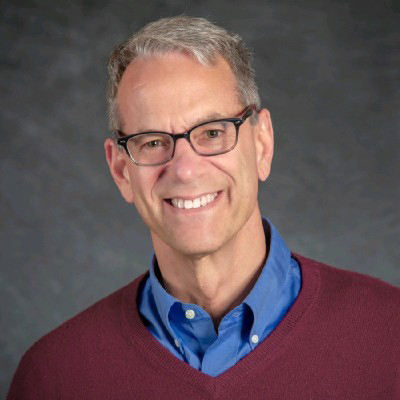
Preparing members of the rising generation to take on a leadership role is of pressing concern to many families. However, Edelman cautions, “the rising generation is not a monolith. You need a different approach when you’re talking to a 14-year-old, a 25-year-old—or a Prince Charles.”
He notes the importance of recognizing that “people tend to engage more when they can connect [learning] to their lives, when they have some voice and when they can apply what they’re learning to a real responsibility.”
He says an effective developmental pathway would combine traditional classroom-style learning with experience, reflection and progressively growing responsibility or authority: “We want to give them a chance to test out what they’re learning.”
Edelman recommends that advisors who have been tasked with supporting a family member’s educational and developmental needs should begin by considering the role that the person is being prepared for. In deciding whether that person is “ready” for the role, as training progresses, “readiness should be defined in terms of observable behaviour; otherwise, it becomes a stalling tactic,” he says.
Useful learning resources
In keeping with this notion of developmental pathways, Allred has been working with researchers Joan DiFuria, Stephen Goldbart and Emily Bouchard on a tool that charts various phases in the life cycle and matches them with relevant learning challenges, called the 10×10 Learning Roadmap. The Institute is working on its own version of that model.
Another helpful online resource has been developed by Caroline Bailey of Premier Growth with Governance & Decision-Making Domain Chair Dennis Jaffe. The Family Enterprise Assessment Tool (FEAT) is designed to help multigenerational families take stock of the current state of their family enterprise.
We are focused on how families can have courageous conversations and build conflict resiliency.
Stacy Allred
Meanwhile, an article by Edelman and Torri Hawley of Tamarind Learning is soon to be published in Trusts & Estates (December 2026). The article “looks at why families that genuinely want to prepare the rising generation can nevertheless remain stalled, and what helps move that developmental work forward,” Edelman says.
Teaching the teachers
Family members aren’t the only ones who need educational support; so, too, do advisors, and that is another focus for the Family Learning & Development Domain. For instance, faculty member Kristin Keffeler led a UHNW Institute Practice Management Clinic last spring titled “Growing from Analyst to Partner: Investing in the Human Capital Within Your Organization.” The content was published in a report available to the general public that “emphasizes inquiry—the ability to ask good questions, collaborative mentoring and experiential learning,” Edelman says.
He notes, however, a growing tendency to move away from isolated educational events such as seminars, or even certifications, toward “more intentional developmental pathways, because you can’t send an advisor to a workshop or a seminar and expect then to come back having changed much.”
Overall, “families are now taking greater care to better prepare the rising generation to build the knowledge, skills and confidence for a smoother transition,” says Allred. “We are focused on how families can have courageous conversations and build conflict resiliency within their system.”
“In the big picture, the goal is for the family to be able to develop the people with the skillset that they need, and that’s how they are going to sustain themselves across generations,” Edelman says. “You look at where the system is trying to go and what it will take to get there.”
Sarah B. Hood is a Toronto-based writer and book author. She has served as editor of three national magazines and written weekly columns for the National Post. She also serves on the editorial board of Spacing magazine. She writes frequently on business, urban affairs and culture. As a food writer, her work has been translated into Japanese and Arabic. She has taught writing at George Brown College for more than 20 years.
The Canadian Family Offices newsletter comes out on Sundays and Wednesdays. If you are interested in stories about Canadian enterprising families, family offices and the professionals who work with them, but like your content aggregated, you can sign up for our free newsletter here.
Please visit here to see information about our standards of journalistic excellence.