

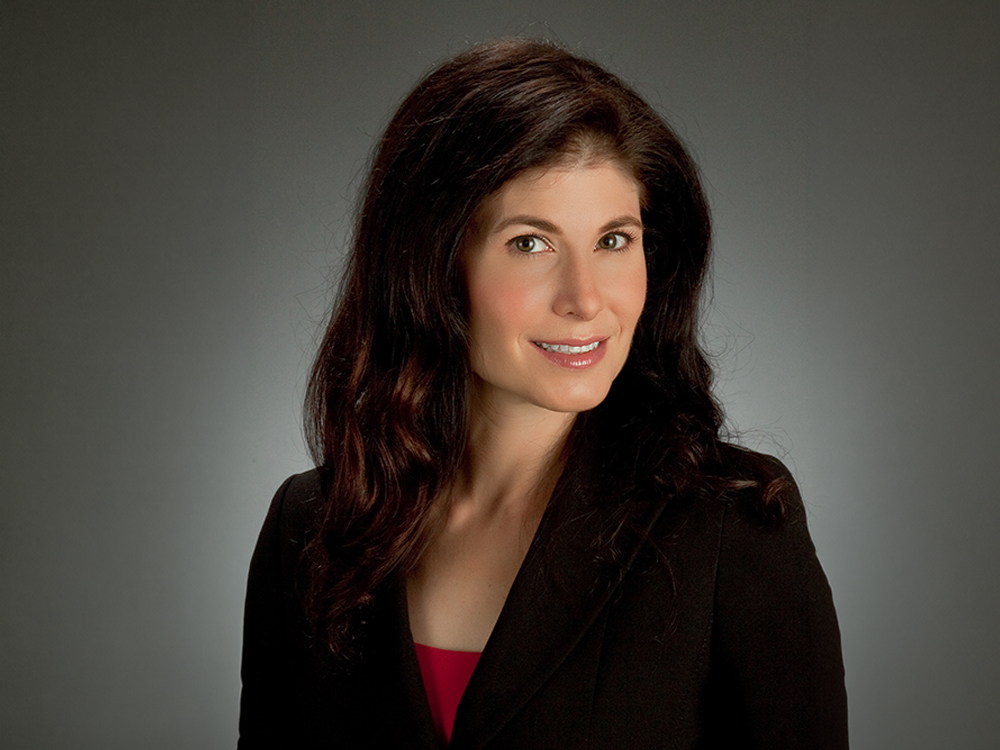
In this 10-part series, we explore the Ten Domains of Family Wealth, a comprehensive framework for understanding the issues facing wealthy families, as conceived by the Ultra High Net Worth (UHNW) Institute, headquartered in New York City. In this edition, we focus on the Estate Planning and Legal Issues Domain.
“I joke that we have the biggest Domain,” says Kim Kamin, a partner and chief wealth strategist with the independent wealth management firm Gresham Partners LLC in Chicago.
She has a point: As the UHNW Institute’s Domain Chair for Estate Planning and Legal Issues, Kamin presides over an area that has grown from focusing mainly on estate planning to encompass a prodigious list of legal issues that pertain to families of means and their family offices. The list ranges from prenups, divorces, adoptions and surrogacies to real estate leasing and purchase, labour relations, legal disputes and litigation of every description.
One Domain that applies to all
Even estate planning on its own might seem self-explanatory, but “it’s considerably more than just wills and trusts,” she points out. It also includes lifetime and testamentary transfers, the creation and structuring of businesses, co-investment entities, family foundations and other not-for-profit entities, and succession planning for all of the above.
“Our Domain recognizes that law permeates all aspects of our clients’ lives, and at the end of the day, the terms of the trusts and other legal documents will govern how a family and its wealth function,” Kamin says. (In the UHNW Institute Podcast episode about her Domain, she elaborates on this breadth and complexity, emphasizing the importance of collaboration among advisors.)
Such a wide-ranging Domain requires a remarkably versatile overseer, and Kamin ably fills the role. Although she comes from a family of lawyers (including three of her four grandparents), she earned a B.A. in psychology from Stanford before receiving her J.D. from the University of Chicago.
“I’m also very interested in interdisciplinary types of topics, so [the Domain Chair role] was incredibly appealing to me,” she says. Working with such breadth of scope, she finds it “compelling to be able to make a significant impact on clients’ lives, [supporting them in] all the things they care most about.”
Kamin engages in an astonishing range of activities, including teaching, speaking and writing as an adjunct professor at the Northwestern University Pritzker School of Law and a faculty member with the Certified Private Wealth Advisor (CPWA) program through the University of Chicago Booth School of Business Executive Education. She co-authored the Leimberg Library Tools & Techniques book Estate Planning for Modern Families and has contributed to such books as Wealth of Wisdom: Top Practices for Wealthy Families and Their Advisors (2022). She is also active on numerous advisory boards for philanthropic organizations.
Kamin points out that while “our tax and property laws do differ between Canada and the U.S., we are actually more similar than other countries.” Advice on topics like choosing a trustee, avoiding unnecessary court involvement in the settlement of estates and preparing a letter of wishes to assist and inform fiduciaries is generally similar on both sides of the border.
“Also, we have so many families who have members in both countries, I think there’s a lot of overlap,” Kamin says, adding that “the most significant departure is some of the transfer tax.”
Cross-border resources
As a result, the resources produced through the UHNW Institute can often be helpful for Canadian advisors. Kamin points to roundtables from 2023 that tackled the sensitive subjects of handling dementia and incapacity, and letters of wishes. In 2024, there was a roundtable on “Wealth 3.0 Lawyering” (in reference to the title of the acclaimed recent book by Jim Grubman, Dennis Jaffe and Kristin Keffeler that tracks the evolution of the family advisory sector from its early foundations to its present incarnation). A 2025 roundtable covered the complexities of trust-owned enterprises.
Most recently, the Domain has engaged in a variety of programs in collaboration with other organizations. For instance, in June, Kamin spoke about the Ten Domains from a women’s perspective to attendees at the 2nd Annual Women’s Leadership Summit in West Palm Beach, Fla., along with two other Domain Chairs, Stacy Allred and Betsy Erickson.
In July, the Institute collaborated with Gresham Partners and Gordon, Fournaris & Mammarella P.A. to present a three-part virtual series for the 46th Annual Planning for Large Estates Program hosted by Trusts & Estates Magazine. The program, established in 1981, is the longest-running advanced educational program devoted to estate planning for substantial wealth. In October this year, a roundtable panel featuring Kamin with Judi Galst of Henley & Partners and Amanda Andrews of Handler Law LLP will discuss global citizenship migration and golden passport programs.
After that, Kamin says, “our big focus over the next 12 months will be on prenuptial agreements.” A resource titled Prenuptial Agreements as Wealth Governance: A Framework for Family Office Leadership has already been published in the Institute’s resource library.
Most of these events and resources are available only to members of the UHNW Institute and its partner organizations, but Kamin and her colleagues contribute prolifically to professional publications that are more widely accessible. Among recent additions to writing in her field, Kamin especially recommends the 2026 book Family Flourishing, The True Meaning of Wealth (Reimagining Estate Planning, Trust Administration, and Family Culture, in Service of Generational Well-Being) by James E. Hughes, Mary K. Duke and Stacy Allred of J.P. Morgan, who serves as Domain Chair for Family Engagement and Governance. The book looks at estate planning and related functions through a human lens rather than as a technical discipline.
Some of the Domains are changing quickly as rising generations bring a new perspective to the area, but this is not necessarily true of Estate Planning and Legal Issues, Kamin says. Nonetheless, “their elders need to be thoughtful about designing plans that give the rising generations agency, flexibility and room to find their own purpose,” she adds, “rather than imposing structures that may have made sense for themselves or their own generation but become constraining later.”
Sarah B. Hood is a Toronto-based writer and book author. She has served as editor of three national magazines and written weekly columns for the National Post. She also serves on the editorial board of Spacing magazine. She writes frequently on business, urban affairs and culture. As a food writer, her work has been translated into Japanese and Arabic. She has taught writing at George Brown College for more than 20 years.
The Canadian Family Offices newsletter comes out on Sundays and Wednesdays. If you are interested in stories about Canadian enterprising families, family offices and the professionals who work with them, but like your content aggregated, you can sign up for our free newsletter here.
Please visit here to see information about our standards of journalistic excellence.