


Building a single-family office (SFO) from the ground up in Canada is a complex exercise. From establishing an overall purpose to determining which resources to keep in-house and those to outsource—it’s a challenging task. Thankfully, many experts across the country have been through the process or assisted others, and they have lessons to offer.

“The learning never ends,” says Neeraj Gupta, an angel investor in Calgary who in 2017 started his own SFO, Chapter.AI, which invests in early-stage companies.
What does he most regret about how he put his SFO together? “I wish I had spoken to more single-family offices,” says Gupta, who instead talked to people managing multi-family offices and moved right into hiring a law firm and accountants. “I should have spoken to at least 10 to 15 SFOs that were similar to mine. That was my single largest mistake.”
Because of that, “a lot of things got delayed and failures started happening, and then we started learning,” recalls Gupta, who says his experience as an entrepreneur and his patient capital helped turn things around. “The single largest advice I give to any person who wants to start an SFO is talk to other similar SFOs.”
I should have spoken to at least 10 to 15 SFOs that were similar to mine. That was my single largest mistake.
Neeraj Gupta
Is starting an SFO worth it?
Whether to open an SFO or not in the first place is another major question, Gupta notes. The amount of capital that families have to cover operational and administrative costs is often a determining factor, but he notes that “in the last three years the entire landscape has changed,” making Canadian SFOs with fewer resources viable because they’re less reliant on hiring a lot of talent. “Even if you have $20 million you can start your single-family office.”
Gupta says most people launch SFOs because they come from a background of operating a company “and they want to be directly involved with their investments” as venture capitalists. The focus is on impact and tax, he notes, and “you can control your narrative simply because it’s operator-led and entrepreneurial.”
Artificial intelligence (AI) can assist with this, he says, helping SFOs find good deals as well as manage and look after elements like regulatory compliance. “You can automate your chat agents based on your philosophy,” he says, making due diligence management easier. “Everything has changed because of AI.”
Gupta got the idea to build an SFO from his experience as an investor, where he found that it’s important to have a structure and philosophy, “otherwise you’re just a compulsive gambler.” When he started to focus on certain industries, it became “a long-term game” and led him to start his SFO. “I wanted to continue doing it for impact, for learning and for building a network.”
Start with purpose
Thane Stenner, founder of Stenner Wealth Partners+ at CG Wealth Management, a multi-family office that acts as an outsourced CIO group, says it’s critical to start with the family’s purpose before building the organization.
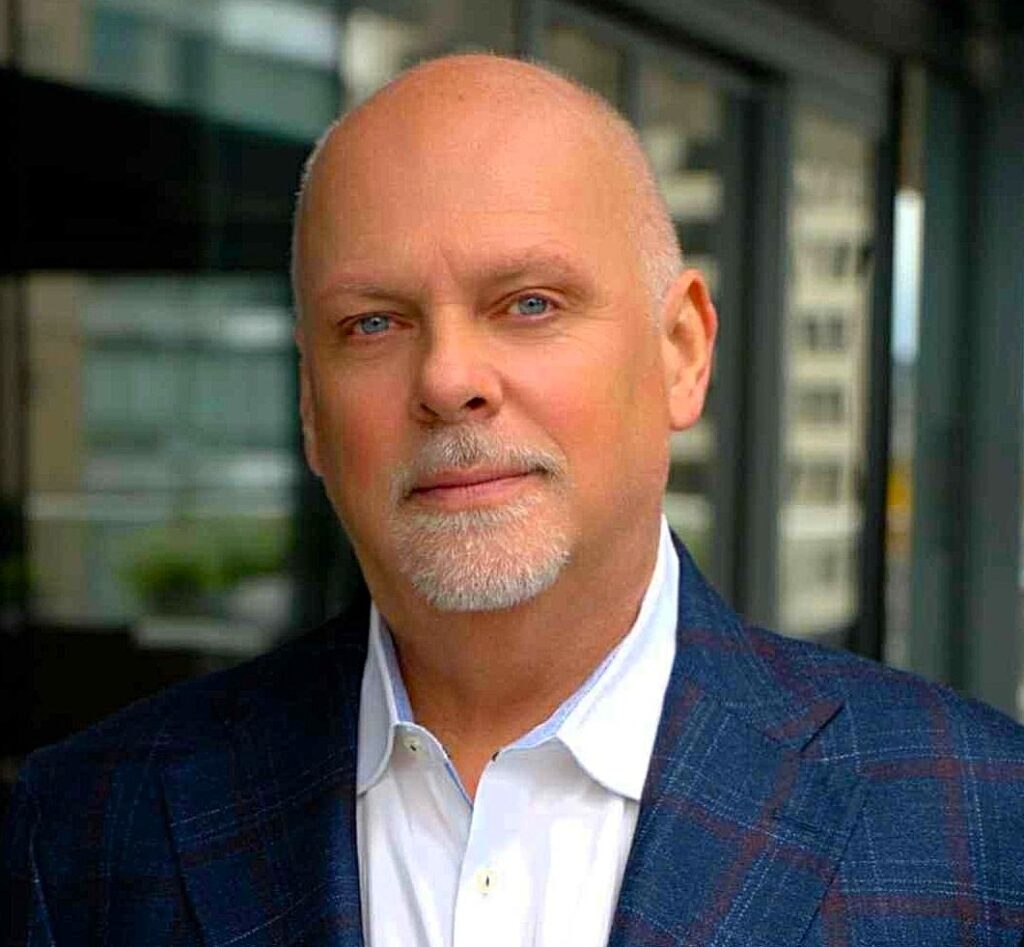
“Families often focus first on structures, people and investments when they should focus first on decision-making, succession, communication and shared purpose,” he says. “The greatest misconception is that a single-family office is primarily about managing money. The best family offices are designed to preserve family unity, educate future generations and steward wealth responsibly for decades.”
The most common discussion is what should be done in-house and outsourced, Stenner says, which means balancing control, expertise, efficiency and cost. “Families should retain control of strategy, governance and decision-making while leveraging external specialists where scale and expertise are required,” he points out. A hybrid model is often the most effective approach. “The question is what the family is truly capable of governing well.”
Risks surrounding SFOs
He says the biggest risks of building an SFO include becoming overly dependent on the founder for key decisions and relationships, hiring the wrong leadership team, underestimating cybersecurity, privacy and operational risk as well as creating unnecessary complexity too early. “We’ve seen scenarios where it’s like spaghetti thrown against the wall; the family is trying to do everything all at once.”
Strategies for addressing these challenges include establishing a clear family vision and governance framework, documenting decision-making processes and succession plans early, hiring deliberately and defining roles clearly, treating cybersecurity and privacy as strategic priorities from day one and scaling as complexity grows.
Gupta says it’s critical to start an SFO with a hypothesis. For example, he invests in companies where technology is an enabler and prefers companies that are global as well as local. Philanthropy is also an important thing to consider up front, he notes. “You want to have a structured execution of social goals.”
Legacy versus lifestyle
James Burron, founding partner of the Canadian Association of Alternative Strategies, a non-profit organization for alternative investments that has SFO members, says the SFO’s philosophy can be as basic as whether it is intended to be “a legacy,” meaning the principal is preserved for generations, or “a lifestyle,” where all the money is spent in the founder’s lifetime.
He says that if an SFO “doesn’t start well, things can go pear shaped,” especially when it comes to bringing family members on board. “You need to get everybody on the same page—or at least reading the page.”

It’s important to take your time in setting up an SFO, Burron stresses. “You don’t have to say, ‘Hey, we’ve got this great office space, we’re going to fill it,’” he explains. “There’s a lot of time; you can bring in a few people and see how they do.”
Finding staff who you already know is helpful, he says, “because they understand some of the family’s trauma and drama.” The biggest mistake that an SFO can make when it’s being set up is rigidity, Burron says. While it’s necessary to have a core philosophy that can be passed down, a communal atmosphere is helpful and it’s critical not to “try to control everything.”
What makes Canada different when it comes to starting an SFO? Gupta notes that the country’s entrepreneurial spirit sets it apart. “Canada has a value system, it has a business acumen and it has a culture,” he says. “That’s why Canadian families tend to want to become family offices.”
Canada is “more relational than transactional,” he says, so SFOs talk to each other “not because somebody else might have a better deal, we exchange our values, our notes.” More and more SFOs are becoming part of incubators, tech investment summits and other groups, he notes, “so that becomes easy.”
Gupta says founders in Canada “want your advice, your mentoring, your network. There is a very good synergy between mentors and investors and entrepreneurs.”
Stenner notes that while “the SFO industry in Canada has grown a decent amount in the last five years,” we have a relatively smaller SFO ecosystem compared with the United States, with a smaller pool of specialized family-office talent and service providers.
“Canadian families often benefit from a leaner, hybrid model that combines internal leadership with external expertise,” he says. “In Canada, the best SFO model is often not the biggest one—it’s the most intentional one.”
Gupta shares his early SFO experiences with would-be SFOs “because at the end of the day, it’s a community,” and he feels that the more Canadian SFOs that are created, the more startups will be attracted to the country. “Canada suddenly has become a very interesting place for startups and everybody wants to set up their base here, so I want more and more money to be here.”
Mary Gooderham is a writer, editor and communication advisor based in Ottawa. She leads Cohen Gooderham Communications and has worked as a journalist for more than 40 years at The Globe and Mail, as a recording officer at the International Monetary Fund and as a custom content creator for online and print media. She’s been a contributing writer at Canadian Family Offices for four years, focusing on investment strategy, trusts, philanthropy, women in finance and estate planning.
The Canadian Family Offices newsletter comes out on Sundays and Wednesdays. If you are interested in stories about Canadian enterprising families, family offices and the professionals who work with them, but like your content aggregated, you can sign up for our free newsletter here.
Please visit here to see information about our standards of journalistic excellence.