


Wealthy families looking to manage their investment, financial and estate planning matters have a choice of whether to be covered by their single-family office (SFO) or join a multi-family office (MFO).
But what about a hybrid?
Members of ultra-high-net-worth families already being served by a single-family office often transition some of their personal dealings to MFOs, experts say. They are looking for discretion and a range of expertise they need—or prefer—to source elsewhere.
“As family enterprises grow and ownership becomes more distributed across siblings, cousins, family branches and generations, individuals inside the same family ecosystem want different levels of service, privacy or independence,” says Yannick Archambault, president of private wealth at Nicola Wealth, a Vancouver-based wealth management firm with offices across Canada.
This trend is showing up in a number of ways, he says. For instance, family members typically look to an MFO for personal planning and administration, while the SFO stays focused on the family balance sheet and enterprise.
The best outcomes will come from families who treat hybrid relationships as an operating model choice, not a secret workaround.
Yannick Archambault, Nicola Wealth
“We also see next-gen family members ask for help with governance, education and investment oversight in a way that feels more theirs than the SFO’s,” he says.
Opting for a hybrid approach can also simply be a capacity issue, with an SFO “not built to deliver every specialty at institutional depth,” Archambault explains. “This aligns with broader trends we see in the market: family offices are expanding and professionalizing, but they still outsource important capabilities, especially where specialized expertise or independent perspective matters.”
‘Early days’ for Canadian SFOs
Tina Di Vito, head of Family Office Services for First Affiliated Holdings Inc., a multi-family office based in Mississauga, Ont., notes that it’s relatively early days for Canadian SFOs, which are all different but have been typically established “to manage the investable assets of families,” often after a liquidity event. In the United States and Europe, they’ve evolved to serve multiple generations and delve into more areas, like financial and legacy planning and cash management. But in Canada, she’s seen next-gen family members look outside for these needs, especially when they’re concerned about discretion in their family and financial decisions.
“Maybe they’re into collectibles and artwork, going on elaborate vacations, buying cars, or they have expensive hobbies like a winery or a horse farm, and they don’t want to have their family members critique how they’re spending their money,” she says.
Independence is another factor, she notes. “People say, ‘I want to make my own investment decisions with my own money; I don’t need to follow what everybody else in the family is doing, although I’m happy to do that with our shared wealth.’”
Clients might also be facing complex matters such as multiple holding companies, trusts and global real estate that they want to separate from their business wealth by engaging companies like hers in order to provide management and oversight, Di Vito adds. “We’re a multi-family office that takes care of the financial and the family complexity.”
Steve Ivacko, a partner in Family Office Services with MNP in Vancouver, says family members often look to engage outsiders to get an independent opinion.
“In SFOs, when everyone is paid by the family, ‘yes’ can become a common answer, even if it might not be the best answer,” Ivacko says. “So, getting a second set of eyes on something is both attractive and beneficial.”
Archambault says younger family members often want modern reporting, digital experience and tailored support for their own life goals and identity. He notes that the SFO “is often oriented around the collective, while the MFO relationship can often be more about the individual.” Examples include personal cash-flow planning and lifestyle structuring, prenup and marriage-contract considerations, separation planning or estate updates, personal real estate decisions and philanthropy goals that differ from the family’s official direction.
Such arrangements can be made in secret but are more often disclosed, while some family members look for “quiet autonomy” to avoid friction, Archambault says. “Sometimes the person is doing something perfectly reasonable, but they know it will become a family debate, so they keep it contained.”
Coping with risks in the hybrid approach
Is there a risk to splitting your assets and finances between stewards who perhaps don’t have a full picture of your structure and needs? And could the hybrid approach weaken the SFO or cause a rift in the family to have such arrangements on the side?
Archambault says risks can include gaps where nobody is accountable for the whole picture, as well as operational drift, duplicated work and blind spots, meaning that correlated risks across entities get missed. Strategies that can help range from appointing a clear quarterback “who owns the consolidated view” to establishing a shared reporting package and putting the governance in writing, noting “who does what, who approves what and what must be disclosed for risk management,” he says.
Getting a second set of eyes on something is both attractive and beneficial.
Steve Ivacko, MNP
Ivacko cautions that “no one is well served if anything is done in silos.” He says that one advisor should be aware of the big picture to mitigate risks, keep diversification measured and ensure that everyone’s interests are aligned.
“The best strategy is open communication, with the original SFO sharing information with the new team and having someone with the skills to grasp the full puzzle and all the varying pieces,” he says.
With longtime staff in many Canadian SFOs aging out, it can help to shift some responsibilities over to outside hands, Archambault says. “When long-tenured staff approach retirement, families face two risks: loss of institutional memory and an abrupt drop in operational capacity.” An MFO can provide continuity while succession is planned, documenting processes and improving controls, as well as filling gaps while the family recruits, trains or redesigns the operating model.
On issues such as governance, “having people who are fully trained in having those conversations is important,” Di Vito says. “If you’re trying to rustle three or four different family branches, a single-family office probably does not have that expertise.”
When to go hybrid
When SFOs start managing the tranches of wealth of each individual branch of the family, “that’s often the time where those branches want to separate their personal affairs,” Di Vito says.
She had a client family in the past that found that by the third generation, the children were not as involved in the family enterprise and instead pursuing their own careers. “They were at a point where they were ready to start working with their own advisors on their personal financial, investment and estate planning.”
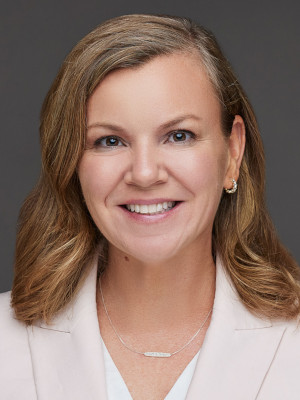


Ivacko expects the Canadian family office industry will have “lots of room for growth, diversification and independent advice being provided alongside those taking care of the family on a full-time basis” as it evolves.
“There will always be a need for fresh ideas, new opinions and independent advice beyond what any one person or team can provide,” he notes.
Archambault expects hybrid models to become the norm, driven by generational transition, rising operational risk and specialization pressure. “The best outcomes will come from families who treat hybrid relationships as an operating model choice, not a secret workaround,” he adds. “Clear roles, shared reporting disciplines and governance that respects both family cohesion and individual autonomy are critical.”
Mary Gooderham is a writer, editor and communication advisor based in Ottawa. She leads Cohen Gooderham Communications and has worked as a journalist for more than 40 years at The Globe and Mail, as a recording officer at the International Monetary Fund and as a custom content creator for online and print media. She’s been a contributing writer at Canadian Family Offices for four years, focusing on investment strategy, trusts, philanthropy, women in finance and estate planning.
The Canadian Family Offices newsletter comes out on Sundays and Wednesdays. If you are interested in stories about Canadian enterprising families, family offices and the professionals who work with them, sign up for our free newsletter here.
Please visit here to see information about our standards of journalistic excellence.