

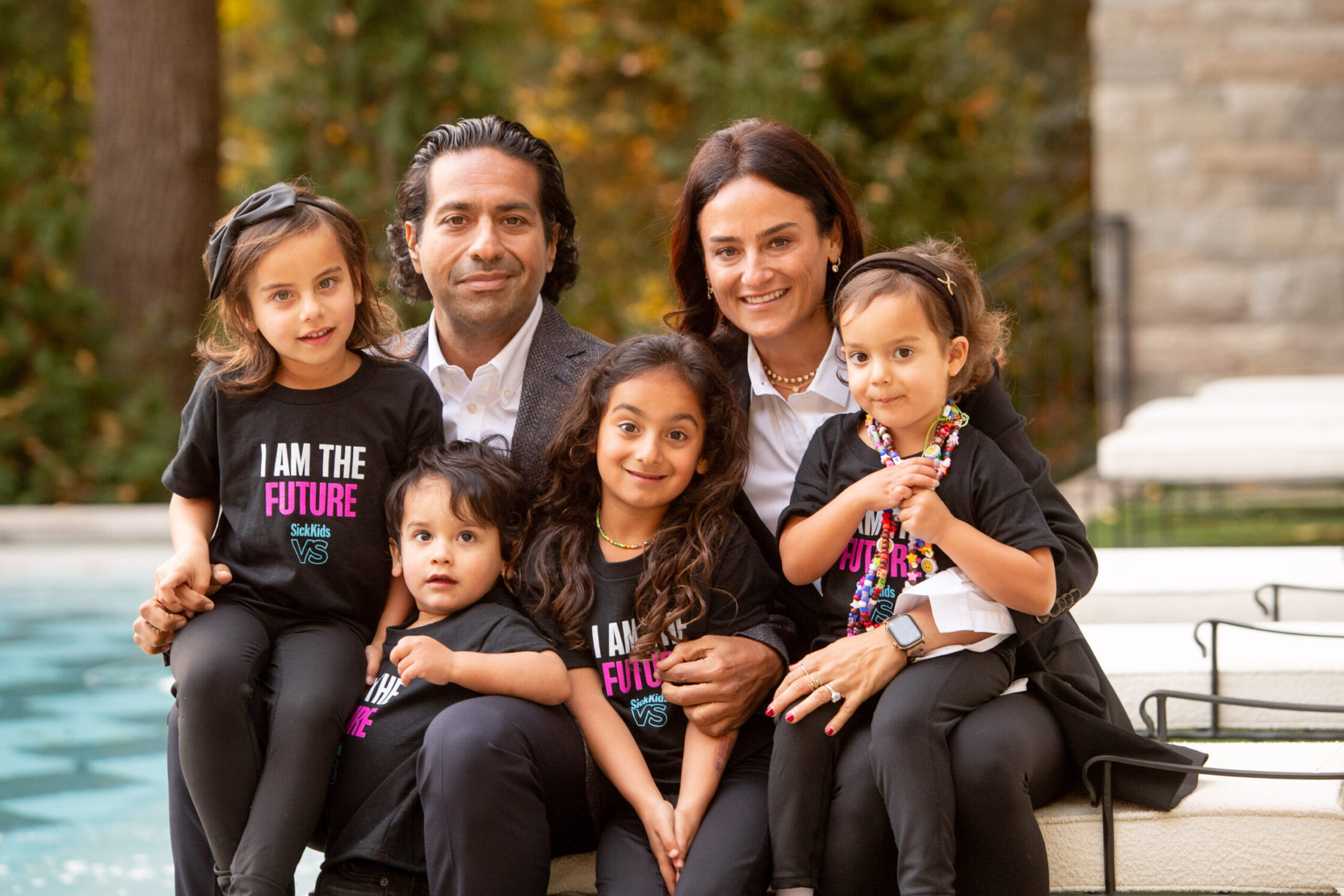
Moez and Marissa Kassam are dedicated philanthropists and entrepreneurs who have focused on the well-being of children throughout their respective careers, as well as in collaboration with each other. They are known to donate life-changing gifts, including to The Hospital for Sick Children in Toronto, which last year celebrated its 150th anniversary.
Mr. Kassam is a Canadian alternative asset manager and the founder and principal of Anson Funds. He established the company Anson Group in 2007 and was named among Canada’s 40 under 40 in 2018. His philanthropic approach—treating social impact with the same rigour as growth capital—was recently recognized with an honorary Doctor of Laws from Toronto Metropolitan University (TMU) and the Global Citizen Award from the United Nations Association in Canada. He also serves on the board of directors for the Canadian Olympic Foundation. Throughout his early childhood in Toronto, Mr. Kassam became fascinated by the world of finance after his class placed in the top three schools in Ontario at the TD Stock Portfolio Challenge. He graduated from the University of Western Ontario in 2002 with a Bachelor of Arts and later earned an MBA in finance from the London Business School.
In 2016, Mr. Kassam married Marissa Siegal, who was already a successful businesswoman and fundraiser. She has worked as the vice-president of philanthropy at RBC Capital Markets and held positions at JPMorgan in London, Hong Kong and New York City. The couple have four children, and together they have established the Moez and Marissa Kassam Equity Fund to support initiatives that aim to level the socioeconomic playing field and improve health outcomes.
Throughout it all, our partnership has been constant. We approach challenges as a team.
Marissa Kassam
Their support of healthcare has recently included a $3.5-million investment in Michael Garron Hospital, $5 million to Toronto Metropolitan University’s new medical school, and a $15-million donation to SickKids to establish two pediatric research positions and further critical care. In 2023 and 2024, Mr. Kassam was recognized by Toronto Life magazine as one of Toronto’s most influential people due to his philanthropic efforts.
Although their respective journeys towards success have been different, the couple share a vision as dedicated fundraisers and parents, rooted in their deep love for Toronto and their children.
What are your memories of growing up in Toronto?
Moez: Toronto in the ‘80s and ‘90s was a fantastic place to grow up—vibrant, diverse, and full of energy. My family has deep roots in East Toronto, and community was everything. My parents instilled a strong work ethic, but also the importance of looking out for others. They were incredibly supportive, encouraging curiosity. Whether it was sports or my early fascination with markets, they fostered a belief that with hard work and focus, anything was possible. That sense of community support and possibility is something that has stayed with me.
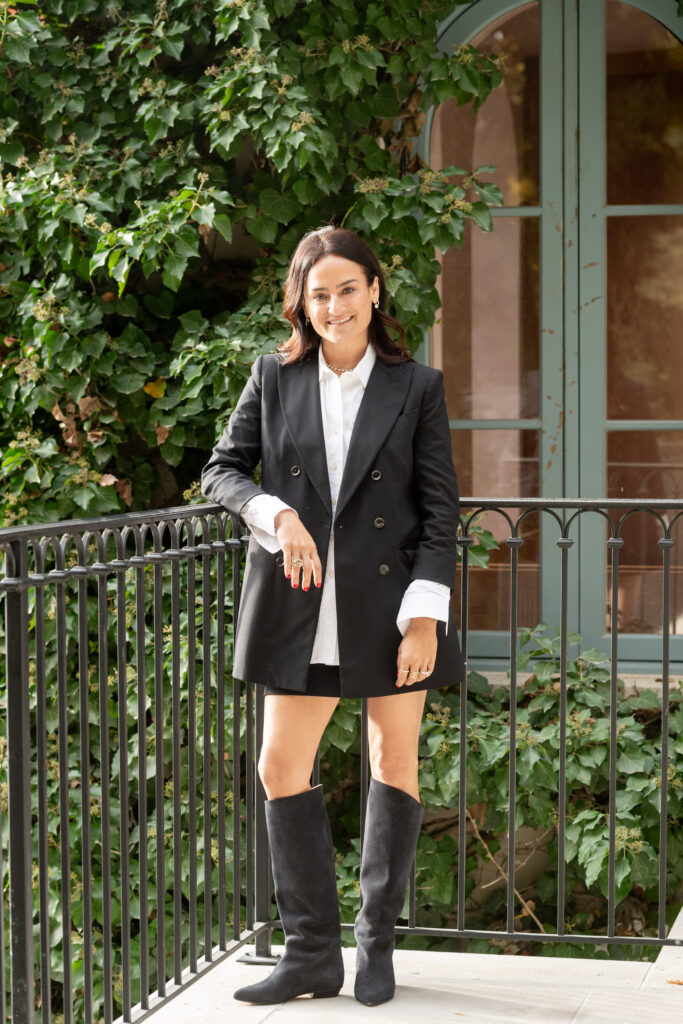
Wealth comes with responsibility, and for us that means actively participating in building stronger, more equitable communities.
Marissa Kassam
Marissa: I also grew up in Toronto, surrounded by siblings and cousins in a very close, family-oriented environment. Some of my fondest memories are from my grandparents’ farm in King City [north of Toronto], exploring the wilderness and appreciating that balance between city life and Canadian nature. My family was incredibly supportive of my passion for sports from a young age—driving me around for everything from rhythmic gymnastics and field hockey to waterskiing and tennis. That constant encouragement to pursue what I loved was invaluable.
When did you first become interested in business and investment, and how did your family guide you through education choices?
Moez: I was probably around 12 or 13 when I started getting really interested in business. I was fascinated by how markets worked, how companies grew. My family didn’t push me in any specific direction academically, but they emphasized the value of education as a tool for creating opportunities—not just for oneself, but for others. They supported my decision to study business, seeing it as a practical way to build something tangible.
Marissa: My interest was less in markets and more in the logic of numbers—I won the math award in Grade 7. I always liked that math had a clear answer. Like Moez’s family, mine encouraged me to advance my studies, valuing education deeply. That support led me to pursue business at the Ross School of Business, University of Michigan, seeing it as a strong foundation. For both of us, the guidance was less about specific career paths and more about the underlying values: discipline, pursuing excellence, and using education to open doors.
When did investing become a serious focus for your career?
Moez: It became a serious focus right after university. I was drawn to the intellectual challenge of asset management—the need to analyze complex situations, identify opportunities others might miss, and make strategic decisions under pressure. I’ve been fortunate to have several mentors, but the most impactful were those who taught me not just about generating returns, but about building trust and lasting relationships. They emphasized integrity and the long game, which are principles I apply equally to managing investments and to our family’s philanthropy.
Marissa: My path was a bit different. Straight out of university, I joined a leadership development program at JPMorgan. That experience was foundational, offering incredible exposure and bringing me to London, Hong Kong and New York. My mentors during that formative period were really my colleagues within the program and at the firm—a network of driven, intelligent people who not only pushed each other to excel, but also were a source of inspiration and camaraderie, not to mention exposure to new cultures and ways of perceiving the world.
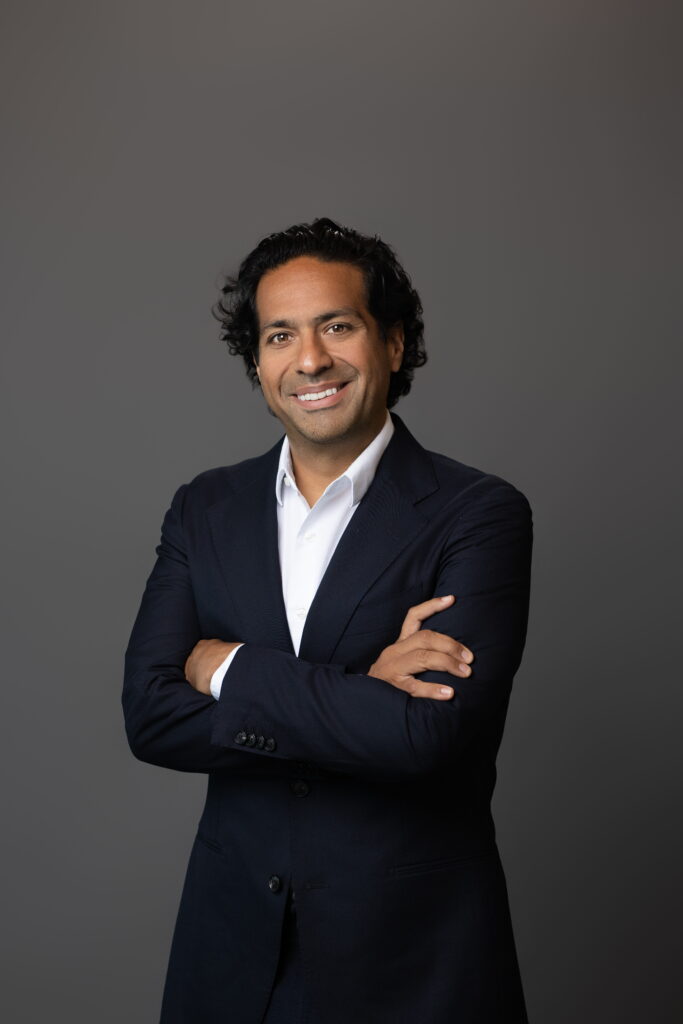
We want [our children] to see philanthropy not as writing cheques, but as an active way of engaging with the world and living our family values.
Moez Kassam
What led you to the founding of Anson Funds?
Moez: Anson Funds was born out of a desire to build something different: an investment firm that was nimble, opportunistic and deeply analytical. Starting any business has its ups-and-downs, especially in volatile markets. There have certainly been challenging periods, navigating market downturns or complex investment landscapes.
Marissa: Throughout it all, our partnership has been constant. We approach challenges as a team. Whether it’s us navigating the intensity of our SickKids experience or Moez facing a tough market cycle, we lean on each other. That shared resilience and commitment to our family values grounds us and allows us to tackle challenges, both professional and personal, head-on. Moez’s focus and drive are incredible, and my role is often to ensure we maintain balance and perspective, keeping our family and our shared values at the centre of everything we do.
What led you to create the Moez & Marissa Kassam Equity Fund?
Moez: It really grew out of conversations around our own dinner table. We come from a multi-faith family—Indian-Muslim and Egyptian-Jewish roots—with relatives all over the world. That lived experience teaches you the importance of building bridges and finding common ground.
Marissa: We realized that the values we were trying to instill in our children—empathy, fairness, the idea that everyone deserves a chance to reach their potential—were the same principles we wanted to apply more formally through our philanthropy. The Equity Fund became the vehicle to put those family values into action in the community. It’s about investing in the connections that help everyone thrive. Wealth comes with responsibility, and for us that means actively participating in building stronger, more equitable communities.
Moez: We deliberately chose the word ‘Equity’ because charity is often just a Band-Aid. Equity is about removing the barrier so the person doesn’t need the Band-Aid in the first place. Applying this investment mindset, we look for organizations—like TMU’s new School of Medicine or Michael Garron Hospital in East Toronto, where my family has roots—that are deeply embedded in their communities and are tackling systemic challenges head-on.
Marissa: Our ‘due diligence’ for our charitable investments involves truly understanding the need and the potential for impact. We meet with the leadership, often visit the sites, and listen to the stories of the people they serve. It’s about building relationships and trust. We want to ensure our support empowers organizations to amplify their existing strengths and innovate, like providing state-of-the-art equipment or funding scholarships that open doors for under-represented students.
Can you share why giving to SickKids has been of such importance to the heart and soul of your family?
Marissa: Without a doubt, it was our experience at SickKids. When our daughter Mikayla became critically ill, we spent four weeks in the Paediatric Intensive Care Unit. Seeing the incredible skill, but also the profound compassion, of the doctors and nurses—how they cared for every child, regardless of background—was transformative.
Moez: That experience was intensely personal, but it also crystallized our public mission. We saw firsthand how vital world-class, accessible healthcare is. It’s a place where equity isn’t just a concept; it’s practised every single day. That solidified our resolve to invest not just our gratitude, but strategic resources, back into the systems that support families and give children the best possible chance. Our gift to name the PICU wasn’t just a donation; it was a commitment born from that experience.
What projects are on the horizon?
Moez: 2026 is already proving to be a significant year. On the business side, Anson Funds continues to evolve and seek out new opportunities in dynamic markets. Philanthropically, February marked the 10th anniversary of the Moez & Marissa Kassam Equity Fund. We are rolling out special initiatives to celebrate that milestone and deepen our impact in our core areas—health, education, food security and sport. A major highlight for us this year was the continued success of our Great to Gold initiative. After seeing 40 per cent of Canada’s medals won by athletes supported by the program at the Paris Games, that number surged to 70 per cent at the Milan Winter Olympics.


Marissa: We’re particularly excited about seeing the continued progress at the Toronto Foundation for Student Success, ensuring young students have the basics they need to reach their potential, as well as TMU’s School of Medicine and the impact of the Excellence Through Equity Scholarships. And personally, as a family, we’re simply looking forward to continuing to teach our children the importance of community and connection. It is true what they say: they grow up so fast! And hopefully [we’ll] enjoy some precious time together amidst it all.
How do you teach younger generations in your family about philanthropy and the importance of giving back?
Marissa: It’s incredibly important to us that our children understand why we do this. We involve them in age-appropriate ways. Sometimes that means visiting an organization, like when we brought them to see the impact of donations at SickKids, or helping pack food hampers.
Moez: More often, it’s about the conversations we have as a family. We talk about fairness, about recognizing the advantages we have, and about the responsibility that comes with that. We want them to see philanthropy not as writing cheques, but as an active way of engaging with the world and living our family values. We hope to raise compassionate young people who see the world not just as it is, but as it could be—and who have the courage to help build it.
Natalya Anderson is a writer and former ballet dancer. She completed her master’s degree in creative writing at Anglia Ruskin University, Cambridge, England. Natalya has won several literary awards, including the Moth Poetry Prize for her poem ‘A Gun in the House’ and the Bridport Prize for her poem ‘Clear Recent History.’
Get our new quarterly newsletter about philanthropy: Canadian Family Offices’ newsletter brings you key insights, trends and expert perspectives on charitable giving, tailored to Canada’s wealth leaders and giving communities. Click here to subscribe.
Please visit here to see information about our standards of journalistic excellence.