
When Ronald Samuel Roadburg, who came from a successful business family in Vancouver, passed away in 2021, he left most of his estate to charity. Mr. Roadburg was a prominent businessman who took over a substantial real estate business started by his father, Al Roadburg. Despite health issues throughout his life, including a longtime drug addiction that he overcame a decade before his passing, he was a generous and caring member of the community, with a wide array of interests, from art and fashion to architecture and, notably, philanthropy. He gave generous support to the disadvantaged, to his friends, and to animal welfare. He died at the age of 65.
The Ronald S. Roadburg Foundation was established to continue his legacy of giving. In its fiscal year ending July 2025 alone, the foundation gave more than $30 million to charities and qualified donees, including to St. Paul’s Hospital Foundation of Vancouver, the Sierra Club, Tikva Housing, the Jerusalem Foundation and the Jewish Federation of Greater Vancouver. Today, it continues to engage in philanthropic initiatives in the Jewish and broader communities in B.C., Canada, Israel and globally. The foundation is very supportive of addiction recovery and environmental causes.
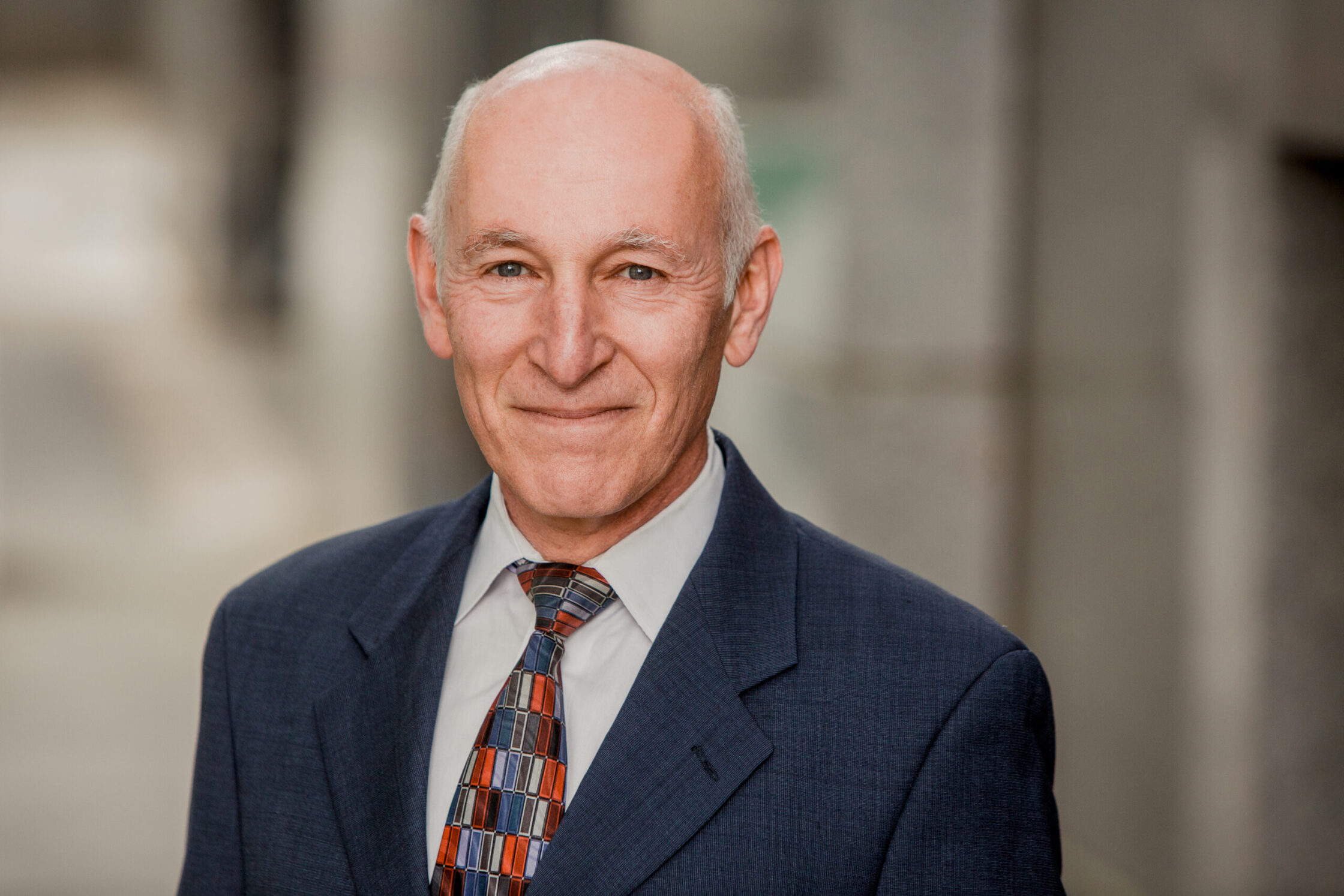
Here, former lawyer and board chair Bernard Pinsky discusses how the foundation is transforming substantial assets into charitable impact, and how it is fulfilling Mr. Roadburg’s commitment to giving with a philanthropic vision built for the long term.
How did the Ronald S. Roadburg Foundation come to be established?
Mr. Roadburg left the bulk of his estate to charity, with the executors having total discretion as to what charities to choose. The vast majority of Mr. Roadburg’s estate consisted of real estate, so that before any funds could be donated, some buildings had to be sold. The executors created the Ronald S. Roadburg Foundation, a charitable entity, to receive the buildings and sell them over time. The foundation now receives all the income from the rental of the buildings and it also receives all proceeds from building sales. Those revenues and proceeds are used to donate to operating charities and to carry out the foundation’s charitable purposes.
People feel that they have been given a blessing when something positive has been done to improve their lives or their community.
Bernard Pinsky
Why was the foundation so important in expressing the wishes of Mr. Roadburg?
The value of the real estate left by Mr. Roadburg was considerable, and the executors knew that liquidating all the real estate would take time. In addition, we realized that any goals that the foundation set for itself to make the world a better place would likely take many years to achieve. Having a foundation as the vehicle for carrying out the good works intended by Mr. Roadburg gives the executors and foundation directors time to imagine, design, negotiate with providers, implement, measure and correct course with respect to the charitable goals the foundation sets. In many cases, it will take years or even decades to achieve our transformational charitable goals.
What are the core values and most important initiatives of the foundation?
The foundation is very active in three broad areas: addictions, with a focus on drug addiction rehabilitation; climate change, with a focus on reduction of greenhouse gas emissions; and support of minority communities who are disadvantaged or disproportionately affected by circumstance. But having our focus on one aspect of an area does not mean we exclude all other aspects. For example, in addictions, we focus on rehabilitation and treatment, but we also fund addiction prevention programs for youth at risk.
What are some of the most significant milestones for the foundation?
We publish on our website an annual report describing the impact of our funding and listing the organizations funded that year. Some of my proudest donations include Canopy Planet, which aims to prevent up to one billion trees a year from being cut down by convincing clothing companies, cardboard and other wood-fibre users to use other organic materials, such as hay and food waste. Our support allowed Canopy Planet to build their teams so that they could reach many more donors and fibre users, and they are growing all the time, saving countless trees with every success.
Additionally, I’d point to Vancouver’s St. Paul’s Hospital Road to Recovery project, the first hospital ward in North America dedicated exclusively to addiction care. When an addict who needs hospitalization is ready for rehabilitation, they aren’t sent home by the hospital or to the street to wait for a recovery bed, where most succumb to the temptation to use drugs again; they commence their rehab in the hospital until an outside rehab facility is ready to accept them. We also supported the establishment of the University of the Galilee in Kiryat Shmona, Israel, where Jews, Christians, Muslims, Druse and Bedouins teach and learn as equals, with good-paying jobs and learning relevant skills to improve the lives of all residents of the Galilee.
My promise to Mr. Roadburg was to make his name a blessing for many thousands of people. That is the message that everyone who is involved at the foundation hears regularly, and it is at the core of why we choose the projects we do. People feel that they have been given a blessing when something positive has been done to improve their lives or their community. That result is what we will continue to strive towards for decades to come.
Are there any upcoming projects or initiatives you wish to share?
The new Jewish Community Centre (JCC) of Vancouver, to be called the Roadburg Campus, will be a community hub for all the diverse peoples of the Oakridge, Marpole, Kerrisdale and wider communities. While it’s being built by the Jewish community, more than half of JCC members are not Jewish, and the new facilities—including a theatre, museum, swimming pool, two gymnasiums, art gallery and more in a beautiful setting—are expected to attract thousands to its diverse program and fitness facilities. We are very excited about its projected opening in about three years.
Natalya Anderson is a writer and former ballet dancer. She completed her master’s degree in creative writing at Anglia Ruskin University, Cambridge, England. Natalya has won several literary awards, including the Moth Poetry Prize for her poem ‘A Gun in the House’ and the Bridport Prize for her poem ‘Clear Recent History.’
Please visit here to see information about our standards of journalistic excellence.