

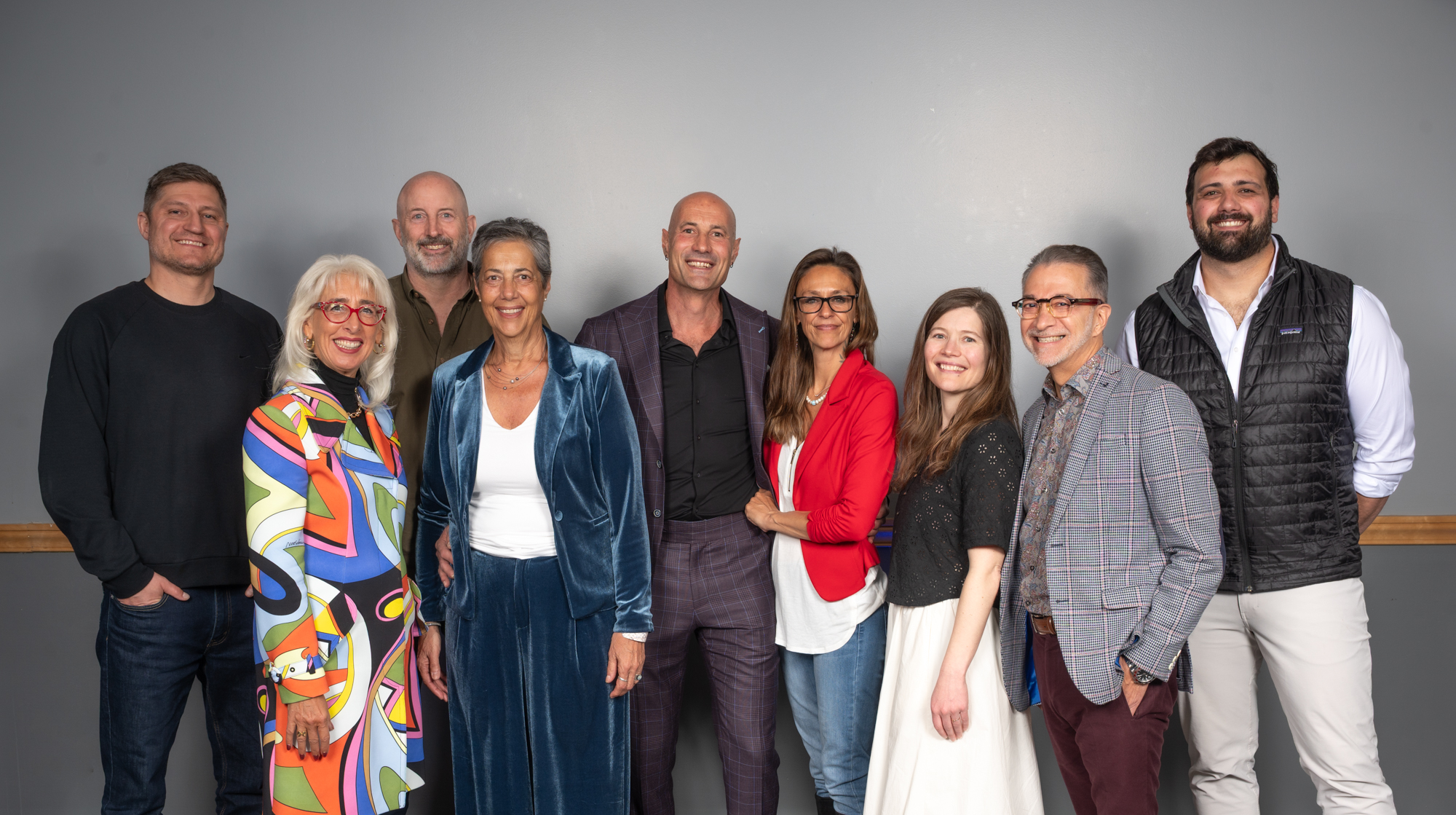
An Italian surname, Bonapace means a “good peace.” And as one of the leaders of the Bonapace Foundation, which aims to fund research into environmental monitoring, Lina Bonapace is working to bring exactly that to Rouyn-Noranda.
Lina’s story is intertwined with the history of the prosperous capital of eastern Quebec’s Abitibi-Témiscamingue region. She and her siblings were born in Rouyn-Noranda. Their father immigrated there from the Italian Alps after the Second World War–joining relatives who had already settled–while their mother’s family arrived from Lebanon. Like thousands of immigrants from a wide range of other countries, they came seeking opportunity in a city that promised work and a chance to build a future amid the region’s mining boom.
“My dad was always in business, building and developing real estate and helping shape the economic prosperity of the region,” says Lina, who serves as a member of the Bonapace Foundation’s board of directors and as an executive committee member. “Whereas my mother devoted her career to community health as director of the School of Nursing, then in launching the first university health clinic in Quebec, and as an active member of the regional heart foundation.”
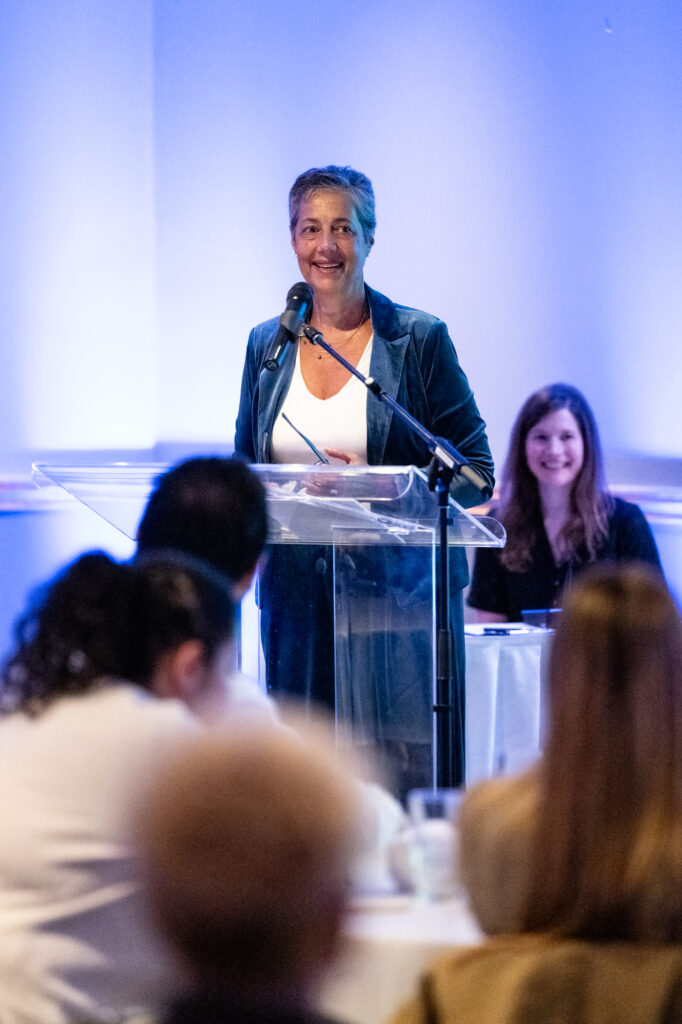
If we can figure out what works—and also what doesn’t—we can share that experience with other communities.
Lina Bonapace
As respected leaders of Rouyn-Noranda’s economy and health sector, the Bonapace family wished to contribute to the city that had been their home for decades. Enter the foundation, a registered non-profit research and environmental charity founded in 2024 by Lina’s brother Dany Bonapace and his wife, Mélanie Tardif. Its stated mission: To strengthen the capacity of industrial communities to act toward a healthy, thriving, and sustainable environment.
“Our motivation is to continue building and developing the economy, but we also want ourselves and our community to be able to live well,” Lina explains. “My brother and I often talk about how lucky we were to have parents who gave us that example. Now we’re asking ourselves: ‘How do we give back?’”
Balancing industry and sustainability
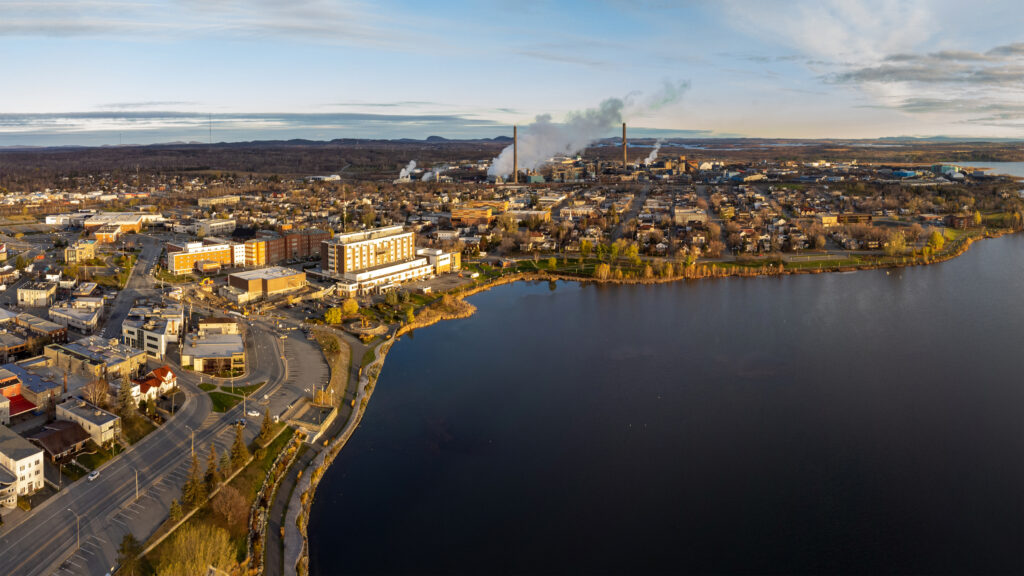
Home to the Glencore-owned Horne Smelter–Canada’s only copper smelter, and the largest processor of metals from electronic scrap in North America–the city has long been a focal point of controversy due to various claims relating to environmental contamination stemming from the smelter. A recently published peer-reviewed study, for instance, has found evidence linking the smelter to elevated levels of metal contamination, including arsenic, in residential areas. A recent Glencore-funded study, meanwhile, found that residents living near the facility are at no higher risk of arsenic exposure than other Canadians.
At the same time, the smelter makes an important contribution to the city’s economy. A 2020 consultant’s report commissioned by Glencore estimated that the smelter contributed $369 million in value-added activity, equivalent to 4.3 per cent of the Abitibi-Témiscamingue region’s gross domestic product. At the time, its 549 employees earned an average of nearly $107,000, about 70 per cent more than the average worker in Rouyn-Noranda.
It’s this duality that has led to a years-long campaign to encourage the smelter to reduce emissions and monitor air, soil and water quality, all while avoiding negative economic consequences. “We think it’s important that the industry is there, but we also think it’s very important that we live in a healthy environment, and we want to build that for ourselves and for our children,” says Maude Labrecque-Denis, executive director of the Bonapace Foundation.
Around the time environmental investigations into the smelter were being made, Dany Bonapace began to feel ill. While visiting Houston for business, he decided to have some tests done. Doctors discovered he had very elevated levels of heavy metals in his body. “That created a big alarm for us personally,” Lina says. “We realized: maybe he’s not the only one.”
Bringing stakeholders to the table
All of this reveals the need for more independent monitoring and clear answers for the city’s inhabitants, Lina says, adding that the foundation aims to foster closer ties between Glencore and health groups advocating for clarity. “The foundation is based on a local issue–it’s industrial, it’s economic, it’s health, it’s environment. It has to do with trying to understand how people can come together, find whatever common ground there is, and move forward.”
The foundation’s goals are to fund rigorous, accessible and independent air quality monitoring that can be interpreted and shared with the community. To this end, it is aiming to raise $6 million to fund collaboration with several scientific and environmental researchers to develop tools and statistics that can inform local decision-making and improve communication with the smelter. Lina says collaboration with research centres and universities, including the University of Montreal, the University of Quebec in Abitibi-Témiscamingue, the National Observatory on the Impacts of Contaminant Emissions on Health and the Environment, the National Institute of Scientific Research, and the Industrial Residue Technology Centre, have been especially productive.
Next year, the foundation aims to acquire a mipToF, a trace-element mass spectrometer that can detect metals and metalloids in the air. The high-resolution data it yields will allow researchers to better pinpoint when and where emissions are occurring. In 2028, it hopes to acquire XRF stations, which use X-rays to determine the chemical and elemental composition of various materials. In 2026, Lina says, the foundation is assessing its progress and determining next steps.
Families as active agents of the change
The Bonapace Foundation also illustrates the broader role that private capital and families can play in shaping the future of their communities. Families with deep local ties often bring more than financial resources: they can draw on their influence, relationships and long-term perspective to advance social values and a sense of responsibility that may span generations. By supporting research, convening stakeholders and advocating for evidence-based solutions, they can help inform public debate and, over time, influence policy. In this way, philanthropy can become more than an expression of legacy—it can make families active agents of the change they want to see in the places they call home.
Ultimately, Lina hopes the foundation’s impact will extend beyond Rouyn-Noranda. If the community can find a way to balance economic prosperity with environmental responsibility, she believes it could become a model for other industrial regions with similar challenges. “If we can figure out what works—and also what doesn’t—we can share that experience with other communities,” she says.
Should the foundation succeed in its mandate, Lina hopes future generations will inherit not only a prosperous mining community, but one that has learned how to protect both its economy and the health of its citizens. That, to her, would be the Bonapace family’s greatest legacy.
Anna Sharratt is a business and health reporter and editor with more than 20 years of experience. Based in Toronto, she has written for Canadian Family Offices since 2021. A regular contributor to the Globe and Mail, she has written for Inc.com, Forbes, Business Insider, Canadian Business, MoneySense, the National Post, The Toronto Star and other publications. She is the former managing editor of smallbiz.ca, health editor of Chatelaine and senior health writer for the CBC.
Disclaimer: This story was created by Canadian Family Offices’ commercial content division on behalf of PBY Capital, a member and content provider of this publication.
PBY Capital Limited is registered as an exempt market dealer, portfolio manager and investment fund manager with Canadian provincial securities regulatory authorities, servicing family offices and their professionals. For more information, visit: www.pbycapital.com. The opinions and information provided in this article are solely those of the writer and are not to be construed as personal, legal, accounting, taxation, or investment advice, or as an endorsement of any entity.