

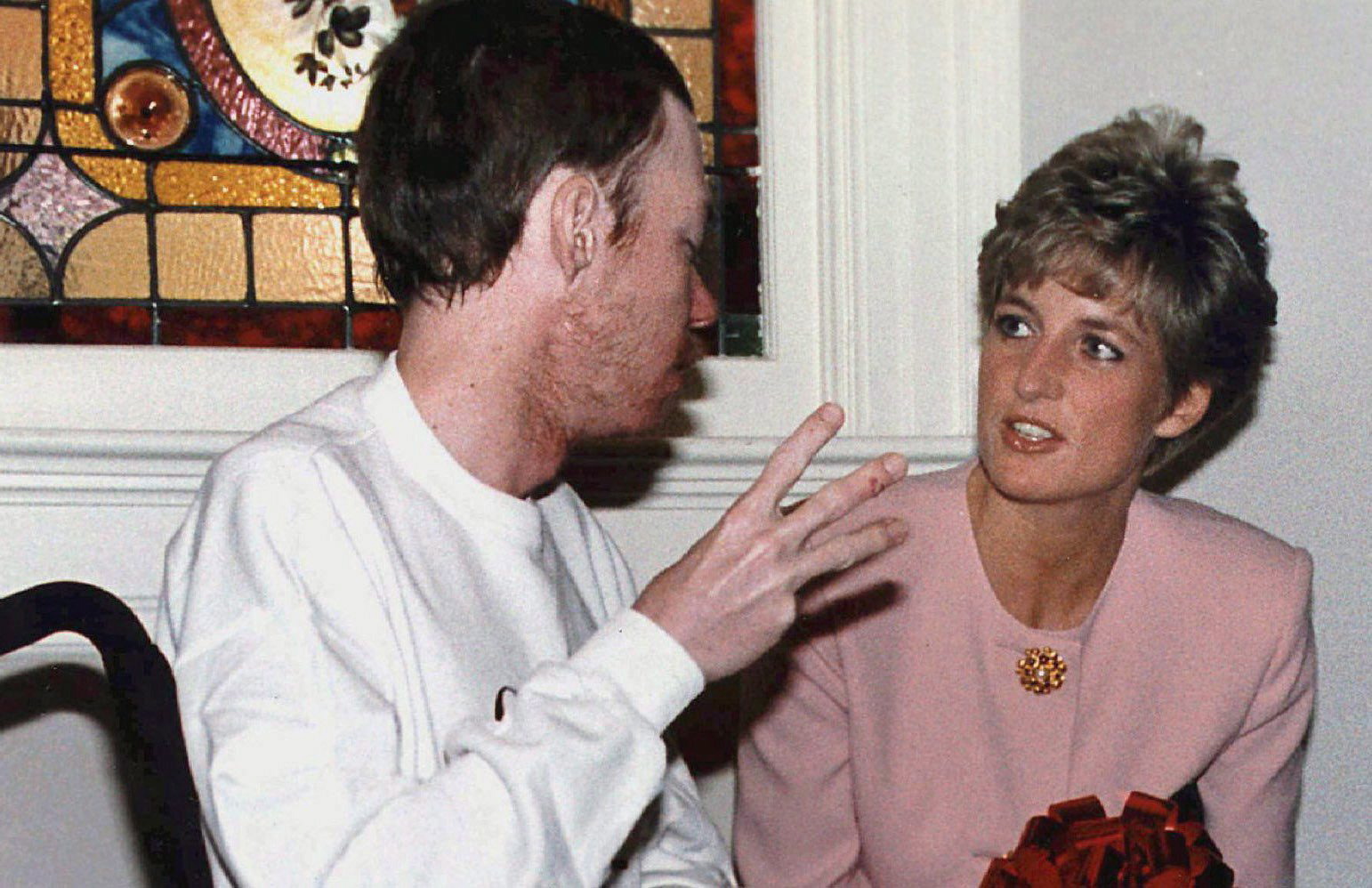
Four decades ago, journalist and social activist June Callwood and Margaret McBurney, also a writer and activist, helped volunteers to register and incorporate Casey House as a charity. At the time, it was Canada’s only standalone hospice for people dying of AIDS—a milestone in giving compassion and dignity to people facing a disease that by the end of the 1980s had killed at least 60,000 in Canada and the U.S.
The path toward opening Casey House’s doors in downtown Toronto in 1988 (Callwood named the hospice after her son, who had been killed by a drunk driver in an automobile accident) was not without challenges. Even at the height of the AIDS crisis, she struggled to find support for the hospice and for HIV/AIDS research in the face of seemingly intractable stigma.
“We faced a lot of heat, particularly the first year that we were open,” original board member and former executive director Jane Darville, who was recently appointed to the Order of Canada for her work, recalled in an interview earlier this year with the CBC. “The stigma and the homophobia continued for quite a while, and it was very hard to raise money and, in some cases, even to get staff …. [As] time evolved, it became easier, [but] I must say it’s never been easy. The current Casey House still has issues with, you know, stigma and phobia and anti-addiction and all that sort of stuff. It got easier to raise money—slowly it changed—but, you know, it still is there.”
Just because something isn’t in the headlines doesn’t mean it isn’t happening. HIV and AIDS still exist.
Glenn Pushelberg
Forty years later, the struggle continues. HIV/AIDS has not gone away. According to federal statistics, there were 2,288 new HIV diagnoses in 2024, down from 2023 but up by nearly 25 per cent compared with 2022, and the national rate of new diagnoses in 2024 was 5.5 per 100,000 population. Yet public interest in and awareness of the ongoing crisis is waning, and that is having a clear impact on research and support. One example: last year, the AIDS Committee of Toronto closed due to lack of funding, as its philanthropic donations fell from $3.6 million in 2003 to less than a projected $300,000 in 2025.
The ongoing reality of HIV/AIDS in Canadian society amid a general decline in fund-raising makes the work of Casey House—now an HIV specialty hospital—all the more important today. And it could not do that work without the commitment of the philanthropic community.
Here, four prominent donors to Casey House share their reasons for supporting the world-renowned hospital:
- Designers George Yabu and Glenn Pushelberg, who have been recognized with a Casey Award for leadership in corporate philanthropy for the HIV and 2SLGBTQ+ communities. In July, their firm, Yabu Pushelberg, wrapped up “Don’t Stop. Stand Up!”—a month-long exhibition and cultural programming series in partnership with UNAIDS at the firm’s New York Office in partnership with UN, exploring the history of 2SLGBTQ+ identity, activism and resilience in response to HIV/AIDS.
- Designer and TV personality Tommy Smythe, a longtime Casey House volunteer and philanthropist.
- Paul M. Austin, who along with wife Pamela is known for his contributions to healthcare and medical research. Those include establishing The Pamela and Paul Austin Centre for Neurology & Behaviour Support at Baycrest, the Guided Therapeutics International Fellowship Program at UHN, funding for the establishment of HQ Toronto, funding of the Sexfluent program by CanFar and establishing the Pamela and Paul Austin Chair in Precision and Regenerative Medicine at the University of Toronto in 2023.
‘A mandate of compassion, dignity and care’
What brought Casey House to your attention when considering how you would direct your philanthropy?
Tommy Smythe: I turned 18 in 1988. That was the year Casey House opened. In that year, I came out as gay, reached the age of majority and became an adult just as AIDS was decimating the community I had only just discovered.
Years later, after losing many friends and loved ones to the AIDS pandemic, I had reached a level of public recognition and was hoping to use it to help an organization I cared about. I had spent time in Casey House with friends who were cared for there and felt connected to the overall mandate of compassion, dignity and care.
There are no ‘patients’ at Casey House—only clients. I volunteered, and am still a volunteer, serving on the foundation committee. During my time as a volunteer, I was also serving on the board of directors of the Conn Smythe Foundation, and through the charitable giving of the CSF I was able to add another layer of support for Casey House.
Paul M. Austin: I have been actively involved with HIV/AIDS awareness and care, including with Casey House, when Casey House was still just an idea back in the ’80s. Although we have all hoped that the need for HIV/AIDS awareness and care would subside over time with better treatment options and medical breakthroughs, we are sadly still at a point where Casey House provides pivotal services and support for those living with HIV/AIDS, and therefore I want to continue to provide funding to help Casey House achieve its objectives as care requirements evolve and change.
Today, many consider AIDS to be ‘old news.’ Why does donating to Casey House and organizations like it still matter?
Glenn Pushelberg: Just because something isn’t in the headlines doesn’t mean it isn’t happening. HIV and AIDS still exist. What’s changed is who it’s affecting and how visible it is. In the beginning, it was perceived as a very specific crisis, and there was attention around that. But over time, it has increasingly affected people who are more marginalized: people without stable housing, Indigenous communities, people who can’t consistently access or afford medication. It’s not ‘old news’—it’s just quieter. And when something becomes quieter, support tends to fall away. That’s why it still matters. Casey House continues to serve people who might not have anywhere else to go, and that kind of care requires ongoing commitment.
George Yabu: It’s important to understand that progress in treatment doesn’t eliminate inequity. There are still people without stable housing, without consistent access to medication, or [who are] navigating stigma in their daily lives. Supporting Casey House helps ensure that those individuals aren’t overlooked simply because the broader conversation has become quieter.
‘Healthcare can be humane’
Why has Casey House has been so meaningful in the global struggle against HIV/AIDS?
Smythe: Casey House was the first free-standing AIDS hospice in North America. People are surprised to learn this, given the intensity of the pandemic’s effects on U.S. cities like New York and San Francisco. As an early responder, Casey House and its incredible staff and volunteers have been able to share front-line learnings and innovation in HIV/AIDS care with institutions that followed it all over the world.
Pushelberg: One of the things Casey House did early on was respond when others weren’t. There were moments in the evolution of the crisis when certain communities weren’t really being listened to, when mainstream systems were slow, or reluctant, to react. Casey House stepped in and filled that gap. Healthcare systems everywhere have limits; they can only stretch so far. Community-based institutions like Casey House help bridge what’s missing, particularly for people who don’t always have the means or the confidence to advocate for themselves.
Yabu: It’s also about dignity. Casey House isn’t just about treatment; it’s about how care is delivered. That sensitivity, especially toward marginalized communities, is what matters and what makes it a touchstone. It shows that healthcare can be humane as well as clinical.
Austin: Casey House has historically been a beacon of hope and provided a model of care that was desperately needed in some very dark times in the beginning of the epidemic. Our community in Toronto responded in what I will say, to me, is a uniquely Canadian way—to help those in need, without judgment, and with compassion. Casey House proved that it could be done in the beginning, which was an uphill battle at the time, and as needs have changed, Casey House, together with the community in Toronto and Canada, have demonstrated continuing support to ensure that needs will continue to be met.
What are some of your most significant memories of supporting Casey House?
Smythe: It’s our clients and staff. Meeting them, hearing their stories, their struggles and triumphs, is the heart in our logo. While we may have—in my perhaps not-so-humble opinion—the best and most fun fund-raising events in the country, the emotional and lasting memories that every donor and volunteer at Casey House carries are of those client and staff stories.
Austin: Unfortunately, my memories are bittersweet. Memories of dear friends whom I have lost, but gratitude for the fact that they could die with dignity at Casey House, and in many, many other cases live meaningful lives due to the support and care they have received through Casey House.
If you had a friend who was thinking about directing their support towards HIV and AIDS causes or Casey House, what might you tell them?
Smythe: I would tell them that there are two buckets that need filling: a cure, and the means to care for people ‘living with’ while we wait for that cure. I chose Casey House because I felt the latter was the more challenging ask. Donating to find a cure is the easy yes. Caring for the communities that are affected by HIV/AIDS has the appearance of being less urgent, and therefore is arguably a more challenging fund-raising request. But we must remember that the clients we serve at Casey House and other institutions like it around the world, through their records and their lived experiences, are critically important informants in the quest for the cure, so at Casey House you’re having an effect on both.
Austin: ‘We were on the front lines back in the beginning. We helped so many. Our job is not done yet.’
‘HIV/AIDS is still a deadly disease’
What do you feel Canadians still need to know or become aware of about HIV/AIDS and the stigma around the disease?
Pushelberg: Often times, people don’t contribute to things they don’t feel directly connected to. If an issue is associated with a particular community, especially one that has historically faced stigma, it can be easier for others to look away. But that’s exactly why our community should lean in.
Yabu: We’re living in a time where people feel more isolated, more anxious. There’s less direct communication, less simple kindness. Supporting organizations like Casey House restores that. It signals that we still care about each other. If we lose that, then we’ve lost something much larger than a single health issue.
Austin: I think the biggest hurdle we need to overcome regarding awareness is to make Canadians, and in particular younger Canadians, aware that HIV is not over and that infections are rising, particularly within younger demographics. This is happening in the face of all the communication and awareness-building that has gone on in the last 40 years. While not the death sentence many perceived it to be back in the early days, it is still a public health issue that needs funding and support. I don’t know that I would use the word stigma anymore, but I think the misunderstanding among some is that the HIV/AIDS crisis is over. It isn’t. We need to continue to educate and build awareness around prevention, while continuing to provide support and care to those in need.
Smythe: HIV/AIDS is more manageable than ever with early diagnosis, a regime of care and a positive outlook. Treatments have advanced, but unfortunately the stigma associated with HIV/AIDS has not. HIV-positive Canadians still face stigma, alienation and rejection upon disclosure, even those who live with an undetectable viral load due to treatment and have untransmittable status. I think that people forget, given these advances, that HIV/AIDS is still a deadly disease. At Casey House, we still provide end-of-life care with compassion and an understanding of the unique needs and lives of the community we serve. The No. 1 thing to remember is that there’s hope for a cure, hope for a future and a life free of stigma. This is what everyone at Casey House wants and we won’t ever stop working for that reality. And we won’t ever stop believing that it’s possible.
Natalya Anderson is a writer and former ballet dancer. She completed her master’s degree in creative writing at Anglia Ruskin University, Cambridge, England. Natalya has won several literary awards, including the Moth Poetry Prize for her poem ‘A Gun in the House’ and the Bridport Prize for her poem ‘Clear Recent History.’
Get our new quarterly newsletter about philanthropy: Canadian Family Offices’ newsletter brings you key insights, trends and expert perspectives on charitable giving, tailored to Canada’s wealth leaders and giving communities. Click here to subscribe.
Please visit here to see information about our standards of journalistic excellence.