


Once upon a time, cross-border estate planning was a nice thing to have for ultra-high-net-worth (UHNW) families. Today, it’s a necessity. As more and more wealthy families retain global assets, their estate planning needs become more complex, requiring advice that is tailored to their specific family.
Looming in the background is the great transfer of generational wealth, gathering momentum as trillions get passed from boomers to their children.
Globally, the great wealth transfer has been projected to be as high as $125-trillion through 2048, according to Cerulli Associates. However, adjusted estimates—factoring in actual household spending, taxes, and debt—point to about $36 trillion directly reaching everyday Gen X and millennial households, according to Visa Research.
Estate planning is a transfer of knowledge

This mass movement of wealth will continue to highlight common cross-border estate-planning themes and pitfalls. Yet, the onus will be on families to understand how these themes impact their own unique stories (or fact patterns, as some like to say). In this sense, estate planning is a transfer of knowledge, as much as it is a transfer of wealth.
Take, for instance, a family in Canada receiving an inheritance from a U.S. relative, says John Woodfield, senior wealth advisor at Swan Wealth Management-Raymond James in Kelowna and Vancouver, B.C.
If the inheritance is in the form of a U.S.-based IRA, the family inheritors can defer from turning it into income for up to 10 years, Woodfield explains. This puts an emphasis on planning well ahead of time to get the best tax outcome.
To flesh out the story further, let’s say that the relative previously had a U.S. 401k, perhaps sponsored by an employer. When she retired, imagine that she rolled that 401k into an IRA. So, when she passed away, the inheritance went to the beneficiaries tax free, even in Canada initially, and it could then trickle to the Canadian family as income over 10 years, Woodfield says.
Stories like this “are a big part of this generational wealth transfer,” he notes. Pregifting is another common narrative.
‘We’ve had a number of clients whose parents in the U.S. have pregifted large sums of money,” Woodfield says, adding that assembling a team of cross-border specialists from accountants to lawyers is necessary to understand the tax implications and to talk the language of U.S. taxes. “Getting a U.S. license is relatively easy, but understanding what’s going on is extremely complex,” he says.
You really want to do estate planning in the jurisdiction where you have your assets. That’s point number one.
Matt Altro
Exemptions: Plus, more trust planning opportunities south of the border
Another central theme is exemptions. Say you own more than a relatively small US$60,000 in U.S. assets. You have to file a U.S. estate tax form on those U.S. assets, even if the assets are held by you as a Canadian. However, there is an exemption for those who have worldwide assets up to US$15 million.

“With the higher U.S. estate tax exemption now at US$15 million per person, the average person is not going to have any U.S. estate tax associated with their passing,” says Kris Rossignoli, senior private wealth manager at Cardinal Point Capital Management, based out of the firm’s Toronto office.
To elaborate, let’s say you buy a second home in Florida to escape the Canadian winter, and that home is worth US$4 million. That’s obviously more than US$60,000 but your estate is still less than US$15 million worldwide, so you are exempt from U.S. tax even though you still need to file, Rossignoli explains.
There are also significantly more trust planning opportunities in the U.S., Rossignoli says, noting such exotica as dynasty trusts which, “if properly set up, can last for hundreds of years.” How this is affected by Canadian deemed disposition rules for the estate is highly complicated. Nevertheless, “that’s a major planning opportunity that we’ve often implemented for our UHNW family office clients when the fact pattern exists,” Rossignoli adds.
Fundamental of estate planning
Then comes perhaps the most fundamental part of any estate-planning story: Having the proper documents, including possibly multiple wills and powers-of-attorney. A single will and power-of-attorney may not work well if a family’s wealth resides in different jurisdictions.
“You really want to do estate planning in the jurisdiction where you have your assets. That’s point number one,” says Matt Altro, president and chief executive officer at MCA Cross Border Advisors, based out of the firm’s Montreal office.
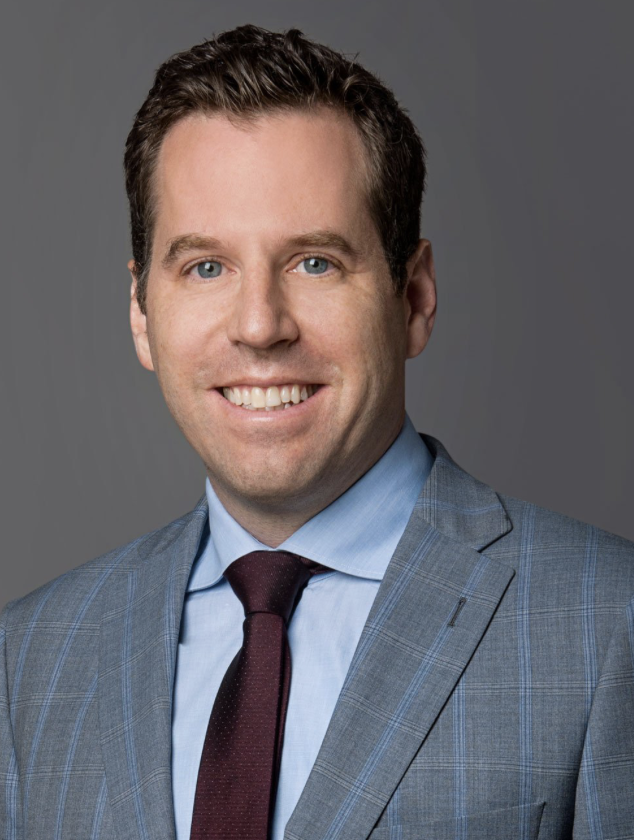
“So, for many Canadian UHNW families, they’ll have properties in the U.S. or assets in the U.S. In that case, you need to think about what type of estate-planning documents, what type of estate-planning issues exist on both sides of the border. Sometimes that can lead to two sets of documents,” Altro explains.
And when you have two sets, including perhaps two wills, or a trust in another country, “you really want to make sure that they don’t bump into each other. The documents have to be coordinated and written in a way, whether it’s by one cross border lawyer or by multiple lawyers, that it’s clear which pertain to which assets,” Altro says.
For instance, he explains that “you might want to have a specially designed cross-border trust to hold U.S. real estate, which will help to avoid probate, but not run into problems in Canada.”
So, as the great wealth transfer between generations continues, the emphasis will be on families to tell their cross-border estate-planning stories in the best (and most tax-efficient) way possible.
Guy Dixon began his career at Dow Jones Newswires in New York before joining the Globe and Mail, covering financial markets, business news, the arts and other topics over the years. He has written for the CBC and The Walrus among other publications.
The Canadian Family Offices newsletter comes out on Sundays and Wednesdays. If you are interested in stories about Canadian enterprising families, family offices and the professionals who work with them, you can sign up for our free newsletter here.
Please visit here to see information about our standards of journalistic excellence.