


In recent articles, I have explored how inheritance often functions as emotional currency within families, and how unintentional favouritism can emerge when support follows perceived need rather than fairness. This piece continues that conversation by looking at another pattern that appears quietly and consistently in many high-net-worth families: the tendency for the most capable child to carry the greatest burden, often without recognition.
In many families, one child becomes the stabilizing force. He or she is organized, emotionally steady and dependable. When something needs to be handled, these children step in. When decisions are required, they are consulted. When parents need support, they show up. Over time, they become the person everyone relies on, not because it was formally assigned, but because it happened naturally and efficiently.
This role rarely emerges by design—it tends to develop gradually. Sometimes it reflects temperament, sometimes early maturity. Sometimes it’s a response to instability elsewhere in the family. Whatever its origin, reliability becomes part of that child’s identity. At first, it is noticed and appreciated. Over time, it can become expected.
As this dynamic settles in, support begins to flow elsewhere. Flexibility is extended to the sibling who is struggling. Financial resources are directed toward the one experiencing difficulty, and emotional energy is focused on whoever appears most vulnerable. Meanwhile, the responsible child is assumed to be fine, and most of the time, they are—until they are not.
In family office work, this dynamic often expresses itself through what might be called “invisible labour.” The responsible child attends meetings, helps manage professional relationships, supports aging parents, interprets complex information for siblings and mediates disagreements. These children often become the informal coordinator of the family system.
Estate plans and governance structures can unintentionally reward dependence over reliability.
None of this appears in financial statements or legal documents. Because it is done competently and without complaint, it is rarely treated as a distinct contribution.
From a planning perspective, this matters. Without intentional design, estate plans and governance structures can unintentionally reward dependence over reliability. The child who struggled receives continued support and protection. The one who needed assistance is buffered against risk. Meanwhile, the responsible child receives less because she or he is assumed to need less.
The logic behind these decisions is understandable. Emotionally, however, it often lands poorly.
What responsible children tend to want is not financial advantage—it is recognition. They want their contribution to be seen as part of the family’s wealth ecosystem, not simply as a personal trait that can be taken for granted.
One of the most challenging aspects of this pattern is that responsible children rarely speak up. Having learned early to manage themselves and others, they are reluctant to appear demanding, entitled or disruptive. They do not want to burden their parents or create conflict among siblings. They have been “the strong one” for so long that vulnerability feels unfamiliar and unsafe. As a result, silence is interpreted as contentment.
These dynamics often surface during major transitions, such as succession planning, liquidity events, estate freezes or caregiving decisions. It is at these moments that responsible children sometimes realize that their reliability has been built into the system without being valued within it. They are expected to continue managing complexity, supporting implementation and smoothing tensions, even when outcomes do not reflect their long-standing role.
That realization can be deeply unsettling. Not because of greed, but because of disappointment.
Families who navigate this well tend to be highly intentional about recognizing contribution—not just crisis.
Families who navigate this well tend to be highly intentional about recognizing contribution—not just crisis. They pay attention to emotional labour as well as financial need. They ask who has been carrying responsibility, who has coordinated quietly, who has absorbed stress so others did not have to, and who has helped maintain stability over time.
More importantly, they translate that awareness into structure. Recognition is reflected through governance roles, decision-making authority, compensation, trust arrangements or explicit acknowledgment within planning documents. The invisible becomes visible. Contribution becomes part of the formal system rather than remaining an informal expectation.
Clarity plays a central role in protecting the child who never asks. When families articulate how responsibility is valued and how decisions are made, the risk of silent resentment diminishes significantly. Clear communication allows parents to say, in effect, “We see what you have carried. We understand what you have given. We are not taking that for granted. This matters in how we plan.”
For many responsible children, hearing this is transformative.
Strength within families is often misunderstood. It is frequently equated with independence, resilience and competence. Yet true strength also includes the capacity to receive support. Responsible children are often deprived of that opportunity by circumstance rather than choice. Thoughtful families restore balance by design.
Aligning financial systems with lived family reality
Across this series, a consistent theme has emerged. Whether the issue is inheritance as emotional currency, unintentional favouritism or invisible responsibility, the underlying risk is the same. When relational patterns are left unexamined, they become embedded in financial structures. When those structures are built on unspoken assumptions, they eventually fracture.
Effective wealth planning is not only about optimizing assets. It is about aligning financial systems with lived family reality. That reality includes emotional labour, quiet contribution and long-standing responsibility.
Families who recognize this early tend to build legacies that endure—not only financially, but relationally.
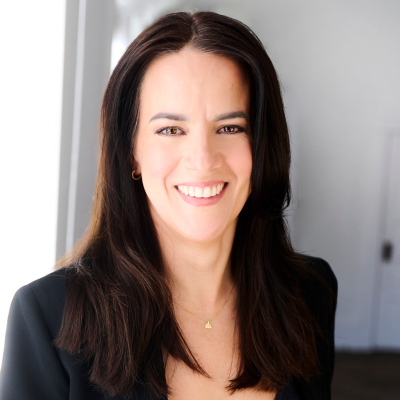
Elke Rubach is a Certified Financial Planner with CLU and MFA-P designations. Her expertise lies in optimizing income and tax efficiencies, achieving cohesiveness in financial and estate plans, and providing ongoing asset management strategies that foster wealth accumulation and growth. Elke is a reformed lawyer who earned her graduate degree in law, with a focus on banking and finance, at the London School of Economics, where she studied on a Chevening Scholarship. She worked as an associate at the London (U.K.) and Toronto offices of the law firm McCarthy Tetrault. During a stint in banking, Elke observed the life-changing impact of good financial advice and decided to switch to a career in financial planning and wealth management. She founded Toronto-based Rubach Wealth in 2012. Today, Elke is a sought-after speaker on wealth management, estate planning and philanthropy. She’s the founder of Fashion Heals for SickKids, which has raised more than $500,000 for pediatric cancer care and research since 2016. She also gives back with board and volunteer commitments with the Professional Advisory Council for SickKids Foundation, the Investment Committee at the Office of the Public Guardian, the advisory board for Transpod Inc., and the board of Ronald McDonald House Charities in Toronto.
The Canadian Family Offices newsletter comes out on Sundays and Wednesdays. If you are interested in stories about Canadian enterprising families, family offices and the professionals who work with them, you can sign up for our free newsletter here.
Please visit here to see information about our standards of journalistic excellence.