

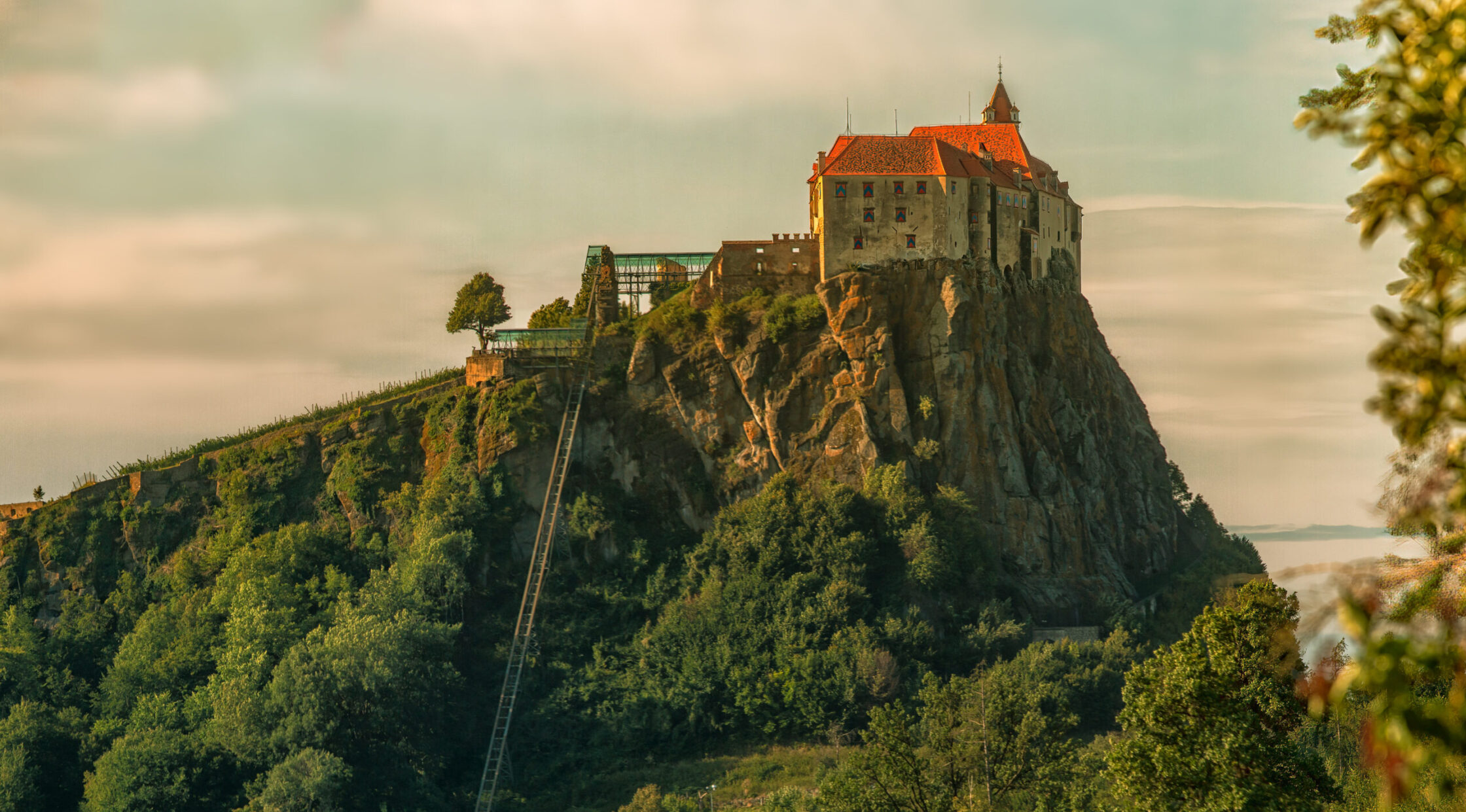
There’s a corner of Austria that sits, quite literally, on a volcano—and almost nobody outside the wine trade has heard of it.
Vulkanland Steiermark, tucked into the far southeastern reaches of Styria against the Slovenian and Hungarian borders, is the only one of Austria’s 16 official wine regions where extinct volcanoes shape what ends up in your glass. For anyone who likes to arrive at a place before it becomes fashionable, that’s reason enough to pay attention.

[Vulkanland has] the makings of a genuinely complete long weekend or week-long escape—one that most international travellers, including serious wine people, have not yet found.
The region has spent two quiet decades upgrading the quality of its wines, and it’s now arriving on the international stage with a confident young generation of growers and a private quality system stricter than most countries bother to enforce. It belongs near the top of the list of Europe’s most rewarding, least discovered wine-and-travel destinations.
A wine rebrand with a point
People have made wine in Vulklnland since Celtic and Roman times, but the modern story is recent. Until 2016, the region carried the flat, geographic name Südoststeiermark—translation: “Southeast Styria.” But that year, in a rare moment of marketing clarity from a wine bureaucracy, it was renamed Vulkanland Steiermark, putting its volcanic soul front and centre. Two years later came Austria’s DAC classification, a French-style hierarchy running from broad regional wines up to single-vineyard bottlings.
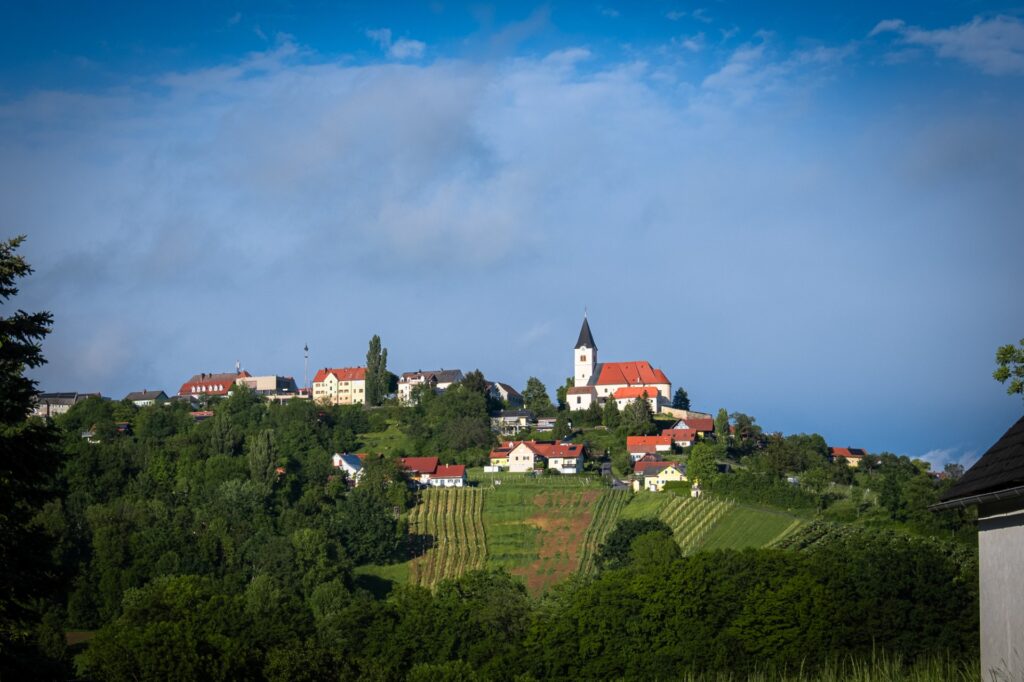
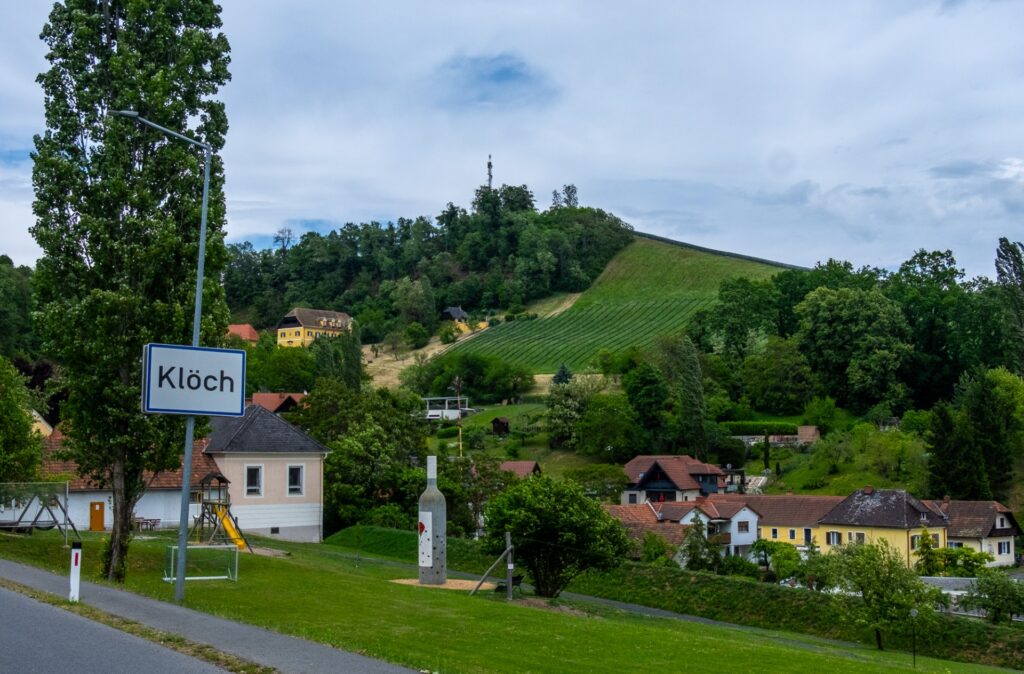
The region of hills and valleys is polycultural in the traditional European fashion; a constellation of small vineyard “islands” rather than one contiguous block climbs from gentle lowland slopes up to nearly 650 metres near Hartberg, among the highest vineyard sites in Austria. The towns worth knowing are Klöch, the historic home of Traminer and the most volcanic soil of all; Straden, known for Pinot Gris and its dramatic Stradner Kogel hill; Sankt Anna am Aigen, the coolest of the group and a rising Sauvignon Blanc address; and Riegersburg, a fortress town perched on a sheer basalt cliff that looks like something from a Tolkien novel.
Built by fire, finished by water
The geology, in plain terms, comes in two flavours. Basalt is hardened lava—dense and dark, so tough that a working quarry at Klöch still ships it out by rail as railbed ballast. Tuff is compacted volcanic ash, softer and more porous. Where the two layer together, with a cap of red clay from centuries of weathering, you get a particularly favourable growing environment for distinctive wines.
For anyone who thinks about wealth the same way—building something meant to outlast its founder—there’s an obvious kinship in how these estates are run.
Here’s the twist: less than 50 per cent of Vulkanland’s vineyards actually sit on this volcanic bedrock. The remainder rests on ancient seabed—limestone, marl, sandstone—left behind by a prehistoric sea that once covered the region. But those volcanic pockets give the top wines their signature: a saline, almost electric quality on the palate, bracing acidity, and a brooding, slow-to-open character that rewards patience, much like the region itself.
Four grapes worth seeking out
Vulkanland grows more than 40 varieties, but four define it. Weissburgunder (Pinot Blanc) is the quiet star—broad, creamy and structured, capable of aging far longer than the grape’s reputation elsewhere suggests. Sauvignon Blanc, grown on volcanic soil, sheds its usual grassy cliché entirely, turning smoky, saline and genuinely surprising. Traminer, concentrated almost entirely around Klöch, ranges from a lean, citrusy style to the full spice and weight of Gewürztraminer, and remains the grape most associated with the region’s identity. And Riesling, grown on a sliver of land at Klöch, produces something unlike any other Austrian Riesling I know: dense, flinty, smoky, and utterly its own thing.
The wine growers rewriting the region’s reputation
Much of Vulkanland’s recent renaissance traces back to the Eruption Winzer, a nine-member growers’ association that has spent the past five years building its own rigorous, independently audited vineyard classification on top of Austria’s official system—an unusual, almost obsessive level of quality control for a region this size.
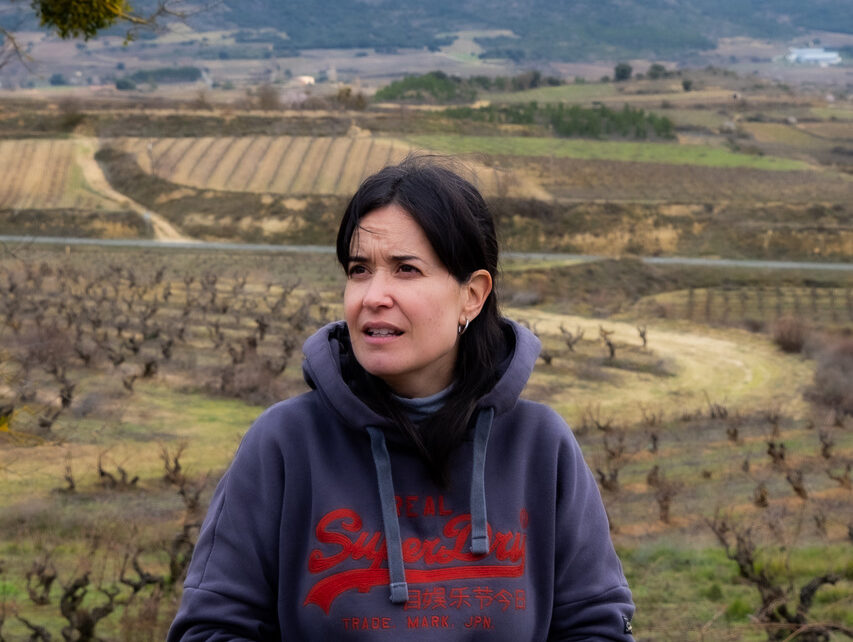
A few names to know if you’re planning a cellar, or a trip:
- Weingut Krispel, in Straden, is the group’s most ambitious estate: certified organic, home to a woolly Mangalitza pig operation and a destination restaurant, and maker of a genuinely singular wine aged in vessels carved from the local basalt.
- Weingut Müller, in Klöch, is the historic anchor—three centuries and seven generations of the same family, still making the definitive expression of that town’s basalt soils.
- Weingut Hutter, also three centuries old, farms a vineyard sitting on what may be the hardest basalt bedrock in the country.
- Weingut Pfeifer, a small organic estate in Sankt Anna, makes some of the region’s most age-worthy whites from a single hillside.
- Der Gollenz is a more recent operation coming up on its 20th anniversary, making a particularly compelling pinot gris Erste Lage (“premier cru”) from the Klöchberg vineyard.
- Weingut Josef Scharl is the region’s iconoclastic producer in Sankt Anna, defying the odds, and the market, with memorable pinot noir and chardonnay, as well as a growing shift to planting “PIWI” varieties—that is, grapes, like Souvignier gris, bred for disease-resistance and requiring very little to no spraying, an evolution in sustainable farming.
- Weinschloss Thaller, near Riegersburg, has built a serious hospitality operation around its wines, with an event space that makes it an easy stop for anyone touring the region rather than just tasting through it.
- Weingut Frauwallner, farming in Straden since 2002, has quietly become the benchmark for Traminer, the grape most closely tied to this land.
What ties all these producers together is scale and continuity rather than investment capital: these are family concerns, several running to seven generations, making decisions in decades rather than quarters. For anyone who thinks about wealth the same way—building something meant to outlast its founder—there’s an obvious kinship in how these estates are run.
A destination beyond the glass
The wine, it turns out, is really just the entry point. Vulkanland is also Austria’s pumpkin-seed-oil heartland, producing the dark, almost black, protected regional specialty that shows up on tables across the country. It’s home to cured Vulcano ham, Mangalitza charcuterie, and Arzberger Stollenkäse cheese, alongside a cluster of small distillers and cider-makers. Add open-air thermal spa towns Bad Gleichenberg and Bad Radkersburg, the medieval fortifications of Riegersburg and Kapfenstein, and four marked wine trails winding through the vineyard islands, and you have the makings of a genuinely complete long weekend or week-long escape—one that most international travellers, including serious wine people, have not yet found.
That combination—postcard-worthy scenery, deep history, spa culture, and wine that nobody else at the dinner party will have tried—is exactly what makes the region worth visiting now rather than later. Prices are still reasonable, the best producers are still small and personally run, and the welcome, in my experience, is unusually warm precisely because visitors are still a novelty rather than a nuisance. It is, in other words, still possible to book a table at the winery restaurant, walk the vineyard with the person whose name is on the label, and buy the wine directly from them—a level of access that regions like Burgundy or Napa priced out of reach decades ago.
Drink Vulkanland now, visit it if you can, and consider it the kind of quiet find that’s more satisfying to have known about early than to hear about later from someone else.
John Szabo is Canada’s first Master Sommelier and one of the best-known Canadian voices in wine. He is a principal critic for WineAlign.com and Curator-in-Chief for the WineAlign Exchange, which offers members a curated case of fine wine quarterly.
The Canadian Family Offices newsletter comes out on Sundays and Wednesdays. If you are interested in stories about Canadian enterprising families, family offices and the professionals who work with them, you can sign up for our free newsletter here.
Please visit here to see information about our standards of journalistic excellence.