

When Adam Graves and Scott Bachly were asked to make a donation to a new hospital being built in their community of Oakville, Ont., 14 years ago, the two friends took their contribution a step further—a big step.
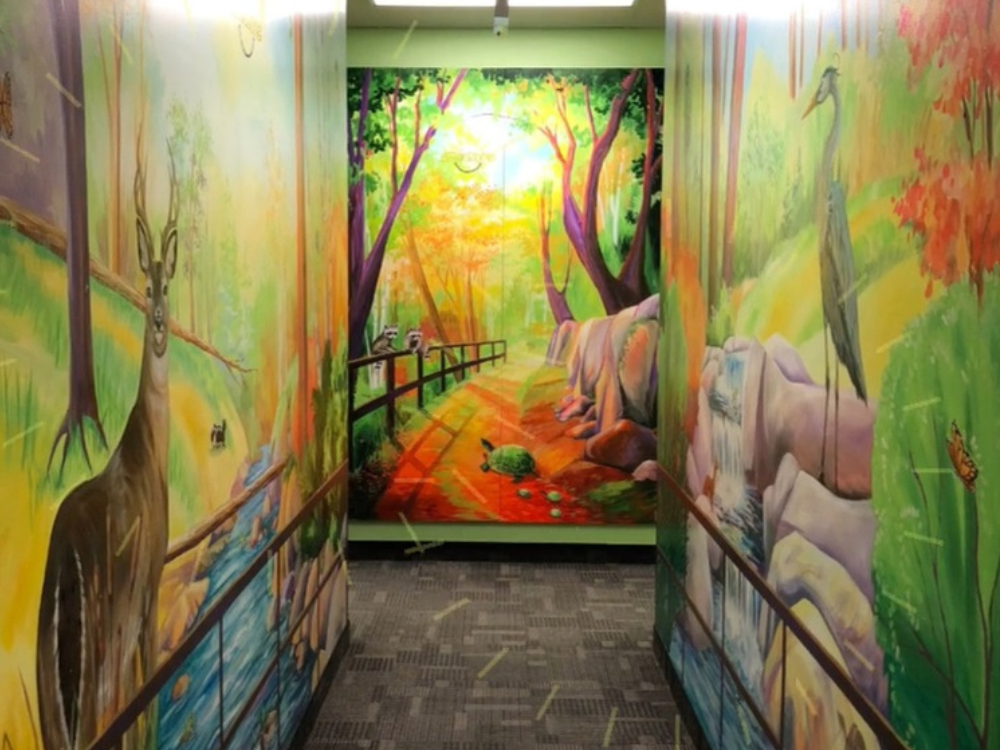
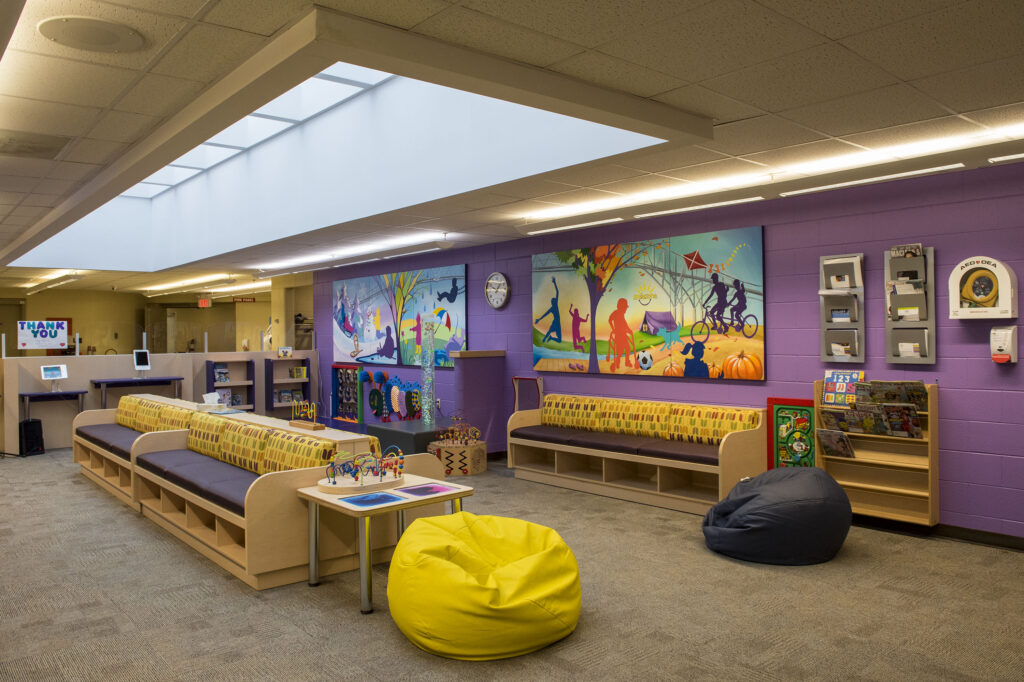
They founded the Smilezone Foundation, a charity that designs and installs cheerful spaces for children in hospitals and other healthcare centres across Canada. It transforms everything from patient rooms and waiting areas to treatment bays and hallways, with features that include colourful murals and interactive technology to make them more comforting and engaging.
“Every hospital we go in is a different shade of beige,” says Bachly, who owns Bolton, Ont.-based Bachly Construction, which does commercial industrial construction and fire and flood restoration, as well as building high-end custom homes. “We’re able to make it a nicer place for the kids and families to visit and change the environment.”
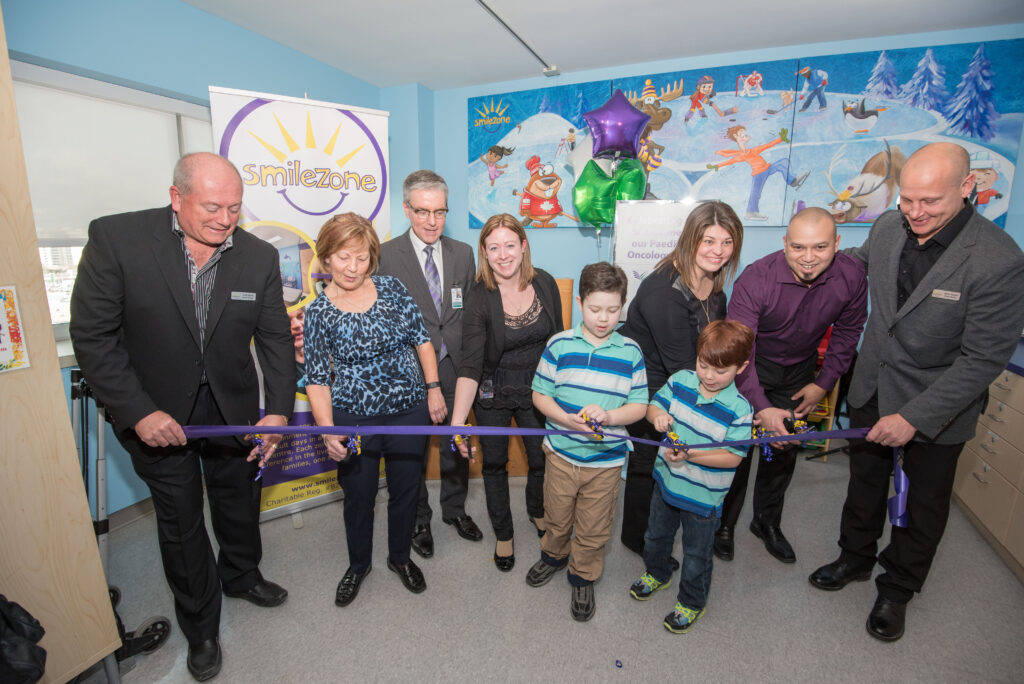
They also brought their families and others all over the country into the effort, says Graves, a retired NHL hockey star and two-time Stanley Cup champion. Donors choose the facilities where the Smilezones will be set up under a legacy program that also involves them in the design process. They and their extended family members can even be part of the artwork created for children and youth to enjoy.
“Instead of just saying, ‘Here’s a donation,’ our families can have a bigger impact,” says Graves, who got the idea for Smilezone from his visits to kids in hospital as a player for the New York Rangers, where he still works in hockey and business operations.
“Spending time with them put a smile on their faces,” he recalls. “We go into these bland spaces in centres that treat kids to brighten them up and give them something to look forward to.”
In 2013, Bachly approached the Bank of Montreal for a donation and came away with a $1 million commitment that got Smilezone off the ground. BMO continues to support it annually, while fundraising events such as hockey and golf tournaments and 50-50 draws cover most of its modest overhead, which includes four staff. Its offices and much of its equipment are donated.
The funds to create Smilezones come from individual donors, including high-net-worth families and family foundations, businesses, hockey teams and the NHL Players’ Association. “They donate to create one particular Smilezone project, and we make sure 100 per cent of that donation goes into the hospital or the health centre that we’ve co-selected with them,” Bachly says.
We’re able to make it a nicer place for the kids and families to visit and change the environment.
Scott Bachly
Today there are some 540 Smilezones in 100 facilities, from hospitals and autism facilities to community mental health centres and Children’s Aid Societies across all 10 provinces, and one will be installed in the Northwest Territories in August 2026. There are typically three to six Smilezone rooms per facility.
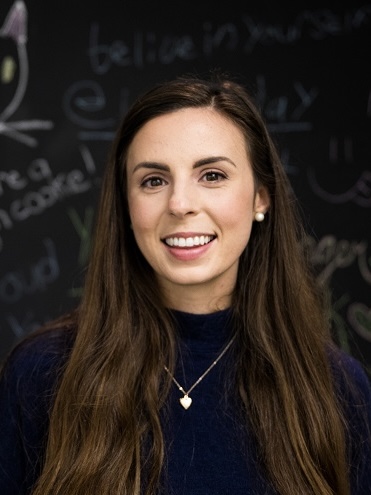
Jackie Hames, Smilezone’s executive director, says Graves’ background visiting children’s hospitals and Bachly’s in construction were a perfect combination to create the charity. “We want to do something tangible and tactile that we know is impacting kids every day,” she adds.
The organization’s design team works with a health centre’s staff, who “know the kids best and know how the space is being used,” to decide on renovations that include fresh paint, custom murals, furniture and gamification with video games and iPads to bubble hockey, sensory devices and interactive floor projectors. “No two Smilezones are alike,” Hames says.
A new project is installed about twice a month, and the renovations happen over one weekend to limit disruption. That astonishes people when they walk in on the Monday morning, but behind it are six to eight months of planning and preparations the design team and frontline staff have carried out.
Graves says in one project the planning included finding a place for kids getting regular treatment to put their outdoor clothes. “It’s Canada, so we built individual lockers for each kid and put their name on it, so they could hang their coat and put their boots in.”
Sometimes the murals on ceilings and walls will have a “Where’s Waldo?” element, Hames says, “so a nurse giving a child a needle can say, ‘Hey, can you find the 10 butterflies for us?’ The kids get so distracted they don’t even realize the needle is going in.”
Because the designs are custom, personal touches can be added that reflect the donors; for example, in a nature-themed mural, the family dogs can be drawn. One project featured imagery from the farm of a grandfather who had recently passed away. In another with an under-the-sea theme, a couple’s seven grandchildren each picked a favourite sea creature to be portrayed and did a research project on it.
“People take ownership and it becomes something they really truly believe in,” explains Graves. “It’s a pretty simple concept.”
He and Bachly, who are volunteers, donors and sit on Smilezone’s board of directors, love to attend project grand openings, which Bachly calls “the most special days of all.” The two have drawn a number of others to the organization. Sportscaster Ron MacLean, who is an ambassador for Smilezone, and his family donated funding for a project in Red Deer, Alta., where he grew up.
Hames says high-net-worth families act as donors and regular supporters. For instance, one family foundation does an annual project with Smilezone, picking a different healthcare facility in the communities where family members live. Others choose places to install the projects that they have roots or connections in.
Hames says the spaces have an impact on more than 400,000 children and youth across Canada each year, “and this does not include the siblings, parents, grandparents and staff that also benefit.” She notes there has been lots of research showing that creating supportive pediatric healthcare environments lessens children’s anxiety, increases opportunities for distraction, makes treatments easier for staff to complete and enhances healing and socialization.
Bachly says Smilezone is a great way for donor families to involve their children and grandchildren in philanthropy, learning the importance of giving back to their communities. They get naming rights to the Smilezone and there’s a plaque to celebrate their gift. It also offers a permanent physical space for the donor family, business or sports team to continue philanthropic efforts within the community.
Bachly says he and Graves “never envisioned Smilezone becoming this big.” He feels it gives donors a new role and local impact in their giving. “There’s some great charitable organizations in Canada, but when you give them a donation, it just goes into a pool of money,” he says. “But when you give Smilezone a donation, it’s earmarked for something in your community.”
Graves hopes the foundation “will continue to serve families across Canada,” especially in smaller centres. “It’s had a huge legacy, one that you can actually see,” he says, especially because it puts families that are part of the development and design of Smilezones together with doctors, nurses, clinicians and patients. “There is so much growth opportunity here for us—we’ve just touched the surface.”
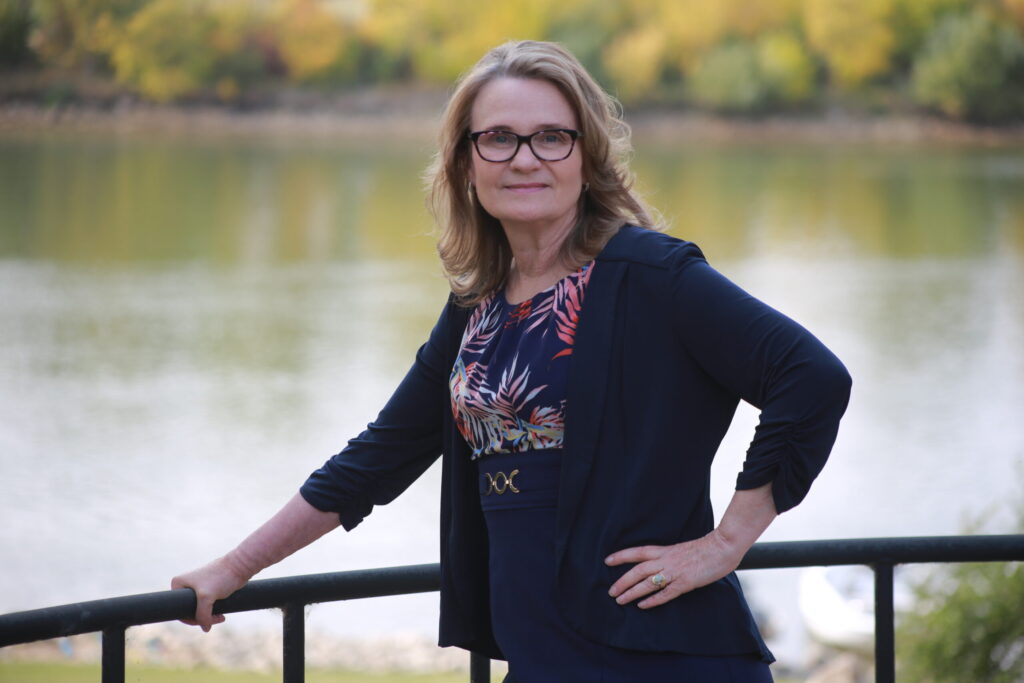


Mary Gooderham is a writer, editor and communication advisor based in Ottawa. She leads Cohen Gooderham Communications and has worked as a journalist for more than 40 years at The Globe and Mail, as a recording officer at the International Monetary Fund and as a custom content creator for online and print media. She’s been a contributing writer at Canadian Family Offices for four years, focusing on investment strategy, trusts, philanthropy, women in finance and estate planning.
Get our new quarterly newsletter about philanthropy: Canadian Family Offices’ new newsletter brings you key insights, trends and expert perspectives on charitable giving, tailored to Canada’s wealth leaders and giving communities. Click here to subscribe.
Please visit here to see information about our standards of journalistic excellence.