

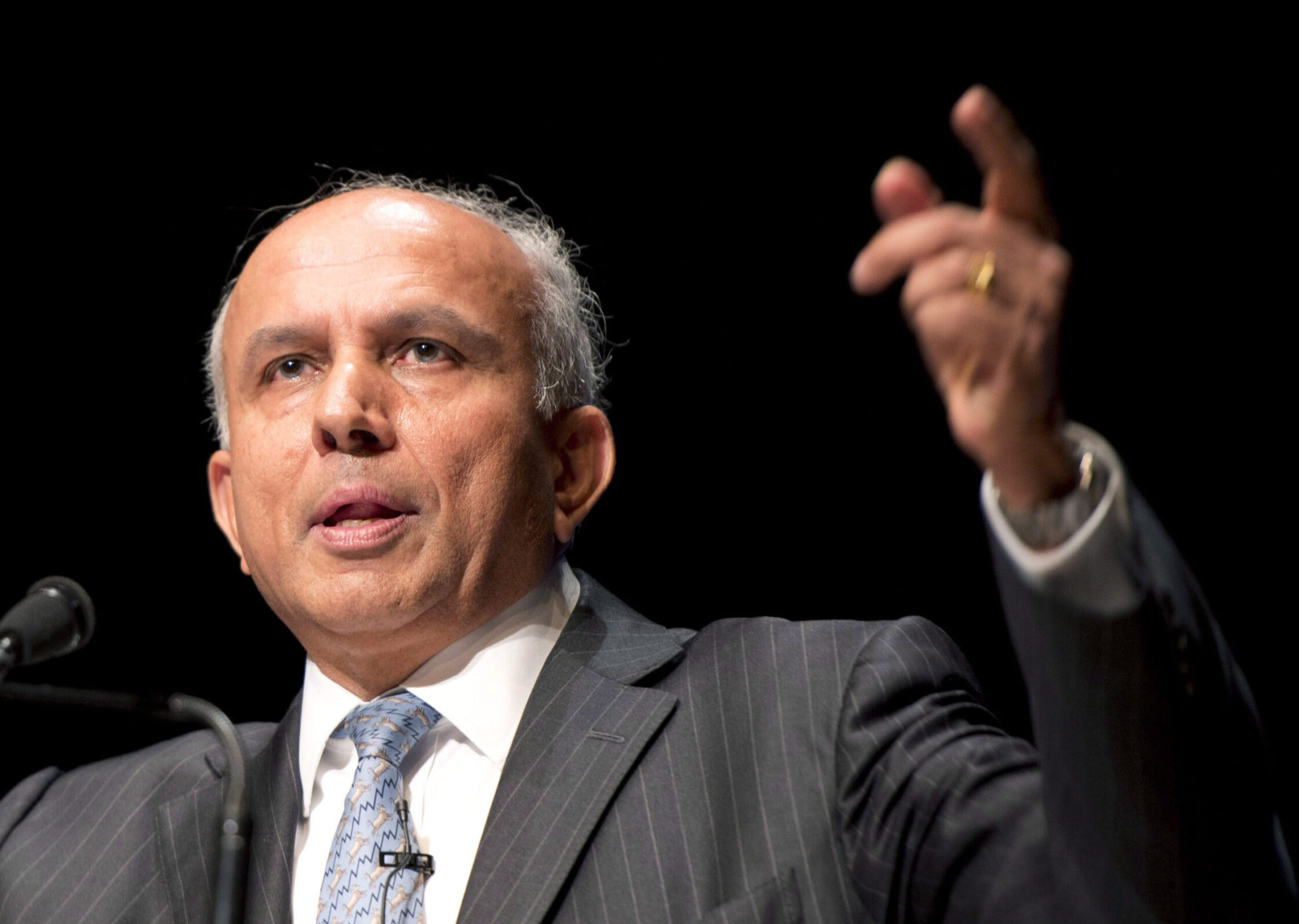
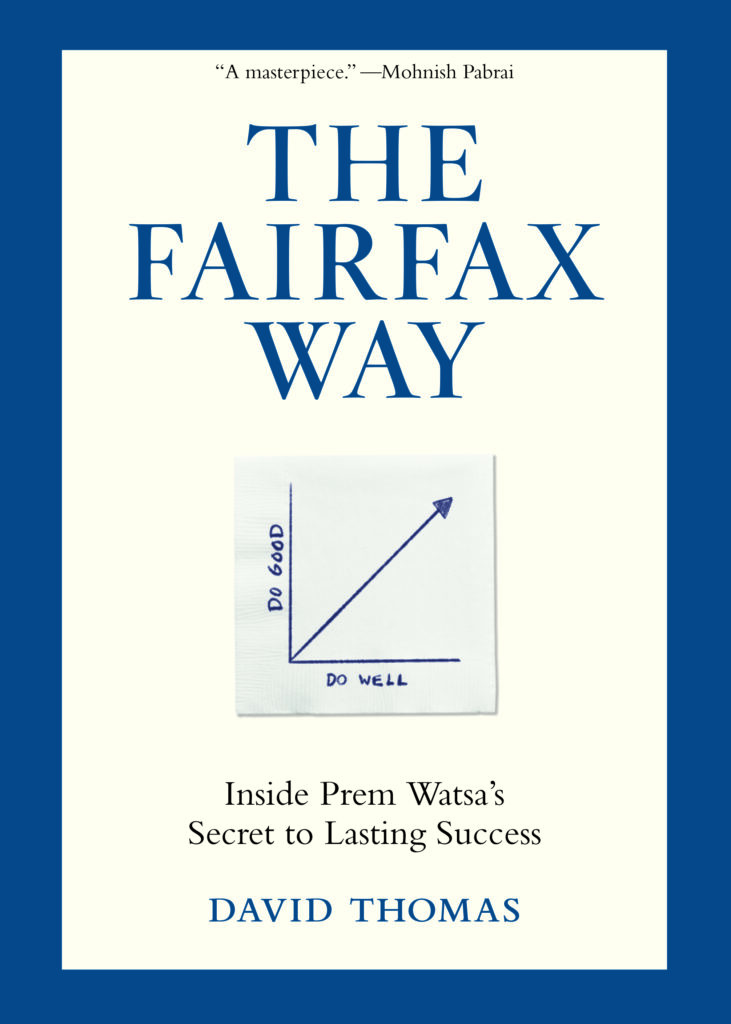
Renowned investor Prem Watsa, founder, chairman and CEO of Fairfax Financial Holdings, typically avoids the spotlight, but in David Thomas’s recently published book, The Fairfax Way: Inside Prem Watsa’s Secret to Lasting Success, he opens up to an unprecedented degree about the philosophies and strategies that helped turn Fairfax into a global success story. Here, in the second of two articles featuring quotes from Thomas’s book, Watsa and some of his top executives discuss the company’s plan to retain family control in an ambitious goal to keep Fairfax going for another century—or two.
Imagine you were able to build a rare kind of corporate culture and had the crazy idea of setting it up to run for another century or two after you are gone. To have a chance of success, a lot of things have to come together, even if your company is family-held. But a publicly traded company? What was Prem Watsa thinking? Let’s find out.
Watsa, now 75, launched Fairfax Financial Holdings in 1985 and has assiduously instilled a principles-based culture that asserts everyone should follow the golden rule in treating each other, partners and customers fairly. It starts with dropping egos—and not F-bombs.
“Doing the right thing is just the way we agreed we wanted to live,” Watsa explains. “Anyone who’s rude, arrogant, proud, foul-mouthed or not team-oriented has never managed to last long here. We want people who are smart, hard-working, humble and honest.”
Under the watch and leadership of a founder and controlling shareholder who also happened to be chairman and chief executive, the unified vision has been attentively nurtured—and successful. What Watsa wants next is to set a plan where the company stays public, remains headquartered in Toronto but operates globally, and continues to breathe the same values.
How does he plan to do it?
First, you need to have your company running right before the founder is out of the picture. Watsa has studied companies that have proven they can last a century. He says the key common attributes boil down to these:
- They provide outstanding customer service with a deep understanding of the business environment.
- They have a strong culture that promotes from within.
- They operate de-centrally, with delegated authority and autonomy.
- They maintain conservative financing with spare cash on hand for stability and flexibility.
Second, you need control. Watsa himself controls about 43 per cent of the company, leveraging a nontrading multi-vote class of shares. He plans to pass his stake on to his family to maintain vision. His eldest child, Ben—a value investor like his father—has already been made non-executive chairman at Fairfax India, a subsidiary, and has been designated to step into the same role at the parent holding company in the future. (Prem has no stated plan to drop either his CEO or chairman role.)
Both Ben and his sister, Christine McLean, already sit on the parent company’s board. The idea is that the family members act as stewards of the culture but will not take on any executive roles. The youngest child, Stephanie, is active with philanthropic boards at the company and family level.
All this planning has accelerated in the last few years. At the same time, Peter Clarke has been elevated from chief operating officer to president and designated as CEO-in-waiting. Watsa’s core expertise is in investing, but he has been grooming his younger replacements, led by Wade Burton, for almost two decades.
Watsa launched the company with a mindset that he would never exit with a sale. He has regularly cautioned shareholders since Day 1 to never to expect the “bonanza” of a company sale, no matter the price.
When the company and his children were young, Watsa always kept a provision in his will that his family would retain control and, if they needed to sell, they would require the consent of his longtime right-hand man at Fairfax, Rick Salsberg. He has explored various options of how to pass control, but concluded that most of them were too loose in that they would probably just delay but not prevent a sale.
It’s not like I will be ruling from the grave, but I will die knowing the culture will continue to flourish.
Prem Watsa
“You can leave the asset in the control of a charity, but it’s really only a matter of time before it gets divested,” says Watsa. “For that reason, I decided control has to be with the family. I think our family-control strategy will easily shoot down any breakup proposals.”
The hope is that the culture is already ingrained with a leadership team that measures retention in decades instead of years. One reason Watsa dropped his aversion to publicity and agreed to have a biography done is that he figures the company will face inevitable pressure to seek synergies, sell assets, abandon its decentralized structure or even sell off outright. As the old guard dies off, at least there will be a book that explains why they built the company the way they did.
“It’s important that shareholders and the company know there is a plan for continuity and to promote the culture of the Fairfax Way,” Watsa says. “It’s not like I will be ruling from the grave, but I will die knowing the culture will continue to flourish and Fairax and its main companies will never be sold.”
Watsa plans to use his remaining years staying on top of research into what works in succession and corporate longevity.
“There is a lot written on the subject, but I think the basic guidelines are simple ones. And I would say retaining trust is at the centre of long-term success. Maintaining that for any length of time takes discipline, hard work and maybe a little luck.”
Watsa offers reading tips for further research: The Living Company, by Arie de Geus, and Lessons from Century Club Companies, by Vicki TenHaken.
The magic of decentralization
Watsa is a firm believer in the management strategy that teaches the best way to get the best out of your best people is to get out of their way.
In 1984, he and a few partners started up a wealth management business. The following year, he decided to create a holding company for the investing side but build up operating companies (especially insurers) on the other side. That was the birth of Fairfax.
From the start, the plan was to make sure there was good management in place and leave them alone. It didn’t always work out, but that was the plan. In an early letter to shareholders, he laid out a division of responsibilities between the holding company (we) and the CEOs of the subsidiaries, like this:
- Leaders run their own companies, but we evaluate the performance. (All parts of Fairfax were subject to a 20 per cent return-on-capital target.)
- We need to be comfortable with their successors.
- We handle acquisitions and major shifts in corporate strategy.
- We tackle financings and capital decisions.
The emphasis on rational discipline in value thinking might explain it, but Watsa has a lot of company with other value legends when it comes to decentralization. Warren Buffett, for one. But also Henry Singleton of Teledyne, Tom Murphy at Capital Cities, and many others.
In additional to sharing various traits, such as a preference for small, non-flashy offices without a big layer of vice-presidents and a low priority assigned to talking to media, these leaders shared a common love of decentralization as a way to empower employee talent and keep value creation in the hands of those building the actual business. The payoff? It drives accountability, performance and an entrepreneurial mindset. Done right, it has the potential to make your best people so happy they never leave.
The operating companies under the Fairfax tent are large, competitive global leaders that attract top talent, explains Clarke, Fairfax’s president. They get long-term strategic commitment and can focus on building the business.
“Each of the operating companies has its own CEO/president, CFO, chief risk officer plus leads for the underwriting and actuary teams,” Clarke says. “This setup allows each firm to attract very talented people. These are leaders who would be running their own companies even out from under the Fairfax umbrella.”
Ben Watsa, Prem’s son and future Fairfax Financial chairman, boils it down to how that works for motivation and retention: “If everyone is running their own baby, the entrepreneurial people stay in the company. If you start telling people what to do, the entrepreneurial people don’t want to stay.”
David Thomas is the author of The Fairfax Way: Inside Prem Watsa’s Secret to Lasting Success, published by Viking, a division of Penguin Random House Canada. All quotes are reproduced from the book.
The Canadian Family Offices newsletter comes out on Sundays and Wednesdays. If you are interested in stories about Canadian enterprising families, family offices and the professionals who work with them, but like your content aggregated, you can sign up for our free newsletter here.
Please visit here to see information about our standards of journalistic excellence.