

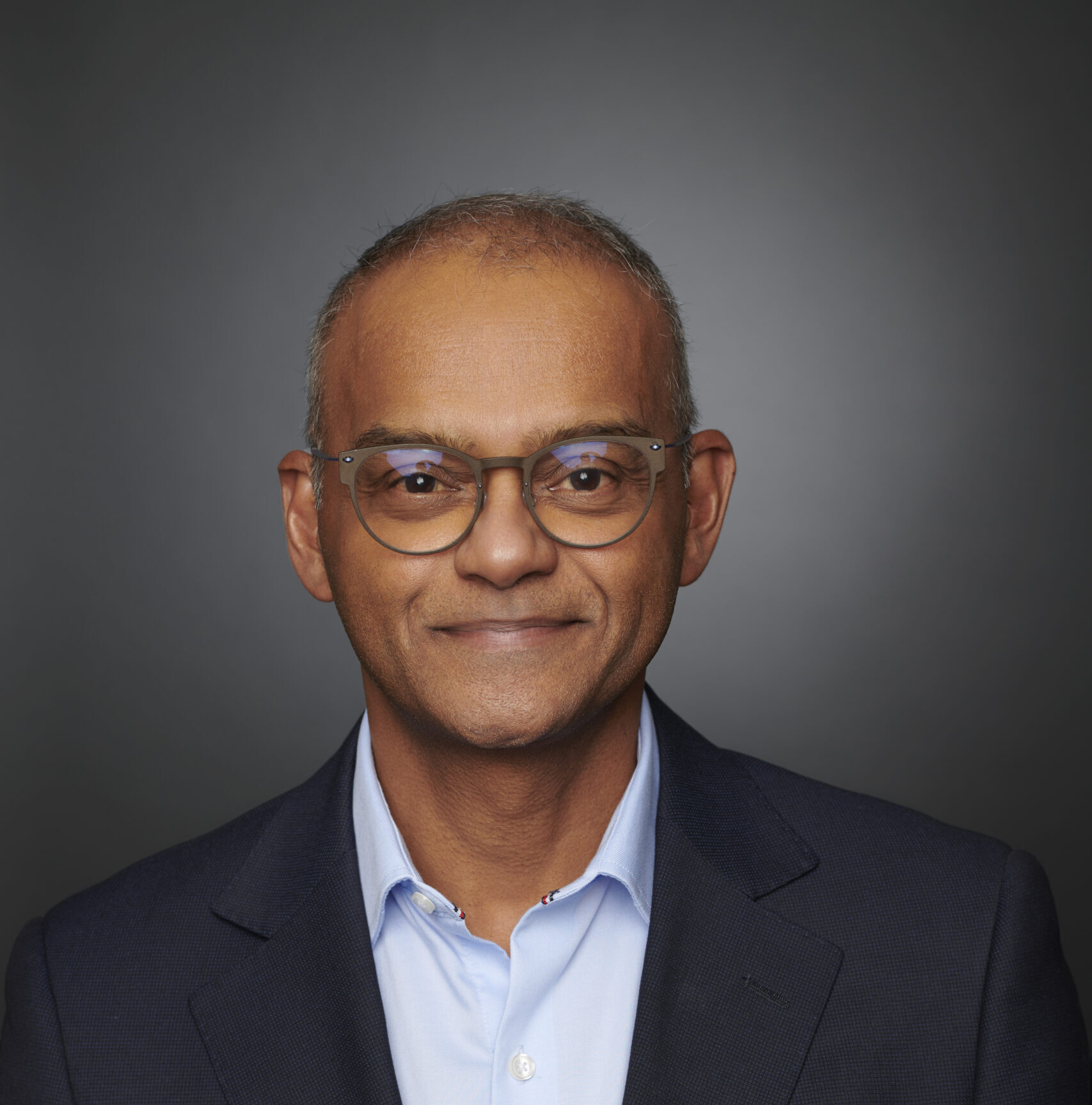
CFA Society Toronto is Canada’s largest organization of Chartered Financial Analyst charter holders, and one of the oldest such groups in the world. This year, the society is marking its 90th anniversary—a milestone that speaks not only to the enduring merits of the CFA designation for investment professionals, but also to how it has evolved to address emerging challenges and opportunities in the financial services sector and beyond.
Fred Pinto, CFA, ICD.D, is CEO of CFA Society Toronto, which today includes more than 11,500 charter holders. He signed on with the society after an accomplished three-decade career in financial services, and he brings unique insight into the value of the CFA, what the designation will mean to charter holders in future, and the emerging career opportunities they can explore.
In this Q&A, Mr. Pinto talks about his own journey in the financial industry, how the career landscape for CFAs is changing, and why family offices present “a wonderful opportunity” for charter holders to take on new professional challenges.
How did you get your start in the financial services industry?
I got my start way back in the early 1990s. It was somewhat unique in the sense that it was a time of rapid expansion in the financial services industry. A lot of us who went to university back then would not have planned that we would spend, you know, 25 or 30 years in an investment career.
I sort of fell into this industry by chance. I finished off university [with a B.A. in economics from the University of Toronto], and I did a little bit of traveling. And then I went back to the U of T career centre and I saw this advertisement for joining a pension consulting firm, Russell Investments. The posting was for a performance measurement analyst. And I said, ‘OK, well, I finished off school. I have some debt and I need to get a job.’ So, I sort of fell into the industry by applying for the role. And I guess my boss, whom I’m still very friendly with today, saw something he liked.
One bit of advice I always give to the younger cohort is that careers are rarely linear. At some point, you may want to consider taking a calculated risk.
Fred Pinto
I left after a few years and did an MBA at the same time as I was doing my CFA. I came back to that organization, which went on to develop into a global asset management firm. I did a whole bunch of different things for them in investments, in product development and product management, and I was really quite comfortable.
Fast-forward to the early 2010s, and I was looking to do something different. One bit of advice I always give to the younger cohort is that careers are rarely linear. At some point, you may want to consider taking a calculated risk. And you may have to go back a little bit to advance your career over the long term. And that’s what happened with me.
I was presented with an opportunity to join what I would consider to be a startup. It was well known in the online brokerage space, but much less known in wealth and asset management. So, I joined that organization, and it was based in Vancouver while I lived in Toronto, so I was on a plane probably every other week to build up that business. It went from about $200 million in assets under management to around $2 billion in assets under management by 2018. That organization then merged with a couple of others to form a Canadian wealth management organization called Aviso Wealth. And I ran their asset management business for almost four years.
When I left the organization in 2022, I was again looking to do something a little different. And the ‘something a little different’ was almost going back to first principles and asking, What am I really passionate about? What do I really like to do? And how can that fit with where I am in my career today?
I think AI will accelerate the value we bring to the table. I still believe that there is a human quotient.
Fred Pinto
The role as CEO of CFA Society Toronto came up, and it sort of checked all those boxes. I’m incredibly passionate about the CFA designation. It has afforded me a lifetime of success and also a lifetime of great relationships. And it’s also something that I like to do because I get to work with a small organization of 15 people here, and I’m building and growing something while having stakeholder impact with 11,500 members.
How has having the CFA designation helped you through the various stages of your career?
The CFA has really afforded me the opportunity to have credibility. When you have a CFA, you may be in leadership, or sales, or any number of roles, but the fact that you have done this designation—three levels, 400 hours of study per level—demonstrates resilience, tenacity and excellence.
I know you weren’t around 90 years ago when CFA Society Toronto got its start, but do you have any thoughts on how the organization and its function have evolved over the decades?
In 1936, the society was really a small group of individuals. At the time, the bylaws only allowed male employees of certain organizations—which would seem odd these days—and they were focused on very technical details with respect to financial statement analysis. It was obviously a very small community compared to our thousands of members, but like us they had shared interests, a shared curiosity of what they were doing. It really was about networking with a community and saying, ‘I want to get together with people.’ And what happens is that a community of peers becomes a community of lifelong friends.
That still exists for us today. We are very much a community. We help people at all stages of their careers. People might think of CFA Society Toronto as a very technically oriented organization, but we offer a lot of professional development and leadership training—soft skills. Those are skills that people need to accelerate their careers into leadership and into their next roles. And then we also offer senior people an opportunity to interact with their peers in a neutral setting—because at the end of the day, we’re not trying to sell them anything.
How do you see the role of the CFA evolving, especially now in the age of artificial intelligence?
First, the role of finance and investment professionals is broadening out. Historically, one might have pursued a CFA to get really in-depth knowledge of portfolio management or research analysis and then work on either the portfolio management side of the Street or the capital market side. Today, the role of CFAs is evolving. We have individuals today who are in financial planning and analysis, in treasury and corporate finance, in corporate strategy and development. It’s really taking that fundamentally sound principle of understanding companies, understanding financial statements, understanding macroeconomic trends and global trends, and wrapping those up into what I consider to be a building block of a career that can go in various directions.
Financial markets are … really evolving in two areas: private markets and private wealth. When we think of family offices, they are at the intersection of both these areas.
Fred Pinto
When I think about the skills that are going to matter most going forward, obviously AI and technology are on everyone’s mind, and people think, oh my gosh, this is going to wipe out a whole cohort of junior analysts. I take perhaps a different and more optimistic view. We still need smart people who are well-trained in ethics, in critical thinking, in judgment, in human relationships, to utilize AI and technology and then build upon it. Will it make me more efficient if I use AI in my job? Absolutely. But the question then is, What am I missing? Am I incorporating biases that define me as an individual or define me as an analyst?
I think AI will accelerate the value that we bring to the table. I still believe that there is a human quotient. There’s human value. Will there be a period of dislocation in the next, I don’t know, three to five years? More than likely that exists in all sorts of large industrial revolutions, right? When you think about the Internet, way back when I started my career in the early 1990s, there are going to be times like that. It’s going to yield roles and jobs that we probably haven’t even thought about yet.
That interpretation puts an emphasis on the soft skills—communication, judgment, ethics.
I would say those are critical today. When I speak with employers and our stakeholders, what’s clear is that technical skills are table stakes. It’s how well you apply them to problem solving and judgment that will accelerate your career. And part of that is being able to think critically and articulate a view.
What’s your perception of where family offices sit in the financial services landscape? Do you hear your members expressing more interest in them?
I think family offices offer a myriad of opportunities for someone who is anchored in our profession, which is portfolio management and analysis. It’s about understanding human relationships and human dynamics. It’s understanding business strategy and leadership. I will say today that family offices represent a tremendous growth opportunity for CFA charter holders.


Financial markets are evolving, and they’re really evolving in two areas: private markets and private wealth. And when we think of family offices, they are at the intersection of both these areas.
We are probably in the early, early stages of the growth and development of the family office market. We are probably in the later stages of the institutional market, like pensions. So now is a wonderful opportunity for people to transition from different sectors into family offices, to apply those skills of being a CIO or an institutional manager to being a CIO of a family office. I think it’s a wonderful opportunity for people to actually grow and build something, starting off as a CFA because you’re basically building out an investment platform and investment structure. You’re building that toolkit out for a family office.
We recently cohosted an event with PBY Capital about “Demystifying the Multi-Family Office.” One reason is that there’s obviously lots of interest in family offices, but also I think people do not know where to start. People might know how to build an investment policy or do an asset allocation, but what they may not know is the operating and service model of family offices, the organizational and family dynamics. The investment portion, while being very critical, is only one part of the family office market. The other part is relationships, it’s dynamics, it’s trust and ethics.
Joe Chidley is managing editor of Canadian Family Offices.
The Canadian Family Offices newsletter comes out on Sundays and Wednesdays. If you are interested in stories about Canadian enterprising families, family offices and the professionals who work with them, but like your content aggregated, you can sign up for our free newsletter here.
Please visit here to see information about our standards of journalistic excellence.