


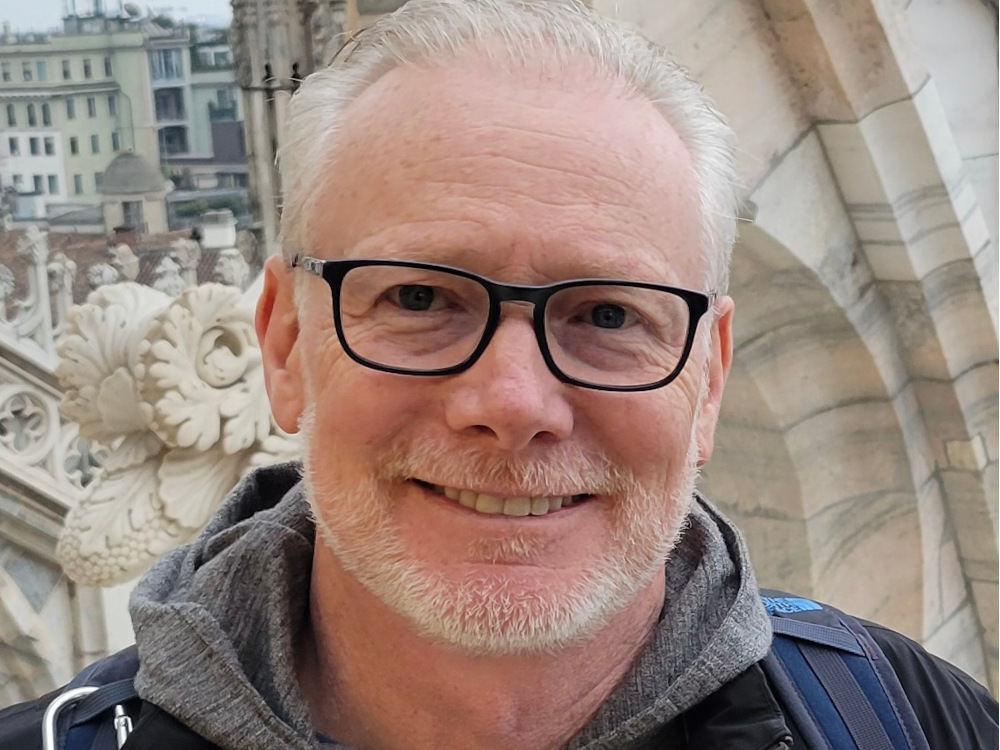
Over a career that now spans nearly 50 years, Salvatore “Sam” Reda has quietly become a significant influence in the financial industry and within Canada’s family office ecosystem. Affable, erudite, and consistently discreet, Mr. Reda prefers to stay out of the public spotlight, an approach grounded both in his humility and in his preference for connecting directly, face to face, with the many people he has helped and supported over the years.
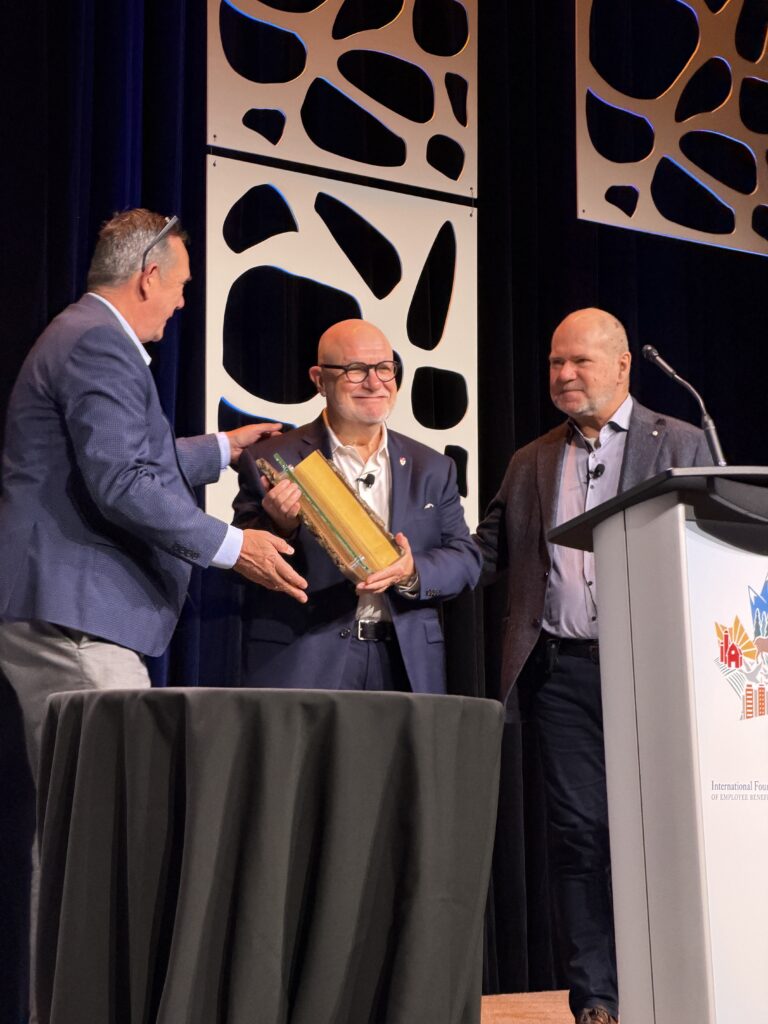
Recently, however, the spotlight has found him nonetheless, most notably last November, when he was honoured with a lifetime achievement award for his decades of volunteer work with the International Foundation of Employee Benefit Plans (IFEBP), a non-profit organization dedicated to educating trustees in the employee benefits industry, including pension fund investment management. Mr. Reda also sits on the Canadian Family Offices Editorial Advisory Board, where he contributes insights and thoughtful perspectives to enhance the publication’s editorial quality and guide informed discourse.
Mr. Reda is a veteran of the investment management industry, most recently serving as president of Maralex Capital, the strategic advisory firm he founded in 2011. He previously held executive roles at some of Canada’s most respected asset managers, including TAL Global Asset Management (purchased by CIBC), Natcan Investment Management, and Fiera Capital. Over the course of his career, he has served on the investment committees of numerous organizations. He is currently chair of the investment committee of the Pension Fund of the Employees of Concordia University, and a member of the investment committee of a major Canadian family office. He also sits on the boards of Jesselton Capital Management, PBY Capital (as vice chair) and Canso Innovations. His non‑corporate involvement is equally extensive, including chairing the Concordia University Intergenerational Fund and serving on the Board of Governors of the McGill University Health Centre Foundation, the steering committee for educational events at CFA Montreal, and the Canadian board of the IFEBP.
Those accomplishments represent only a fraction of Mr. Reda’s professional and volunteer contributions. Today, his informal work as a connector, mentor and builder of knowledge within the family office ecosystem is just as remarkable. In this Q&A, he reflects on how he entered the industry, the challenges facing ultra-high-net-worth (UHNW) families, multi-family offices and single-family offices today, and why, for him, “how much you care” has always mattered far more than “how much you know.”
Where were you born?
I was born in Calabria, Italy. I love telling this story. I was born in December 1954, and in January 1955 my dad came to Canada, leaving my mom and me with his family in Italy. It took him two years to save enough money to bring us over. My dad had a fifth‑grade education, as did my mom, and he worked as a construction labourer day and night.
He always told me his biggest dream was for his son to go to university. And on that, he got it right.
I graduated from McGill in 1977, and I was fortunate. I got a job in the pension investment department at Confederation Life Insurance Company—in those days, one of the major insurance companies in Canada. I thought it would be a two‑ or three‑year stint. I stayed for about 12 years.
Then I was recruited by Jean‑Guy Desjardins, founder of TAL Global Asset Management. He became a mentor and my partner for more than 21 years and now runs Fiera Capital. I spent 14 years with him at TAL, and then we sold the company to one of the major Canadian chartered banks. I did not want to work for a bank, to be honest. But then, someone at National Bank asked me to lead their money management operation. His name was Jean. I told him, ‘Jean, I do not have the personality to work within a bank.’ And he said, ‘I am going to be the block between you and the bank. I will keep you away from any bureaucracy or politics.’ He lived up to his word, and I ran that operation for three years. Then, after Jean‑Guy Desjardins founded Fiera Capital, he invited me back to help build the business, and I spent another seven years doing it with him.
Family offices are seen as the new kid on the block. They represent enormous wealth, but they are far more than wealth management.
After that, I decided to step back a little and focus on board and investment committee mandates and some consulting work. It keeps me just as busy as before, but now I choose what I want to do. I was 56 then, and I am 71 now, still doing it and still feeling energized and motivated. I am a lucky person in what I call my retirement.
You have long supported the Chartered Financial Analyst designation. How did that begin?
Honestly, earning my CFA charter was the best professional decision I ever made, back when I was at Confed. I was proud of it, and I am one of the early charterholders.
There was one person who influenced that decision: Prem Watsa, who later founded Fairfax Financial. Prem and I worked together at Confed. He was always telling me, ‘Sam, you have to read this book, The Money Masters, or this other one.’ He had a huge influence on me. That is how I developed my love of investing.
Why now your interest in family offices?
Until I was 56, most of my clients were institutional. But about 15 years ago, I began discovering the world of family offices. A dear friend of mine, John Carswell from Canso Investment Counsel, told me that his firm was seeing growing interest from family offices and that the expansion of traditional defined benefit plans was becoming more limited. He asked whether I would help him build a firm that would focus primarily on serving family offices.
And it is a fascinating world, much more interesting than traditional institutional in many ways. The institutional industry, especially pension funds, is highly structured and rigid, with pension committees, consultants, gatekeepers and so on. In contrast, with family offices, you are closer to dealing directly with the families, how they manage their wealth, but most importantly, understanding their family aspirations. Every family is different, which is why defining what a ‘family office’ is can be so challenging.
You organized your first family office event with CFA Montreal in 2009. How did that begin?
It goes back to my volunteer work with the IFEBP. In 1999, the organization offered an investment educational program for English‑Canadian pension fund trustees, but not for French‑Canadian trustees. So, I developed a seminar to educate French‑Canadian trustees on major investment topics. Last year, we celebrated our 25th edition, after missing two years due to the pandemic.
Education has always been at the core for me. When I launched the family office events for CFA Montreal, the goal was to help investment professionals better understand the needs and aspirations of UHNW individuals, multi-family offices, and single-family offices. At first, people would ask, ‘Why family offices? Are they not just like pension funds?’ Clearly, they were not. Now, the event is sold out every year.
This year’s event is on April 15, 2026. I invited Owen Matthews, the second generation of the Matthews family, whom you have interviewed at Canadian Family Offices, and he is incredible one‑on‑one. Every time we spoke previously, his dad was there, and Owen barely said a word. When we finally spoke alone, I said, ‘Owen, you do all these amazing things I had no idea about.’ And he said, ‘Well, when my dad is around, he does not give me a chance to speak,’ and he laughed.
Arnaud de Coninck, seventh generation of the Solvay family of Belgium since 1863, will also join us to share the story of an old European family and its fascinating family governance and family business. And Patricia Saputo of Crysalia, from the well‑known Saputo family, will facilitate the discussion. When preparing these panels, I am always touched by how generously these families share their history and insights.
I also launched a series for the PBY Capital team called ‘Generations in Conversation,’ focused on generational dynamics. Two generations from one family take the stage together to discuss what matters most to them. The audience consists entirely of UHNW families, multi-family offices, and single-family offices. Last year, we welcomed Jim and David Hewitt (Hewitt Group), Tina Naqvi Rota and Aliya Rota (Cameron Corp.), and Pierre and Isabelle Somers (Walter Group). The conversations were deeply inspiring for the audience, and together we raised $400,000 for the Dr. Judy Luu Women’s Cardiovascular Health Program at the McGill University Health Centre, a cause that is close to my own family and to the PBY team.
Families need and want a champion, someone who brings everything together.
We are now finalizing our 2026 edition of ‘Generations in Conversation,’ which will feature four remarkable families sharing their stories and aspirations. Once again, we will be raising funds in support of the critically important cause of women’s health.
There seems to be a growing interest in family offices. Why is that?
I think it is because the investment community now recognizes the influence and diversity of family offices. Many years ago, people mainly wanted to understand how large pension funds, endowments, etc. were invested. Now, they want to understand families, how they think, what they prioritize, how they make decisions, and how they manage their substantial wealth. Family offices are seen as the new kid on the block. They represent enormous wealth, but they are far more than wealth management. Each is a unique family with its own needs! Unfortunately, too much emphasis is still often placed on the asset management side.
How so?
If you look at the Ultra High Net Worth Institute’s Ten Domains of Family Wealth, which I think are excellent, only one relates purely to financial and investment management. The rest focus on equally important areas.

I will never forget what Patricia Saputo once told me: “Sam, the investment part is the easy part. The hard part is all the rest.” She was right. Many people can analyze a private equity or real estate deal, but the other wealth creation and stewardship activities, and especially the cultivation of family capital, are the real challenges, including communication, trust, expectations, and so on. Families are far more than balance sheets, exactly as the Ten Domains indicate.
Are multi-family and single-family offices addressing those issues?
There are real differences between a multi-family office and a single-family office. Many people use the terms interchangeably, but that is not completely correct. Some offices are trying, but many are not. There are very few multi-family offices or single-family offices that fully integrate all Ten Domains, such as governance, risk, health, well‑being, education, family dynamics and investments, in a seamless way. Ideally, a family office would coordinate all of these.
People talk about investments and assets, but too often they are just trying to make money off you.
Families need and want a champion, someone who brings everything together. Some multi-family offices are getting closer, but internally many areas within an office (especially multi-family offices) still operate in silos. In a true family office, everybody should work together, in full comprehension of a family’s needs. As a client, I want one competent point of contact who helps coordinate across the teams and who really knows my family and its aspirations. Families want peace of mind. My own family has been searching for a true multi-family office for years. It is not easy to find.
What are your goals now?
Above all, I want to do meaningful work. I am still learning every day. There is so much to uncover about family offices, and each one is different. I want to build strong relationships, make a positive impact, keep growing, and be of true service.
One principle I have lived by most of my life is this: I do not care how much you know until I know how much you care. Some people talk endlessly, and I stop hearing them because the caring part is what matters. The same is true in family offices. People talk about investments and assets, but too often they are just trying to make money off you. That has never been my philosophy.
The soft issues truly matter and are the hardest to deal with. Let me share a story. A friend sold his company and did very well. Every time we met, he would ask, ‘Hey Sam, how did you do last year?’, meaning my investment return. One day, I finally said, ‘Look, you did 10 per cent, I did eight per cent. Do you think that stops me from sleeping at night?’ Then I added, ‘You have a kid with whom you have little communication. You have grandchildren you barely know. So, tell me, what should really be keeping you up at night? Certainly not whether I made two per cent more or less than you?’ Every family is unique in many ways, and their wealth does not change that.
I had lunch with him last week. We did not talk about portfolio management at all. And he said, ‘You know, it feels like I escaped by always talking about investments.’ He added, ‘In reality, it is all about the family.’
Joe Chidley is Managing Editor of Canadian Family Offices.
The Canadian Family Offices newsletter comes out on Sundays and Wednesdays. If you are interested in stories about Canadian enterprising families, family offices and the professionals who work with them, sign up for our free newsletter here.
Please visit here to see information about our standards of journalistic excellence.