

This article is part of our summer special report on wealth in Canada.
Wealthy families are chasing favourable tax regimes, residency-by-investment programs, and sanctuaries from future political policy changes as they search for new places to live or have a second home.
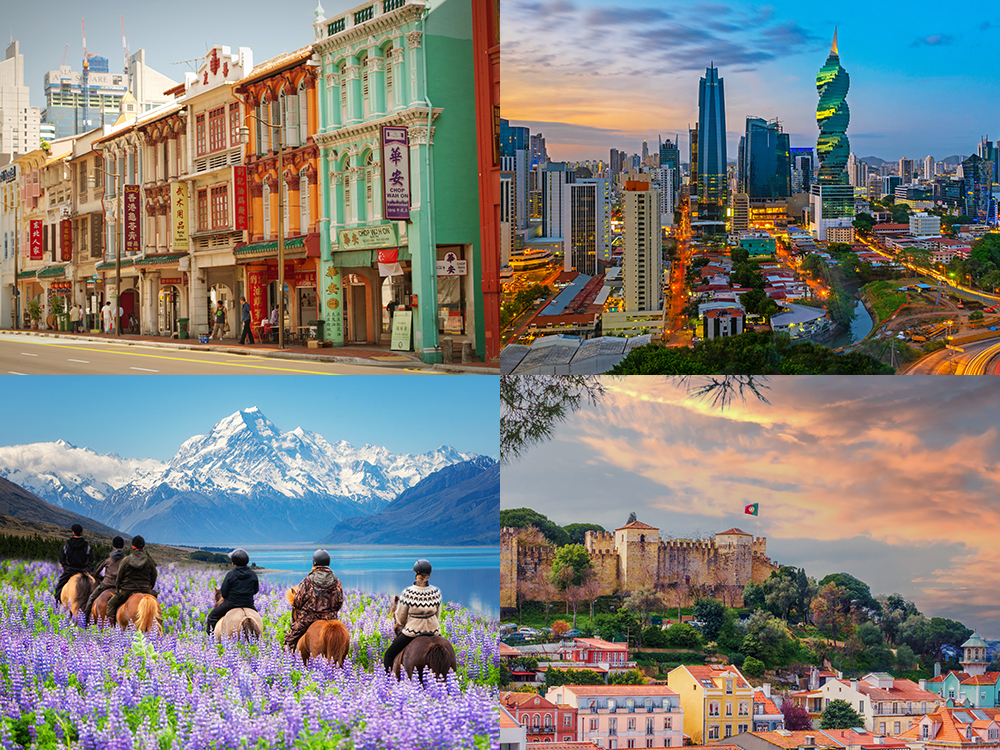
Experts say the ultra-high-net-worth migration trend is accelerating as countries offer more enticing incentives. Trending destinations include widely diverse locations, including Portugal, Singapore, New Zealand and the Cayman Islands, but the U.S. remains the biggest magnet for the rich and billionaire class.
Tanzeela Ayub, a partner in KPMG’s Family Office who advises on cross-border tax matters, points to a recent report from global wealth analysis firm Altrata that found 37 per cent of the world’s ultra-high-net-worth people lived in the U.S. in 2025.

What makes the U.S. attractive? There are many reasons, including access to global markets and capital, business growth opportunities, proximity to Canada, and opportunity. Canadians might have especially close ties to their southern neighbour (even as trade and political relations are more strained than they have been in decades). Many have vacation homes over the border, notes Ayub. Their children may move to the States for educational opportunities and then stay. Entrepreneurs may move there to scale up their businesses, access customers or raise capital. Miami-based Basil Mohr-Elzeki, managing partner for relocation specialists Henley & Partners USA, adds that for migrants from around the world, the U.S. offers attractive education and very good private health care.
Many other jurisdictions are actively targeting the wealthy investor class, however. European and Middle Eastern luxury destinations offer golden visas for easy residency and relocation.
But geopolitical situations can change, and wealthy migrants aren’t immune from risks—as expats in the United Arab Emirates discovered this year when the Iran-U.S. conflict suddenly imperiled the previously secure destination.
Before recent events, the UAE seemed to have it all. “They have a zero per cent tax regime on the personal side,” Mohr-Elzeki says. “They have a luxury lifestyle, a very high level of safety, generally speaking, and very pro-business.” But while the UAE still sits at the top of recent lists as a residential draw, that’s likely to change when statistics come in for 2026, he adds.
Many nations lure wealthy investors with low investment requirements to achieve residency status. And some offer preferential access to residency based on ancestral ties to the country. Wealthy migrants are favouring European countries because residency in one EU country is a doorway to opportunities throughout the region. Portugal, Italy and Malta are attracting particular attention, says Mohr-Elzeki.
It’s no longer [just] about ‘Where do we want to live?’ It’s also about ‘What should we be doing for the transfer of our capital, business, family?’
Tanzeela Ayub
Taxes are another prime consideration in selecting a new place to live—and not just in terms of the tax regime in the destination location.
Ayub says taxes are not always the primary driver but should be a part of the mobility conversation. Canada’s departure tax on the appreciation of certain assets can be a factor in making a move or on the timing of a move. For instance, a technology entrepreneur may relocate their start-up to the U.S. before the value of the business increases significantly, thus managing the departure tax. The rules can also affect families with significant wealth across different asset classes, particularly where a move could trigger tax before an actual sale or liquidity event.
Ayub stresses that proactive planning and thinking about longer-term implications of migration decisions are key for the wealthy migrant and their advisors.
“Certain jurisdictions provide relatively accessible entry through some migration programs. Families should weigh their options, understand the risks if geopolitical or policy issues create volatility, and consider what a backup plan would be,” she says. “More and more advisors are thinking about mobility this way, because it’s no longer only about where a family wants to live. It’s also about the transfer of our capital, business interests, family considerations and intergenerational planning. Families are thinking about succession planning and how decisions made today will affect the next generation.”
Ayub adds that many family offices are following the migration ecosystem and establishing satellite offices or full-fledged family offices in jurisdictions where client demand, capital flows and family mobility are growing.
There is no one list of the most attractive destinations for wealthy migrants or one single approach to figuring them out. For example, Forbes concentrates on billionaires’ citizenship rather than home base, while global luxury real estate consultancy Knight Frank uses a definition of ultra-high-net worth of $30 million and up for its country market report. For its part, Henley & Partners ranks destination countries by factors that attract the wealthy, including taxation policy, educational and economic opportunity, and stable institutions.
The list below highlights some countries that are attracting significant attention from the wealthy in 2026 as desirable locations to live, or at least have a residence, and outlines some of the policies and factors driving residency applications.
United States

In raw numbers, the U.S. boasts the highest number of wealthy residents on the planet. UK-based Knight Frank reports there are 251,352 residents with more than US$30 million in assets. The Forbes billionaire list reports that 123 New Yorkers and 58 San Franciscans are in the billionaire club.
Henley & Partners pegs the U.S. with a 62.3 wealth mobility competitiveness score—not in the Top 10. Henley’s analysis shows U.S. advantages include the most liquid capital markets; AI, finance and technology leadership; strong institutions, and a concentration of global private wealth. But the firm’s 2026 Private Wealth Migration Report finds taxes and family reunification policies are less favourable than those of other competing destinations.
Panama and Costa Rica

Stable Central American countries Panama and Costa Rica are attracting residents from elsewhere in the Americas with their generous residency programs and pathways to citizenship as well as favourable tax regimes. An idyllic tropical lifestyle doesn’t hurt either.
Panama scores 71.5 on the Henley scale. The country taxes only income made in Panama. Its investor program for residency requires US$300,000 in real estate investment, $500,000 invested in the local stock exchange, or a $750,000 term deposit in a local bank. Residency can lead to citizenship in five years, according to Henley & Partners.
Costa Rica’s investor program requires at least $150,000 in investment or stable pension income. The country scores 70.5 on the Henley scale.
Cayman Islands
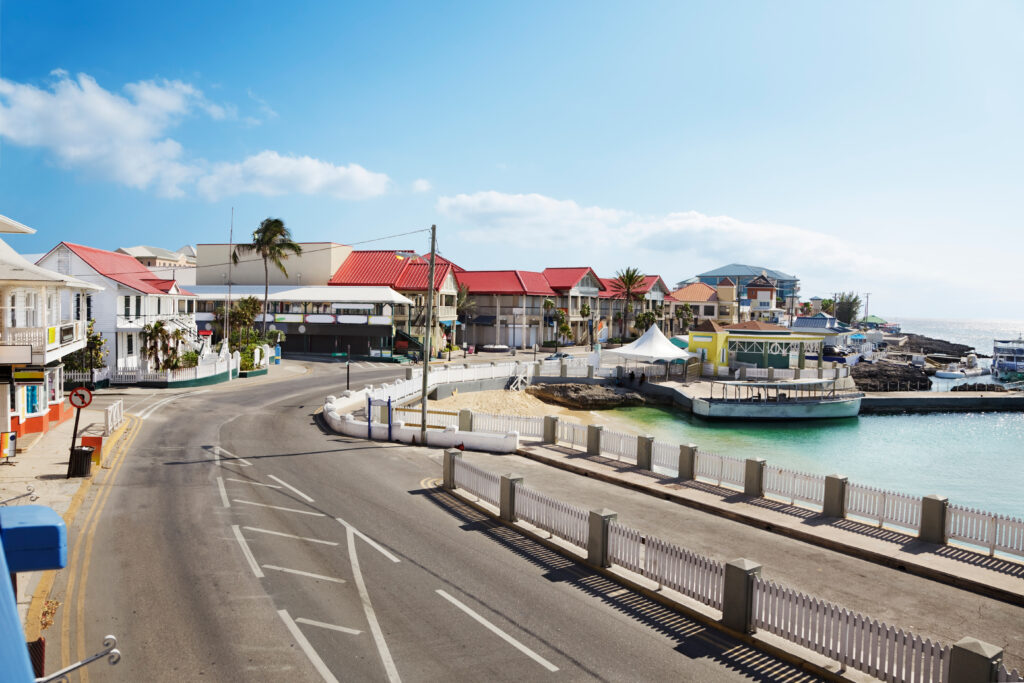
The Cayman Islands has a reputation as a robust tax haven, with a sophisticated financial services sector and lush lifestyle. It garnered a 74.3 rating out of a 100 in the Henley & Partners 2026 wealth mobility report and has a leading wealth destination for decades. Plus, it’s only 75 minutes from Miami by air. The country offers routes to citizenship and residency requiring investments upward of US$1 million.
Portugal

Portugal is proving attractive not just for tourists, but also for wealthy migrants looking for residency. According to Knight Frank, in the past five years the number of UHNW residents has increased by 49 per cent, to 2,187, and a further bump to 2,452 by 2031 is predicted. Henley gives the country a high 72.5 rating for its migration policies and lifestyle. Portugal has instituted a targeted residency program with tax advantages to attract individuals involved in research and innovation. The pull of European Union membership also appeals.
The publication World Finance spotlights Lisbon, Cascais and the Algarve as particularly attractive to the luxury set.
Switzerland

With a long history as a financial centre, Switzerland’s appeal continues for wealthy migrants. Knight Frank says there are 17,692 ultra-high-net-worth individuals in the country, up 39 per cent in the past five years. Henley & Partners gives the country a 70.8 score as a destination for the wealthy, particularly because of its value as a politically neutral safe haven for preserving wealth. A lump-sum tax system in some parts of the country is favourable, as well.
Italy

Italy’s flat tax regime, along with its abundance of luxury locales, is garnering more and more interest. Knight Frank reports 15,433 ultra-wealthy residents this year, an increase of 23 per cent in five years. The Guardian noted recently that expat Brits fleeing the Iran war disruption in the United Arab Emirates are settling in Milan, Italy’s fashion and finance capital. Italy’s optional flat tax now stands at 300,000 euros—up from 100,000 euros at its inception in 2017—but it is still attractive to the UHNW set who get the best advantage. European Union membership is also a draw.
United Arab Emirates

While the U.S.-Iran war plays out, the question will be whether the UAE’s Golden Visa and much-vaunted luxury lifestyle can outweigh the questions about political unrest in the region.
While lists showing popular migration destinations still include the UAE, the data is largely based on 2025 figures. Knight Frank reported 4,851 ultra-wealthy residents in 2026, up more than 50 per cent in five years.
The country’s golden visa offers several categories of eligible investments, ranging from US$110,000 to over US$500,000, depending on the type of investment and planned duration of residence. The UAE levies no personal, wealth or personal capital gains tax on residents and limits corporate tax for companies operating in the country to nine per cent.
Singapore

Forbes estimates there are 60 billionaires living in Singapore, and Knight Frank says 7,171 UHNW residents make the city-state their home, up 54.5 per cent in five years. Henley & Partners highlights Singapore in this year’s wealth migration report, scoring it at 79.5 for its stability, financial institution strength and deep capital markets. It has been a particular draw for the ultra-wealthy from China and Southeast Asia and those doing business in the region.
New Zealand

New Zealand is about as far as you can get from global conflict zones. Its generous investor visa program, requiring only NZD$5 million (just over CAD$4 million) or NZD $10 million depending on the type of program, has sparked considerable interest.
Henley scores New Zealand as a solid 75.8, ranking it second behind Singapore. The Kiwi government’s website shows 730 applicants from a wide range of countries since the visa introduction in April 2025. The Knight Frank report shows 1,710 UHNW residents in New Zealand, up 11 per cent in five years, with a forecast of a 28.5 per cent increase in numbers over the next five years.
Forbes attributes the draw for U.S. residency applications to quality of life, including cleaner air and a close connection to nature. PayPal founder Peter Thiel, for one, bought a residence in New Zealand in 2017, calling the country “future-proof.”
And what about Canada?
Altrata’s latest report shows 17,690 individuals in the UHNW category in Canada. Henley & Partners gives Canada high points for its strong passport and quality of life. But some media have reported a softening in Canada’s appeal to the wealthy, including a Globe and Mail report in December that cited concerns about the economy and tax policy.
For those who do wish to call the Great White North home, Quebec provides one potential gateway: the Quebec Investor Immigration Program (QIIP), which grants a work permit and the right to apply for permanent residence anywhere in Canada after one year. Among other qualifications, applicants must make an investment totalling at least $1.2 million and have a net worth of at least $2 million. And yes, they must be able to speak French.
Kathy Kerr is a veteran online and print journalist who, as a newspaper reporter, editor, and now freelance writer has covered the Canadian business and financial scene for more than three decades. Kathy has contributed to Canadian Family Offices for four years and has also written for The Globe and Mail, the Real Estate News Exchange and various commercial business publications. She also comments on Alberta politics for TV, radio and online publications.
The Canadian Family Offices newsletter comes out on Sundays and Wednesdays. If you are interested in stories about Canadian enterprising families, family offices and the professionals who work with them, you can sign up for our free newsletter here.
Please visit here to see information about our standards of journalistic excellence.