


This article is part of our February Special Report on Philanthropy in Canada. To see all the articles so far, click here.
Studies have consistently shown that fewer and fewer Canadians are supporting philanthropic causes and total donations have been falling. But Canadian Family Offices’ latest philanthropy survey, conducted through January and February, suggests that high-net-worth and ultra-high-net-worth families may continue to buck that trend. When we asked a sampling of donors, advisors and foundation board members about any anticipated change in donation levels in 2026, half of respondents said they expected giving to increase either modestly or significantly this year.
That is just one of the findings in Canadian Family Offices’ second annual philanthropy survey, which is part of our commitment to covering the issues, opportunities and personalities in Canada’s philanthropic ecosystem. This year, more than 80 respondents, representing a cross-section of donors, advisors and foundation board members, participated. The survey asked more than 30 questions about giving priorities, intentions and strategies.
Giving more
When asked about the anticipated change in giving in 2026, about 45 per cent of respondents said that they expected it to remain level, but most of the rest—50 per cent of the total—expected giving to increase, including 10 per cent who expected it to increase significantly.
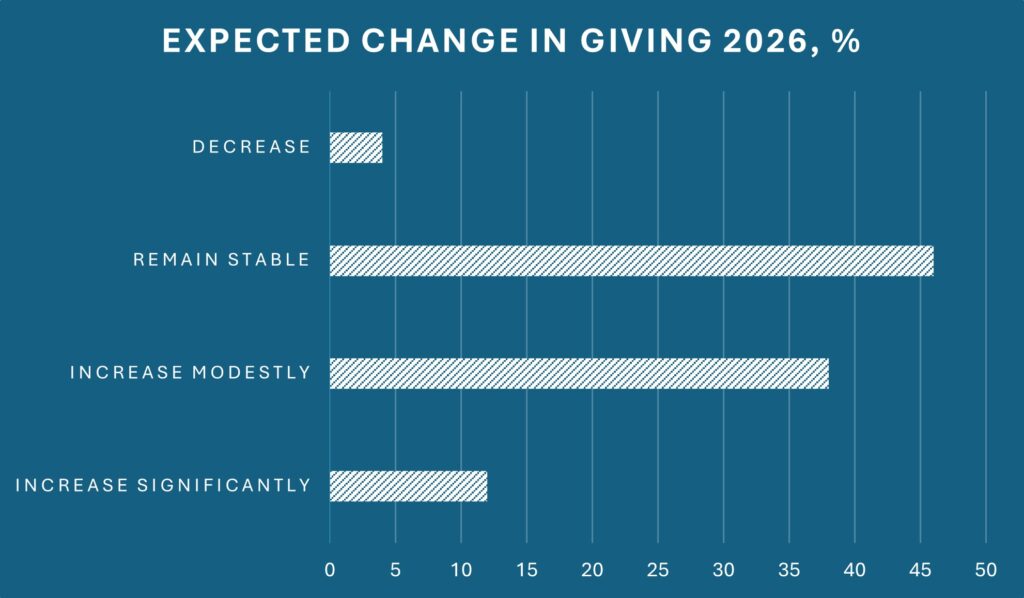
That relatively high level of commitment to maintaining or increasing charitable support is consistent with last year’s philanthropy survey, in which about 90 per cent of respondents said giving would not decrease in 2025.
Where they give
As it did last year, our survey asked respondents to rank their or their clients’ top giving priorities. The most commonly cited giving targets this year: health and medical research, arts and culture, social justice and equity, education, and international humanitarian relief.
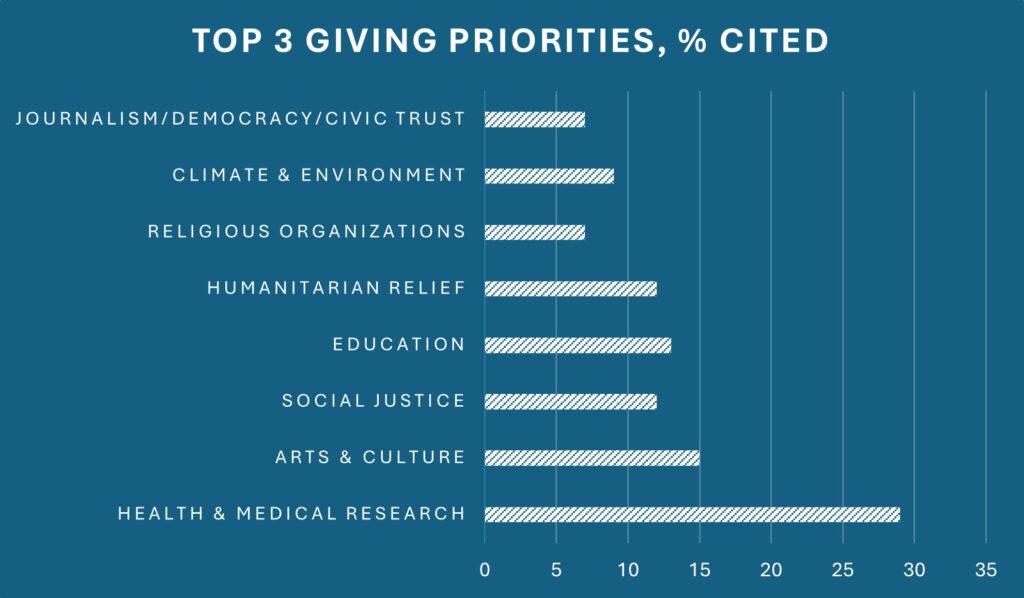
Interestingly, social justice ranked relatively low among giving priorities last year, and environmental causes ranked among the Top 5. This year, those positions are reversed, with social justice ranking among the most-cited Top 3 priorities and climate/environment falling, ranked as a top priority by just nine per cent of respondents. International aid was also among the lower priorities last year, but ranks among the five most-cited Top 3 priorities this year.
How they give
Donor-advised funds (DAFs) have become among the largest and most important giving vehicles in the Canadian philanthropic landscape, and our survey confirms that reality. When we asked donors and advisors which vehicle they or their clients primarily use for giving, direct donations to charitable organizations still came out on top, cited by about one-third of respondents.
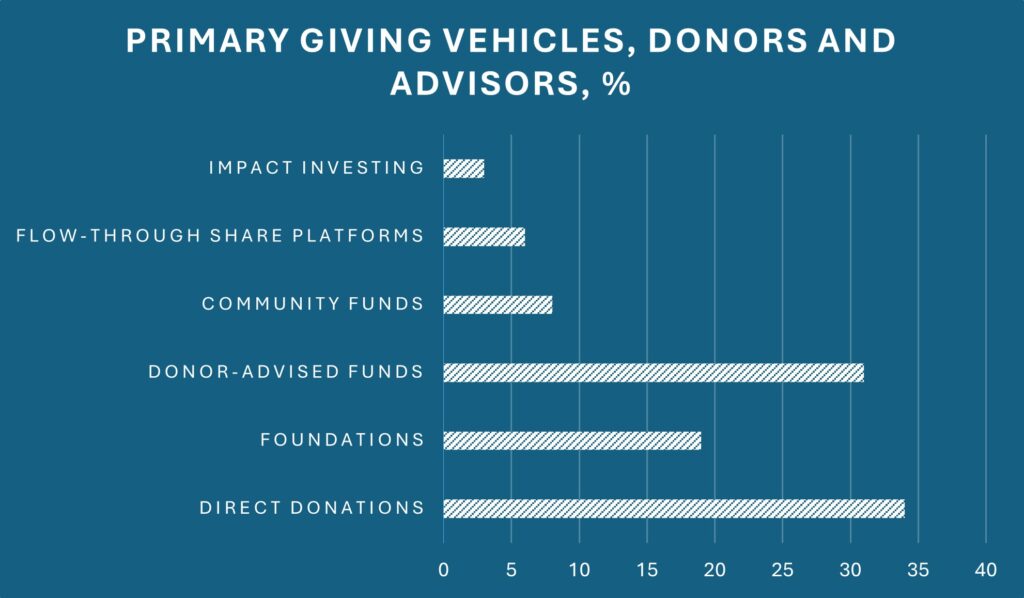
DAFs, however, came in a very close second, at 31 percent. And among donors—whose use of the vehicles in last year’s survey was well below that of direct donations—DAFs this year nearly equalled direct.
This trend may well continue. When we asked donors and advisors what, if any, structural changes they planned to make in 2026, nearly one in three said that they expected to increase the use of DAFs. Notably, impact investing, which aims to generate positive social or environmental outcomes along with financial returns, was deployed infrequently among respondents to our survey (about three per cent), but the strategy was cited by 15 per cent of donors as one they expected to use this year.
Unrestricted giving on the rise?
Our survey asked respondents whether and how they had shifted their giving strategies. The most common response was that they had not changed strategy at all. Among those who did, there was a clear trend towards fewer, larger grants, cited by one in five respondents.
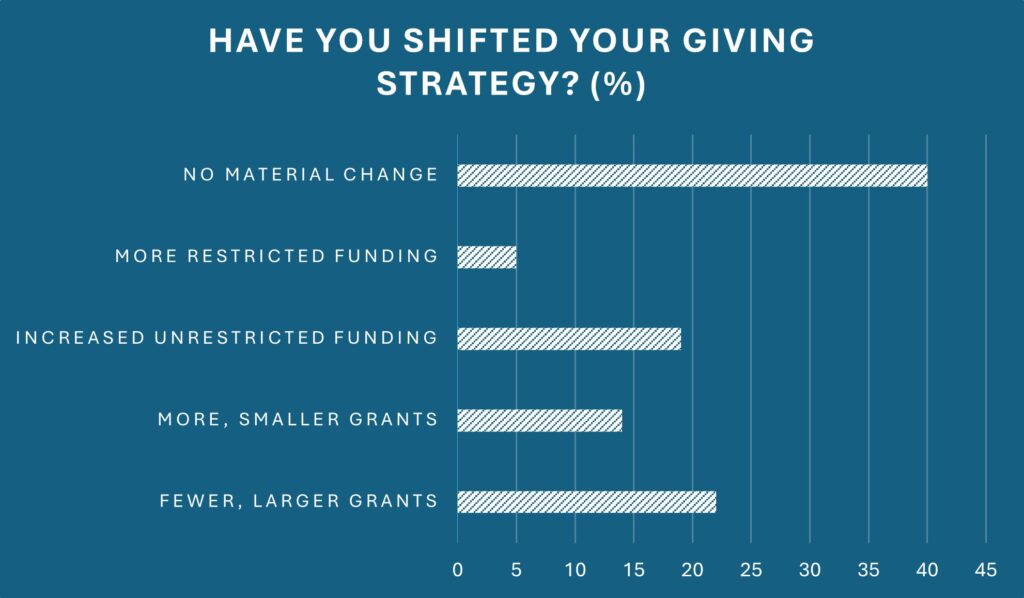
Almost as many, however, said that they had increased the use of unrestricted giving—donations made without specific limitations to how the funds will be used—which has been called out among some philanthropy advocates as a way to enhance the efficiency and impact of giving.
Joe Chidley is managing editor of Canadian Family Offices.
Get our new quarterly newsletter about philanthropy: Canadian Family Offices’ new newsletter brings you key insights, trends and expert perspectives on charitable giving, tailored to Canada’s wealth leaders and giving communities. Click here to subscribe.
Please visit here to see information about our standards of journalistic excellence.