


Just a short memory ago, the world was a different place. Then, in early January, Venezuela’s president was captured by the U.S. Soon, tensions over Greenland escalated and simmered. And the U.S. oil blockade of Cuba ramped up and continues.
In a moment of relative calm, amid the stream of events, the Wall Street Journal released a brief video urging viewers not to be too worried about something they may not have even been thinking about: “Forget Greenland. Investors should be paying attention to the Japanese government bond market.”
Today, we have an entire reshuffling of risks, with the White House’s war in the Middle East turning any suggestion of stability into rubble.
The flash of concerns about one region after another speaks to the difficulty of managing risk in turbulent times. If it’s hard enough for the global markets to gauge the impact of numbers-based events such as high Japanese yields or surging energy prices, how can they quantify the political turmoil of the war and other global dangers, to say nothing of U.S. tariffs?
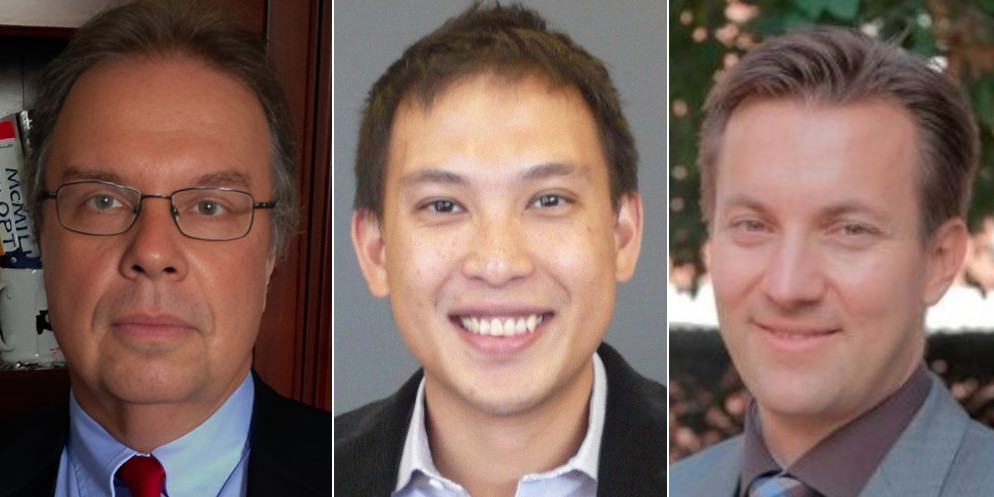
“And I think another aspect of risk, which is very hard to quantify, is the risk that investors take on themselves, through their own emotional behaviour, and their perception of markets, which may be more hopeful than realistic,” says Jonathan Baird, award-winning money manager and publisher of the monthly Global Investment Letter based in Toronto. As he sees it, with all the current geopolitical risks abounding, complacency can be a big problem for investors.
Because it is difficult or impossible to cleanly fit geopolitics into investment models, investors should be more proactive in assessing signs of risk, he says. “That’s where attention to evidence comes in. The idea is that you don’t act without some concrete reasons to do so,” Baird argues.
It’s a subtle point. Baird describes himself as a student of history, and he feels that seeing events in historical contexts can add perspective, helping investors to stay alert to changing conditions. For Baird, it’s not about knee-jerk reactions, but about not being too slow or, worse, complacent.
“We’ve had relatively strong markets over the past 10 years. … I think that has lulled a lot of people into a false sense of security,” where they believe “that what’s happened to markets in the past decade, or the recent past, is necessarily going to happen in the future,” he says.
“My own contention is that the balance of this decade and maybe longer is going to see a substantial amount of market volatility. In fact, I think it’s going to be one of the defining characteristics of the balance of the decade. And that’s going to create risks,” Baird says.
“But if you’re more proactive, or more of an active investor, that volatility will also present some great opportunities as well. So, I think the investors that rely on evidence-based investing and try to avoid complacency, staying alert to developments, are going to do well,” he argues.
If you try to quantify it, you’re going to create false precision. That’s the term I use.
Chay Ornthanalai, University of Toronto’s Rotman School of Management
Attempts to quantify the unquantifiable remain alluring, especially with artificial intelligence seeping into risk modelling and market sentiment indicators indirectly measuring risks by looking at traders’ behaviour.
But “if you try to quantify it, you’re going to create false precision. That’s the term I use,” says Chay Ornthanalai, associate fellow, Canadian Derivatives Institute and associate professor of finance at the University of Toronto’s Rotman School of Management.
“False precision is that, yes, if you quantify it, you’re going to get some value. But it’s going to be based on a model that’s probably incorrect to begin with,” he says.
When facing unquantifiable risks, “the main thing is to go back to the objective of the family office or the fund,” he says. In his work with foundations, he advises that when uncharted difficulties arise, “go back to the blueprint. What is the objective of the fund, and stick to that as closely as possible,” Ornthanalai says.
What’s important is to avoid being mired in a model that ultimately doesn’t work. The more one tries to quantify unquantifiable risk, the more people will use the model, because they think the calculations are good, Ornthanalai says. But at times like these, qualitative rather than quantitative assessment, looking at risk broadly, is probably more valuable, he argues. “When you can’t really model something, you shouldn’t trust your quantifications.”
Using history as a guide adds perspective, if only we could learn from lessons of the past.
But Nikola Gradojevic also sees problems with relying too heavily on historical patterns as a predictive tool.
“Markets evolve, geopolitics evolve, politicians change, foreign policy may change too,” says Gradojevic, who is professor and Fidelity Chair in Finance at the Lang School of Business and Economics, Department of Economics and Finance, University of Guelph.
What caused crises in the past may not be as relevant today. So, “we would be using irrelevant historical information as our ‘training data set’ that may have nothing to do with the present state of markets and political realities,” he says.

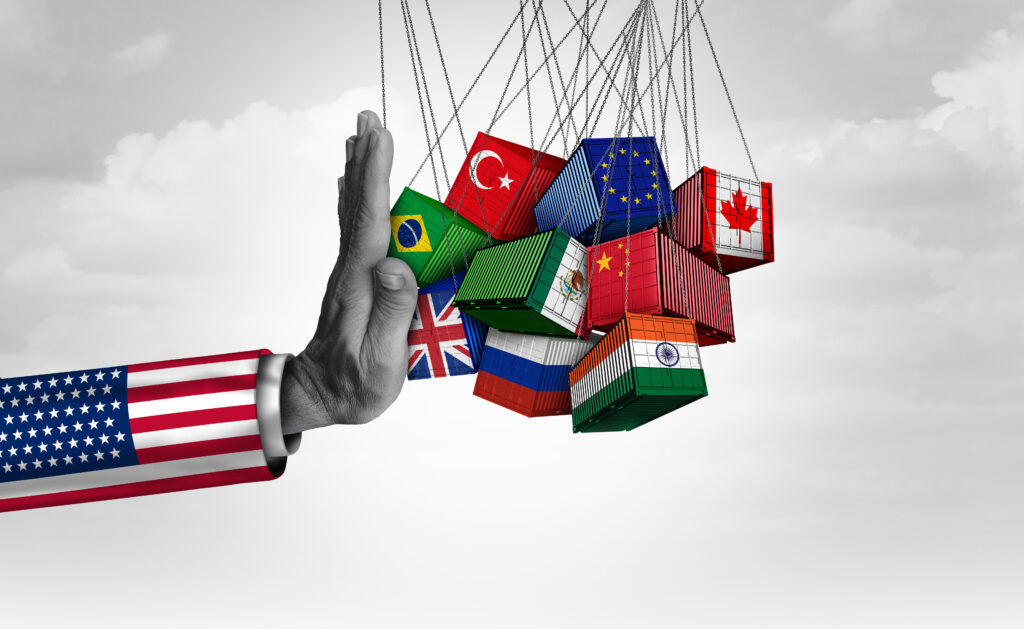

A central problem with geopolitical modelling is the secrecy surrounding global leaders. It can be difficult to understand the true flow of information behind policy decisions. “Information flow arising from real-world events, that may impact the decisions by politicians, is largely random and interconnected in ways we cannot comprehend,” Gradojevic says.
“Finally, politicians are often irrational and influenced by psychological traits—vanity, invincibility complex, etc., that are not easily quantifiable in an AI or any other financial model,” he says. Even if a model attempts to push emotions to the side, the model’s creators “have to decide which geographical region of the world is more important than other regions. And then they weigh that information. You have to assign weights to the information when you are creating an index. So, it’s highly subjective in my opinion.”
In this climate, he generally advises to seek out diversity across various countries and regions, and across different asset classes.
“Investors should be more cautious than ever. They should carefully select and diversify, prioritize quality, look for undervalued companies, butremain flexible enough to respond to new technologies and trends,” Gradojevic says.
And, as Baird emphasizes, it’s about acting based on the evidence the market itself provides.
“One thing I learned as an investor a long, long time ago is don’t try to impose your own view on how you think things should be in the market,” he says. “Wait for the market to tell you what it wants to do.”
Guy Dixon began his career at Dow Jones Newswires in New York before joining the Globe and Mail, covering financial markets, business news, the arts and other topics over the years. He has written for the CBC and The Walrus among other publications.
The Canadian Family Offices newsletter comes out on Sundays and Wednesdays. If you are interested in stories about Canadian enterprising families, family offices and the professionals who work with them, you can sign up for our free newsletter here.
Please visit here to see information about our standards of journalistic excellence.