


Making sure you have enough money available for your everyday needs and extra expenses is an important consideration for everyone. Yet, for high-net-worth families with significant sums tied up in alternatives—an asset class currently plagued with issues of illiquidity and redemptions—cash-flow planning is especially critical.
As stewards of multigenerational wealth, family offices balance investment objectives with other considerations, ensuring there’s enough money to cover lifestyle and operating expenses, tax obligations, philanthropic commitments, succession and estate planning, opportunistic investments and intergenerational wealth transfers.
A report by RBC and Campden Wealth released in October 2025 found that liquidity planning is rising on the priority list for family offices, with 48 per cent of those interviewed identifying improving liquidity as a primary investment objective. It also found that private-market investments continue to be the largest-held asset class, accounting for 29 per cent of the average family office portfolio.
The role of liquidity in a portfolio
Planning for liquidity needs and determining what buckets money should come from is a long-term exercise that begins early, says Athas Kouvaras, a partner and portfolio manager at Richter Family Office in Toronto.

Cash-flow management has always been a significant part of portfolio construction for high-net-worth families, he says. For multi-family offices, the best starting point is planning for it during the onboarding of a new client. “If you don’t do it well, then you set yourself up for issues later,” he says.
The conversation involves going through a detailed discovery process that includes a series of open-ended qualitative as well as quantitative questions. For some clients, it can be an eye-opener. For instance, many people struggle with concepts like “burn rate,” (how much they spend across all categories on average) and ad hoc expenses (one-off extraordinary items like payments for buying a vacation home abroad). “We just need to know, within reason, the level of predictability,” Kouvaras says.
A byproduct of the process is a deeper understanding of the roles and responsibilities of each investment in the portfolio, he says. To do that, Richter uses a pyramid designed around a risk-allocation framework developed by Meir Statman, a professor of finance at Santa Clara University’s Leavey School of Business, which addresses the multi-generational needs of family wealth.
The pyramid has a bottom, foundational cash-flow layer that Kouvaras calls “zero to two-year money,” although some families may be “super-conservative” and put even more years of “de-risked” money in lower volatility, accessible investments.
“If you construct the portfolio correctly, even with conservative assumptions, you still build in a buffer to say, ‘Look, we need to be able—worst-case scenario—to meet everything we’re committed to in terms of capital calls, plus the family’s cash needs, and then some,’” Kouvaras explains.
Above that, there are “inflation-protection assets, things that can, over longer periods of time, stay ahead of inflation, taxes and fees, to maintain purchasing power,” he says. The top level of the pyramid is wealth-creation investments that bring outsized return potential, particularly to support subsequent generations of the family.
How much is enough?

How much money to set aside for immediate needs? Steve Ivacko, a partner in Family Office Services with MNP in Vancouver, typically recommends that families keep up to three years’ worth of funds to cover living expenses “held separately from their other investments in a cash or near-cash form.”
Planning for liquidity requirements “is math, really,” he says. “What are the family’s expenditures coming up? Do you have any big trips? Do you have any big events, or did you order a yacht or a plane a couple of years ago and you’re going to have the final payment coming up? Is one of the kids getting married?”
Deciding which bucket funds come from should be defined in a family’s overall asset-allocation policy, he says, which sets out time horizons and the risk profiles of each individual bucket.
“For example, there’s the ‘stay-rich money’—what you need to live the way you want to live for the rest of your life,” he says, with other buckets for everything from philanthropy to helping your kids down the road.
“It goes back to what’s the ultimate goal? What do you need and how do you marry the two?” he says. If you’ve got enough assets for your day-to-day living, it’s fine to have money in illiquid investments, “but someone needs to do that math.”
The liquidity risk in private markets
Dan Hallett, head of research for Highview Financial Group, an outsourced CIO for wealthy families and foundations in Oakville, Ont., notes that when it comes to managing cash-flow, many single-family offices are still operating businesses they can pull funds from. Often, such families prefer direct private equity deals so they have a better view of liquidity. But those allocating the majority to private markets can encounter cash-flow issues, which “underlines the importance of robust discovery and planning at the front end to understand liquidity needs,” he says.
Investors who set a target of investing 30 per cent of their portfolios in alternatives might aim lower to begin with, as they will likely pull money out of liquid assets to cover day-to-day and extraordinary expenses, Hallett notes. If that happens, the illiquid side of the portfolio, “even without any return, is going to start to get pushed up indirectly.”
He says a lot of the liquidity problems happening today stem from initial allocations at the front end. “Sometimes things just change, and clients need money they didn’t expect to, and you just manage it as best you can,” he says. “But it’s making sure that we’ve spent a lot of time asking those questions about what their needs are, what cash they expect to need—and when.”
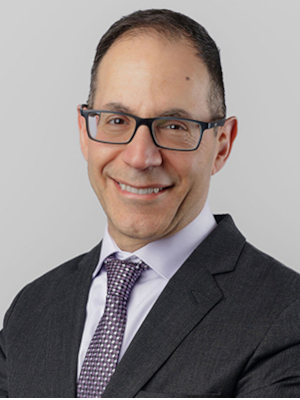
Most clients go through a full wealth-planning exercise, “where we’ve mapped all of that out over a period of time, and then it’s having an appropriate allocation, not potentially handcuffing people by investing a strong majority of their assets in these alternatives,” Hallett says.
For people who are locked into illiquid investments now and need their portfolio for cash flow, it’s important to “get liquidity requests in queue, where possible, so that in three months’, six months’, 12 months’ time, some of that liquidity is coming back to keep things a little bit more in balance,” he adds.
Getting out of a liquidity jam
Kouvaras says investors who are truly “jammed up” in terms of liquidity may have to temporarily borrow against their more liquid portfolio assets, while those who want to get out of specific exposures might be able to explore secondary markets—“although this is not often easy.”
Tracking cash-flow management and investments is critical, he adds, noting that Richter uses consolidated performance software and in-house tools that look at everything from clients’ personal needs to their tax payments. “If you don’t have the full picture, you’re operating partially blind. That’s not ideal.”
Cash-flow issues are more than a portfolio exercise and can extend to governance problems for family offices, he notes. “That’s why it’s important to have a strong investment policy statement, where liquidity is discussed up front in detail in qualitative and quantitative terms.” His team revisits this “liquidity pie chart” every quarter with each client family, Kouvaras says, for example looking at outstanding commitments and how they can be funded.
“What’s tax efficient? What makes sense from an asset allocation perspective?” he explains. “You have to go back to that governance document and remind them of the role that these different investments played and the value of rebalancing.”
Kouvaras thinks it’s a myth that large institutional investors are “better” than individual investors because they’re bigger.
“The reason they tend to outperform is really governance, discipline, cash flow management—all of that,” which also means having money to invest in opportunities as they arise, he adds. “You need liquidity to take advantage of that.”
Mary Gooderham is a writer, editor and communication advisor based in Ottawa. She leads Cohen Gooderham Communications and has worked as a journalist for more than 40 years at The Globe and Mail, as a recording officer at the International Monetary Fund and as a custom content creator for online and print media. She’s been a contributing writer at Canadian Family Offices for four years, focusing on investment strategy, trusts, philanthropy, women in finance and estate planning.
The Canadian Family Offices newsletter comes out on Sundays and Wednesdays. If you are interested in stories about Canadian enterprising families, family offices and the professionals who work with them, you can sign up for our free newsletter here.
Please visit here to see information about our standards of journalistic excellence.