

For those in the financial services industry, the remarkable global growth in the number and footprint of multi-family offices is both an opportunity and a challenge. For investment professionals, particularly in Canada, MFOs are increasingly seen as a rewarding and potentially lucrative career path. On the other hand, supporting families of wealth comes with its own difficulties, and the level of service, customization and adaptability it requires may be unfamiliar territory for advisors whose background and training are often highly specialized and technical.
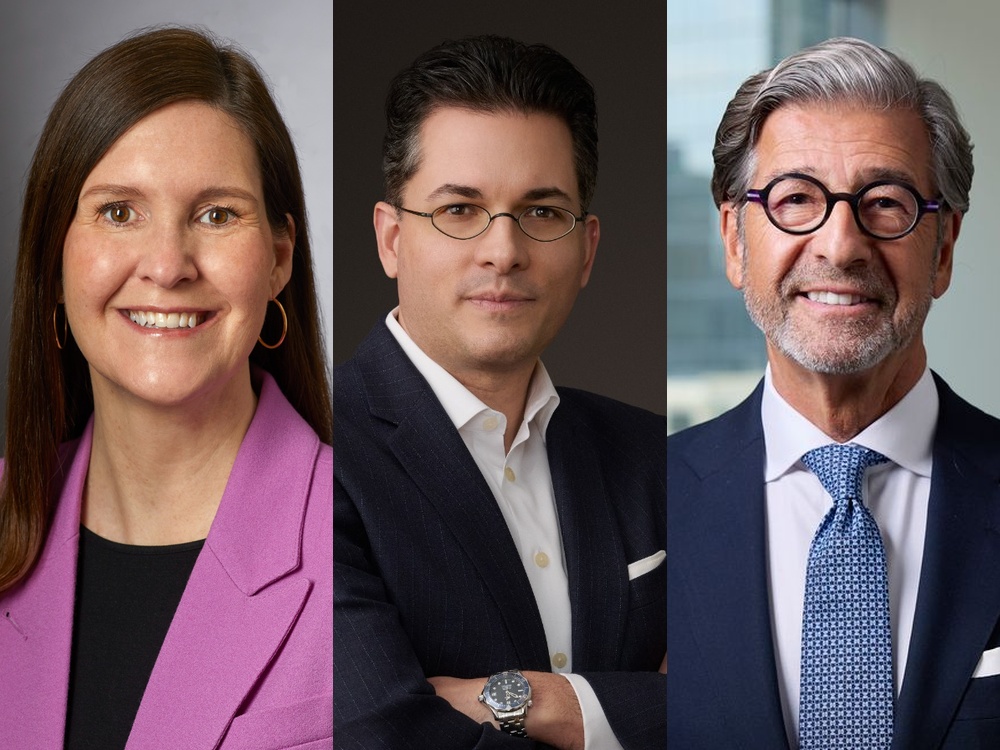
Earlier this year, PBY Capital and CFA Society Toronto tackled the opportunities and the challenges of working in an MFO head-on, in an engaging and spirited panel discussion titled “Demystifying Multi-Family Offices.” Moderated by Frank Balazic, vice-president at PBY, the panel featured three leaders in the Canadian industry: Susan Bell, president and CEO of Bell Kearns and Associates; Athas Kouvaras, partner and portfolio manager at Richter Family Office; and Neil Nisker, co-founder, chairman emeritus and board directorof Our Family Office.
Here are some highlights. (Comments have been edited for clarity and length.)
What is a multi-family office?
Susan Bell: There are lots of different definitions. I think the common element is working predominantly with ultra-high-net-worth families. Another common element would be working with a smaller group of clients, as opposed to 400, 800, 1,200. It’s a small concentrated group, with a focus on the investments.
But then there’s a lot of differences between family offices. One of them, for example, is how are the fees paid? Are the clients paying our fees? Are the money managers paying the fees, or is it a hybrid in between? Are fees charged as a percentage of assets? Are fees instead project- or retainer-based? Is the decision-making done on a discretionary basis or a non-discretionary basis?
Another point of differentiation is, are the actual investments, stock picking, and selection of other assets being done in-house, or exclusively outsourced to investment counselors, or maybe a hybrid in between?
And then my last thought would be in terms of the platform: Do we as an MFO work with a small subset of managers that all of our clients will work with, or is it more open architecture, where a family comes to us and they already have six managers that they’ve worked with for many years and they want to stay with them.
Athas Kouvaras: Why does the minimum for family assets matter? We don’t want to work with 400 or 500 clients. And significant size of a portfolio is needed to be able to take advantage of the more interesting investments that we bring to them. Families expect that you’re bringing the best of the institutional world in a way that’s adaptable to taxable families, and to do it with the same kind of cutting-edge ability to manage money. They want the institutional pedigree and approach, but customized and in a way that’s tax efficient.
Beyond the world of investment, a lot of these families have plenty of other needs. Some are soft needs, whether it’s governance, transition, financial literacy for their kids. You want your client’s grandkids to be with you? You need to do a lot more than just investments to do that.
Neil Nisker: Think of a wheel. The family office is the hub of the wheel. The family office is the most trusted advisor, and we co-ordinate everything. We put that extra set of eyes on everything so families can sleep better at night.
Who are MFO clients?
Kouvaras: Some of the answer lies in that minimum threshold. The other criteria is, frankly, will they value the advice that they’re getting? I’m not saying clients have to listen to everything we recommend, and we don’t expect them to, but it has to be a relationship that works on both sides. You have to have that shared philosophy that this is going to work.
And then, if the family is mainly interested in just being invested in stocks and bonds and won’t embrace anything beyond that ever, there are probably simpler, cheaper, more efficient solutions than a family office. We can bring them direct investments, privates, alternatives, but if it’s purely going to be traditional, they can probably find something else just as easily. Most people wouldn’t say that, but that’s true.
Nisker: There is a word, and if you use this word very often, you will be extremely successful. It’s ‘no.’ And we say no. We will only onboard one family a month, 12 a year maximum. Because we don’t want to sacrifice the service level to all our other families.
Managing family dynamics
Bell: Being a moderator or a mediator is a key part of our role. In the boardroom, or maybe it’s a dining room table, our role is to create a safe space for every voice. And we will definitely have different opinions. At the end of the day, when they leave the discussion with us, then they’re able to be a family. For all the families we work with, ensuring there is that cohesiveness as a family is really, really important.
Kouvaras: I’ll tell you something I really struggled at for probably 15 years, and I’m still trying to get better at: listening and not talking—actually listening. And it’s not easy. It’s very easy to say G1’s paying my bill right now, so let me make sure I agree with G1. And that’s a great way to ensure G2’s never going to be your client. I think you have to listen to both sides. They’re often saying the same thing, just differently.
Navigating emotional challenges
Nisker: These are much more important than anyone realizes, especially if you’re client-facing. High EQ [emotional intelligence] is necessary, not just for client-facing but also for mid-office and back-office staff. We want people to understand. We want them to be good listeners. We should listen twice as much as we speak. Smarts, experience, we have to check those boxes, but being able to communicate, tell a story, is really important.
Bell: Listening and trust are the foundation. The listening: it’s easy to say, it’s hard to do. Are you comfortable sitting across the table from someone and there being a pregnant pause? That, for me, is part of active listening, allowing someone time to gather their thoughts and be able to express themselves. We all think and eat and sleep and breathe investments. The people on the other side of the table, they usually don’t.
The advisor’s role in family governance
Kouvaras: Families don’t expect you to have every single answer to every single question, but they expect that you know them, to understand them beyond their preferences for investments, etc. The experience that they’ve had informs their legacy, their values, and you take all of that and guide them through the discussion. It could end in overarching governance documents or a family charter.
That’s not easy. And once it’s done, people feel good about it, they pat themselves on the back, and then nine times out of 10, at some point down the road, there’s a moment where they forget it exists and go straight into a conflict. And then it’s like, ‘Hey, wait a minute, do you remember that whole year-long exercise? We didn’t do that for no reason. We’re going to go back to that document, go back to the first principles.’
That process has probably, maybe not single-handedly, but it has probably resulted in the staying together of more families than people realize.
Nisker: We’re in a business where we’re onboarding families that don’t like to change. None of us like to change. But a governance model is imperative. We work on dozens of governance documents, family charter, family constitution. My partner and I have chaired family council meetings where we’ll have three generations of a family in a room with an agenda talking about the foundation. A family constitution or charter is a must.
The institutional approach and non-traditional assets
Bell: The families we work with have really long-term horizons. They do not need this money in their lifetime. There will be excess for multiple generations. So that allows them to invest in less liquid strategies. Our clients look a little bit like an institution with the important proviso that a pension plan does not have to think about tax consequences when they make decisions. So that is important. We don’t want the tax tail to wag the dog, but we want to be aware of it and take it into consideration when we’re making recommendations.
Nisker: We budget for four things. We budget for liquidity. We budget for correlation to other asset classes. We budget for risk, which we focus on. Can we budget for potential return? Our capital market assumptions call for us to realize about eight per cent over the next five years. We only want managers who can meet our capital market assumptions. So, the idea is we’re conservative, under-promising with the hope of over-delivering.
We serve very demanding families. When the market’s up, they expect to be up, and when the market’s down, they expect to be up. And we’ve done that.
Active versus passive
Kouvaras: We develop and communicate active allocation decisions to managers. We don’t recommend individual stocks and bonds. While we believe in core passive for equity, especially developed market equity, we do believe that within equity there are pockets where you can add value, there are geographies where you can add value, there are market gaps where you can add value, and there’s concentration.
If you were to look at the average mutual fund manager…these are some of the most educated, intelligent people in the world. They don’t let you run $100 million if you’re an idiot. However, by being forced to have 30, 40, 50 stocks, there’s a lot of Hamburger Helper mixed in with those great ideas. In fund managers there has to be a repeatable, definable edge that will result in go-forward returns. If you look at track record, you can all look good. Separating luck from skill: the more you’re in the industry, the more you realize it’s really hard to do.
Nisker: We’re 100 per cent passive on four different ETFs to take care of our equity exposure. We have a number of active hedge funds that are long swaps, but also short. If I ask portfolio managers, ‘Why do you think your portfolios outperformed a benchmark for the market?’, I would get a bunch of gobbledygook as an answer. You know, high return on invested capital, low price to book, low PE, great management. And you know what, excuse my language, but it’s all BS. Do you know why that portfolio manager thinks his stocks have been outperforming? Because he picked them. They’re his babies.
You have to understand the biases that we all have. And I think in this business, it’s really important to take a deep look into perspective and understand who you are as a person.
Family office as a career path
Bell: I think it’s the best job in the world. I work with amazing clients. I work with fantastic money managers, and I work with a great team at the office. And then there is constant learning. If you don’t want to be constantly learning, this is not the place for you.
Kouvaras: Beyond the technical skills, which include picking stocks…the soft skills part of it just takes time. You can’t replicate them as quickly as the technical skills. So, you have to also be realistic, and Neil made a great comment: you have to look at yourself, what you’re good at. Some of it’s just a personality thing, especially if you’re client-facing. Being able to adapt to different personalities, being able to listen. And those are not skills you’ll see in a textbook.
But if you’re not client-facing, there’s a whole other set of roles within the family office, some that are purely technical, some that are purely investment management, etc. There’s one firm that I worked at that was a family office, but we had an authorized list of people who were allowed to talk to humans. If you weren’t on that list, you did not talk to humans. Every firm should probably have a version of that.
Nisker: I’ve hired a lot of CFAs. I worked with a lot of CFAs. The CFA designation is important. It’s education. It puts your foot in the door. And then it’s up to you. What do you do with it? You’ve got the job. How do you work your way up the proverbial ladder? Honestly, your education begins the minute you graduate with a CFA.
Engaging the next generation
Bell: We encourage all of our families when the kids are in their late teens to start the process of knowledge-building. We go to where they are. So, for example, books are fantastic, but podcasts are often more digestible for younger people. I have a patriarch who loves sitting through a three- or four-hour meeting with money managers, but the next generation may not, and that’s OK. Make sure what you offer them is tailored to their level of interest. They need the tools to be ready to manage significant assets.
Kouvaras: I think there is a phenomenon, which doesn’t apply to every young person, but…since the pandemic I’ve seen an acceleration of people who are very impatient to make money quickly and easily. The concept of getting wealthy slowly, it seems like they’re allergic to it, which is weird because they’re already wealthy. So whether it’s crypto or whether it’s ‘How do I get into a hot IPO?’ or ‘How do I double my money in two years?’…There’s something that’s shifted there.
It’s important to give them perspective on the risk that they’re taking in some of these things. Now, if you’re too heavy-handed with it, they’ll just go and somebody else will be very happy to solve those things. And you’ll lose that second gen. I hate the idea of a ‘fun’ account; I don’t believe in a ‘fun’ percentage of the portfolio. I prefer the term ‘learning with expense.’ So, if a kid’s got a million, if they want to take 50 grand and have it as a self-directed accountant and learn, whether we’re involved with that or not, I’d rather they do that than take the full million and blow it.
Nisker: And just to add, because it’s a very good point, we often tell families, ‘Keep some play money.’ Do what you want, we’ll advise, but understand we focus on risk. And if it’s gone, it’s not going to change your lifestyle. It will be an expensive lesson, but we won’t be able to help in that. Sometimes you have to use tough love with your families. They trust you, they respect you, and that’s what they want to hear from you.
Joe Chidley is managing editor of Canadian Family Offices.
Disclaimer: This story was created by Canadian Family Offices’ commercial content division on behalf of PBY Capital, a member and content provider of this publication.
PBY Capital Limited is registered as an exempt market dealer, portfolio manager and investment fund manager with Canadian provincial securities regulatory authorities, servicing family offices and their professionals. For more information, visit: www.pbycapital.com. The opinions and information provided in this article are solely those of the writer and are not to be construed as personal, legal, accounting, taxation, or investment advice, or as an endorsement of any entity.