

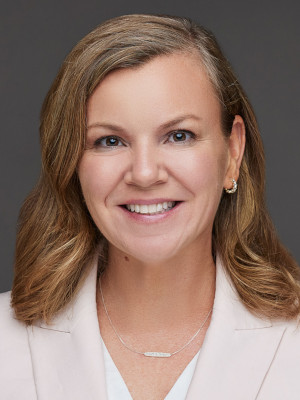
As family offices grow in number and evolve to adapt to changing needs and new generations, recruiting and retaining the right staff is critical. That’s also a key focus for Renee Neri, a senior partner in the financial services practice at Heidrick & Struggles in New York.
The company’s core business is executive search and placement, operating globally in sub-practices that also include private credit and private capital, health care, consumer retail and industrials.
Neri specializes in the family capital as well as asset and wealth management sectors, acting as an executive search professional and talent advisor to clients in countries around the world, including Canada.
Canadian Family Offices spoke with Neri recently about the challenges of finding the perfect person for a family-office job, how the Canadian market differs from others, and what she sees ahead in the space.
What recruitment trends are you seeing in family offices globally?
Overall, there’s been a maturation within the industry of family capital and family offices, so we’re seeing an increase of hiring within this ecosystem. That can be new hiring for launches of family offices, perhaps where there might be a family business that is achieving a certain level of success and wealth, generating a certain amount of wealth for those associated families and/or individuals. And they may think about the transition from either a multi-family office or an external wealth advisor to starting their own.
So, they’re maturing and needing more staff?
Correct, and then you also have the literal level of maturing, in so much as there are established offices, with whom we also work very closely, that may be going through an intergenerational transition. They may have a maturation of the staff or the teams that have been surrounding the governing generation—that might be first generation or second generation—that is aging and might be considering retirement. That becomes an inflection point where you might end up having a leadership change and/or a recast of what the office is meant to do or deliver for the family, based on what that new generation’s preferences are.
And that brings recruitment?
Absolutely. It could be that there’s a shift in strategy from an investment perspective, where a founder might be more interested in doing direct investments into companies, and considering that as another growth avenue, whereas the next generation might actually prefer to allocate to other fund managers in a much more diversified manner. It’s a different level of talent, and you might need more staffing or a head count associated with that specific reprioritization.
What are you particularly seeing in the staffing of family offices in Canada?
In Canada, the approach has historically been more of that trusted, generalist type of profile, where you may have a head of a family office or a CEO or a president that has the opportunity to flex into a number of different experiences. You might have a legal individual who could also be the liaison, if you will, with external wealth advisors. What we’re seeing is the notion of beginning to specialize a bit more and bringing what the market might consider more institutionally qualified hires into specific functions, like the chief investment officer, the chief financial officer and/or controller, and on down the finance stack. The most general title that’s utilized in family offices is the chief operating officer. That can mean a lot of different things, but it especially brings more operational rigour.
Where are the challenges for these maturing family offices?
Sometimes it’s a matter of gaining comfort, and maybe conviction, in what it means to take an office from a certain scale—that oftentimes ran very leanly, maybe in that internal relationship person, or the internal leader—and then drawing upon external advisors. It’s getting comfortable and committing the capital to do that.
The story we’re seeing is one of family offices actively modernizing their approach so it’s competitive, performance-aligned and true to the family’s values.
Renee Neri
What should an expanding family office look for in a CEO?
It’s not uncommon in Canada to have seen a CEO or president of a family office with more of a generalist background. There is absolutely succession that goes on, as people are retiring. Or the family may be making a change intergenerationally, saying, ‘Mary might have felt more like Dad’s or Mom’s person, so I’m going to bring in Jill, who is a closer contemporary to me and my generation.’ It has not necessarily been as much of a recast as some new functions that are being invested in.
You mention new functions. Are there other new positions in family offices?
Two functions have been added inside family offices. One is the general counsel or legal function, which is distinct from the pathway that might have existed at the president/CEO level. The second is head of HR, which again underscores this notion of maturation.
So, family-office growth means someone must focus on staffing?
Yes, it might be a combined office manager/HR individual. The perception is that not all offices can support one full-time executive, so there may be a co-opting of different responsibilities together with that.
What qualities are important for a person hired into a family office?
It’s a combination of IQ and technical competence—the role you’re expected to have with the family—in equal measure with EQ and the ability to communicate effectively, to be aware of your client base and their mindset. It is really the notion of how you establish yourself as that trusted advisor, while the domain expertise is your ticket to entry.

And it has to be the right fit?
Trust in this environment is paramount. A high percentage of individuals that shift into these positions still have some sort of connectivity to either the family or the office in some way. For those that don’t, it’s about establishing yourself and being able to diagnose that organizational history, to understand and appreciate how decisions are made, and the ways that you can be most effective in establishing relationships.
What about compensation? Is this a big issue for family offices, and how are they grappling with it?
We have a recent report focused on investment compensation within family offices that shows that compensation is definitely a big focus area. I’d actually describe it as a real area of opportunity and alignment for family offices. They’re becoming much more deliberate about how they structure pay, especially at the senior levels, and are using market data and peer benchmarks in a way they simply weren’t a few years ago. Many are refining how they link compensation to long‑term investment performance, expanding co‑investment and other ownership‑like incentives, and being more transparent about the overall package. So, the story we’re seeing is one of family offices actively modernizing their approach so it’s competitive, performance‑aligned and true to the family’s values.
Has pay gone up with hiring from the institutional world?
As you begin to recruit from non-family office environments, it inevitably starts to skew compensation up toward what the marketplace looks like in the areas from which the candidate population hails. So, I would say compensation overall is shifting up.
How can family offices deal with that?
There are a lot of different ways to structure compensation. I advise family offices, when they’re first getting started, to avoid the trap of trying to get overly scripted or over-structured in their compensation philosophy. It may be better to establish a target compensation that’s more discretionary, in the form of a base and bonus, rather than using threshold return objectives or co-investment. It might feel a little too fast, too soon, to get to those kinds of targets before you actually have the relationship and trust established.
But a family office might graduate to those structures over time?
Absolutely. Generally speaking, the more mature, the longer-established and the more sizable, the more structure. But there may be some families that have a philosophy against highly structured compensation.
You’ve talked about the idea of articulating the purpose of the family office to get the right staff. What’s the secret to success?
If you’re just getting started, it’s around understanding and diagnosing the governance structure you want to have in place. What do you hope from a purpose perspective that this office does and delivers? What is the time horizon you ideally envision supporting? What are the outcomes that the family would find to be most beneficial? And what services do you want to draw from this office and from the investment in its establishment?
What are issues for financial professionals recruited into family offices to consider?
What pops into my mind is being able to understand and contextualize why this office exists: to support a family and to support their outcomes. It’s not necessarily about your own goals and objectives. That’s where the EQ piece comes in. The family is your client—it’s not only your capital source.
So, a family office should look for an employee that gets that?
Yes. All families are different. Some of the inputs are: What is the source of the capital? And what generation are you serving? Is it a first-generation office where you’re interfacing with the wealth-creator and wealth-founder? They might very well have a different risk tolerance and/or attention span for the office, especially if there’s still an operating business they are focused on. The family office may just be the portfolio that is meant for the long term and for diversification from the operating business.
I assume the next generation can be different in terms of hiring and what they’re looking for.
Again, this is where the EQ comes into play, and really being able to understand where individuals come from. There is a lot of responsibility placed on a family member that is in what I refer to as the governing generation, or the lead family-member seat, particularly if they didn’t generate the capital. They’re almost in that steward capacity, even if they’re just chairing a family-office board or a family board, where they have that accountability placed on their shoulders for making sure that their children and nieces and nephews have the opportunity to continue to be the beneficiaries of this level of wealth on an ongoing basis.
And they’re watching somebody from the outside come in to help manage it, which must be interesting?
It is. And it’s one of those moments where if you’re not deeply expert in the space yourself—and many aren’t, aside from having grown up and lived within it—it can be a stressful experience.
Mary Gooderham is a writer, editor and communication advisor based in Ottawa. She leads Cohen Gooderham Communications and has worked as a journalist for more than 40 years at The Globe and Mail, as a recording officer at the International Monetary Fund and as a custom content creator for online and print media. She’s been a contributing writer at Canadian Family Offices for four years, focusing on investment strategy, trusts, philanthropy, women in finance and estate planning.
The Canadian Family Offices newsletter comes out on Sundays and Wednesdays. If you are interested in stories about Canadian enterprising families, family offices and the professionals who work with them, but like your content aggregated, you can sign up for our free newsletter here.
Please visit here to see information about our standards of journalistic excellence.