


As speeches at the World Economic Forum go, Prime Minister Mark Carney’s address in Davos, Switzerland, earlier this month was, for a leader of a country, unusually direct and, for a leader of Canada, unusually headline-grabbing.
A day before U.S. President Donald Trump by turns prodded and baffled the audience of global policymakers, business leaders and journalists, Carney matter-of-factly noted that the era of “rules-based international order” was done and dusted.
“Great powers,” the PM said, in a not-so-subtle reference to a group that includes the U.S., “have begun using economic integration as weapons, tariffs as leverage, financial infrastructure as coercion, supply chains as vulnerabilities to be exploited.” Carney called on other “middle powers” of the world to build “coalitions that work, issue by issue, with partners who share enough common ground to act together.”
The speech was arguably the most popular at Davos and earned rare praise at home, drawing favourable commentary across much of the political spectrum. Clearly, world leaders were listening, particularly the heads of state of European nations who have recently been on the losing end of tariff and trade agreements with the U.S. Donald Trump was also listening—he blasted the speech and revoked an invitation to Carney to join in the President’s makeshift “Board of Peace.”

Yet, beyond provoking the ire of Trump, the speech also laid bare a worrisome gap between Carney’s vision for Canada and its place in the world, and the reality on the ground in the country he’s led for less than a year.
A line in the sand
It was an important speech, even though it might have been overdue by 10 or 15 years, says Julian Karaguesian, an economic and policy expert, former special advisor to Finance Canada, and a visiting lecturer in the department of economics at McGill University.
“One of the unintentional services Donald Trump has provided is tearing the mask off a system that’s been going the wrong way for a long, long time,” Karaguesian says. “Whether you call it the Bretton Woods system or the neoliberal order, Carney is stating something that’s been true for a while, but nobody really wanted to say it out loud. He’s sending a tough but polite message to the people who run Washington that we have a tipping point and that we need to pursue our interests in a pragmatic and practical way.”
It’s not the first time the U.S. has inspired Canada to question the existence of a stable, rules-based order, Karaguesian says. There’s still the sting of what many see as undue U.S. pressure to cancel Canada’s advanced Avro Arrow fighter jet program under President Dwight D. Eisenhower in the 1950s. In the 1970s, President Richard Nixon threatened to kibosh the Canada-U.S. Auto Pact. Even Barack Obama took a swipe at Canada-U.S. trade with the “Buy American” provisions in the 2009 American Recovery and Reinvestment Act.
But today, a traditionally polite and complacent Canada may have finally had enough.
No more business as usual

Jack Cunningham, assistant professor at Trinity College, University of Toronto, and program coordinator at the Bill Graham Centre for Contemporary International History, says the Carney speech coincides with a shift in the international zeitgeist and a growing recognition that business as usual is no longer a practical strategy.
“Ever since Trump returned to the White House, many of his counterparts have treated him as someone with whom business as usual can be transacted,” Cunningham says. “There was still enough hope he could be managed, that they weren’t willing to make that decisive break. They also made the mistake of tending to deal with him bilaterally. Carney has basically articulated what a lot of people are coming reluctantly to accept, and in that sense, it caught the mood of the moment.”
Yet Cunningham underlines the urgency of cementing the Davos speech with concrete action. Key areas to watch: follow-through with the EU in strengthening partnerships on trade, defence and technology policy, progress in trade negotiations with Mercosur in South America and ASEAN in Southeast Asia, and leveraging Canada’s role in the CPTPP trade agreement between the Indo-Pacific countries..
“There’s a certain amount of existing architecture that, if it is sufficiently mobilized, can actually be utilized to construct alternatives to the order that’s passing,” Cunningham says. “If there’s no follow-up, the speech becomes a historical footnote.”
An alliance built on Canadian values?
For Andreas Schotter, professor of international business at the Ivey Business School, the speech was also a message from Canada’s leadership that was long overdue, particularly in its overture to middle powers.
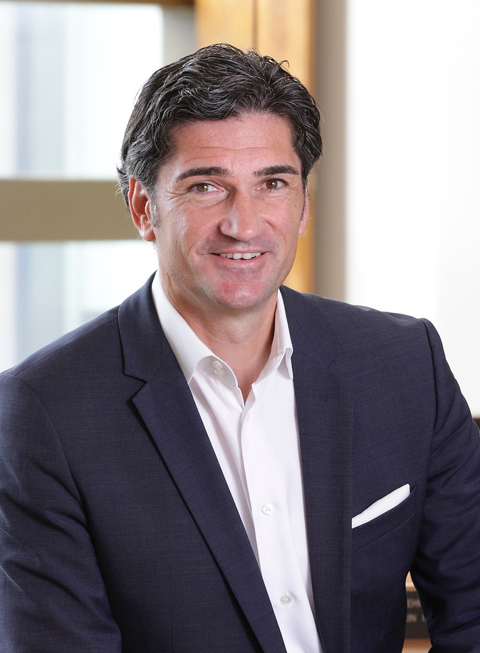
“The Prime Minister now needs to fill the concept with life,” he says. “How do we achieve this middle power alliance built on norms and values that are truly Canadian and accelerate our economic diversification?”
Counting on a rapid succession of trade deals and treaties with middle powers may be too much to ask for, given that the wheels of international diplomacy typically turn at a snail’s pace. For example, the much-celebrated Canada-European Union Comprehensive Economic and Trade Agreement (CETA), which was signed by then-Prime Minister Justin Trudeau almost a decade ago, still hasn’t been fully ratified by the EU. Perhaps that’s not surprising: the EU-Mercosur trade deal, now 25 years in the making, has been turned over to the European Court of Justice for further opinion, tossing a potential years-long delay into the schedule before an official vote by the European Parliament. The just-signed India-EU free trade agreement was no sprint either, following on the heels of almost 20 years of negotiations.
The Prime Minister now needs to fill the concept with life. How do we achieve this middle power alliance?
Andreas Schotter, Ivey Business School
It isn’t just political foot-dragging that is holding up tighter middle-power integration and a lead role for Canada in it. Structural problems also stand in the way. And perhaps the most daunting is the reality that Canadian businesses have continued to rely on the U.S. as their primary export destination.
“For many years, I’ve been criticizing this complacency, on the business side but also on the government side,” Schotter says. “In general, we have a very low level of support and active handholding of Canadian businesses that seek out opportunities other than the United States. If we’re going to do more business with middle powers, the next natural step would be to map out the existing arrangements and commitments between Canada and those middle powers.”
We also have homework to do on freer trade. Among other measures, Carney’s speech highlighted the efforts of his government to eliminate federal barriers to interprovincial trade. But Schotter says that this sidesteps the real issue, which is the number of trade barriers erected by provinces against each other.
“Considering the level of economic threat Canada is facing, we’re still seeing people arrested for bringing too many cases of beer from Quebec into Ontario,” he says. “Both the federal and provincial governments need to put every effort into removing these trade barriers immediately.”
Finding the political will to act
What does Carney need to do to put meat on the bones of his Davos speech? Look to the PM’s two recent trade missions—one to Qatar and the other to China, both occurring in January—for a demonstration of the new doctrine in action, Karaguesian says.
Qatar could have happened without Trump. China happened because of Trump.
Julian Karaguesian
“The China trip is big for trade, and the Qatar trip is big news for investment,” he adds. “Qatar could have happened without Trump. China happened because of Trump—because our economic model is to sell a lot of stuff to the United States, and this model is under attack.”
Karaguesian also says that if the World Trade Organization, the International Monetary Fund, the World Bank and the United Nations no longer matter to the U.S., it may be time to create a new forum alongside the G7 and G20, devoted to ensuring that the united voices of middle powers can be heard. Convening a meeting of those countries within a year should be the next step.
“We need to continue to build bridges with the entire global south,” he says. “Not only China, but India, Indonesia, Malaysia, Korea, Australia, Nigeria and Brazil. The United States is always going to be our largest trading partner by virtue of geography and language. It’s going to take time, but we also need to see visible and concrete progress with building trade and investment bridges with the rest of the world.”

Embracing energy
While Carney called Canada an “energy superpower” in his Davos speech, Schotter says the PM must overcome his reluctance to build more energy infrastructure in Canada and embrace fossil fuels in the most environmentally friendly way possible to meet a growth in global demand that may extend 30 to 40 years.
“We’re shipping oil to Texas and Louisiana at a discount, to be refined and sold to Canada as gasoline at a profit,” Schotter says. “It doesn’t make refining more environmentally friendly if you don’t refine it in Canada. We should be building refineries here instead.”
Decisive action is also necessary, Karaguesian says, because Carney spoke with courage while other middle powers remained meek—even though Canada may have the most to lose by speaking out.
“I think we’re seeing some reawakening of pride in being Canadian,” Karaguesian says. “We’re a rich country, and we’re an energy, natural resource and freshwater superpower. If our vision for the future is nation-building and trading with the whole world, we can tell the United States, ’We’ve been great partners and allies, but if you’re going your way, we also have to go ours.’”
Schotter argues that this newfound pride must also energize Canadians to act—not just bask in the glow of Carney’s warm reception at Davos.
“Prime Minister Carney says he wants to reduce Canada’s dependency on U.S. trade by a certain percentage over the next 10 years,” he says. “We no longer have the luxury of those 10 years.”
Peter Kenter is a Toronto-based writer with a deep and abiding interest in how everything in the world works and how it got that way. He’s written about the economy, investing, financial services, cryptocurrency, pharmaceuticals, mining, energy, cannabis, agriculture, consumer electronics, education, sponsorship marketing, and entertainment. He’s the author of TV North: Everything You Wanted to Know About Canadian Television.
Please visit here to see information about our standards of journalistic excellence.