

The costliest form of financial disorganization rarely looks disorganized. Yes, the tax returns are filed and the investments are professionally managed. Of course, the estate documents have been drafted, and the family may have sophisticated corporate structures, trusts and insurance strategies combined with several highly competent advisors.
Everything exists, but the information required to make a good decision may sit in six different places with six different people, none of whom necessarily understand the entire picture.
At a certain level of wealth, that is no longer an administrative inconvenience—it is an execution risk. The real cost of financial disorganization is not simply that someone cannot locate a document. It is that the family cannot always determine, with sufficient speed and confidence, what a decision will affect before making it.
Wealth creates information asymmetry
As a family’s financial life expands, information becomes fragmented almost by design. The accountant understands the tax position, the lawyer understands the legal architecture, the portfolio manager understands the liquid assets, the insurance advisor understands the policies and the banker understands the credit facilities. The family may also have private investments, operating businesses and cross-border interests overseen by entirely different people.
Each professional may hold an accurate piece of the picture, while the family still must make decisions holistically.
Consider what appears to be a relatively simple decision to sell a property, make a significant gift to a child or extract capital from a corporation. The economics may depend on things such as ownership structure, adjusted cost base, liquidity elsewhere in the family, future tax liabilities, existing debt, shareholder balances, estate equalization objectives and what other transactions are likely to occur over the next several years.
None of those issues are particularly exotic in isolation, but they interact. When the information required to understand those interactions are fragmented, families lose something far more valuable than administrative efficiency: they lose decision-making clarity.
The hidden cost is lost optionality
Financial opportunities often have windows. A business owner may have an opportunity to acquire a competitor, a family may need to respond quickly to a real estate transaction, markets may create an attractive liquidity event, tax legislation may change, or a shareholder may receive an unsolicited offer for the business.
In those moments, information becomes a strategic infrastructure.
Families that already understand their liquidity, ownership structures, tax exposures, borrowing capacity and competing capital requirements can evaluate opportunities quickly. Families that do not must first reconstruct the facts, often involving accountants, lawyers, investment advisors, lenders and insurance professionals before anyone can properly assess the decision itself.
Sometimes the opportunity will still be there when that work is finished. Sometimes it will not be.
The silent cost of financial disorganization is therefore not simply wasted professional time. It is diminished optionality. Sophisticated wealth management should increase a family’s ability to act. Poor information architecture does the opposite.



Complexity magnifies incomplete information
The more substantial the wealth, the less useful it becomes to look at assets in isolation.
A family may appear extraordinarily liquid on a personal net-worth statement while much of its wealth is held inside corporations, private investments, real estate or structures where access to capital carries tax or legal consequences. It may also have future obligations that are not immediately visible when looking at the portfolio alone, including taxes arising on death, capital commitments, business funding requirements, estate equalization objectives or philanthropic commitments.
A decision made without understanding those obligations can be entirely rational at the asset level and still be inappropriate at the family level.
The problem is usually not that information does not exist. It is that it has not been assembled in a way that allows someone to see the consequences of one decision across the rest of the family architecture.
Disorganization creates advisor drag
Families with significant wealth often assume that having more professional advisors reduces risk, and it can, but only if information moves effectively among them. Otherwise, additional expertise can create another form of inefficiency: advisor drag.
The lawyer requests information already held by the accountant. The accountant works from a corporate chart that no longer reflects the current structure. The investment advisor makes assumptions without visibility into upcoming private capital requirements. Insurance strategies are considered separately from estate liquidity. Planning meetings repeatedly begin by reconstructing facts rather than evaluating decisions.
No individual professional may have done anything wrong. The system itself is inefficient.
This is why sophisticated families increasingly need someone to maintain the connective tissue between disciplines. The objective is not to replace the family’s lawyer, accountant, portfolio manager or other specialists, but to make their expertise more valuable by ensuring that everyone is working from the same current picture.
Co-ordination should not mean forwarding emails between advisors. It should mean understanding the dependencies between decisions.
The real vulnerability appears during transition
Disorganization becomes particularly expensive when a family moves from one phase of wealth to another: a business is sold, a founder becomes incapacitated, control shifts to the next generation, a family member relocates, or a major succession transaction is contemplated.
Yet many wealthy families remain dependent on one individual who has accumulated decades of institutional knowledge. That person remembers why a corporation was created, why a particular property is held in one entity rather than another, what an old shareholder loan represented, and which advisor was involved in a transaction 15 years earlier.
For wealthy families, the real standard is not whether records are accurate or documents can be found. It is decision readiness.
While that individual remains active, the family appears organized. What it may actually have is concentrated knowledge risk.
If the next generation inherits assets without also inheriting an intelligible framework for understanding them, the family has transferred wealth without transferring the capacity to manage it.
The standard should be readiness
The solution is not more binders, more portals or another 80-page family wealth report. The objective is to make the family’s financial architecture intelligible.
Someone should be able to identify the following:
- How are the major assets owned?
- Where does liquidity sit?
- What material liabilities exist?
- Which structures serve which purpose?
- Where significant tax exposures may arise, what decisions are approaching and which professionals are accountable for each area?
The underlying documentation may occupy thousands of pages. The architecture should not.
For wealthy families, the real standard is not whether records are accurate or documents can be found. It is decision readiness. If a major opportunity, transaction or family event arose tomorrow, could the family and its advisors begin with a common set of facts and understand the implications quickly?
Those are not administrative questions. They are measures of how effectively the family can deploy, protect and transfer capital.
At a certain level of wealth, organization is not about knowing where everything is. It is about knowing enough, quickly enough, to make the right decision when the moment arrives.
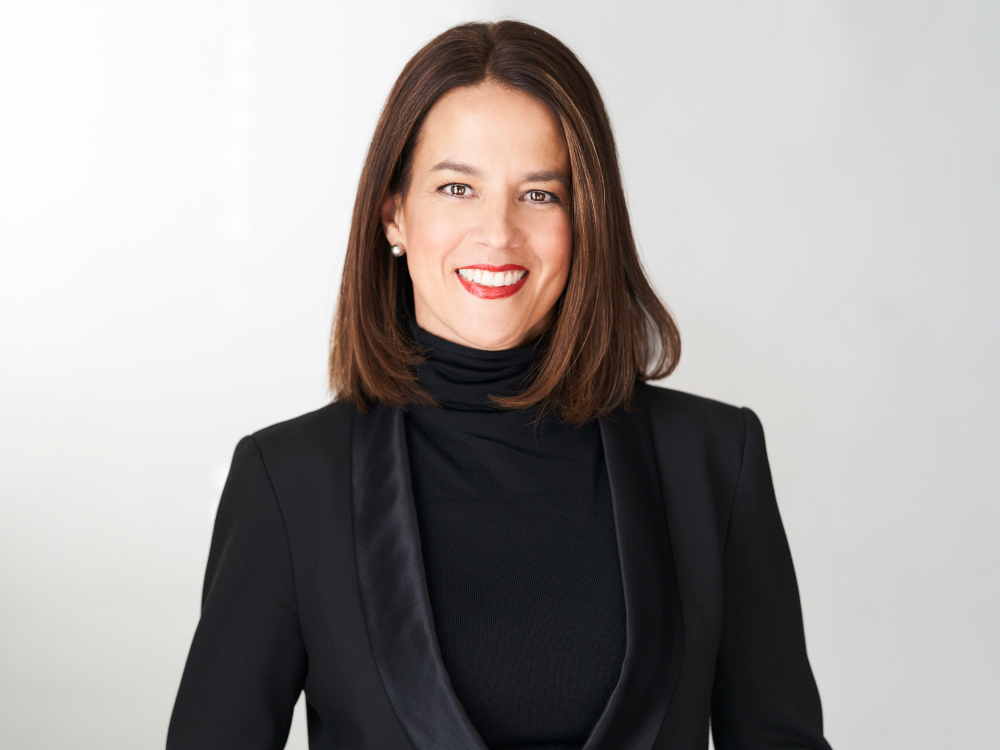
Elke Rubach is a Certified Financial Planner with CLU and MFA-P designations. Her expertise lies in optimizing income and tax efficiencies, achieving cohesiveness in financial and estate plans, and providing ongoing asset management strategies that foster wealth accumulation and growth. Elke is a reformed lawyer who earned her graduate degree in law, with a focus on banking and finance, at the London School of Economics, where she studied on a Chevening Scholarship. She worked as an associate at the London (U.K.) and Toronto offices of the law firm McCarthy Tetrault. During a stint in banking, Elke observed the life-changing impact of good financial advice and decided to switch to a career in financial planning and wealth management. She founded Toronto-based Rubach Wealth in 2012. Today, Elke is a sought-after speaker on wealth management, estate planning and philanthropy. She’s the founder of Fashion Heals for SickKids, which has raised more than $500,000 for pediatric cancer care and research since 2016. She also gives back with board and volunteer commitments with the Professional Advisory Council for SickKids Foundation, the Investment Committee at the Office of the Public Guardian, the advisory board for Transpod Inc., and the board of Ronald McDonald House Charities in Toronto.
The Canadian Family Offices newsletter comes out on Sundays and Wednesdays. If you are interested in stories about Canadian enterprising families, family offices and the professionals who work with them, you can sign up for our free newsletter here.
Please visit here to see information about our standards of journalistic excellence.