


Public discourse continues to highlight a phenomenon variously short-handed as “the growing wealth divide,” “the gap between rich and poor” or “the K-shaped economy.” By whatever name, it describes an apparent economic trend in which high-income individuals and families (occupying the ascending “arm” on a K-shaped chart) enjoy increased wealth, while lower-income folks (on the descending “leg”) grapple with mounting debt and a decline in spending power.
To the extent to which the K-shaped economy is real (more on that later), it’s often portrayed as a societal problem that adversely impacts those on the lower rungs of the wealth ladder. But it also raises challenges for the wealthy.
The most proximate risk is the potential for higher income taxes, as well as taxes on existing wealth, as wealth tax movements in Europe and California suggest. There’s also reputational and privacy risk as individuals and families of wealth come under heightened scrutiny—even tail risk of violence or revolution. And under the surface, there is the creeping perception that in a world in which the poor at least feel they are getting poorer while the rich seem to be getting richer, families of wealth are doing something, well, wrong.
But how real is the gap between rich and poor? And is it really widening?
Wealth concentration is rising
A recent report published by Canadians for Tax Fairness (C4TF) and BC Policy Solutions, entitled The New Robber Barons; A quarter-century of wealth concentration in Canada, looks at the concentration of economic power in Canada and how that distribution is changing.
Among the report’s findings:
- The wealthiest one per cent of Canadian families (169,000 families) who each have at least $7.8 million in wealth owned 22.7 per cent of household wealth in 2023, up from 19.3 per cent in 1999—an increase of $3 trillion.
- The wealthiest 0.01 per cent of Canadian families (1,685 families) hold an average of $448.5 million, more than 4,000 times the average wealth of a family in the bottom 50 per cent in 2023.
Silas Xuereb, an economist and policy analyst at C4TF and co-author of the report, points out that wealth concentrations in Canadian society have never been static or linear. He cites Long Run Canadian Wealth Inequality in International Context, by James B. Davies & Livio di Matteo, appearing in The Review of Income and Wealth, which suggests that top wealth shares in Canada generally decreased from 1945 to 1968, coinciding with a period of higher marginal income tax rates, limits on capital flows, and growing rates of unionization. They rose modestly from 1970 to 1984, then increased to 2012. More recently, wealth concentrations fell slightly from 2016 to 2023, the last year for which detailed data is available.
What’s a ‘fair share’ of wealth?
“The term ‘fairness’ gets thrown around a lot,” Xuereb says. “But I think that there is a shared perception that when there are a few people with billions in wealth who own yachts and private jets while other people live on the streets and experience rising food insecurity—that’s unfair. There’s an intuitive sense that there is something unfair right now and that we need to work to make things more fair. That doesn’t necessarily mean complete equality, but at least moving in a more just direction.”
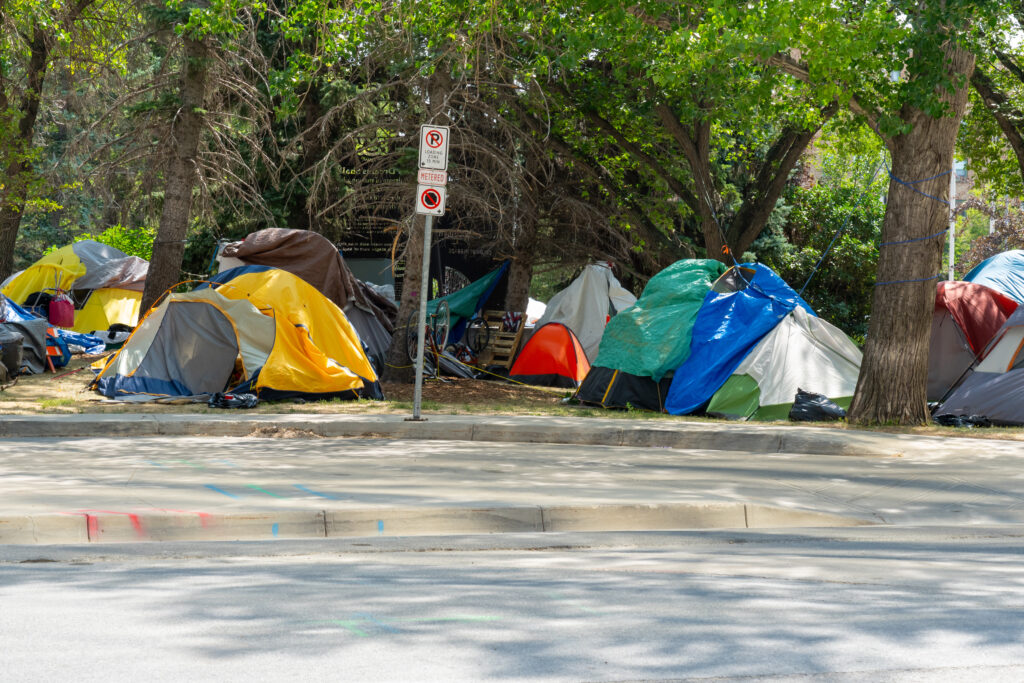
The title of the report is deliberately provocative, he says. A perception that some wealth has been earned unfairly, or through advantages available only to the already-wealthy, heightens a sense that something is wrong. He cites a growing stream of income protected by capital gains exemptions, as well as a lack of comprehensive inheritance taxes, as two significant advantages that tilt the playing field in favour of the wealthy.
The concentration of wealth gives people disproportionate power over policies, over other people’s jobs, over their livelihoods and where they live.
Silas Xuereb
“A wealth tax could help to rectify the fact that a lot of accrued wealth is not sold, so it doesn’t produce realized taxable capital gains,” Xuereb says. “The ultra-wealthy are able to borrow against that wealth without ever selling it, so they don’t have to pay taxes on that income. We could shift towards a more equal and fair society by taxing those resources to provide for basic needs at the other end of the distribution.”
Just as important, he says, is the relationship between wealth, societal power and political influence.
“The concentration of wealth gives people disproportionate power over policies, over other people’s jobs, over their livelihoods and where they live,” Xuereb says. “We want to shift things into a more democratic direction where each of us has equal influence over our government and its policies.”
But is Canadian wealth inequality really getting worse?
There are several measures of income or wealth inequality within a population. Among the most widely cited is the Gini Index, which compares actual income distribution against absolute equality, a theoretical state in which everyone earns the same. The higher the Gini coefficient, the greater the degree of inequality. A coefficient of 100 indicates that one individual earns all the wealth in a country while everyone else owns nothing; a coefficient of zero means wealth distribution is completely equal.
By this standard, Canada comes in somewhere around the middle of the pack. According to the World Bank, Canada earned a Gini coefficient of 31.5 in 2022, up a bit from 29.9 in 2020. That’s still better than the U.S., with a coefficient of 41.8 in 2024, and nowhere near as extreme as, say, South Africa and Colombia, where Gini coefficients measure in the mid-50s. On the other hand, in the Slovak Republic and India, among other places, Gini numbers are in the mid-20s.
Gini coefficients provide a snapshot of wealth inequality, but they also provide little information on comparative conditions on the ground. A country with little overall wealth may be more equal in its distribution, but might also provide less overall opportunity for citizens at the lower end of the wealth spectrum than a country with a higher Gini coefficient. Likewise, if all of Canada’s billionaires suddenly decided to move to the U.S., taking their wealth with them, Canada’s Gini coefficient would improve.
There are other ways to slice and dice the data. For instance, Wealth Inequality Revisited, a Fraser Institute report published in 2025, makes a counter-argument to the rising perception of rising wealth inequality by pointing out that it really hasn’t changed significantly over five decades.
In the report, author Christopher A. Sarlo, professor emeritus of economics at Nipissing University and a senior fellow with the Fraser Institute, uses Statistics Canada data to review the top 10 per cent of wealthy Canadian households. Using that sample, the top decile of households in 1970 held 53.3 per cent of the country’s total wealth; in 2019, they held 47.8 per cent.
The current crisis isn’t inequality. It’s the naïve acceptance of socialism as a tool to address it.
Christopher Sarlo
Sarlo also posits that shifting age demographics explain much of the apparent current disparity in wealth.
“In modern economies like Canada, most people don’t have any wealth in their 20s and maybe even early 30s,” he says. “It’s a gradual process of building wealth. In their 60s and 70s, they’re in a much different situation and they’re probably in the top 20 per cent.”
In brief, Canadians are getting older, and older folks tend to be wealthier, so there are more wealthy people around, relatively speaking.
Statistics Canada’s survey data also excludes certain types of wealth, such as the value of public retirement programs that, if included, would likely show wealth inequality declining.
“In my teenage years, I probably had the same sense of wonderment about how wealth is distributed and what should be done about it,” Sarlo says. “But this naïve, emotional concern about disparities—as if that in itself is some kind of crime that needs to be corrected—I think is wrong.”
He reckons that most wealth in Canada is earned ethically, by providing goods and services demanded by consumers. Even though the use of some tax loopholes may raise eyebrows, they’re legitimate features of a tax regime that can be ethically employed or altered as the government sees fit.
“The current crisis isn’t inequality,” Sarlo maintains. “It’s the naïve acceptance of socialism as a tool to address it. If you tried to make things either completely equal or substantially more equal, it means taking wealth away from people who have legitimately earned it. Are they going to be as enthusiastic about innovating, about continuing their business activities, if they know that a substantial part of that wealth will be extracted from them?”
Obsessed with the ‘K’
It’s a message often shared by Lance Roberts, chief investment strategist at RIA Advisors, a wealth management firm based in Houston. He believes that media obsession with the “K-shaped economy” has resulted in a stream of exaggerated and inaccurate reporting.
He points out that, in the U.S., the bottom half of American households owns about 2.5 per cent of the nation’s wealth—a number higher than it was in 2019 and 2015, and about six times higher than the 0.4 per cent low it hit in 2011.
In every economy, throughout history, there are the rich and the poor. There is no ‘fair.’
Lance Roberts
Roberts agrees, however, that while the rungs of the K-shaped economy have stopped moving apart, forces such as wage pressure and high inflation have made the ladder between the bottom and top of the K harder to climb. He sees the 2.5 per cent figure as neither fair nor unfair—but moveable.
“In every economy, throughout history, there are the rich and the poor,” he says. “There is no ‘fair.’ The problem with that line of thinking is that we believe the ‘K’ problem can only be solved by policy. The vast majority of wealth disparity in an economy results from both economic and financial choices. Individuals consistently spend more than they earn, live beyond their means, and take on debt to supplement their incomes. We are always looking for a way to ‘give them more money,’ but this doesn’t solve the real root of the problem, which is a lack of financial education and savings.”
Roberts says he’s concerned that inaccurate media reports on the K-shaped economy will create a doom loop of hopelessness that influences poor and irreversible financial decisions made over a lifetime—reinforcing lower overall wealth ownership.
“The narrative is creating the outcome,” he says.
Does history really tell us anything?
Throughout history, narratives about wealth have proven powerful political tools, and there are echoes of those narratives in the current debate. So far, that debate has been relatively civil, with more punitive tax policies appearing as the most significant threat. Yet more concrete risks—blackmail, kidnappings, physical violence—cannot be dismissed out of hand, and rising tensions between haves and have-nots might at least condition the landscape for those risks to become realities.
Of course, few believe that developed economies today will see anything akin to Russia’s several revolutions of the early 1900s or France’s Reign of Terror—violent uprisings in which the rich paid with their lives. But do these periods of extreme political violence tell us anything about the dangers of wealth inequality today?
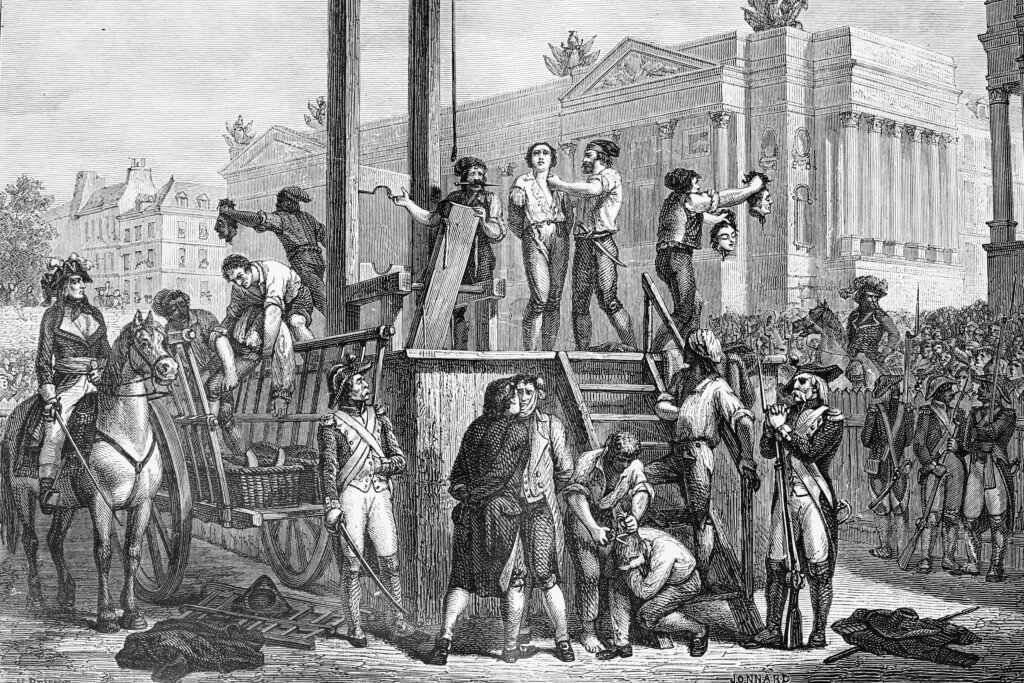
Even here, the picture is complicated. In Tsarist Russia just before the revolution of 1905 (a precursor to the Bolshevik Revolution of 1917), “Russian income inequality was middling by the standards of that era, and less severe than is inequality today in China, the United States, and Russia itself,” note Peter H. Lindert and Steven Nafziger in their 2014 paper, “Russian Inequality on the Eve of Revolution.”
More than a century before Russia became the U.S.S.R., there was another template for what can go wrong when the rich get richer and the poor get poorer: the French Revolution. Popular myth holds that Marie Antoinette sparked it all with an off-hand comment that starving French citizens should “eat cake” if they had no bread. Never mind that she almost certainly never said those words: they continue to resonate with those who believe that wealth inequality was the primary driver of revolution.
But the original salvos in that conflict involved inequality under the law, and inequality of wealth only later became central to demands from members of the Parisian lower class, known as the sans-culottes, during the Reign of Terror, says William S. Cormack, a professor in the Department of History at the University of Guelph.
Tensions rode high in 1789 as elections were held to populate the Estates General, a body representing three societal tiers, which met for the first time since 1614 to approve new taxation powers.
“The political tensions were primarily about the unfairness of privilege which separated the First and Second Estates [the clergy and the nobility, respectively] from everyone else,” Cormack says. “The battle against privilege was not explicitly about economic inequality, because there were people within the Third Estate [the commoners] who were wealthy and there were members of the clergy and the nobility who were not. The question was more about inequality under the law.”
How do you achieve influence in outcomes you believed are rigged in favour of powerful people?
William Cormack
The failure of the Estates General to agree on much of anything, including voting procedures that would favour the Third Estate, resulted in members of the Third Estate breaking off to form the National Assembly. That decision was perceived as both an act of defiance against privilege and a challenge to the authority of the Crown.
Yet the political dust-up went on to gain momentum from economic issues, and here the corollaries to modern-day conditions begin to surface. The summer of 1789 witnessed increasing discontent, as a free trade agreement between Great Britain and France began to displace urban workers, while earlier crop failures saw bread prices rise astronomically. In July 1789, royal troops appeared to be massing to overturn the National Assembly. The sans-culottes rose up and took violent action to defend it, culminating in the storming of the Bastille.
So, while the French Revolution was sparked by an attempt to roll back elite privilege, a lack of economic opportunity and high prices unexpectedly began to shape its development.
“Following the uprising, the National Assembly now finds itself beholden, in some ways, to the popular violence in Paris,” Cormack says.
When trust erodes
During the infamous Reign of Terror, which began in 1793 under Maximilien de Robespierre, the demands of the sans-culottes turned to price controls on items such as bread, increased taxation of the wealthy, limits on property ownership and threats of violence to those who opposed the reforms. (Those threats proved during the Terror to be very real for the tens of thousands who died, including some 17,000 formally executed—among them, King Louis XVI and, eventually, Robespierre himself.)
Cormack explains that one key factor underscored the demands of the sans-culottes, and it’s one that might seem familiar to modern-day observers: declining confidence in existing institutional structures.
“Economic inequality was a factor, but if there are any parallels between our present circumstances and the French Revolution, questioning the basic structures of law and government is perhaps a bigger parallel,” he says. “How do you achieve influence in outcomes you believe are rigged in favour of powerful people who make all the decisions?”
And perhaps it’s here that we are most clearly hearing history rhyme—with concern over wealth inequality just one aspect of a wider lack of trust in the way things seem to be going.
Today’s headlines are filled with news of AI data centres forced on communities that overwhelmingly reject them, of the displacement of jobs by technology, of the alienation and economic disenfranchisement of youth who feel they’ll never be able to own a home or live as well as their parents, of growing nativism in the face of geopolitical disruptions, and of the mass migration of work in search of cheap labour.
Are these the pre-conditions for greater anti-wealth tensions, demands for increased wealth redistribution through more confiscatory tax policies, or greater, violent civil unrest? And if they are, can tinkering with government policy alone make a difference?
Peter Kenter is a Toronto-based writer with a deep and abiding interest in how everything in the world works and how it got that way. He’s written about the economy, investing, financial services, cryptocurrency, pharmaceuticals, mining, energy, cannabis, agriculture, consumer electronics, education, sponsorship marketing, and entertainment. He’s the author of TV North: Everything You Wanted to Know About Canadian Television.
The Canadian Family Offices newsletter comes out on Sundays and Wednesdays. If you are interested in stories about Canadian enterprising families, family offices and the professionals who work with them, but like your content aggregated, you can sign up for our free newsletter here.
Please visit here to see information about our standards of journalistic excellence.