
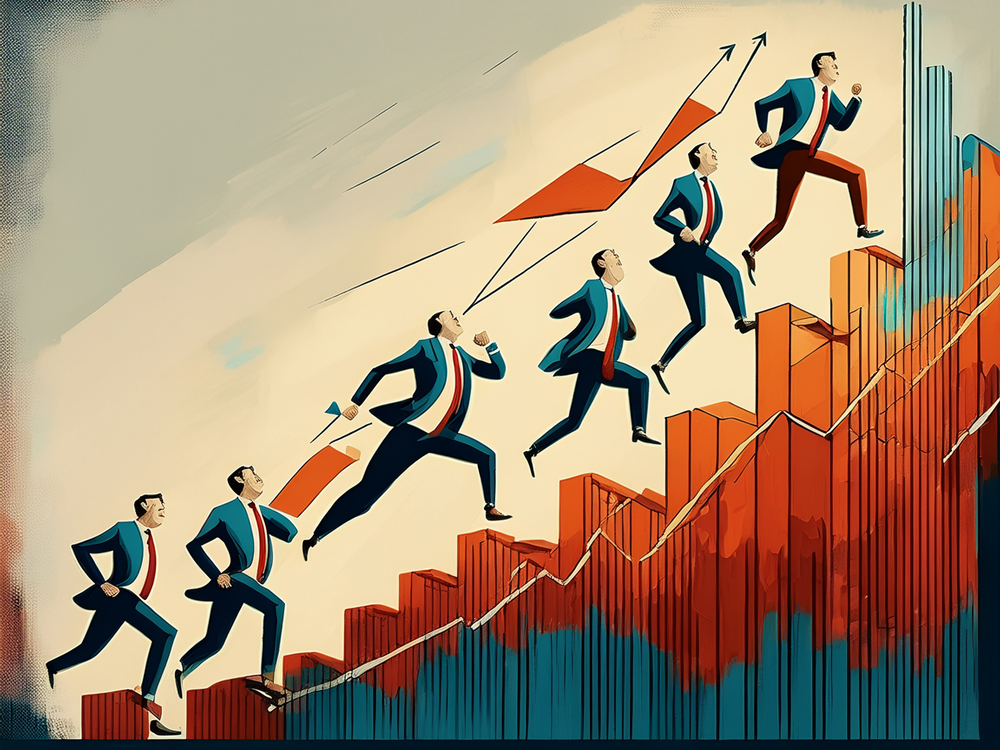
Canada’s wealthiest individuals and families include the expected business and industrial titans, from Thomsons to Irvings, Westons to Bouchards. But since Canadian Family Offices published its 2024 wealthiest list, some less familiar names have vaulted up the fortune rankings, driven by artificial intelligence and cryptocurrency stock valuations that have reached stratospheric heights.
In July, Forbes listed cryptocurrency entrepreneur Changpeng Zhao as the richest Canadian, with US$107.8 billion. Two years ago, that fortune was valued at US$15 billion. And Toronto-born AI guru Christopher Olah doubled his wealth in the Forbes list to US$15.5 billion in less than six months.
“I think a lot of people would say that the wealth creation that we’ve seen recently, particularly in the tech area, is feeling a little lofty,” says Greg Moore, senior partner for Richter Family Offices. “It’s feeling a little bit sort of frothy in terms of valuations.”
Some of these billionaires have fortunes concentrated in their own corporation’s stock or investments in their own narrow area of expertise.

“I think if you look back at history,” Moore says, “you can find lots of situations where people have seen a massive creation of wealth, only to see it dissipate in a very short period of time as markets become rational.”
Moore suggests the entrepreneur whose wealth has grown on the back of recent success needs to diversify.
On the flip side, the current list of Canada’s wealthiest includes several multigenerational dynasties that built and maintained great fortunes with broad-based, stable businesses. The Irvings, for instance, are now in their fourth generation of ownership of an empire that includes petroleum, forestry and media.
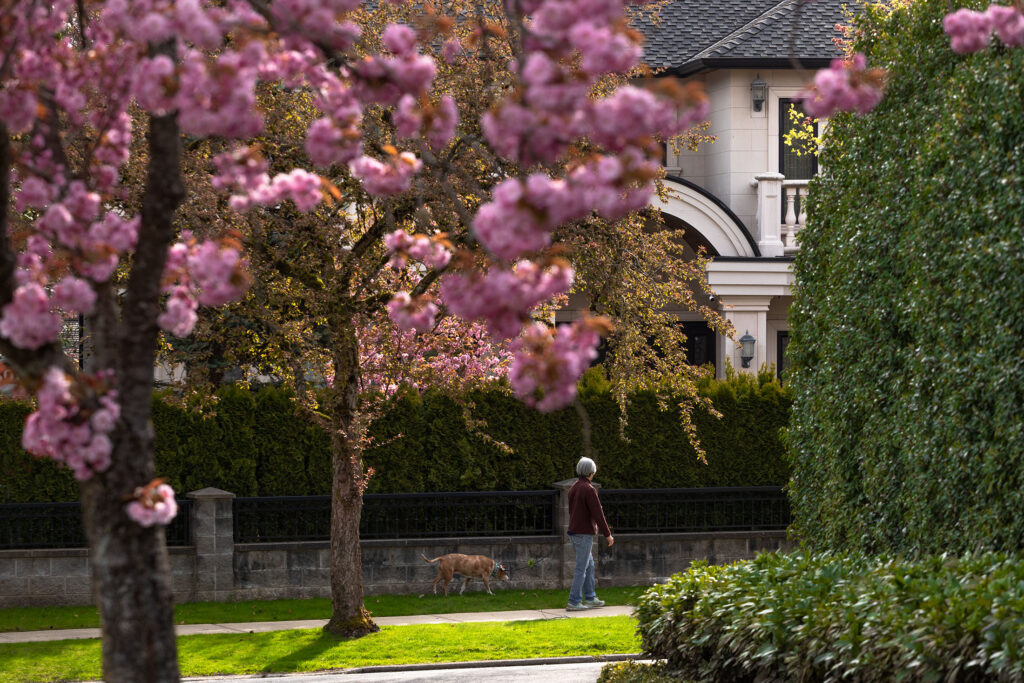
And simply by the nature of external valuations of wealth, a complete picture of who has more than others faces several challenges. One factor is that while some may like to be on wealthy lists, many successful families don’t relish the public spotlight.
“I would say Canada historically has been founded by, and has had the benefit of, significant titans of industry and wealth creators who are people who do not want to be on those lists, who don’t self-actualize through their wealth,” Moore says. “They are much more modest in the way they run their lives.”
Canada also has a layer of families who never turn up on lists because their wealth is tied up in private assets and other investments that aren’t easy to verify.
“It always amazes me in my business when I come across individuals that I’ve never heard of that have an enormous amount of wealth,” Moore notes. “And they like it that way. They’re quite happy being under the radar.”
As a result, this list of 20 billionaire Canadian families and individuals isn’t a definitive ranking. The wealth estimates here largely reflect data from the Forbes World’s Billionaire List and Maclean’s magazine’s The Rich List, both of which rely on records of public company holdings and sometimes estimates of private investment holdings and company valuations. And it should be noted that the two sources sometimes have estimates that are markedly different for the same families or individuals.
Also note that this list also does not include a handful of billionaires whose connection to Canada, beyond citizenship, isn’t reliably documented.
Changpeng (CZ) Zhao (US$108 billion)
Zhao’s enormous wealth, quoted by Forbes in July as nearly US$108 billion, is rooted in cryptocurrency. He founded Binance, the largest cryptocurrency exchange in the world, in 2017.
Zhao, 49, immigrated with his family to Vancouver from China when he was 12 years old, and he went on to study computer science at McGill University in Montreal. To launch his career, he eventually moved to Shanghai; he is now based in Dubai.
A brush with the U.S. Justice Department hasn’t diminished his fortune. In 2023, he stepped down as Binance’s CEO after the company’s operations came under scrutiny for failing to maintain an effective anti-money-laundering program; he paid $50 million in fines and served four months in prison. In October 2025, however, Zhao was pardoned by President Donald Trump.
The Thomson family ($90.2 billion)
Thomson family wealth is founded in newspapers, media and information distribution. Maclean’s estimated the family wealth at $90.2 billion in November. Forbes now splits the family members up as individuals in its list, which includes six billionaire family members.
Roy Thomson, who died in 1976, started with newspapers in Canada and Britain. Now, family holdings in media conglomerate Thomson Reuters and their investment company Woodbridge keep the clan afloat. The family also owns the Globe and Mail newspaper.
Prominent members of the family are David, Peter and Taylor Thomson, Sherry Brydson, Linda Campbell and Gaye Farncombe. Forbes lists Sherry Brydson, 80, as the wealthiest of Roy Thomson’s grandchildren, with US$11.4 billion.
Stuart Hoegner (US$24.7 billion)
Toronto lawyer, accountant and cryptocurrency executive Stuart Hoegner’s fortune is estimated at US$24.7 billion by Forbes.
Hoegner stepped down in 2025 as legal counsel for crypto stablecoin firm Tether and its companion crypto exchange Bitfinex, but Forbes reports he still owns a 13 per cent chunk of Tether.
He focused his legal practice on gaming and crypto law, joining Tether in 2014. His exact age isn’t public, but his LinkedIn profile shows he attended Carleton University from 1989 to 1993 to earn a BPA, Economics, Public Administration, and the University of Toronto from 1993 to 1996 to attain a law degree.
Christopher Olah (US$15.5 billion)
Forbes’ estimate of Christopher Olah’s fortune more than doubled in less than six months, to US$15.5 billion, thanks to the soaring valuation of Anthropic, which is valued at nearly US$1 trillion ahead of an expected public offering in October 2026.. Olah co-founded the cutting edge AI system, best known for its commercial chatbot Claude, with six colleagues from his previous employer, OpenAI.
Olah, 33, was born in Toronto and attended the Abelard School, a private school for gifted children. He attended the University of Toronto but left before receiving a degree. He subsequently received a Thiel Fellowship to pursue his own research.
Olah spoke at the Vatican in May about artificial intelligence, where he described today’s AI models as “far more subtle, odd and beautiful than science fiction prepared us for.” In January, Olah and Anthropic’s six other co-founders pledged to donate 80 per cent of their personal wealth to philanthropic causes. He lives in San Francisco.
Galen Weston Jr. ($20.6 billion)
Maclean’s pegs grocery mogul Galen Weston’s fortune at CAD$20.6 billion. He is the familiar public face of the sprawling Canada-UK Weston empire, which owns Loblaw Companies and Shoppers Drug Mart. Weston is chair and president of Loblaw’s parent company, George Weston Ltd., and chair of Loblaw. He stepped down as president of Loblaw in 2023. The family fortune began in 1884 with a Toronto bakery.
Jim Pattison (US$11.8 billion)
Vancouver’s 97-year-old Jim Pattison offers a master class in the value of diversification. Starting out with car dealerships, Pattison’s network of firms is now involved in a wide variety of sectors, including entertainment, forest products, media and grocery stores. Forbes assesses his wealth at US$11.8 billion.
Pattison acquired his first car dealership in 1961. Today, his brands include Guinness World Records, Save-On Foods and Canfor forest products. Pattison and his wife, Mary, have been married for more than 70 years. They have three children.
The Irving family ($15.8 billion)
Last November, Maclean’s said New Brunswick’s Irving family wealth stood at CAD$15.8 billion. The dynasty has a sprawling empire of businesses involved in forestry, oil, media and shipbuilding, started more than a century ago with James Dergavel Irving’s first gas station. Over the next three generations, the family became the wealthiest in the Maritimes and one of the richest families in the country.
Two titans of the family, James and Arthur, died in 2024 in their 90s. Robert Irving, James’ son, died in May 2026 of cancer. Jim Irving is currently the CEO of J.D. Irving.
Tobias Lutke (US$10.1 billion-$13.6 billion)
Shopify founder Tobias Lutke’s fortune was estimated by Forbes at US$10.1 billion in July, but Macleans last November pegged his wealth at closer to $19 billion (US$13.6 billion), which illustrates how much wealth estimates can vary.
Forbes reports Lutke owns about six per cent of Shopify, the prominent e-commerce business that includes Starbucks, Allbirds, Michael Kors and Gymshark among its clients. The 45-year-old Lutke was born in Germany, but moved to Canada in 2002. He co-founded an online snowboard store in Ottawa in 2004 before creating Shopify in 2006. Lutke lives in Toronto.
David Cheriton (US$10.2 billion)
Stanford professor emeritus, investor and serial entrepreneur David Cheriton’s wealth is estimated by Forbes at US$10.2 billion. He was an initial investor in Google and founded or invested in a series of high-tech firms that either had successful IPOs or were bought by larger competitors. He is now chief data centre scientist at Juniper Networks.
Cheriton, 75, was born in Vancouver, grew up in Edmonton and attended the University of Alberta, the University of British Columbia and the University of Waterloo. He taught briefly at UBC before going to Stanford.
The McCain family ($13.9 billion-$20 billion)
The exact value of the McCain family fortune is unknown, since it is founded on private ownership. Maclean’s suggests the figure is about CAD$13.9 billion. However, a Globe and Mail story this spring, about a family dispute that had landed in court, says that based on the value of publicly traded peer companies, McCain’s Foods Group could be worth as much as CAD$20 billion.
The New Brunswick family is a juggernaut in the global french fry and food service supply sector. Founded in 1957 in Florenceville, N.B., by four McCain brothers, the firm now sells in 160 countries. The fourth generation of the large family is now entering the scene.
The Rogers family ($11.9 billion)
Toronto’s Rogers family has been a major player in media, communication and sports franchise sectors for decades. Late last year, Maclean’s estimated the family fortune at CAD$11.9 billion.
The family’s interest in media goes back to radio pioneer Edward Rogers, who was an inventor and founder of Toronto’s CFRB radio station. His son Ted built the family’s wealth with radio and TV station acquisitions in the 1960s, and the company expanded into cable and wireless communications. Ted died in 2008, and his son, Edward Rogers III, is currently in control of the business after a difficult rift and legal battles within the family.
In 2021, Rogers bought Calgary-based Shaw Communications for $28 billion. The family also branched into sport and entertainment with its investment in Maple Leaf Sports and Entertainment.
Alain Bouchard (US$8.4 billion)
Quebec’s convenience store mogul Alain Bouchard is the founder and executive chairman of Alimentation Couche-Tard. Forbes estimates his fortune at US$8.4 billion.
The 77-year-old Bouchard, born in Chicoutimi, Que., started with one store in 1980, and the conglomerate now has about 17,000 stores, owned or franchised, around the world. Couche-Tard made headlines in 2024 with a bid to buy the massive 7-Eleven chain, but negotiations broke down after a year.
Bouchard lives in Montreal.
The Desmarais family ($7 billion-$12.7 billion)
Montreal’s Desmarais family fortune is difficult to nail down. Maclean’s put it at CAD$12.7 billion last fall, while the Montreal Gazette estimated the family had CAD$7 billion last July. Its holdings are largely in ownership of Power Corp. of Canada, a dominant player in financial services and investment.
Paul Desmarais Sr. bought a major portion of Power Corp. in 1968. Through the ’80s and ’90s, Paul Desmarais Jr. and Andre Desmarais served in senior management ranks. Paul Desmarais III is now in charge of Sagard, an alternative investment firm.
Daniel Nadler (US$7.6 billion)
Artificial intelligence billionaire Daniel Nadler, 43, has a fortune that Forbes estimates at US$7.6 billion.
The Toronto-born Nadler did his undergrad work at U of T and took his PhD at Harvard, where he founded a machine learning company while still a student. In 2018, the company was bought for US$550 million by S&P Global. In 2022, Nadler founded Open Evidence, an AI tool widely used by doctors; its valuation was US$12 billion earlier this year.
Nadler lives in Surfside, Fla., is a published poet and has financed a couple of films, serving as producer on Palmer (2021) and Motherless Brooklyn (2019).
Daryl Katz (US$7.1 billion)
Daryl Katz started out in the pharmacy business and diversified into sports, entertainment and real estate sectors. Forbes pegs the 64-year-old’s fortune at US$7.1 billion.
Son of a pharmacist, Katz is an Edmonton native who completed his university degrees at the University of Alberta. His drive to wealth began with the purchase of Medicine Shoppe and Rexall Drugs. He phased out of the drugstore business in the mid-2010s.
The Edmonton Oilers owner and real estate mogul continues to expand Edmonton’s downtown ICE district with large-scale hospitality, office and event space development. His sports and entertainment company is OEG Inc.
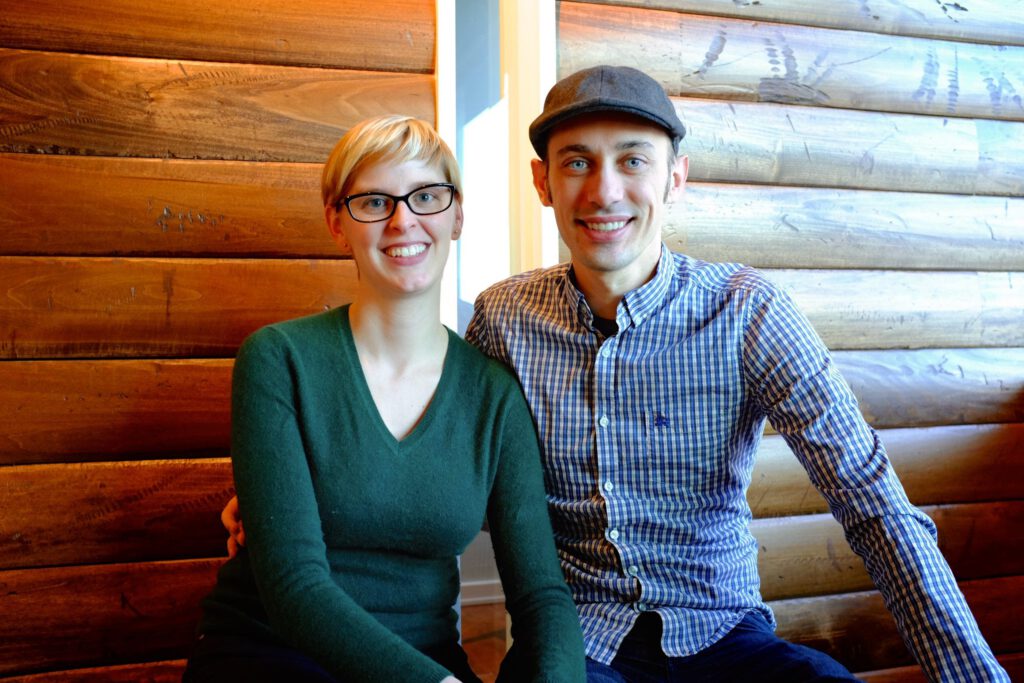
Stephen Smith (US$6.9 billion)
Financier Stephen Smith, 75, has made his mark in banking, mortgages and lending. Forbes estimates his net worth at US$6.9 billion.
Smith co-founded First National Financial, a mortgage lender, in 1988. He now invests through his firm Smith Financial Corp., which includes among its holdings banks, lenders and a financial advisory company.
Smith, who lives in Toronto, earned his BA in engineering from Queen’s University.
Earlier this year, he purchased a stake in The Economist. He told the Globe and Mail at the time: “Some wealthy people buy sports teams. I bought a stake in The Economist. It’s a sports team for nerds.”
Peter Gilgan (US$6.7 billion)
Ontario homebuilder Peter Gilgan clocks in on the Forbes billionaire list with US$6.7 billion.
He founded Mattamy Homes in 1978. The company is named for Matt and Amy, two of his eight children.
The 75-year-old Gilgan is credited with building more than 135,000 homes over his career. He just launched a new, fully automated modular homes facility, Stelumar Advanced Manufacturing, and a recent Globe and Mail story reported that Prime Minister Mark Carney was among attendees at Gilgan’s Muskoka resort home for a Davos-style conference dubbed “The Dock” this summer.
Mark Scheinberg (US$6.6 billion)
Forbes estimates Israeli-born Mark Scheinberg’s fortune at US$6.6 billion. Sheinberg, 52, moved to Richmond Hill, Ont., at 13 with his parents. He attended Fanshawe College in London, Ont., for a year before dropping out.
Scheinberg and his computer-programmer father, Isai, founded online poker site PokerStars in 2001. The family sold the business in 2014, providing funds for Scheinberg to establish Mohari, an international luxury real estate and hospitality investment firm. Company holdings include 1 Hotel in Toronto.
Scheinberg, who lives on the Isle of Man, is a yachting enthusiast.
Bruce Flatt (US$6.5 billion)
Bruce Flatt, 61, is the high-powered money manager who picked up Mark Carney’s old job when the latter left to run for office. Winnipeg-born Flatt, who succeeded Carney as chairman of Brookfield Asset Management, was already CEO of parent firm Brookfield Corp. His wealth, estimated by Forbes at US$6.5 billion, derives from his shares in the huge, diversified investment firm, which represents institutional and individual investors. Brookfield reports it has US$1 trillion of assets under management.
Flatt lives in London and New York.
The Saputo family (US$5.9 billion)
Montreal’s Saputo family fortune is built on generations in the dairy and cheese business. Forbes estimates the Saputo net worth at US $5.9 billion.
Guiseppe Saputo founded the family firm in 1954. Son Lino expanded it until today the Saputo brands are sold in 40 counties. The firm went public in 1997. Last year, Lino’s son Lino Jr. retired as CEO but stayed on as executive chair.
The family owns property in Toronto and Montreal, and Lino’s son Joey owns Major League Soccer’s Montreal Impact.
Kathy Kerr is a veteran online and print journalist who, as a newspaper reporter, editor, and now freelance writer has covered the Canadian business and financial scene for more than three decades. Kathy has contributed to Canadian Family Offices for four years and has also written for The Globe and Mail, the Real Estate News Exchange and various commercial business publications. She also comments on Alberta politics for TV, radio and online publications.
The Canadian Family Offices newsletter comes out on Sundays and Wednesdays. If you are interested in stories about Canadian enterprising families, family offices and the professionals who work with them, you can sign up for our free newsletter here.
Please visit here to see information about our standards of journalistic excellence.