

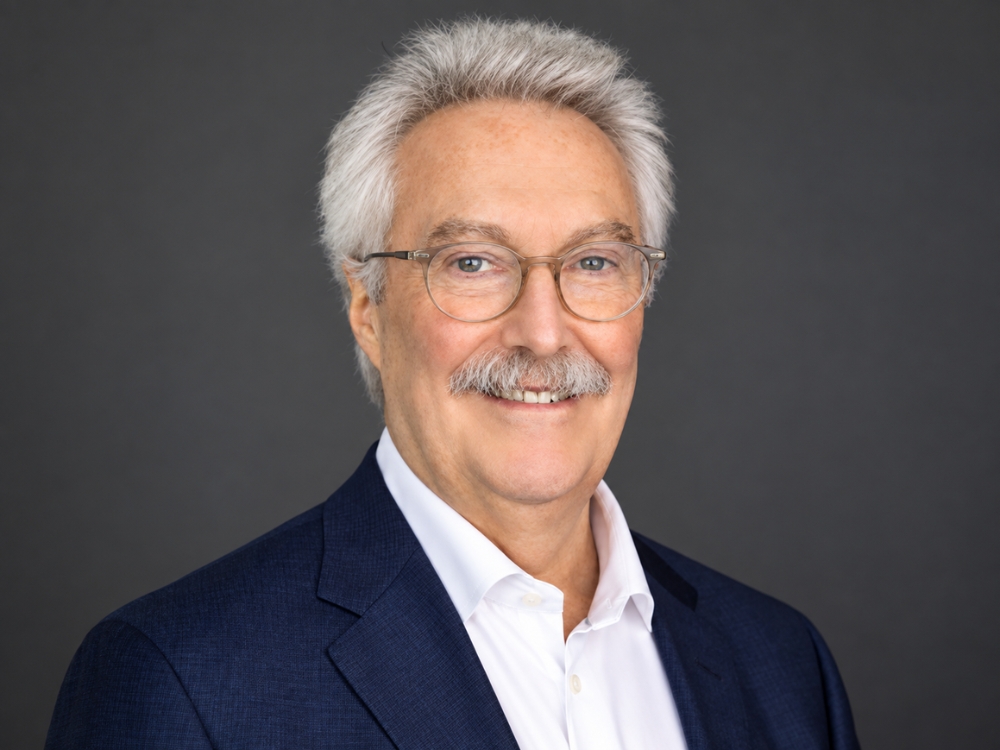
Stephen Emanuel Prostano built an impressive career in wealth management, multi-family offices and financial services over more than four decades. But the colleagues who knew him well say titles and accomplishments tell only part of the story.
They remember a thoughtful, modest man who listened more than he spoke and had an unusual ability to bring people together around an idea bigger than themselves.
“He was a selfless leader,” says Jamie McLaughlin, a longtime colleague and co-founder with Prostano of the Ultra-High-Net-Worth (UHNW) Institute. “He led from behind. He led quietly and selflessly.”
Over a career that included senior leadership positions at Bank of the West Wealth Management, Silver Bridge, Atlantic Trust, Chase Global Asset Management and FleetBoston Financial, Prostano became a respected innovator in serving UHNW families.
Arguably, his most enduring professional legacy is the organization he helped create late in his career: the UHNW Institute, an independent, nonprofit think tank dedicated to improving how families of significant wealth are served.
The idea grew out of a problem Prostano had recognized for years.
The wealth management industry was organized largely around the specialties of those providing the services—investment managers, lawyers, accountants, bankers, trust professionals and others. Families, however, did not experience their lives in neat professional silos.
Prostano understood early that a family’s needs were interconnected and extended beyond managing its financial assets, says Tom McCullough, a partner at Corient and the UHNW Institute’s head of thought leadership and strategy.
A family might approach an advisor with an obvious need, perhaps after selling a business and looking for someone to manage the proceeds. But that family might still have questions about governance, succession, risk, philanthropy and the next generation.
“He was very early on as an advisor in recognizing the integrated, complex, interconnected needs of families,” McCullough says, “and therefore the need for advisors to understand them better in more nuanced ways and serve them in more integrated ways.”
Building something better
Eight years ago, Prostano brought together senior representatives from different parts of the U.S. wealth management industry for a panel in New York. McLaughlin moderated the discussion.
What emerged was a shared recognition that navigating the industry had become extraordinarily difficult for families. “We talked about how the market could be really confusing for families, and there was no safe place to go; there were no standards,” McLaughlin recalls. “That was the genesis of the Institute.”
But identifying the problem was one thing. Building an organization capable of addressing it was another.
That was where Prostano distinguished himself.
“Steve acted on it,” McLaughlin says. “Steve alone put his shoulder to the wheel to make this thing happen.”
Prostano built the Institute’s governance and infrastructure, established its purpose and helped assemble a community that has grown to hundreds of members. Much of the work is carried out by volunteers—professionals Prostano persuaded to contribute their time and expertise to improving the field.
McCullough says Prostano’s ability to rally people around a common purpose was one of his particular gifts.
Both McCullough and McLaughlin describe Prostano as reserved and uninterested in seeking the limelight. His leadership style wasn’t showy, says McCullough, who compares it to the old story of two labourers asked what they are doing. One says he is laying bricks. The other says he is building a cathedral.
Prostano made people feel they were building the cathedral.
There are lots of jobs that are basically blocking and tackling. But with Prostano, you always had a sense that…we’re building a cathedral here. This is something significant.
Tom McCullough
From an industry to a profession
At the heart of Prostano’s vision was a straightforward goal: better service for families.
The Institute was established to serve families of wealth, the advisors who work with them and the businesses that support them, while raising standards and practices across the field.
McCullough says Prostano wanted to see wealth management evolve “into a profession as opposed to an industry,” one with recognized standards families could trust.
That philosophy can now be seen in some of the Institute’s signature work, including its 10 Domains of Family Wealth framework, which identifies the interconnected areas in which wealthy families may need advice and support.
Prostano did not think every advisor needed to be an expert in all of them. But he believed advisors should understand the breadth of a family’s needs well enough to identify them, connect families with the right expertise and help knit the pieces together.
That vision continues through an Integrated Wealth Advisor certificate program being developed by the Institute. For McCullough, initiatives like it represent a tangible continuation of Prostano’s work: creating a profession centred on high-quality, integrated and client-focused service.
McLaughlin says Prostano brought an unusual combination of abilities to that mission. A lawyer by training, he was meticulous and diligent—someone who “sweated the details.” But he also possessed the emotional intelligence required to work closely with families.
A leader without the spotlight
Those qualities carried into Prostano’s relationships with colleagues.
McCullough, who had known Prostano professionally for many years, worked more closely with him after joining the Institute’s board six years ago. The two eventually became friends, and in January, Prostano convinced McCullough to join the Institute’s staff.
What McCullough saw firsthand was a leader modest about his own accomplishments but capable of being decisive when necessary. “He had a backbone,” he says. A discussion might continue at length until Prostano eventually stepped in: “Okay, that’s it. We’re doing this.” Then everyone moved forward.
Prostano’s quiet approach earned what McCullough describes as “love, admiration, loyalty, respect” from those around him.
McLaughlin saw much the same thing. While others took on more visible roles, Prostano concentrated on building the organization itself: recruiting staff and volunteers, creating structures and developing a culture capable of sustaining the Institute. He did it, McLaughlin says, “never looking for credit.”
The person behind the work
Prostano’s professional life was only one dimension of him.
He and his wife, Laura, whom he met when they were 12 years old, were married for 47 years and had three children and five grandchildren. Despite his demanding career, colleagues say his devotion to his family was unmistakable.
McLaughlin says attending Prostano’s memorial gave him a fuller appreciation of this side of his longtime colleague that Prostano largely kept separate from his professional life. “He had a great family life,” he says. “It turns out he was just as great as a father and grandfather.”
For the people carrying on the work of the UHNW Institute, Prostano’s absence is profound. Yet, so is the imprint he left on it.
Sarah Moore is a content and communications professional with deep experience in producing and creating content for print, digital and social. An extensive background in journalism led to managing editor roles at two national magazines, including Today’s Parent.
The Canadian Family Offices newsletter comes out on Sundays and Wednesdays. If you are interested in stories about Canadian enterprising families, family offices and the professionals who work with them, but like your content aggregated, you can sign up for our free newsletter here.
Please visit here to see information about our standards of journalistic excellence.