


In this 10-part series, we explore the Ten Domains of Family Wealth, a comprehensive framework for understanding the issues facing wealthy families, as conceived by the Ultra High Net Worth (UHNW) Institute, headquartered in New York City. In this edition, we focus on the Risk Management Domain.
For those over 40, the recent 25th anniversary memorials of the World Trade Center attacks of 2001 were also a reminder of a tremendous sea change that swept the Western world in the wake of that tragedy. After 9-11, families and their insurers became increasingly diligent in planning for risk, to a degree not previously known. Since then, a global pandemic, the evolution of cyber crime and an apparent increase in the incidence of extreme weather events have intensified awareness of the need to predict the unexpected and build strategies to mitigate it.
“I would bet that risk and risk management as a need have doubled since the time of COVID,” says Tom McCullough, a partner with Corient in Toronto, who also serves as managing director of thought leadership and strategy with the UHNW Institute. “Whatever’s going on in the world has an impact on the clients’ perspectives.”
A strategic approach to risk management
Insurance is generally the first thing people think of when they think of risk management, but it encompasses much more, says Linda Bourn, Domain Chair for Risk Management and practice leader for family enterprise risk with Alliant Private Client in New York.
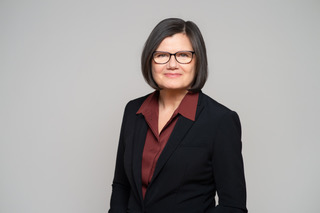
The work of Domain Chairs is voluntary; Bourn says her professional role at Alliant is focused on family office and private insurance. “For the past 25 years, I’ve focused on advising family office and private enterprise,” she says. “But the UHNW Institute gives me the chance to work alongside other professionals. It’s a great opportunity to build something along with other Domain Chairs and faculty.”
The work of Bourn’s Domain assists advisors who are engaged in helping ultra-high-net-worth families understand the areas of risk associated with running the family office, covering the gamut from the potential liabilities of directors and trustees to cybersecurity threats like ransomware attacks.
To that end, “we have a framework in the UHNW Institute that’s pretty widely used: the AIM framework, for Assessment, Implementation, and Monitoring,” says Bourn. “It has been adapted and applied to wealth management by Jim Grubman and his team.”
The three-part AIM Framework provides a structure for addressing risk in a manner that meets the needs of complex families. In Phase 1, the family and advisors assess risk, perform discovery and set goals. Phase 2 is about designing and implementing strategies and solutions. Phase 3 ensures that those solutions remain robust through monitoring, administration and adjustment.
As a non-profit, the UHNW Institute can function as a think-tank, Bourn says, “providing best thinking and innovation.” She points to the “Wealthesaurus,” the Institute’s glossary of terms commonly used within the family advisory sphere, as the type of resource it is uniquely positioned to create.
Like the Wealthesaurus, many of these resources are made available free of charge to the public. For example, Episode 15 of the UHNW Institute Podcast, Navigating Risk Management, features Kate Norris of Atténuer Risk in Chicago discussing non-portfolio risks and their impact on both family members and financial security.
“We’re working on a podcast around AI and information security both at the family office level and at the family level,” Bourn says. “The next one is something we’re really keen on exploring further: the role of women as leaders in the family tackling some of these issues.”
Families have a wide range of online activities. We need to review security and vulnerability.
Linda Bourn
Faculty members also program regular in-person and online events, some of which focus on just one Domain, while others are cross-disciplinary. Last January, Bourn and the Risk Management Domain faculty members organized a webinar titled “The Obsolete Armor: Integrated Risk Management for the AI Era.”
In May, a virtual session called “Geopolitics and Risk: Turning Headline Risk into UHNW Family Strategy” brought thought leaders together in a cross-Domain panel. Recordings of these sessions are available to UHNW Institute members, along with resources on topics like household staff and cyber security in the Institute’s online library.
Areas of concern
Bourn names four areas related to risk that UHNW Institute faculty members plan to focus on the near future. The first is “where the family lives and travels,” which encompasses planning for travel within natural disaster zones and staff training. The second is “what is owned and how”—the inventory of multiple residences, business real estate and “unique assets such as private aviation,” as well as planning to insure and protect all of it.
The third, and currently the most pressing, is the external pressure being brought to bear on families by new technologies such as social media and, especially, the rapid deployment of AI. “Families have a wide range of online activities,” she says. “We need to review security and vulnerability.”
Finally, as family members take on a variety of roles within their community, working on boards and councils, they incur risks such as fiscal responsibility for the entities they’re engaged with. Bourn notes that this topic crosses over with the territory of the other Domains engaged in philanthropy, estate planning and related functions.
“The other large trend is the rising generations who have a different need to manage risk as they navigate milestone events—first car, first home—so there is a huge need for education for these young adults,” says Bourn.
In answer to demand from advisors and family office professionals, the UHNW has developed a four-step annual planning guide. In brief, the steps are to raise the topic of risk at the next family meeting, to start an annual review, to develop an action plan and to utilize insurance as a strategic risk management tool.
“People think risk management is insurance,” say Bourn. Although insurance is certainly part of it, risk management in the contemporary world is a far broader and more complex topic. However, “if you utilize these four steps, you don’t feel like you’re boiling the ocean,” she says. “Risk management becomes manageable.”
Sarah B. Hood is a Toronto-based writer and book author. She has served as editor of three national magazines and written weekly columns for the National Post. She also serves on the editorial board of Spacing magazine. She writes frequently on business, urban affairs and culture. As a food writer, her work has been translated into Japanese and Arabic. She has taught writing at George Brown College for more than 20 years.
The Canadian Family Offices newsletter comes out on Sundays and Wednesdays. If you are interested in stories about Canadian enterprising families, family offices and the professionals who work with them, but like your content aggregated, you can sign up for our free newsletter here.
Please visit here to see information about our standards of journalistic excellence.