


In this 10-part series, we explore the Ten Domains of Family Wealth, a comprehensive framework for understanding the issues facing wealthy families as conceived by the Ultra High Net Worth (UHNW) Institute, headquartered in New York City. In this entry, we focus on the Social Impact and Philanthropy Domain.
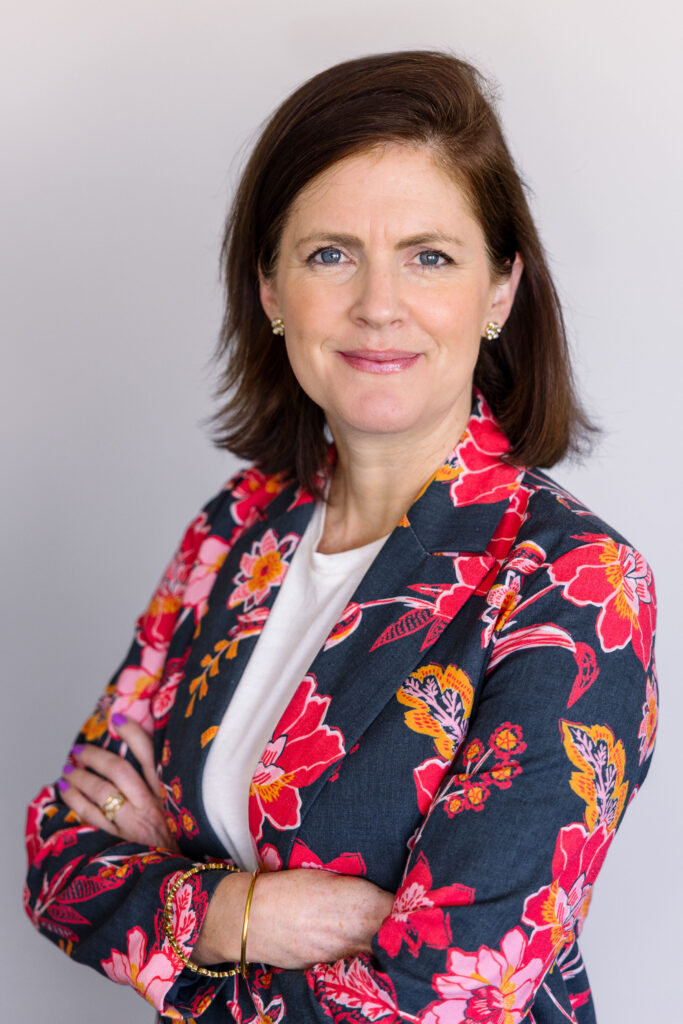
“Traditionally, philanthropy was seen as a side activity,” says Betsy Erickson, managing director, Philanthropy and Wealth Strategy with philanthropic consulting firm ViaNova, who is based in Washington, D.C. “Today’s leading families and family offices are recognizing philanthropy as a central engine—not just for impact, but for aligning. It’s a space where families can define the meaning of wealth across generations.”
Erickson is also the UHNW Institute’s Domain chair for Social Impact and Philanthropy. “We’re the voice in the institute supporting the goals of ultra-high-net-worth families in giving and investing with greater impact,” she says.
Central to the work of UHNW Institute is exploring and building connections among the Ten Domains of Family Wealth. Within that system, philanthropy occupies a unique position since, as Erickson says, it’s “situated at the intersection of financial management and those deeply human things like identity, relationships and values.”
Advisors who specialize in philanthropy and social impact work across many disciplines as they help families clarify purpose, design governance structures and navigate intergenerational dynamics, as Erickson discusses in a 2024 episode of the UHNW Institute Podcast.
Breaking down the siloes
Erickson’s career was shaped by a long period of cancer treatment in her childhood. It showed her the strengths of philanthropy in maintaining the entire healthcare ecosystem, from education and research to treatment and patient support. It also revealed to her, however, that not all organizations are equally worthy of investment.
The experience “ultimately shaped my career,” she says. “I want to help others give in ways that are strategic, ethical and truly aligned with what they hope to achieve.”
Erickson worked for eight years in the nonprofit sector with groups focused on cancer research, but her current path “really comes from two decades of building the practice at [philanthropic advisory firm] Arabella Advisors [now ViaNova], working at the intersection of philanthropy, family dynamics and wealth advising.”
The main attraction of the UHNW Institute, she says, is its “collection of the most amazing thinkers, researchers and practitioners. It’s a really inspiring thing to be a part of, a very inspiring cross-pollination of ideas.”
In the U.S. and increasingly in Canada, families and their advisors inhabit an environment of rapid change, including an unprecedented transfer of wealth that has added complexity to the philanthropic sphere.
“People tend to think of philanthropy simplistically, but with the scale at which people are working now, philanthropy can’t be thought of as a silo,” says Erickson. “It can’t be thought of so narrowly as just giving money away, and people are left unsupported when advisors aren’t thinking about the bigger picture.”
Another level of complexity is added by intergenerational dynamics. At the same time, national and global approaches to philanthropic models—the best ways to have an impact in a particular area—are being rethought, with more investigation into how the recipients of aid can shape the ways funding is utilized.
“What was true yesterday might not work today,” Erickson says. “It prompts a need for more collaboration among advisors and what competencies are needed by advisors to help families get through this.”
While many issues in philanthropy are somewhat consistent from one country to another, legislative and regulatory conditions vary considerably between Canada and the U.S. For instance, donor-advised funds (DAFs) have been under scrutiny south of the border, but experts in Canada agree that Canadian DAFs are well regulated.
Also, U.S. authorities have been examining the balance between donor transparency and appropriate anonymity in so-called fiscal sponsor entities, which are tax-exempt organizations that can manage funds on behalf of other entities. “That is an area where there are some major shifts in the landscape in the U.S.,” says Erickson. However, Canada Revenue Agency (CRA) regulations already differ significantly from U.S. practice.
Overall, “one thing I should say is that, while the field is less mature there, there are excellent advisors in Canada,” she adds. “Some of the strongest thinkers are Canadian.”
Evolving research and professionalism
UHNW Institute Domain chairs and faculty are continually engaged in research, some of which is available only to members, but some of it is freely available to practitioners.
A noteworthy example is the 2024 study Overcoming Psychological Barriers to Giving, co-authored by Erickson with Nicholas Tedesco and Piyush Tantia, which is available through the National Center for Family Philanthropy (NCFP). The researchers interviewed more than 100 families and consulted current behavioural science to identify the top 10 psychological barriers to giving in situations when families get stuck between their decision to give and an actual disbursement.
A follow-up study is scheduled for release in January 2027. It will look at at-risk donor types: families who are unprepared for a wealth transition or the loss of a powerful founder.
The Institute also participated in the creation of Daylight Advisors’ 2025 Philanthropic Advising Competency Model, a framework for philanthropic advisors organized around 13 core competencies that provides a roadmap for firms.
“You can’t be an accountant without being a CPA, and you know a lawyer has passed the bar,” Erickson says. “With philanthropy, there are some designations, but largely it’s a free-for-all.”
She notes that family philanthropy is evolving with demographic changes. “The younger generation has more of a tendency to see philanthropy as a core part of their identity. Also, women inheritors think about capital differently. They’re thinking about how this all fits together. They’re asking, ‘Can I use some of my investments to drive change?’ And they’re much less likely to work with advisors who think of capital in a very siloed way.”
Both groups are interested in supporting smaller grassroots organizations. “We are seeing these rising generations asking the tough questions about the wealth gap, and younger people willing to just step away from their family,” Erikson says. “If we’re not thinking about that and the factors that contribute to that, we’ll be behind the curve as an advisory ecosystem. We need to be thoughtful about how we get ahead of it.”
Sarah B. Hood is a Toronto-based writer and book author. She has served as editor of three national magazines and written weekly columns for the National Post. She also serves on the editorial board of Spacing magazine. She writes frequently on business, urban affairs and culture. As a food writer, her work has been translated into Japanese and Arabic. She has taught writing at George Brown College for more than 20 years.
Please visit here to see information about our standards of journalistic excellence.