


Some of the wealthiest families I know are rich in assets and poor in clarity. They may have successful businesses, substantial investment portfolios, real estate, insurance, trusts and carefully prepared estate documents, with excellent accountants, lawyers and investment professionals advising them. On paper, everything can look extraordinarily well organized.
Yet when I ask whether a spouse actually understands how everything works, whether the children have any idea what they may one day inherit or what will be expected of them, or whether the family would know what to do if the person who has always managed everything suddenly could not, the conversation often changes. I have spent years sitting at tables with successful families, and I have come to believe that some of the most valuable assets they own will never appear on a balance sheet. Trust is an asset. Communication is an asset. Financial confidence, good judgment and the ability to make difficult decisions together are assets too.
Financial capital
We spend an enormous amount of time measuring financial capital because it is relatively easy to measure. We can value the business, calculate the investment portfolio and real estate, model future cash flow and estimate what an estate may eventually be worth. What is much harder to measure is whether the people around that wealth are prepared for it. A family can have sophisticated legal and tax structures and still leave behind enormous confusion. A business owner can spend 30 years building a company without ever having a meaningful conversation with the children about whether any of them actually want it.
Parents can spend decades protecting their children from conversations about money, only to eventually hand them significant wealth without having taught them how to manage the responsibility that comes with it. A spouse can live an extraordinarily comfortable life while knowing surprisingly little about the structures supporting it. None of this necessarily means the legal, accounting, tax or investment advice was wrong. Families should absolutely rely on the appropriate professionals for that advice. The issue is that excellent technical planning can still fall short when nobody has adequately considered the people who ultimately have to live with it.
Communication is an asset. Financial confidence, good judgment and the ability to make difficult decisions together are assets too.
This is why I think we need to broaden the conversation around wealth planning. When I look at a family’s financial picture, I want to understand the assets and liabilities, but I also want to understand who makes the decisions, who avoids them, which children are naturally responsible and which have never had to think about money. I want to know whether one child believes the family business will eventually be theirs while another assumes it will be sold, whether a spouse understands the family’s financial position or has always deferred to the other, and whether aging parents are quietly becoming another financial and emotional responsibility.
These may sound like family questions rather than financial ones, but they can have very real financial consequences. The best structure in the world cannot compensate for expectations that were never discussed, family members who do not understand what has been created, or responsibilities that nobody is prepared to assume.
Successful wealth transfer
One of the most common things I hear from successful parents is that they do not want their children to know how much money the family has. I understand that instinct. They worry that knowing will change their children, diminish their ambition or create entitlement, and they want them to build lives and identities of their own. But there is an enormous difference between handing a young adult the family net worth statement and gradually teaching them how wealth works.
Families can talk about responsibility, philanthropy, investing, ownership, debt, risk and the purpose of money without disclosing every number. In fact, waiting until an inheritance arrives may be the riskier approach. We would never hand someone the keys to a complicated business without preparing them to run it, yet families routinely spend decades building substantial wealth and assume the next generation will somehow know what to do with it.
Perhaps we also need to reconsider how we define a successful wealth transfer: Preserving the financial assets matters, but did the family relationships survive? Were the children prepared rather than overwhelmed? Did the surviving spouse feel confident rather than frightened? Could the family make thoughtful decisions together when circumstances changed? Did the wealth give the next generation opportunity without taking away their sense of purpose?
Money does not exist independently from the people who own it. It lives inside marriages, businesses, sibling relationships, aging, illness, ambition, generosity, guilt and expectations. That is why, for me, one of the most important questions in planning is not simply, “How much will my family inherit?” It is, “What kind of family will inherit it?” The answer will never appear on a balance sheet, but it may ultimately determine the value of everything that does.
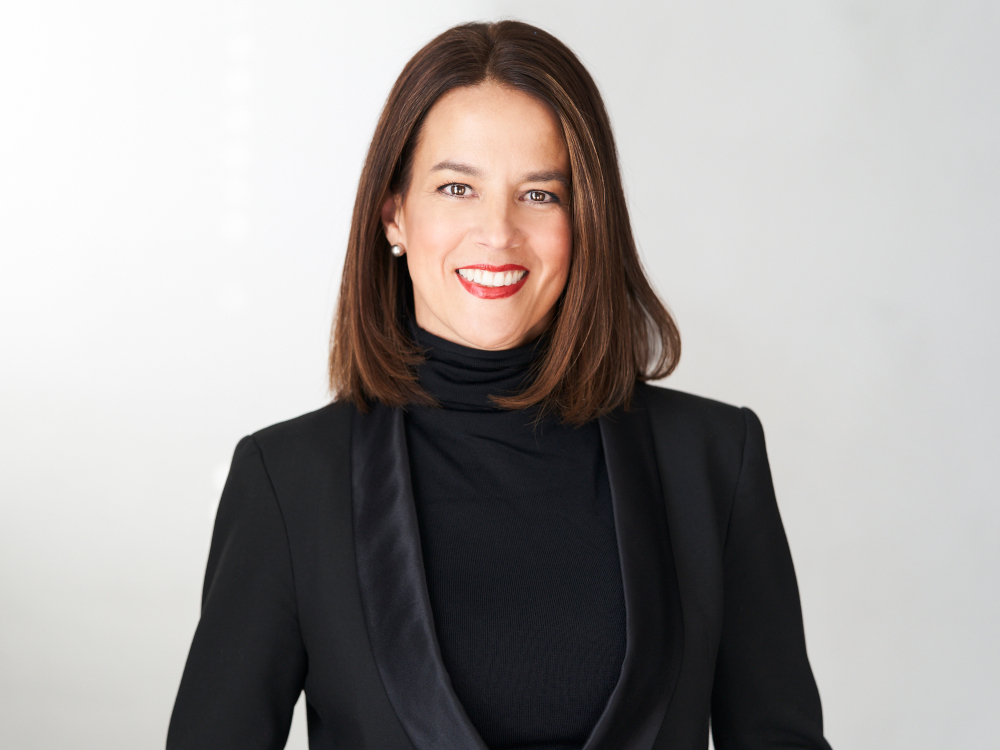
Elke Rubach is a Certified Financial Planner with CLU and MFA-P designations. Her expertise lies in optimizing income and tax efficiencies, achieving cohesiveness in financial and estate plans, and providing ongoing asset management strategies that foster wealth accumulation and growth. Elke is a reformed lawyer who earned her graduate degree in law, with a focus on banking and finance, at the London School of Economics, where she studied on a Chevening Scholarship. She worked as an associate at the London (U.K.) and Toronto offices of the law firm McCarthy Tetrault. During a stint in banking, Elke observed the life-changing impact of good financial advice and decided to switch to a career in financial planning and wealth management. She founded Toronto-based Rubach Wealth in 2012. Today, Elke is a sought-after speaker on wealth management, estate planning and philanthropy. She’s the founder of Fashion Heals for SickKids, which has raised more than $500,000 for pediatric cancer care and research since 2016. She also gives back with board and volunteer commitments with the Professional Advisory Council for SickKids Foundation, the Investment Committee at the Office of the Public Guardian, the advisory board for Transpod Inc., and the board of Ronald McDonald House Charities in Toronto.
The Canadian Family Offices newsletter comes out on Sundays and Wednesdays. If you are interested in stories about Canadian enterprising families, family offices and the professionals who work with them, but like your content aggregated, you can sign up for our free newsletter here.
Please visit here to see information about our standards of journalistic excellence.