

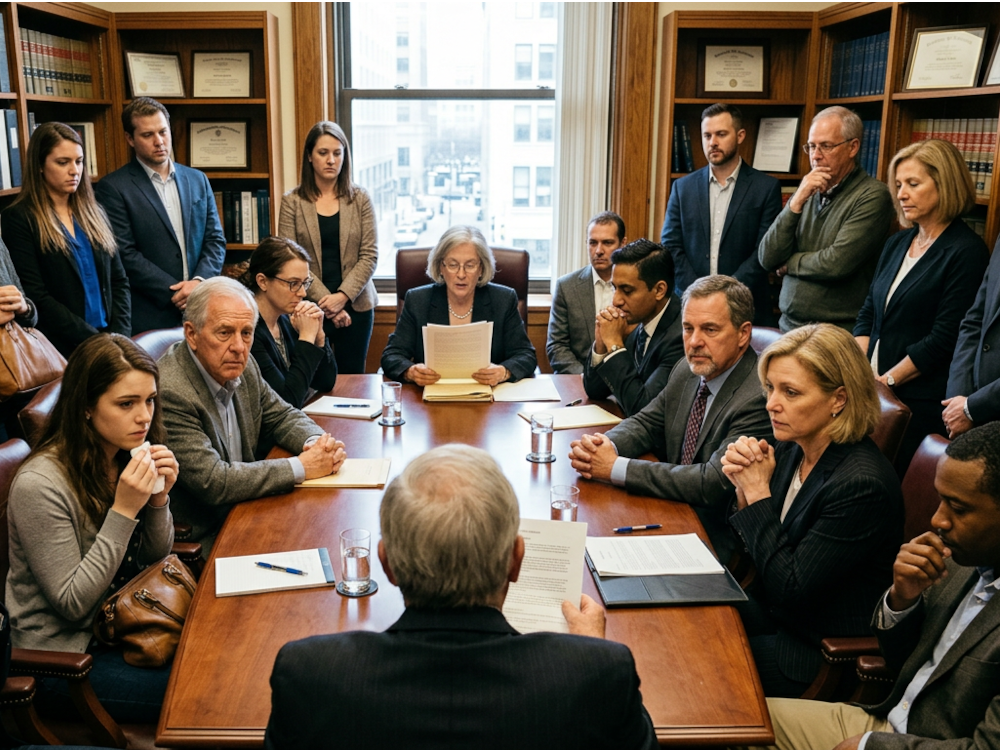
Inheritance is usually discussed in technical terms: Valuation. Liquidity. Tax efficiency. Governance. These conversations matter, and they should be rigorous. But they are rarely how families actually experience inheritance.
For most people, inheritance is not received as a financial event. It is received as a message.
It is interpreted through years of family history, sibling dynamics and unspoken expectations—who was trusted, who was prioritized, who was protected, who was overlooked. Long before any assets transfer, meaning is already attached to the outcome.
Over time, I have seen how even well-designed estate plans can leave families unsettled when the reasoning behind them is never clearly articulated. The documents may be precise and the structures sound, yet conflict still arises, not because the plan failed technically but because the intent behind it was never fully explained.
In those moments, inheritance becomes emotional currency.
What beneficiaries are really interpreting
Few beneficiaries view inheritance as neutral. Most experience it as a reflection of approval, fairness, loyalty or control. In the absence of direct communication, people construct their own explanations. Those explanations are shaped far more by personal history than by legal logic.
Equal distributions, for example, are often assumed to be fair. In practice, they can feel deeply unfair when caregiving, business involvement or responsibility have gone unrecognized. Unequal outcomes, on the other hand, are frequently accepted with far less resistance when the rationale has been shared in advance.
Clear communication does not remove emotion from the process. It does, however, reduce the likelihood that beneficiaries will interpret decisions as personal judgments.
When intent is left unspoken, disputes rarely focus on the documents themselves. Instead, they surface through strained relationships, competing narratives and long-standing resentments that often predate the estate plan.
From a planning perspective, silence may feel efficient. From a family perspective, it is often costly.
When inheritance becomes leverage
In some families, inheritance is not only a future transfer of wealth. It becomes a form of influence.
Future assets are positioned, sometimes subtly, as conditional. Expectations are rarely stated outright, but they are understood. Alignment is rewarded. Dissent is discouraged. Independence is delayed. Family members learn, over time, what is “safe” to say and what is not.
This dynamic often produces the appearance of harmony. There are fewer open conflicts. Difficult topics are avoided, decisions are deferred and, outwardly, things seem stable.
Internally, however, relationships become cautious. Adult children may postpone major life choices. Siblings may avoid honest conversations. Family members may limit self-expression in order to preserve their standing. While these arrangements may be legally permissible, they tend to weaken trust over time.
Few beneficiaries view inheritance as neutral. Most experience it as a reflection of approval, fairness, loyalty or control.
Over the long term, patterns tend to emerge. Beneficiaries may struggle to develop confidence in their own judgment. Gratitude becomes intertwined with obligation. Relationships shift from genuine connection to careful performance. People learn how to behave rather than how to engage honestly.
These dynamics often surface most clearly after death, when the influence that once maintained order is gone. Long-suppressed frustration can emerge through litigation, estrangement or permanent relational breakdown. In many cases, these outcomes are the opposite of what the original planners intended.
Rethinking fairness and stewardship
Many wealth creators default to equal distributions to avoid conflict. Others rely on conditional structures to maintain order. Neither approach is inherently wrong. Problems arise, though, when decisions are implemented without context.
Fairness without explanation feels arbitrary. Control without transparency feels punitive.
Families who take the time to explain how and why decisions were made, particularly when outcomes are unequal, are generally better positioned to preserve relationships. Even when emotions are complex, understanding reduces suspicion.
A facilitated family discussion provides more long-term stability than any single legal structure.
Stewardship is not only about protecting capital. It is also about recognizing how decisions are experienced by the next generation. Clear communication, after all, is not a soft skill. It is a risk management strategy.
Families that engage in thoughtful, structured conversations about succession, inheritance and governance tend to experience fewer surprises later. This does not require sharing every detail. It does require articulating values, acknowledging trade-offs and creating space for questions.
In many cases, a facilitated family discussion provides more long-term stability than any single legal structure.
What endures after the transfer
Family offices exist to support multigenerational wealth. But financial continuity alone does not guarantee lasting legacy.
When inheritance is treated purely as a technical outcome, or as a means of maintaining influence, it can leave behind divisions that persist long after the assets have changed hands. When it is approached as both a financial and emotional process, it can strengthen trust and continuity.



Over time, it becomes clear that the most durable legacies are not built solely through structures and strategies. They are built through clarity, respect and a willingness to address difficult conversations before they become crises.
What ultimately endures is not the plan itself, but the relationships that remain once the transaction is complete.
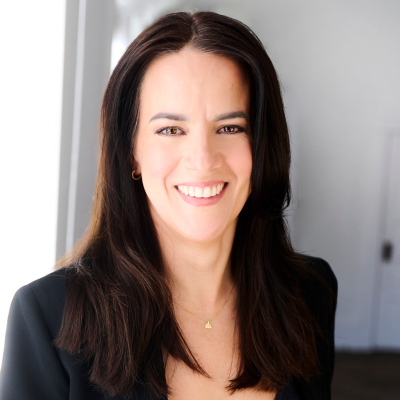
Elke Rubach is a Certified Financial Planner with CLU and MFA-P designations. Her expertise lies in optimizing income and tax efficiencies, achieving cohesiveness in financial and estate plans, and providing ongoing asset management strategies that foster wealth accumulation and growth. Elke is a reformed lawyer who earned her graduate degree in law, with a focus on banking and finance, at the London School of Economics, where she studied on a Chevening Scholarship. She worked as an associate at the London (U.K.) and Toronto offices of the law firm McCarthy Tetrault. During a stint in banking, Elke observed the life-changing impact of good financial advice and decided to switch to a career in financial planning and wealth management. She founded Toronto-based Rubach Wealth in 2012. Today, Elke is a sought-after speaker on wealth management, estate planning and philanthropy. She’s the founder of Fashion Heals for SickKids, which has raised more than $500,000 for pediatric cancer care and research since 2016. She also gives back with board and volunteer commitments with the Professional Advisory Council for SickKids Foundation, the Investment Committee at the Office of the Public Guardian, the advisory board for Transpod Inc., and the board of Ronald McDonald House Charities in Toronto.
The Canadian Family Offices newsletter comes out on Sundays and Wednesdays. If you are interested in stories about Canadian enterprising families, family offices and the professionals who work with them, you can sign up for our free newsletter here.
Please visit here to see information about our standards of journalistic excellence.