

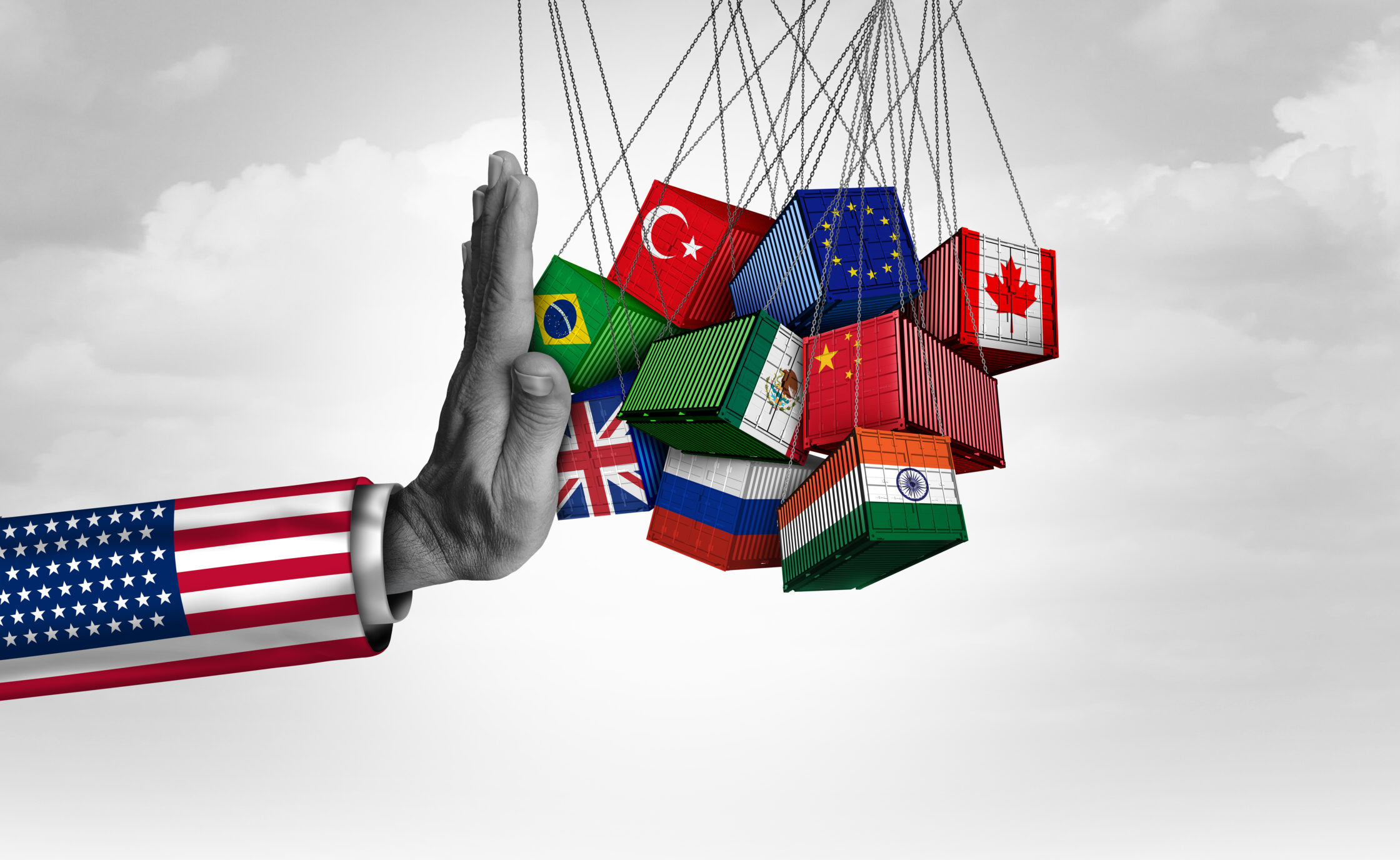
It seems like years since President Donald Trump announced Liberation Day and a broad package of import tariffs on April 2, 2025. That’s partly because the tariff landscape keeps changing, as U.S. economic strategies seem to shift and countries are punished with still higher tariffs for perceived misconduct—or given breaks when they play nice.
Further muddying the waters, the U.S. Supreme Court before mid-January may issue a decision on the Trump administration’s use of executive power to impose global tariffs under the International Emergency Economic Powers Act. Meanwhile, the Canada-U.S.-Mexico Agreement (CUSMA), which covers the majority of goods traded in North America, comes up for review in mid-2026.
More volatility ahead
As with 2025, expect no let-up in the level of news on tariffs and trade in 2026, says Dustin Reid, vice-president, chief strategist, fixed income at Mackenzie Investments. He points to the upcoming Supreme Court decision as significant not only because it may shift the methods the Trump administration employs to impose tariffs, but also because it might require tariffs already collected to be refunded.

“The U.S. fiscal package from last summer was broadly expansionary on many levels, and one of the reasons was because of middle-income tax cuts,” he says. “Those tax cuts were generally seen to be funded by revenues generated by tariffs—call it $300 billion on an annualized basis. If that needs to be refunded, then those tax cuts need to be funded by issuing additional debt, and I suspect that the bond market will not particularly like that. The risk is that the bond market moves significantly higher and equity valuations get squeezed on the back of that.”
In response to the tariff turmoil, the Canadian government is spending billions in hopes of making Canada more investable and boosting exports. But Reid notes that the U.S. appears to be doing a better job of attracting investment dollars. Some of that has come in the form of commitments from various countries to invest hundreds of billions of dollars in the U.S. to secure tariff relief. But other U.S. policies, such as a first-year amortization of 100 per cent for companies willing to build a plant there, are helping to seal deals, too.
Although Canada is counting on a successful renegotiation of CUSMA, Reid sees the sentiment surrounding the agreement becoming uglier leading up to the negotiation.
“I think the risk over the next six months is that we’re going to see some very negative headlines,” he says. “That has really got a lot of C-suites across Canada concerned and waiting for more clarity before injecting a lot more into capex spend.”
He advises investors to look cautiously at the five sectors that are most likely to entail heavy discussion during CUSMA negotiations: steel, aluminum, lumber, dairy and automobiles.
Mackenzie also predicts that the Bank of Canada will cut rates twice by the middle of 2026.
“What that means from a market perspective is that we like being long at the front end of the bond curve,” Reid says. “We like buying short-term bonds—two-year, three-year, four-year Canadian bonds—which we believe can outperform U.S. Treasuries of the same duration.”
All told, he believes the Canadian economy is poised to underperform the U.S. next year, by a margin larger than many people expect, in some part due to a weak Canadian housing market.
“I don’t foresee a Canadian recession, but I do see tepid growth in Canada at around one per cent for 2026, and closer to 2.5-plus for the U.S.,” Reid says. “We think there’s also some risk for Canadian dollar weakness over the balance of 2026.”
The outlook for CUSMA

Uncertainty about the CUSMA is also top-of-mind for Tom Nakamura, vice-president and portfolio manager, currency strategy and co-head of fixed income, AGF Investments.
“The consensus is that we’ll probably avoid the worst-case scenario in terms of completely ripping up CUSMA or having it altered so significantly that it’s unrecognizable,” he says. “I think it will also probably fall short of the best-case outcome, which is full renewal. But ultimately we’ll have some kind of rough framework that all three sides can live with, and we’ll be able to move on from there.”
While Nakamura applauds the efforts of the Canadian government to improve Canada’s global trade position, it’s too soon to tell if these strategies will succeed over the long run. Regardless of the future trade relationship with the U.S., however, some degree of certainty can help underpin efforts to explore other trading opportunities.
Global investors were cold to Canada during the first half of 2025, but Nakamura foresees a modest warming trend, resulting from cautious optimism on the trade front, an improved inflation print and the fact that Canada escaped a late-year recession.
“This provides interesting tactical trading opportunities, but there’s still some uncertainty around where things are settling out even before we start to deal with CUSMA,” he adds. “We’re also still grappling with how sensitive the Bank of Canada should be, and there’s a big wild card out there in terms of what will impact the Canadian economic outlook.”
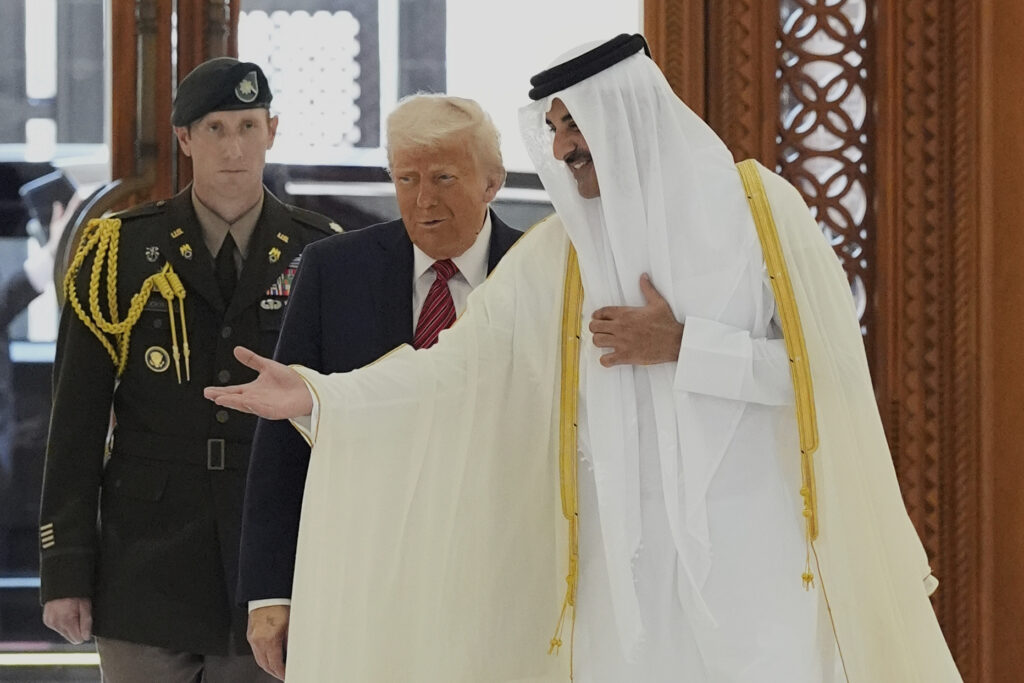

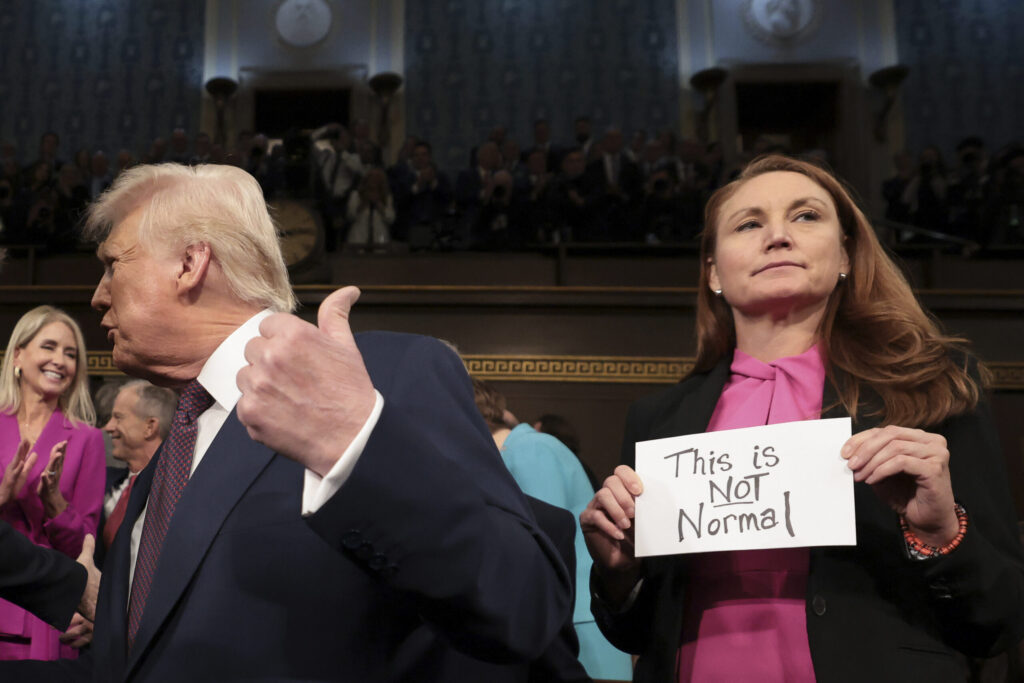
Despite some early moves by institutional investors away from U.S. markets following Liberation Day, Nakamura sees the U.S. retaining its status as a safe haven. As the midterm elections approach, he’s also hopeful that the U.S. stance toward Canadian trade will improve.
“Some of the polling indicates a softening of support for the administration and some concern about how the economy is being handled,” he says. “If that starts to resonate within the White House, you might see a gentler approach to trade negotiations, to the benefit of Canada.”
Re-industrialization or stagflation?

For Stephen Johnston, director of Calgary- and Toronto-based private equity firm Omnigence Asset Management, the U.S story is all about reindustrialization.
“Military power is 100 per cent downstream of industrial power,” he says. “As soon as you deindustrialize, you’re not the world’s dominant military power. Tariffs are part of that reindustrialization.”
He notes that an outward focus by the Canadian government on U.S.-imposed tariffs overlooks a similar necessity for Canada to re-establish its sovereignty and strategically rebuild its industrial base.
“We’re not competitive on corporate tax rates, on regulations, or on energy prices,” Johnston says. “Without those three things, the choice between building a factory in the U.S. or Canada becomes obvious.”
Government efforts to replace the U.S. as Canada’s major trading partner are “mostly political optics” and will likely fail, he adds, because the increased costs of transportation to markets such as Europe will make those goods uncompetitive. And yes, the world wants Canada’s energy, even as the national will to ramp up energy production falters.
Without major policy shifts, Johnston expects to see foreign direct investment into Canada continue to plummet, even as Europe experiences the same fate. In this environment, where can investors deploy their capital?
“If I want to have a balanced allocation to the United States, Canada, Europe and Asia, then my bets in Europe and Canada have to be short aggregate growth and long inflation because they’re creating stagflationary macro conditions,” Johnston says. “However, if you position yourself appropriately, you can make good returns in stagflation by targeting sectors that have pricing power and are not correlated to GDP.”
Those sectors include environmental services and healthcare, which are price insensitive. If Canada falters in addressing the construction of new housing, look instead to companies and suppliers of building materials that will repurpose the existing housing stock. Whereas car manufacturing may stumble, downstream providers of car maintenance could see an upside.
Chaos as the new normal

Looking ahead through 2026, Vivek Astvansh, associate professor, Desautels Faculty of Management at McGill University, and a researcher on trade negotiations, agrees that U.S. government policy will continue to dominate the news cycle and that chaos may be the new normal for the foreseeable future. In fact, chaos may be the intended effect of U.S. government policy.
“What we perceive as chaos can be a strategy, because chaos induces uncertainty, and many people cannot deal well with uncertainty,” he says. “They may attempt to alleviate uncertainty by making decisions that may hurt them in the longer term. We may see more activity in the months leading up to CUSMA’s first review scheduled for July 1, 2026. I will not be surprised if the countries reach no agreement during that review, and the negotiations drag on for a few weeks or months. I am tempted to advise investors to be extra-alert regarding the industries that may become volatile around July.”
As for any change of heart toward Canada as the U.S. midterms approach, Johnston advises investors not to hold their breath.
“One thing Trump has proven very adept at is to act in surprising ways,” he says.
“There’s been no real restriction on his power to use executive authority to do everything he wants, so I don’t think that the midterms impact his agenda. At the same time, America is one of the world’s largest consumers of all the things that Canada has to offer—and that’s something we’re unlikely to change.”
Peter Kenter is a Toronto-based writer with a deep and abiding interest in how everything in the world works and how it got that way. He’s written about the economy, investing, financial services, cryptocurrency, pharmaceuticals, mining, energy, cannabis, agriculture, consumer electronics, education, sponsorship marketing, and entertainment. He’s the author of TV North: Everything You Wanted to Know About Canadian Television.
The Canadian Family Offices newsletter comes out on Sundays and Wednesdays. If you are interested in stories about Canadian enterprising families, family offices and the professionals who work with them, sign up for our free newsletter here.
Please visit here to see information about our standards of journalistic excellence.