

In the midst of global turmoil, investors have been seeking safe haven in gold, silver and critical minerals, bringing lustre to mining—an enduring mainstay of the Canadian economy.
“There’s a lot of interest in what that means for investment in Canada. There’s tons of potential for people to build wealth through investment and mining,” says Katherine Wetmore, partner and Toronto mining leader at KPMG Canada.
Canada hits above its weight in terms of the number of mining companies that call it home and the generational expertise behind them. More mining companies are listed on the TSX and TSX Venture Exchange than any other stock market in the world. Corporations based in Canada have mines all over the globe.
Despite that, Wetmore says, the mining community is relatively small.
“As global as it is, and cross-jurisdictional with respect to the actual location of mines and where the resources exist, the folks who are involved in the business are a small, close-knit community of people. And they tend to stay in the industry for most of their careers.”
The sentiment around mining is changing such that there is more interest in education and pursuing mining as a career.
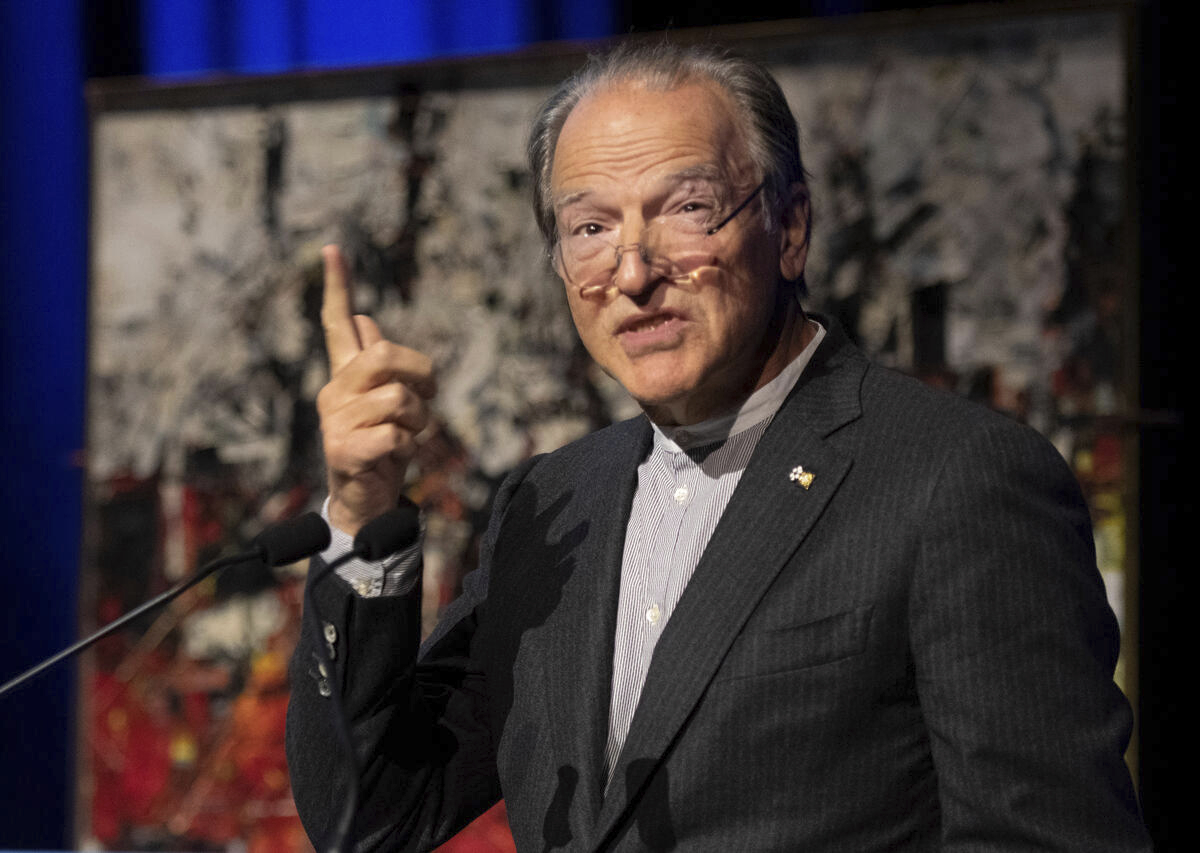
Katherine Wetmore, partner and Toronto mining leader at KPMG Canada
It’s not an easy business. “There’s a lot of risk associated with mining,” she says. “It takes a long time to get to shovels in the ground, from discovery of a resource into the actual exploitation and mining of those resources.”
Successful magnates in the sector have long careers and are sometimes part of even longer family traditions.
If you visit traditional mining towns, “you’ll run into people who have had mining in their families for two to three generations,” Wetmore says. “Where people have been successful in building wealth in the mining industry, it’s often because they’ve got that technical underlying knowledge and operational knowledge.”
Wetmore says that complaints about the industry being bad for the environment are often based on misperceptions.
“Mining, in order to be successful, has to have a social licence to operate,” she says. “And so the mining companies, especially publicly funded ones, are very focused on making sure that they are doing what’s right for the environment and local communities because it’s mutually beneficial and it’s the right thing to do.”
Canada has significant amounts of nickel, cobalt, lithium and uranium needed by the emerging net-zero economy. “The sentiment around mining is changing such that there is more interest in education and pursuing mining as a career, which is new,” says Wetmore.
“There’s been a lot of concerns around access to talent and the retirement of [baby] boomers with tons of experience, and not having the same pipeline of experienced workers coming in to backfill that. But we’re hearing and seeing that shift.”
Many of the individuals on the following list of Canada’s wealthiest mining moguls are in that baby boomer generation or older, having built enormous companies—and wealth—throughout their careers. But the younger generations are starting to appear in executive suites and boardrooms.
This isn’t a definitive list, given the lack of reliable estimates of the wealth of these entrepreneurs and families. But these miners, financiers and investment gurus are some of the most prominent and enduring players in the sector.
Lundin family
In 2024, Bloomberg estimated the Lundin family fortune at US$7.3 billion. The family, with corporate group headquarters in Vancouver, is in its third generation of wealth, with Adam, Jack, William and Harry Lundin now leading or involved in the business.
Their father, Lukas, died of brain cancer at the age of 64 in 2022 at his home in Switzerland, where he had moved in 2013. Grandfather Adolf Lundin, who died in 2006, immigrated to Canada in the 1980s from Sweden.
The Lundin Group has firms in Canada, Botswana, the U.S. and throughout South America under its umbrella, with interests in copper, gold, silver and oil. The corporate website puts the group’s market cap at CAD$66.69 billion.
The family has a large nonprofit foundation involved in ESG and sustainable development. Brain cancer research is also a focus of family philanthropy.
Robert Friedland
In February, Forbes pegged Canadian-American mining mogul Robert Friedland’s fortune at US$3.5 billion.
The 75-year-old founded Ivanhoe Capital Corp., a juggernaut in investing, mining and energy, in 1987. In 1994, he founded TSX-listed Invanhoe Mines Ltd.
Now living in Singapore, the entrepreneur has joint Canadian-U.S. citizenship and has mining concerns in gold, copper, palladium and other metals.
A colourful character, Friedland has a back story that includes an arrest in his youth related to LSD possession. (According to Maclean’s, the conviction was later expunged.)
He has established a reputation for successfully developing mineral deposits around the globe. He was inducted into the Canadian Mining Hall of Fame in 2016 and the American Mining Hall of Fame in 2021.
In Canada, a firm co-founded and chaired by Friedland discovered a massive nickel deposit in Voisey’s Bay, Nfld., which was sold to Inco in 1996 for CAD$4.3 billion.
One of Friedland’s sons, Govind, is also active in the mining industry.
Frank Giustra
Canadian Frank Giustra may be better known for founding Lionsgate Entertainment, a company responsible for many prestige films, but his reputed US$1 billion fortune also derives from financing Canadian and international mining operations, including major gold projects.
Giustra, 68, was born in Sudbury, where his father worked in a nickel mine. Growing up, he lived in Italy, Argentina and British Columbia, where he is now based.
Giustra went into investment and finance, particularly in the mining sphere, working at Merrill Lynch and Yorkton Securities, and became chair of the mining finance firm Endeavor Financial from 2001 to 2007.
In 2017, he was chairman of Leagold Mining, which had a large gold play in Mexico. Leagold merged with Canadian firm Equinox Gold in 2019 in a US$670 million deal. He is now CEO of the Fiore Group, a broadly diversified investment firm.
Giustra is a noted philanthropist, particularly in the area of relieving poverty in Canada and around the world.
Keevil family
The Vancouver-based Keevil family is linked to the history of mining giant Teck Resources.
Although his net worth isn’t publicly available, Norman B. Keevil, 88, as a controlling shareholder of Teck, is a key player in the Canadian mining sector.
Teck’s merger this year with Anglo American plc will create a $70 billion corporation.
The family mining dynasty began with Norman Keevil Sr., who developed technology for mineral exploration in the late 1940s and discovered a major copper deposit near Lake Temagami in Ontario. Keevil branched into gold, and his company grew into Teck, mining metallurgical coal, copper, zinc, gold, silver and other metals.
His son Norman B. Keevil was the key player in the fight to keep Teck Canadian in the face of a dramatic takeover bid by mining giant Glencore. He eventually sided with the Anglo American proposal, which keeps the new partnership headquartered in Vancouver, although it will be incorporated in London with a listing on the London Stock Exchange.
The vice-chairman of the Teck board, according to the firm’s website, is Norman B. Keevil III.
Pierre Lassonde
Pierre Lassonde, 78, built his reputation in the mining sector with Franco-Nevada, a Canadian gold royalty investment firm he co-founded with partner Seymour Schulich in 1982.
The Montreal Gazette estimated the Lassonde family fortune at $1.2 billion in 2025.
After studying engineering at École Polytechnique, Lassonde began his working career with the construction firm Bechtel. He subsequently went into mining and mining financial analysis.
Schulich and Lassonde applied a royalty model, similar to that used in oil and gas, to gold mining with their Franco-Nevada Mining Corp., growing it until 2002 when it was sold to Newmont Mining for US$3.2 billion.
Lassonde served as president of Newmont for five years. He was involved in the revival of Franco-Nevada in 2008 when Newmont spun off the royalty business. The market capitalization of Franco-Nevada was more than US$25 billion in December of 2020, the year Lassonde stepped down as chairman.
Lassonde remains involved in several gold mining plays. He is well known for his philanthropy to educational institutions.
Seymour Schulich
Early in his career, investor and noted philanthropist Seymour Schulich worked for Shell Oil. He took that experience and applied an oil royalty investment model to mining, founding Franco-Nevada with business partner Pierre Lassonde.
Ten years ago, media reports put Schulich’s wealth at more than CAD$1 billion. His current net worth hasn’t been reported, but Schulich has donated more than $350 million to education and healthcare causes.
The longtime financier and investor is also known for his 2007 book, Get Smarter: Life and Business Lessons.
Eric Sprott
Usually characterized as a “billionaire investor,” Eric Sprott, 81, is one of the globe’s biggest fans of precious metals.
He began his career as an analyst with Merrill Lynch. In 1981, he founded Sprott Inc., which has grown into a large asset management firm with offices in Toronto and the U.S. His personal website also describes him as chief executive officer of Eric Sprott Family Office.
Sprott is still active and influential in mining investment, often offering his generally bullish commentary on silver and gold stocks in business media interviews.
After receiving his $10 million donation, Sprott’s alma mater Carleton University named its business school after him in 2001.
Ross Beaty
Vancouver-born geologist Ross Beaty is known for his building of silver and gold mining firms. His flagship company, Pan American Silver, which he established in 1994, is one of the largest silver producers in the world; it has operations in Canada and throughout Latin America. Beaty, 75, retired as chairman of the company in 2021.
He is also known for the creation and sale of a string of other gold, silver and copper companies over the years. He is now chairman of the board of Equinox Gold, which has operating mines in Ontario, Newfoundland, the U.S. and Guatemala.

Beaty expanded his expertise to geothermal and alternative energy companies in 2008, establishing Alterra Power in 2011. That firm has holdings in geothermal, wind and solar power.
Beaty’s philanthropic endeavours focus on environmental causes through his family’s Sitka Foundation.
Ian Telfer
Mining magnate Ian Telfer, 80, moved at the age of 2 from Britain to Canada and spent his formative years in Toronto. With an accounting and business background, he learned the ins-and-outs of the mining business as a financial analyst at Hudson Bay Mines.
Telfer served in management at mining firms with operations in Brazil and New Guinea, eventually joining up with mining financier Frank Giustra to buy into Wheaton River Minerals.
The 2004 merger between Wheaton and Goldcorp Inc. led to Telfer becoming CEO of Goldcorp, which grew to be one of the largest gold mining companies in the world.
Telfer has also been instrumental in building various other uranium, gold and oil firms. From 2009 to 2013, he was chairman of the World Gold Council.
The University of Ottawa’s school of management was named for Telfer following a $25 million donation to the university.
Rob McEwen
Rob McEwen, 75, is a central player in Canada’s gold mining industry. The investor founded Goldcorp in 1994, a firm that eventually reached a market capitalization of $8 billion.
One of McEwen’s innovations was the Goldcorp Challenge. In 2000, McEwen publicly shared the firm’s geological data and offered $500,000 in prize money to contestants who could find its Red Lake mine’s next gold reserve. The contest yielded new deposit discoveries.
McEwen left Goldcorp in 2005. He is now CEO and chief owner of McEwen Mining, which has mines in Timmins, Ont., Nevada, Mexico and Argentina.
In 2016, Canadian Business estimated his wealth at $800 million. McEwen and his wife, Cheryl, are well known for their philanthropic giving to causes in healthcare and education.
Kathy Kerr is a veteran online and print journalist who, as a newspaper reporter, editor, and now freelance writer has covered the Canadian business and financial scene for more than three decades. Kathy has contributed to Canadian Family Offices for four years and has also written for The Globe and Mail, the Real Estate News Exchange and various commercial business publications. She also comments on Alberta politics for TV, radio and online publications.
The Canadian Family Offices newsletter comes out on Sundays and Wednesdays. If you are interested in stories about Canadian enterprising families, family offices and the professionals who work with them, you can sign up for our free newsletter here.
Please visit here to see information about our standards of journalistic excellence.