

Nearly 60 per cent of family offices in North America are controlled by founders. It’s the largest proportion of G1 leadership anywhere in the world. As the greatest intergenerational wealth transfer in Canadian history continues to build momentum, the threat of a succession crisis looms large. What happens when founders are ready to hand over leadership?
Canadian Family Offices, Family Enterprise Canada and the Family Business Institute at Toronto Metropolitan University (TMU) are partnering to present Family Offices – Engaging the Next Generation on Nov. 11 to share the latest research in Canada’s fast-growing family office space and to discuss the key challenges and opportunities facing Canada’s enterprising families.
The November event will feature a presentation by Dr. Francesco Barbera, Academic Director of the Family Business Institute at TMU, as well as a panel moderated by Canadian Family Offices‘ managing editor, Joe Chidley. The panelists are Greg Moore, partner, at Richter Family Office; Reetu Gupta, CEO and ambassadress of The Gupta Group; and Judi Cunningham, founder and CEO of Trella Advisory Group. The event will wrap up with a networking event.
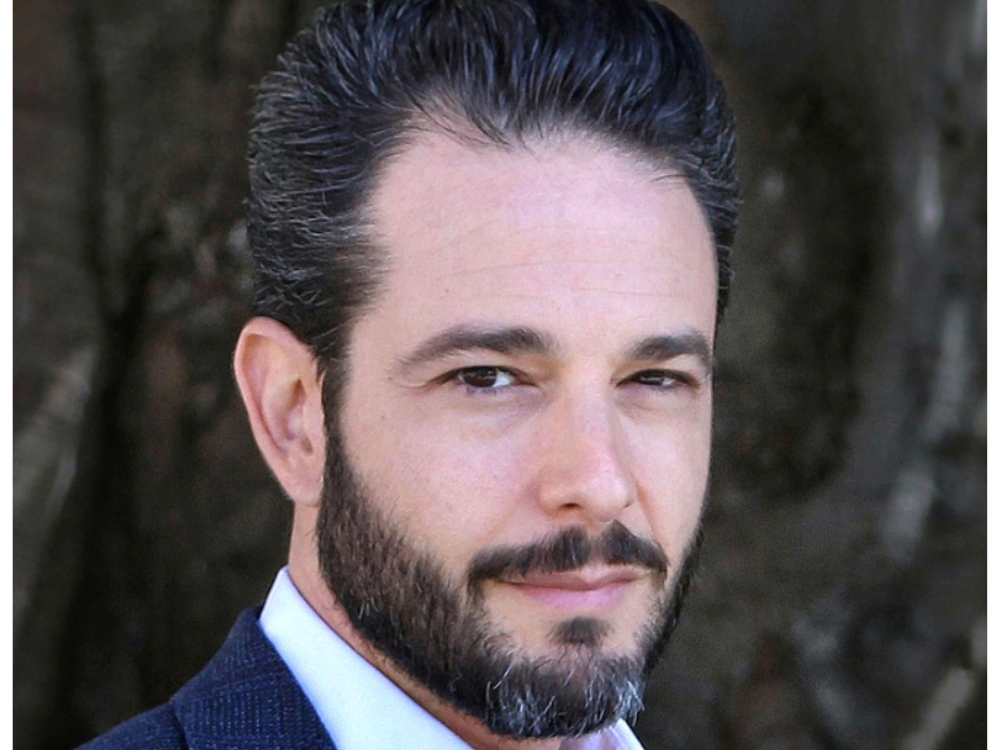
In the lead-up to the event, we sat down with Dr. Barbera to learn more about his research, the Family Business Institute’s work, and the role family offices can play to engage the next generation of Canada’s business families.
What led you to the family enterprise space?
My background is Italian, and in our culture, family is the centre of everything. I have always had a connection and an understanding of what family means and how complicated it can be. I also have a personal experience being in and running a family business with my father and eventually founding my own family business. That got me interested in how family relationships can shape business decision-making.
After that, I started my academic career in economics and finance, but I always brought that family experience with me. My dissertation was motivated by the need to add some economic rigour to the whole concept of family business. Since then, I have dedicated my academic career to the family business discipline, leading family business institutes and university-based family business centres in Australia, the U.S. and now Canada, where I founded the Family Business Institute at TMU. My main areas of focus are succession, identity, developing the next generation, promoting continuity across generations, family business education and training advisors.
Interest is growing, but students are still unfamiliar with the scope of a family office. In Canada, studies show an emerging middle market and massive growth in the family office space.
Why was it important for TMU to launch the Family Business Institute?
Family businesses are the most prominent form of business on planet Earth. They are all around us all the time. Family business as an area of study is growing, but in Toronto there was no representation until the launch of the Family Business Institute in 2023. TMU has great strengths in entrepreneurship, and its Ted Rogers School of Management has one of the largest student populations for a business school in Canada. It was a great opportunity and quite frankly extremely important to have this area of research and education represented in Toronto.
Part of the mandate of the Family Business Institute is to raise awareness in Canada about the impact of family business, and to help develop the metrics to measure the extent to which the Canadian economy contains family businesses. Right now, it’s estimated that two-thirds of all firms can be classified as a family business—but what is a family business? There is no clear definition. We need to understand these types of businesses, but very little is known about them. The vision is to support the growth and continuity of diverse family businesses. We are doing this through a three-pillar approach:
- Research that advances understanding for academics, practitioners and policymakers.
- Education that builds the capabilities of students, family business members, advisors, educators and other researchers.
- Engagement through collaborating with business families and other organizations like Canadian Family Offices and Family Enterprise Canada.
Are you seeing a growing interest among students in family offices?
Interest is growing, but students are still unfamiliar with the scope of a family office. In Canada, studies show an emerging middle market and massive growth in the family office space. A family office is really the natural step for a family business when the focus turns to managing wealth. Understanding the family office is relevant for students interested in finance, governance, advisory, philanthropy and entrepreneurship. It’s also relevant for students from business families who are considering future ownership and leadership responsibilities.
What is the goal of the upcoming event: Family Offices-Engaging the Next Generation?
I describe the event as a mixer. We are bringing together business families, family office leaders, family enterprise advisors, academics, students and alumni to learn and network. The idea is to connect academic research with practical experience and build relationships within Canada’s developing family office community. The event is built around a new research paper I co-authored with my PhD student Clarisse Lafleur and Bond University’s Professor Tim Hasso, What Should Scholars Study About Family Offices: A Practitioner-Informed Research Agenda. It will be published in a special issue of the Family Business Review dedicated to family offices.
The paper surveyed family office professionals to identify knowledge gaps and the most important areas for future research to strengthen continuity across the family office. One of the gaps is engaging the next generation in family offices. It’s much more tangible to engage the next generation around the family business where a clear decision has to be made: Do you want to be part of the family business? The family office is about wealth, which is much more abstract. The family office is trying to ascribe some kind of purpose to that wealth and finding ways to connect the next generation to that purpose and get them to engage. That’s one of the topics a panel of experts will talk about.
What are you working on next?
Along each stage of the succession process—planning, developing the next generation, transferring power—is this underlying current of identity that can either facilitate or hinder the process. One of the key projects I’m working on is focused on identity: Who am I? Who are we as a family? What does our business represent to us? And how existing leaders shape the next generation’s leadership identity.
Mary Teresa Bitti is an award-winning journalist, content creator and entrepreneur who works with media, corporate and not-for-profit organizations to tell their stories.
The Canadian Family Offices newsletter comes out on Sundays and Wednesdays. If you are interested in stories about Canadian enterprising families, family offices and the professionals who work with them, you can sign up for our free newsletter here.
Please visit here to see information about our standards of journalistic excellence.