

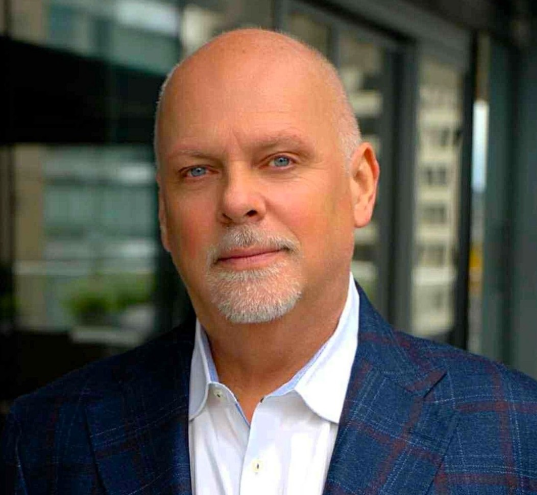
Characterizing John Bell, principal of OnBelay Capital, is a tricky proposition–and he wouldn’t have it any other way. At once an entrepreneur, angel investor and philanthropist, Bell has spent his 40-year career feeding an insatiable curiosity and hooked on the novelty of backing new businesses.
He has chaired publicly traded entities such as Stack Capital Group and Canopy Growth, watching them grow into global leaders. His passion, however, involves supporting and providing equity capital to numerous early-stage companies, from those designing child-proof cannabis boxes to menstrual patches.
Bell’s skills and accomplishments have not been lost on colleagues. “John has had an incredible entrepreneurial career, with some amazing wins and only a few smaller hits along the way,” says Thane Stenner, founder of Stenner Wealth Partners+ at CG Wealth Management and chairman emeritus of Tiger 21 Canada. “He is always forthright, and I value his candor and wisdom. John and his family have been substantial contributors to both the corporate and philanthropic arenas, with very positive impacts. Truly one of Canada’s best long-term leaders.”
Bell recently sat down with Canadian Family Offices to discuss his penchant for risk, his commitment to building community, and his firm’s unconventional evolution into a family office.
Your story is different from the traditional family office model of wealth being created through one major exit or inheritance.
My first company is called Shred-Tech, and I started with a borrowed $10,000 in 1978. I had a new marriage, a kid on the way, and I’d been fired from a big American company. We were absolutely dead broke. So that was the beginning of my money, but I continued being entrepreneurial, and that grew over 17 years and did very well.
In the midst of that, I invented the mobile document shredders that you see in the street, and which became a global industry. What I did is put a shredder in the back of a truck and put a little ad in USA Today saying, “Business opportunity, 50 bucks a day.” All of a sudden they sold all over the world. Then a big American company came along and I thought, “It’s time to have a little financial security.” That was my first exit.
When did you first realize you were effectively building a family office?
Fifteen years ago, that word wasn’t around much when I was doing all of these things. Four or five years ago I thought, “Maybe I have a family office.” I just came across it by accident.
How has it evolved?
When I sold my last company, which was in 2008, I moved to an office in downtown Cambridge [Ontario], overlooking the river. And in those days, I hired a secretary. I quickly hired an accountant when I realized that I had too much personal stuff under us. I got involved in two or three bigger organizations since then.
I like the interaction, the sociability of doing business, and I won’t do business with anybody I won’t have dinner with.
John Bell
We do a lot of private investing. I probably have 20 private investments in all sizes and shapes from one-man entrepreneurial shops to ones with hundreds of people and a lot of biotech. And then along the way, a couple of big ones.
Is there anything that you feel is misunderstood about how entrepreneurial families build family offices?
I think [we mostly think of] the ones that you read about and you think about that have a strong financial background or training. But there are others I know that are pretty simple, like a construction business run by someone who didn’t finish high school. That’s probably a very different family from what we think of. There are so many that are in between. Mine is more of an entrepreneurial think tank than it is a traditional family office.
You have invested in both private and public companies. What is your current position?
I have some managed funds by well-known managers, outside managers that invest some of my money, and then I have 20 to 25 serious private investments. Most of my day is spent monitoring and doing asset allocation. Right now, we’re in a lot of cash because I see too much risk out there.
What big projects did you work on?
I was the first outside investor in Canopy Growth. At that time in my life nothing was as exciting. We were worth $20 billion at one time. I’m a growth guy and I had all the fun and excitement of being there through the growth years. Bruce Linton, the CEO, and I would talk every morning at 8 o’clock and we did some great things.
Since then, I was the founding chair of Stack Capital Group, and we raised about $100 million five years ago. We’re TSX listed, and now worth maybe $300 million.
How did your experience as an entrepreneur and business owner shape the way you approached managing and investing the wealth you created?
I’m an opportunist, not a visionary. I can’t help myself. I like the interaction, the sociability of doing business, and I won’t do business with anybody I won’t have dinner with. It’s all for fun these days. I like seeing people grow their businesses and supporting them and being complementary to their skills. I’ve developed some skills over the years, which are really touch and feel, and you just know very quickly what is what. I get so much enjoyment reading balance sheets—it’s kind of a hobby.
How does your entrepreneurial spark now drive wealth management?
When you start with very little and you’re unwilling to take risks, people say you should have a more conservative investment portfolio. I don’t. I’m equity heavy—although right now I’m not—but generally I am and I’ve had a number of investments that have ended up at zero. I’m still doing some risky things. My estate will have some interesting things.
You’ve remained very lean. Why have you chosen that structure, and what functions do you keep in-house versus outsource?
I have a team of two. I’ve got a very capable financial lady who is very precise and very risk averse and a complement to what I do. She does everything well that I do poorly. I am very lucky in that I have some really competent people as good friends. We have strategic sessions over scotch now and then, or over a fishing rod. I’m not very good with boards of directors.
I’m an accountant by training so I get all the tax and financial expertise through the accountants [association].
What drives you?
I’ve had so many rich experiences because I’ve gone from one thing to the next, rich in the way of friendships, of experiences, and business. I just love business. I love doing stuff. Some of my friends were with a bank for 40 years and retired well because they kept doing their bank stock. I did it very differently, and I don’t regret it. The money’s not the object. If my wife and I had to go back to a one-bedroom apartment, that’d be fine.
How important to you are family governance and succession planning?
Every advisor in the country would like to get a hold of me to do my succession plan. I’m the worst at it. A lot of my friends and I have talked about being very careful about not promoting lifestyle for children, which I have not. They all work hard. I’m there if needed, but not handing out lifestyle. When I go, I will hand out like a huge lifestyle, obviously, but we work hard.
You’ve been very active as a philanthropist. Describe the work you’ve done.
When I walk around the hospitals in downtown, I say, “How can the Bell family make more of a difference?” We’re probably the biggest donor to Crohn’s and Colitis Canada–it’s a great organization. Three hundred and twenty-two thousand people in Canada have inflammatory bowel disease. My eldest daughter was diagnosed at the age of 26.
I’ve also been very involved with the Stratford Festival for six or seven years. And we’ve been a very big part of the community in many ways–I’ve been on every board and chaired many of them–the police, hospitals, work with universities.
How important is to you to work with up-and-coming entrepreneurs?
I was at the Western Angels Demo Day [in downtown Toronto recently], and there was a speaker: a lady who started this business a couple of years ago that made a tampon for athletes. One of the things she said was, “We want to expand our product line because we’ve got a brand, and I want to do a menstrual patch.” I am now a key investor in a Santa Barbara, California company that does menstrual patches.
I just think because of the connectivity of all my businesses, if I can help people, if I know somebody or I can be value-added, then that’s what drives me.
Anna Sharratt is a business and health reporter and editor with more than 20 years of experience. Based in Toronto, she has written for Canadian Family Offices since 2021. A regular contributor to the Globe and Mail, she has written for Inc.com, Forbes, Business Insider, Canadian Business, MoneySense, the National Post, the Toronto Star and other publications. She is the former managing editor of smallbiz.ca, health editor of Chatelaine and senior health writer for the CBC.
The Canadian Family Offices newsletter comes out on Sundays and Wednesdays. If you are interested in stories about Canadian enterprising families, family offices and the professionals who work with them, but like your content aggregated, you can sign up for our free newsletter here.
Please visit here to see information about our standards of journalistic excellence.