

The United States is a favoured market to allocate capital for Canadian investors, and family offices are no exception. For example, Canadian Family Offices’ Multi-Family Office Landscape in Canada 2025 survey found that 71 per cent of respondents allocate at least 31 per cent of their portfolios to U.S. assets.
But there’s a wrinkle: 44 per cent of MFOs surveyed also indicated that they were cutting back that exposure.
That finding illustrated family offices’ concerns last year over trade strife with the U.S.—among other mounting risks—that suggest Pax Americana, which has supported global economic and political stability for decades, is waning.
Those concerns remain sharp, if not more pronounced, today, according to three capital managers for family offices in Canada.
In a two-part series, they discuss their investment philosophies regarding the U.S. and whether the risks they see are pushing them to allocate capital elsewhere. Here, in Part 1, they discuss risks in the U.S. and why (or why not) they are allocating capital elsewhere.
‘Do we see risks in the U.S.? Yes, we definitely do’
The U.S. has many undeniable economic strengths, but it’s difficult for Canada’s family offices to ignore the risks, says Rob Van Wielingen, president and chief executive officer of Viewpoint Investment Partners in Calgary.
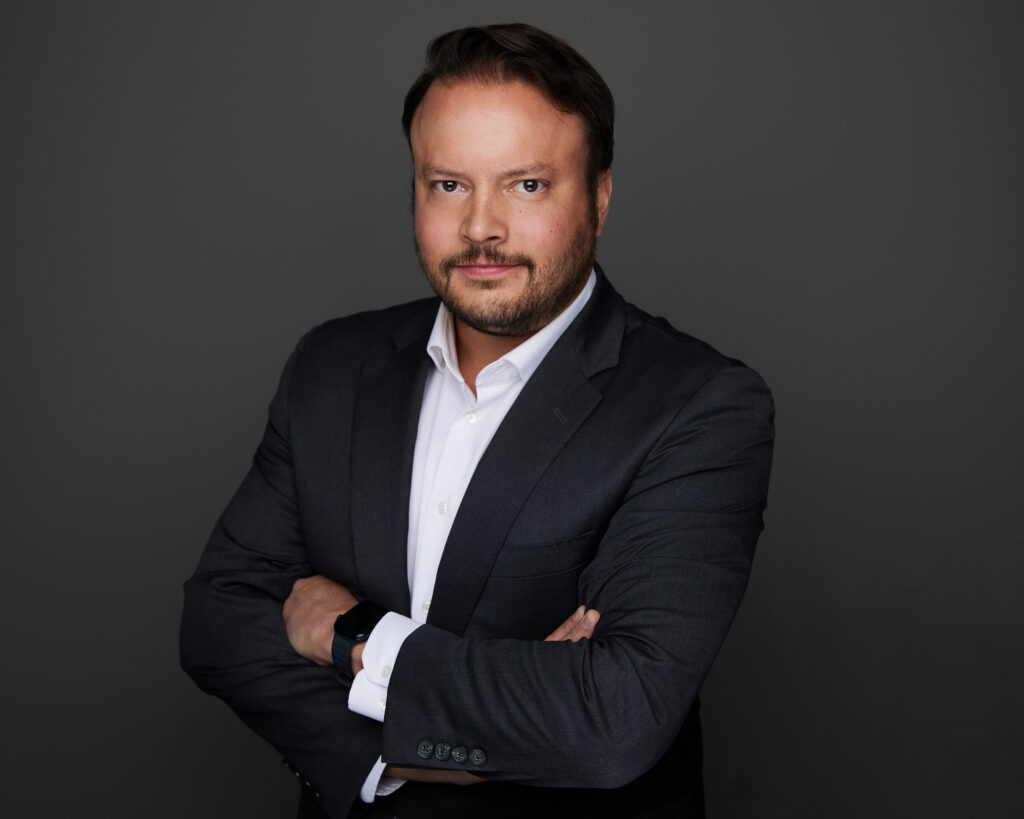
“Do we see risks in the U.S.? Yes, we definitely do,” he says.
The most heightened risk, in his view, is to the independence of the U.S. Federal Reserve. Investors of all stripes have been anxious that the Fed’s new chair, Kevin Warsh—President Donald Trump’s handpicked successor to Jerome Powell—would bend to the President’s will and implement dovish interest rate policy, further exacerbating inflation.
So far, Van Wielingen says, “that [fear] appears to have been misplaced, with Warsh reasserting the Fed’s independence recently.” He adds that a continued hawkish stance is likely needed as long as inflation runs hot, which seems likely based on several factors, including the U.S.’s artificial intelligence-driven economic growth.
The ongoing conflict with Iran and its knock-on inflationary and geopolitical impacts comprise another obvious driver of concern. Yet even amid these risks, the U.S. market remains fertile ground for investment, Van Wielingen maintains, even as the Trump administration’s volatile policymaking continues to roil markets.
“I feel we just have to ride out the next few years,” he says. Any reduced U.S. exposure in Viewpoint portfolios, he adds, is largely a matter of rebalancing and re-allocating gains from strongly performing U.S. holdings to assets in other geographies.
Given America’s continued economic leadership, especially around AI, family offices “still want to have exposure” despite the risks, Van Wielingen adds.
Rising debt ‘a worry’

The U.S. stock market has long powered the equity sleeve of portfolios at Our Family Office Inc., a multi-family office in Toronto. “Because of that, naturally the weighting in our equity sleeve has become a larger component of the overall portfolio,” says Trevor Hunt, chief investment officer and head of strategic growth for the firm.
That inevitably has led to paring back U.S. exposure for rebalancing purposes and rebuilding other exposures in portfolios to their intended weightings.
Hunt adds that U.S. equity markets remain a key component in client portfolios. To that end, Our Family Office’s strategy for the U.S. mostly focuses on passive, large-cap exposure. “Simply,” Hunt says, “it’s very difficult to outperform the S&P 500.”
He further argues that the AI-growth theme likely has a much longer runway ahead, especially as its benefits spread from the hyperscalers to other industries. Yet he would also not bet against big tech, as hyperscalers like NVIDIA and Alphabet continue to defy expectations despite worries over previously high valuations. “NVIDIA, for instance, was arguably expensive two years ago, but it’s continued to grow into that,” Hunt says.
That isn’t to say risks in the U.S. should be ignored. Among the most concerning is its rising debt. “The U.S. national debt is now at $40 trillion, and there appears to be no will among politicians to address the problem,” he notes.
In the absence of policy action, bond yields have been reaching highs not seen in decades. Unwieldy government spending is only part of the risk picture. U.S. hyperscaler bond issues are helping push yields higher, too, as are inflation concerns amid higher energy costs.
In short, the risk that the world’s largest economy could tip into a recession is mounting, and geographical diversification is simply prudent portfolio construction, Hunt notes.
That said, its beneficial impact may be limited: “If there’s a big problem in the U.S., it’s likely to spark a global recession affecting assets no matter what country they’re based.”
‘Tariff madness’
The noise around the U.S. is difficult to ignore for Winnipeg-based single-family office Jessiman Family Investments. Yet the palpable risks have not prompted it to pare back exposure dramatically. “We’re still primarily focused on the S&P 500 and NASDAQ for equity exposure,” says Peter Jessiman, chief executive officer.
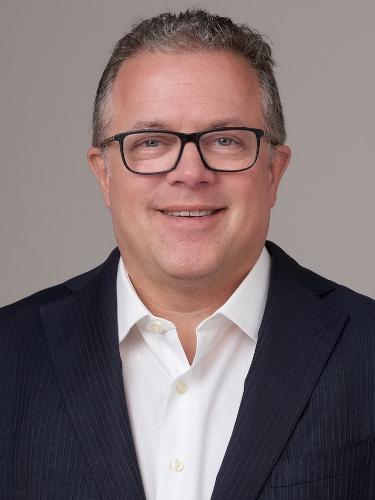
That said, the office has incrementally allocated more capital internationally, at least for publicly traded assets, he says. “Private equity is different,” he adds. “Those are long-term in nature, and we can’t easily exit those even if we wanted to.”
Like other capital allocators, Jessiman still sees plenty of upside in the AI theme, and he believes the U.S. remains the global leader. “Overall, we still see the U.S. as far and away the world’s most investable market,” he says. “I don’t see that changing soon.”
Yet the Trump administration’s adversarial and mercurial approach to trade, especially with Canada, is difficult to ignore, he adds. “Almost every investment manager we work with has been talking about, not coincidentally, increasing international exposure ever since the tariff madness started.”
Still, Jessiman notes that betting against the U.S. economy and its markets, despite the many risks, is likely to prove a poorly placed wager. AI’s economic impact should continue to accelerate, with big tech still leading the way as other sectors of the economy increasingly adopt the technology.
“There will be ups and downs, and even a market correction,” Jessiman says, “but those tailwinds are likely to remain for the foreseeable future.”
Joel Schlesinger is a Winnipeg-based freelance writer who has written for Canadian Family Offices since 2021. Specializing in investment, wealth advice, real estate and personal finance, he is also a regular columnist for the Winnipeg Free Press, and his work regularly appears in The Globe and Mail, Calgary Herald and Edmonton Journal.
Get our new quarterly newsletter about real estate: Canadian Family Offices’ new newsletter will bring you key insights, trends and expert perspectives. Click here to subscribe.
Please visit here to see information about our standards of journalistic excellence.