


If the person who quietly holds your family’s entire financial life together disappeared tomorrow, how long would it take before everyone realized that nobody else actually knows how the whole thing works?
For many successful families, that question is more uncomfortable than any conversation about investment performance, tax or estate planning. Despite having an excellent team of accountants, lawyers and investment advisors (plus corporations, trusts, insurance policies and carefully drafted wills), an extraordinary amount of institutional knowledge often resides with one person.
Every family has an operating system, whether the family recognizes it or not. There are established, often unwritten rules about who makes financial decisions, such as who talks to the accountant and how much the children know. Or when family members receive financial help or who keeps track of important documents and what happens when people disagree. In most families, nobody deliberately designed those rules. They simply developed over time because someone had to take responsibility.
One spouse may naturally have become “the financial person” 25 years ago because he or she was better at it or more interested. One child may understand the family business while the others know very little about it. The accountant may gradually have become the person everyone calls with almost any financial question, even when the issue extends well beyond accounting. Adult children may know their parents have been successful without understanding the structures, responsibilities or decisions they may eventually inherit.
None of this necessarily feels problematic while the person holding everything together remains capable and engaged, which is precisely why the vulnerability can remain invisible for decades.
An all-too-common example
Consider a family that has built substantial wealth over 30 years. There is an operating business, a holding company, investment accounts, several properties, a cottage, insurance and an estate plan. Their three adult children have taken very different paths, with one involved in the business and two pursuing careers elsewhere.
On paper, the family is exceptionally well organized. The documents exist, the taxes are filed and the assets are professionally managed, yet Dad still knows why the corporations were created, which accounts fund what, why certain insurance policies were purchased and what conversations took place with the accountant years ago. He also remembers which child received financial help, whether it was considered a gift or a loan, and what he and his wife intended to do about it eventually.
His wife knows some of the story, while the children know almost none of it. The family has an operating system, but unfortunately it also has a single point of failure.
Continuity questions to consider
We often hear the term “family governance” and imagine billionaire families with constitutions, committees and formal family councils. Most families do not need anything nearly that elaborate, but they do need to consider how decisions will continue to be made as wealth and responsibility move from one generation to another.
Questions to consider:
- Who needs to understand the family’s financial affairs, and how much do they need to know?
- Who has authority to make decisions when circumstances change?
- When should adult children be brought into conversations?
- Who coordinates the accountant, lawyer, investment advisor and insurance professional so that decisions made in one area do not inadvertently create problems somewhere else?
- Most importantly, what happens when the person currently answering all of those questions is no longer available?
These are sometimes treated as estate-planning questions, but I think they are better understood as continuity questions. Legal documents can transfer assets and authority, but they cannot automatically transfer the context, history and judgment that accumulated alongside the wealth.
Some parents deliberately avoid discussing wealth because they worry that knowing too much will undermine their children’s ambition or create a sense of entitlement, and that concern is understandable. There is, however, an enormous difference between telling a 25-year-old exactly what he or she will inherit and gradually teaching adult children how the family thinks about money, responsibility, generosity, risk and stewardship.
Avoiding those conversations does not eliminate the consequences of wealth. It postpones the education until a moment when the stakes may be considerably higher, even though those same children may eventually become shareholders, beneficiaries, executors or trustees whether anyone prepared them for those roles or not.
Families need principles, not just documents
The weakness of an undesigned operating system becomes particularly apparent when families confront questions for which there is no objectively correct financial answer.
If one child has worked in the family business for 20 years while two siblings built careers elsewhere, should ownership eventually be divided equally? If one child receives substantial support during a divorce while another never needs financial assistance, should that difference eventually be reconciled through the estate? If one beneficiary is financially sophisticated while another consistently struggles with money, should both inherit in precisely the same way?
There is no formula that can answer these questions because they involve values as much as money. What matters is establishing principles before circumstances force decisions, because choices that seemed entirely reasonable to the parents can later appear arbitrary or unfair to children who were never given the context behind them.
One of the simplest ways to test a family’s operating system is to imagine that the person most involved in its finances is unavailable for six months. Could somebody else identify the important accounts, corporations, properties, debts and insurance policies, locate the wills and powers of attorney, understand which professionals to contact and explain why the family’s major financial structures exist? Would the family know which decisions could wait, which required immediate attention and who had authority to make them?
If the answer is no, the problem may have little to do with the quality of the family’s advisors or the sophistication of its planning. The family may simply have built considerable financial infrastructure without building the human infrastructure required to operate it.
Successful families can spend decades accumulating assets and creating structures around them, but eventually they also need to prepare the people who will inherit responsibility for those structures. Wealth transfer is not simply the transfer of money. It is the transfer of knowledge, judgment, responsibility and decision-making, and the families most likely to preserve what they have built may not be those with the most elaborate structures, but those whose system can continue to function when the person who built it is no longer running it.
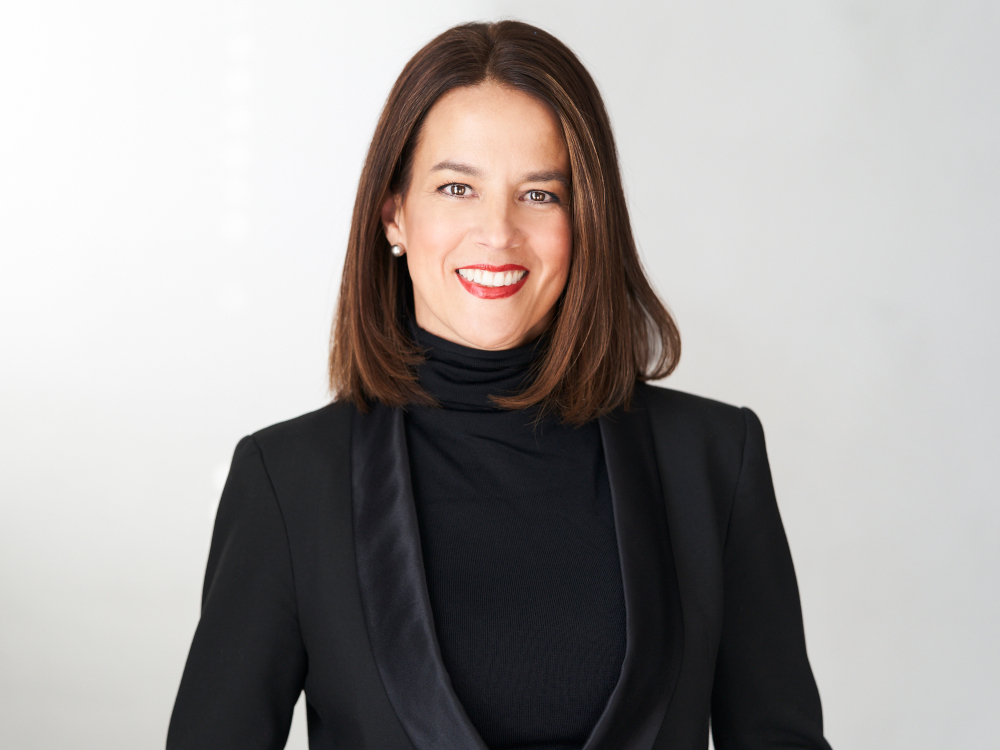
Elke Rubach is a Certified Financial Planner with CLU and MFA-P designations. Her expertise lies in optimizing income and tax efficiencies, achieving cohesiveness in financial and estate plans, and providing ongoing asset management strategies that foster wealth accumulation and growth. Elke is a reformed lawyer who earned her graduate degree in law, with a focus on banking and finance, at the London School of Economics, where she studied on a Chevening Scholarship. She worked as an associate at the London (U.K.) and Toronto offices of the law firm McCarthy Tetrault. During a stint in banking, Elke observed the life-changing impact of good financial advice and decided to switch to a career in financial planning and wealth management. She founded Toronto-based Rubach Wealth in 2012. Today, Elke is a sought-after speaker on wealth management, estate planning and philanthropy. She’s the founder of Fashion Heals for SickKids, which has raised more than $500,000 for pediatric cancer care and research since 2016. She also gives back with board and volunteer commitments with the Professional Advisory Council for SickKids Foundation, the Investment Committee at the Office of the Public Guardian, the advisory board for Transpod Inc., and the board of Ronald McDonald House Charities in Toronto.
The Canadian Family Offices newsletter comes out on Sundays and Wednesdays. If you are interested in stories about Canadian enterprising families, family offices and the professionals who work with them, but like your content aggregated, you can sign up for our free newsletter here.
Please visit here to see information about our standards of journalistic excellence.