

As of this writing on June 13, 2026, the world has just watched financial history being made. Elon Musk became the first human trillionaire after SpaceX’s public-market debut, with Reuters reporting that the IPO made him the world’s first trillionaire and other coverage describing him as the first member of the “four-comma club.” Reports on the debut also said SpaceX closed roughly 19 per cent higher on its first trading day on Friday, June 12, 2026.
That is rarefied air, even by ultra-wealth standards. But back down here on Earth, among the mere mortals with family balance sheets north of $25 million and, in some cases, well into the billions, a different but no less important conversation is unfolding. For these families, the central wealth question is rarely about finding another generic investment idea. It is about finding the right advisory relationship for the realities that come with significant capital: complexity, concentration, taxes, liquidity, family dynamics and, increasingly, the need for judgement rather than more noise.
That is where the idea of the Upper Wealth Curve™ becomes useful. As families move up the wealth curve™, the issues they face do not simply grow in size; they change in kind. Portfolios stop being simple and start becoming structural. The family balance sheet often extends across businesses, trusts, taxable and non-taxable assets, real estate, philanthropic capital, multiple generations and, in some cases, multiple jurisdictions.
This progression matters because every stage up the wealth curve™ introduces new layers of fragility and opportunity. At lower levels of wealth, strong saving habits, concentration and entrepreneurial conviction may be enough to build capital. Higher up the curve, however, preservation, coordination and tax efficiency become just as important as growth. What helped create wealth does not automatically help protect it.
That is why three distinct conversations are increasingly surfacing in the lives of affluent and ultra-high-net-worth families. The first is the broad but essential question of how to steward significant wealth with discipline and perspective. The second is the more acute challenge of navigating significant liquidity events without allowing a major payday to become a major missed opportunity. The third is the more technical but highly consequential issue of Tax Alpha™— not as a slogan, but as a practical framework for helping families improve what they actually keep after tax.
These are not separate silos. In practice, they overlap constantly. A business family preparing for a sale will often need all three at once: specialist oversight for significant wealth, coordinated advice around a liquidity event, and a deep understanding of after-tax outcomes once capital is redeployed.
1. Significant wealth requires a different operating model
Crossing into eight-figure or nine-figure net worth changes the nature of decision-making. The stakes are higher, the consequences of poor coordination are more expensive, and the family’s wealth often spans multiple entities, tax exposures, family members, goals and jurisdictions.
This is one reason the family office model continues to gain attention. As Canadian Family Offices and other industry observers have noted, wealthy families increasingly require a broader, more integrated framework that can address not only investments, but also governance, planning, philanthropy, succession, risk and the human dimensions of wealth.
At this level, sophisticated families rarely need more product. They need sharper thinking. They need advisors who understand that portfolio management is only one component of a larger enterprise. They need a team capable of integrating wealth strategy with tax realities, family priorities, major transactions and long-term continuity.
This is precisely what happens as families move further up the Upper Wealth Curve™. Complexity rises non-linearly. A $25 million family may be confronting concentration risk, family governance issues and the need for more institutional discipline. A $100 million family may be dealing with private-company monetization, substantial tax planning requirements and the need to formalize a multi-generational capital strategy. A $500 million+ family may effectively require a family-office-style operating model, where governance, tax architecture, liquidity management and portfolio design all need to work together.
In other words, higher wealth levels do not simply bring “more assets.” They bring a different category of decision-making. That is why the phrase “significant wealth” matters. It signals that the advisory conversation must be calibrated to a level where complexity compounds quickly and where a generalist model becomes less and less effective over time.
2. Liquidity events are defining moments—but only for prepared families
For many wealthy families, the most important wealth-management moment is not the period after the money arrives. It is the period before. A major business sale, recapitalization, monetization event or succession-related transition often compresses years of planning into a short and emotionally charged window.
Canadian Family Offices recently highlighted this dynamic in an article focused on planning for a “big payday,” noting that prepared business families are more likely to succeed when buyers are knocking. That is exactly right. A liquidity event may look like a triumph from the outside, but internally it raises a series of difficult questions: How concentrated is the family’s risk? What is the after-tax reality? How much capital should be reserved versus invested? What new governance is needed once operating wealth becomes financial wealth? How should family members be aligned before proceeds are distributed or redeployed?
These are not technical footnotes. They are the substance of the opportunity.
Families that are well prepared tend to view liquidity not as a finish line, but as a transition. They understand that the sale is only one milestone in a much longer sequence of decisions. They think proactively about diversification, tax timing, estate and trust structures, family communication and the shift from entrepreneurial concentration to sustainable wealth management.
Families that are less prepared often discover, too late, that illiquid private wealth and liquid financial wealth require different disciplines. The habits that built the business do not automatically solve the challenges that follow the sale. In fact, a successful founder’s greatest strengths—conviction, concentration and speed—can become vulnerabilities if they are applied without adjustment in a post-liquidity portfolio context.
This is one of the most important transition points on the Upper Wealth Curve™. The move from operating wealth to invested wealth is not merely a technical shift. It is a change in mindset. And for many families, it is the moment when the quality of their advisory team becomes most visible.
3. Tax Alpha™ is no longer optional at this level
The higher a family’s net worth, the less useful it becomes to talk only about pre-tax returns. For affluent and ultra-high-net-worth families, what matters is not simply what a portfolio earns on paper, but what the family actually retains after taxes, distributions and implementation costs.
That is the practical relevance of Tax Alpha™.
Tax Alpha™ should not be reduced to a buzzword. Used properly, it is a way of thinking about how structure, timing, income design and tax-aware implementation can improve a family’s long-term net outcomes. This is especially relevant in Canada, where wealthy families often hold substantial taxable portfolios, concentrated positions, corporate assets and intergenerational planning structures that require more than a one-dimensional investment lens.
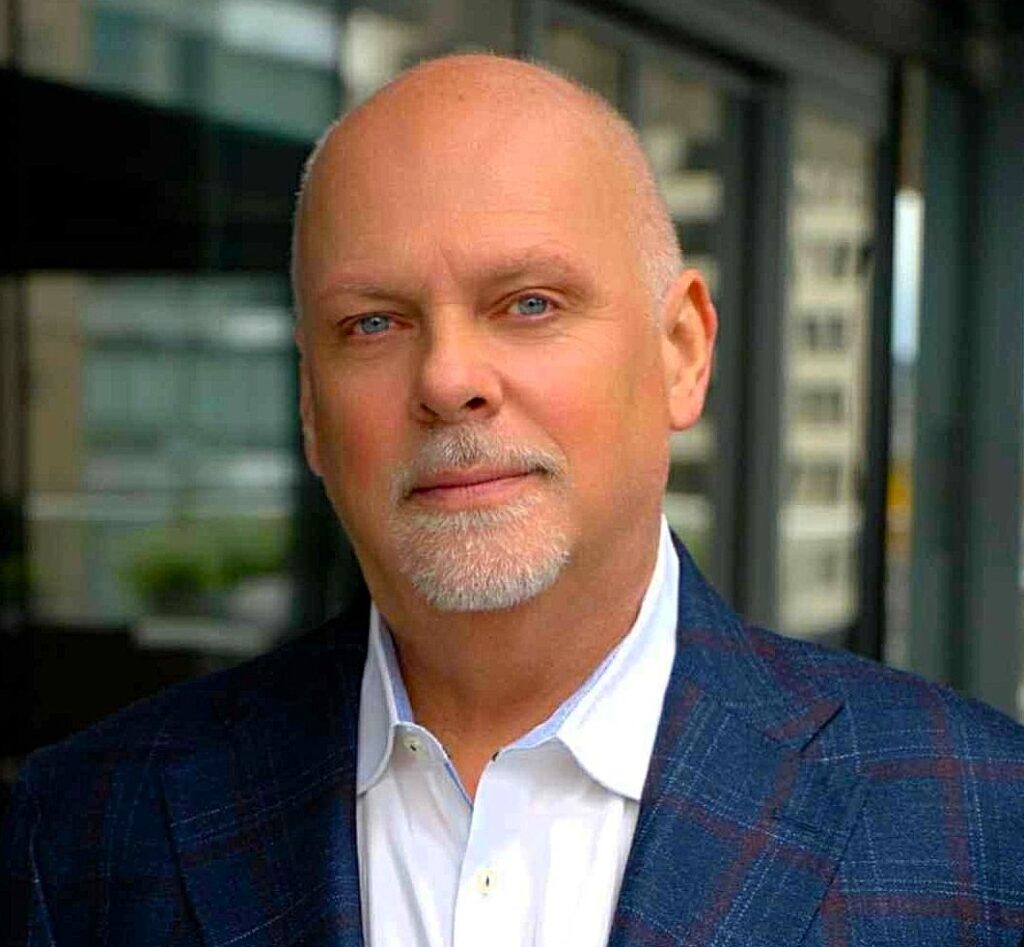
Thane Stenner
A recent article by Eaton Vance makes an important communication point: tax alpha™ may be a useful framework for advisors, but clients connect most clearly when the conversation is translated into concrete outcomes such as taxes deferred, dollars saved and flexibility preserved. That observation is highly relevant for family offices and multi-family offices alike. Families do not want abstractions. They want clarity around what thoughtful implementation does for their real-world outcomes.
That is one reason my recent Canadian Family Offices article, Thane Stenner: 21 Tax Alpha™ tips for wealthy investors, family offices and business owners, matters as a companion read to this discussion. That article is useful not because it romanticizes tax planning, but because it frames Tax Alpha™ as something operational and practical for wealthy families to think about on an ongoing basis.
At this level, Tax Alpha™ is rarely about one isolated tactic. It is about integrating portfolio construction, gain realization, loss harvesting where appropriate, income sourcing, withdrawal sequencing, charitable structures and other planning decisions into a coherent after-tax framework.
That is also why the phrase Tax Alpha™ Income Strategies carries weight. Income is where theory meets lived experience. Families feel after-tax outcomes through the cash they receive, the flexibility they preserve and the drag they avoid. A disciplined tax-aware income strategy can shape not just portfolio efficiency, but lifestyle security, philanthropic capacity and intergenerational optionality.
4. Why these three themes belong together
Viewed together, significant wealth, significant liquidity events and Tax Alpha™ represent three versions of the same underlying truth: affluent families need integrated advice, not fragmented advice.
A family with $25 million may initially enter the conversation through the “significant wealth” lens. They have crossed a threshold where generalist wealth management no longer feels sufficient, and they want a more disciplined framework. A family with $100 million may enter through a liquidity event because an operating business is being sold, a concentrated position is being reduced or a new governance structure is being built. A family with $500 million may be drawn most strongly to a Tax Alpha™ discussion because they already understand that after-tax implementation is one of the few places where high-value advisory work can be consistently demonstrated.
But these are not different families in a strict sense. They are often the same family at different moments on the Upper Wealth Curve™.
That is why the best advisory relationships are designed to meet families where they are, while also seeing around the corner. A family that comes in through a liquidity event will soon need post-liquidity portfolio architecture, governance and tax-aware income design. A family that begins with Tax Alpha™ may soon confront succession, philanthropic planning or a major transaction. A family that simply seeks better oversight of significant wealth may later face all of the above.
This is where the advisory model matters. Families do not need disconnected specialists delivering isolated advice. They need a coordinated framework that recognizes how investment strategy, taxation, liquidity, family governance and long-term capital stewardship interact.
5. The right question for wealthy families now
The most important question is not whether markets will be volatile, taxes will remain relevant or liquidity events will continue. Of course they will. The better question is whether a family’s current advisory setup is genuinely built for these realities.
For some families, the answer is yes. For many, the answer is less certain.
If a family’s advisor is primarily product-led, reactive, or narrowly focused on portfolio returns in isolation, there is a real risk that the family is being served by a model designed for an earlier stage of wealth. And as capital grows, those mismatches tend to become more expensive.
The families that navigate this environment best are usually those willing to step back and ask bigger questions: Is the advisory relationship calibrated to significant wealth? Is there genuine expertise around liquidity events? Is the family’s investment process being evaluated through a Tax Alpha™ lens? Is the advisory team thinking not just about performance, but about continuity, governance and long-term family outcomes?
Those are the right questions because they reflect the realities wealthy families are actually living as they move up the Upper Wealth Curve™.
Follow Thane Stenner and Stenner Wealth Partners+ on LinkedIn.
Thane Stenner Interviews/Articles, Member of Canadian Family Offices.
\ Upper Wealth Curve™ is used publicly by Thane Stenner in connection with wealth-management thought leadership and client communications, including public posts in 2025 and 2026 describing how complexity rises as families move up the wealth curve™.
\ Tax Alpha™ is a registered trademark of True Wealth Enterprises Inc. in Canada. The Canadian Trademarks Database lists the mark as filed on January 10, 2012, registered on February 19, 2013, and used in Canada since December 2011. Public references also associate the mark with Thane Stenner and his thought leadership, including the Canadian Family Offices article “21 Tax Alpha™ tips for wealthy investors, family offices and business owners.”
Disclaimer: This story was created by Canadian Family Offices’ commercial content division on behalf of Stenner Wealth Partners+ at CG Wealth Management, which is a member and content provider of this publication. CG Wealth Management is a division of Canaccord Genuity Corp., member of CIPF and CIRO. Tax & Estate advice offered through Canaccord Genuity Wealth & Estate Planning Services Ltd. Thane Stenner’s views, including any recommendations, expressed in this article are his own only, and are not necessarily those of Canaccord Genuity Corp.
About Stenner Wealth Partners+
Stenner Wealth Partners+ (SWP+) is an in person/virtual Multi-Family Office/Outsourced CIO Consulting team of financial/wealth specialists with a boutique approach and global perspective. SWP+ serves Canadian and US investors/households with generally a minimum of 10M+ in investable assets (or 25M+ net worth). As a CG Wealth Management team, SWP+ is a highly exclusive practice team with one of Canada’s largest independent wealth management firms. Client Range of Net Worths: between $25M To $3B+. They strategically limit new client engagements, onboarding a select number of new key relationships annually to ensure a highly personalized and focused approach. SWP+ is a member of Canadian Family Offices.