

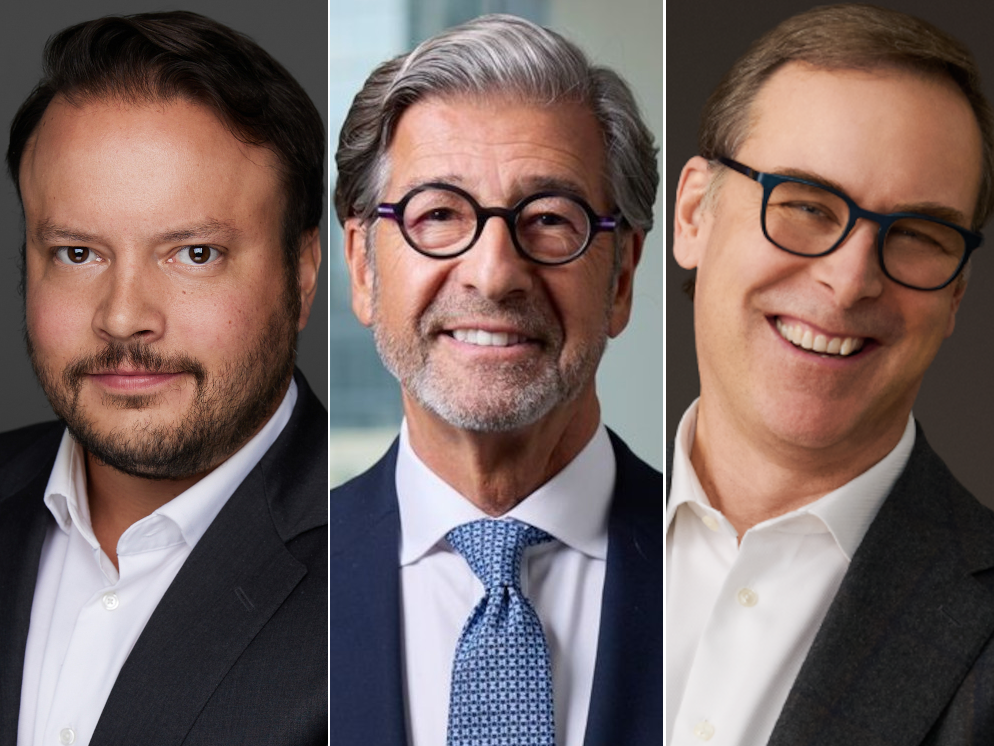
This article is part of the ongoing Next Generation series presented by PBY Capital.
Raised in a wealthy business family, Rob Van Wielingen didn’t hear a lot about investing or the workings of the family office that his father, Mac, had established as his success in the oil and gas business continued to grow.
“Growing up, we didn’t talk business or money or investing,” says Van Wielingen, 39. He finally got involved in the family business in his early 20s when he started asking questions. “I loved finance, and so I started talking to my dad about finance,” he recalls. “If I hadn’t shown an interest in it naturally, I don’t think that I would be knowing what’s going on still.”
He joined the Calgary-based single-family office, Viewpoint Group, in 2010, helping his father set up an institutional-quality investment portfolio for the family and establish Viewpoint Investment Partners, a specialized investment-management company, for other family offices and ultra-high-net-worth families.
“The role of the advisor is shifting from gatekeeper of information to curator, validator and translator of an overwhelming digital landscape.”
CFA Institute Research and Policy Center report
Today, as president, CEO and portfolio manager of the investment firm—and running the single-family office, while his father remains as chairman—this millennial is bringing his own investment-management style to the business, from advisory relationships to the use of technology.
“Our generation is really starting to rethink how family offices work,” Van Wielingen says.
As the generational shift in wealth puts trillions of dollars in the hands of ever-younger members of high-net-worth families, this next generation differs in how it approaches investing, from their goals and values to their embrace of innovation and risk.
A survey of next-gen investors released in March 2026 by the CFA Institute Research and Policy Center found that younger people tend to be digitally fluent, highly engaged and more likely than their elders to express preferences related to personal values. This brings expectations for advice, communication and investment product choice that differ from the clients the wealth-management industry was built to serve.
“These investors are confident, connected and values-driven,” the report concludes. Rather than looking for interpersonal rapport, they seek advisors who demonstrate expertise, provide quantifiable results and integrate technology. The survey found that young investors’ portfolios often incorporate both their goals and values, and they’re more likely to hold cryptocurrencies, exchange-traded funds and investment real estate as well as customized and niche products such as private equity, private credit and sustainability-oriented investments.
FOMO plays a role
Young investors display both certainty and vulnerability, the survey found, with many admitting to making investments driven by “fear of missing out,” especially in trending assets.
They learn from a range of online sources, including social media, AI tools, apps and digital platforms, although human advisors remain the most trusted source of investment guidance. “The role of the advisor is shifting from gatekeeper of information to curator, validator and translator of an overwhelming digital landscape.”
These are characteristics that Neil Nisker finds among the inheritors he sees as co-founder, executive chairman and co-chief investment officer of Our Family Office, a shared family office based in Toronto.
We have to be very careful when we speak to a younger generation to help delineate the difference between speculation and investing.
Greg Moore, Richter
All investors have biases, Nisker points out. For instance, young people have never experienced a bear market. “They’ve made money in everything they do,” Nisker says, and they’re more inclined toward gambling through activities such as online sports betting, which he feels has influenced the rise in the stock market.
Nisker’s firm makes an effort to educate next-gen investors to “take less risk, because you can still make good, long-term returns with limited risk,” he says. “At this point in time in the stock market, I’m just telling them to be careful.”
Meanwhile, a younger member of his team, portfolio manager Charlie Scharfe, 37, has been elevated to the role of co-CIO, because younger clients “want to hear from someone closer to their age and who they can relate to.”
Watch those ESG strategies
Nisker sees a growing interest among young people in values-based strategies such as environmental, social and governance (ESG) investing, which comes with its own challenges. “Young people today are more socially responsible than their parents and grandparents,” he says, but with so much money chasing the asset class, returns have been compressed.
“Then it becomes too expensive, and so we have ESG strategies where valuations are high. You have to do more due diligence on the asset class, as well as each manager and each strategy,” Nisker says. “The next generation wants to leave the world a better place, and I’m very happy to see that, but they have to be careful with the risk they take for that outcome to happen.”
Greg Moore, a Toronto-based partner at Richter Business Family Office who specializes in wealth advisory, sees second-generation members of wealthy families in their 50s and 60s recognizing that their children can benefit from education about the family business and investing that they didn’t receive from the founding generation.
“There’s a lot of conversations around how you engage with and help empower the emerging generation that’s in their teens and 20s,” says Moore, especially because that “middle generation” found themselves frustrated and vulnerable at not being exposed to wealth management at an earlier stage.
[Some] investment relationships that have been formed by older generations, whether it’s with brokers or private deal-making, don’t really speak to the next generation.
Rob Van Wielingen, Viewpoint Investment Partners
His group offers education to ensure the emerging generation has the core skills to make informed decisions. “In situations where you don’t feel that you’ve got the institutional knowledge to bring to bear, you are much more vulnerable to external third parties.”
Moore suggests that family portfolios include a “disruption bucket that allocates capital into an aspirational class of investments” designed to generate outsize wealth gains. “If we’re looking to sustain the capital base over one, two and three generations, we can’t run a uniquely conservative portfolio.”
This theme is “designed uniquely as a bridge to the next generation,” he explains, engaging young people from both financial and intellectual perspectives.
The final frontier
Six years ago, for example, Richter gave its families an opportunity to invest in SpaceX, part of a thematic shift toward space exploration. “Families really liked it, and a lot of them said explicitly, ‘This is an investment we’re making for our children.’”
Young people are looking to invest in areas “that are going to be transformative and have implications for future generations,” Moore says. “Investing in mom and dad’s oil company or car manufacturer, sure, those are great businesses, but there are technologies and themes that are evolving that they’d like to be a part of.”
Impact investing interests next-gens, but most families look at it “through a double-bottom-line set of lenses, so ‘Yes, we want to have a positive impact, but no, we’re not willing to forego economic return for it,’” Moore says.
He notes that sectors such as the energy transition and food sustainability are attracting a lot of speculative capital allocations.
“These are technologies we need to develop, scale and make commercially viable, and there will be massive capital destruction, because people will make ill-informed investments,” he says. “Families are trying to navigate around that to figure out where they can optimize for the impact but also make some money.”
Putting the ‘dopamine hit’ in context
Young investors living in an era of online gambling as well as so-called meme stocks that trade on speculation are becoming accustomed to the “dopamine hit of making short-term types of bets,” Moore cautions. “We have to be very careful when we speak to a younger generation to help delineate the difference between speculation and investing.”
Advisors know that technology is important in how they engage with the next generation, Moore adds. “That includes their ability to access their accounts, to look at everything on their phone and to communicate with their advisor via text,” he says. Wealth advisors must balance giving clients more access to information with helping them to manage against emotional biases that can cause wealth erosion through “poor decision making at poor times,” he says. “Even an AI chatbot can keep you even-keeled, and that’s what an advisor is really designed to do.”


Van Wielingen sees some interest among younger family-office investors in meme investing and prediction markets—and sometimes a pot of funds for venture capital and angel investing that’s “super high risk”—“but we’re in the business of capital preservation.”
He’s not really finding an attraction to values-based and impact investing across his peer group.
“I see an interest in conventional asset management, in private and alternative asset classes, and definitely a trend in private-equity direct deals,” he says. “That’s the sexy part; public-market stuff has mostly been commoditized, and it’s just not as exciting.”
Younger people in the family-office space are indeed interested in technology, he says, from its use in investment modelling to increasing efficiency and decreasing costs in portfolios. Meanwhile, a lot of the “investment relationships that have been formed by older generations, whether it’s with brokers or private deal-making, don’t really speak to the next generation,” Van Wielingen notes, adding that advice is becoming more professionalized and specialized.
“We’re looking at it as more of a clean slate,” he says, noting that his generation does value loyalty, especially among family office executives and staff. “But if advisors haven’t bothered to develop a relationship with the next generation, and they’re focused mostly on the senior generation, that loyalty may be in question.”
Meanwhile, his generation “is moving more toward openness” with their own children when it comes to understanding and eventually being part of the business in the future. His children are just 9 and 7 years old, but Van Wielingen feels they can benefit from greater transparency about investing and other workings of the family office as they grow.
“It’s almost a philosophical discussion,” he says, “that we’re just starting to have now.”
Mary Gooderham is a writer, editor and communication advisor based in Ottawa. She leads Cohen Gooderham Communications and has worked as a journalist for more than 40 years at The Globe and Mail, as a recording officer at the International Monetary Fund and as a custom content creator for online and print media. She’s been a contributing writer at Canadian Family Offices for four years, focusing on investment strategy, trusts, philanthropy, women in finance and estate planning.
The Canadian Family Offices newsletter comes out on Sundays and Wednesdays. If you are interested in stories about Canadian enterprising families, family offices and the professionals who work with them, you can sign up for our free newsletter here.
Please visit here to see information about our standards of journalistic excellence.