

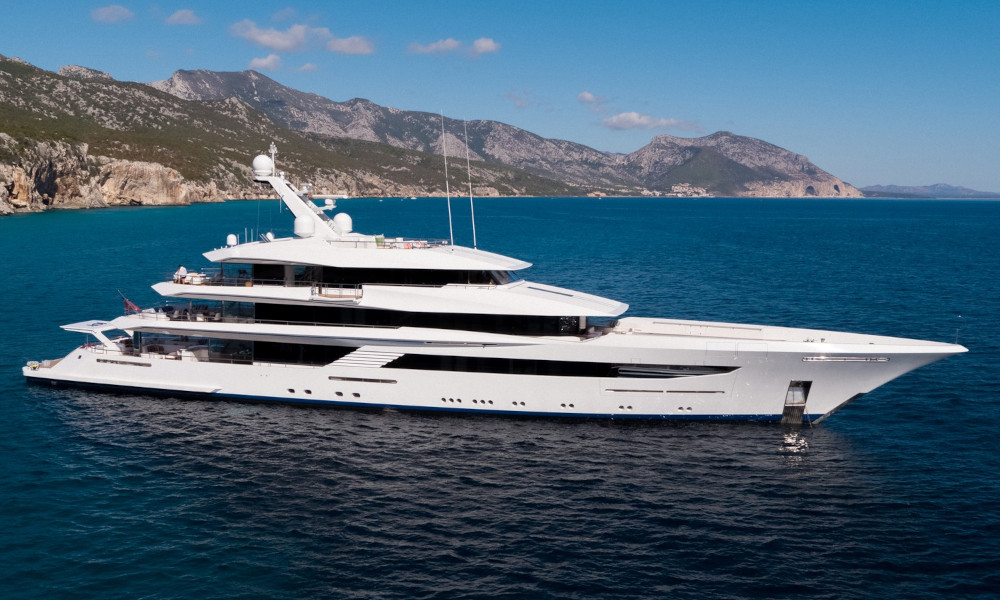
Once the domain of royalty and Bond villains, the chartering of yachts is becoming increasingly visible in Canada’s luxury travel market.
To meet demand, the luxury yacht brokerage and management firm Burgess recently appointed its first Canadian representative. Toronto-based charter broker Sarah McNally has more than a decade of experience working aboard some of the world’s most iconic super-yachts, travelling to 61 countries while working across a range of vessels.
In this Q&A, she explains the chartering process and what goes into creating a hyper-personalized yachting experience.
Why is Burgess expanding its presence in Canada?
There’s real wealth in Canada, and over the past five years, Canadians have done some of the biggest deals in yachting. For instance, former NHL goalie-turned-waste-management-mogul Patrick Dovigi made headlines in 2023 when he purchased the 115-metre Lürssen Ahpo for a reported US$330 million, the largest super-yacht brokerage deal in history at the time.
As for Burgess, it’s great for fellow Canadians to have someone here on the ground to explain all the aspects of yachting, whether they’re looking into chartering, ownership or the many other services Burgess offers.
What’s involved in chartering a yacht?
Before we discuss the vessel, it’s important we understand the client and their party. How many guests will there be? Is it a special occasion? Are you looking for a trip that’s going to bring you into a secluded anchorage or a vibrant port town?
Once we get an overview of the client’s wish list and what they want their trip to look like, I’ll go into my database. I have access to not only Burgess-managed vessels, but also a worldwide database of over 3,000 additional yachts. It usually comes down to a list of 10 to 15 vessels. Working with the client, we narrow it down and consider every single detail until we find their perfect boat.
Is there a lot of paperwork?
Once the boat is chosen, we go into the paperwork process, which includes the MYBA contract from the Worldwide Yachting Association. It’s a standard contract that’s used across the yachting industry. It protects both parties very well and ensures that the owner delivers the boat in perfect working order.
Through Burgess, we do a compliance check. If the charterer wants to know more about the crew, we have crew profiles that we can discuss. And the owner who’s renting out the vessel can also ask for a reference.
Beyond that, you’ve got your contract, and a passport is required for all guests on board. Some off-the-beaten-track destinations, such as Antarctica or Galapagos, have entry requirements such as cruising permits and different types of documentation, which we help facilitate.
We also recommend clients get their own curtailment insurance in the event of illness.
How much does chartering cost?
You can enter yachting at every different level of ambition. If we’re looking at a 30- to 40-metre boat for six to 12 guests, we could be in the range of US$50,000 to $225,000 per week. If we go 40 to 50 metres, that would hold about 10 to 12 guests and would be from US$85,000 to $300,000 weekly. And Burgess has unique vessels like Hemisphere, the world’s largest catamaran, which holds 10 to 12 guests and costs EUR$235,000 per week.
Are there any other fees?
We budget an additional 30 to 35 per cent on top of the base charter fee for the APA [advanced provisioning allowance]. It’s a prepaid fund that covers all onboard running costs as they arise—food and beverage provisioning, fuel, marina fees and incidental fees. The captain keeps a detailed running account during the charter, and anything that’s not used is returned to you.
Then there’s tax, which varies depending on where you embark. The Caribbean has no tax. In Bahamas, it’s 14 per cent tax on top of that charter fee. France is 20 per cent. Italy is 22 per cent, and so on.
For tips, we recommend anywhere from 10 to 20 per cent of the base charter fee. It’s obviously dependent on the client’s experience, and it’s customary and well earned by the crew.
How do you create an itinerary?
The entire experience revolves around your preferences and your desires. We send out a preference form, and I always recommend that clients tell their broker absolutely everything. If there’s a family member who is really adventurous or who prefers solitude with a book, the crew wants to know, because they’ll base the trip around all that information.
Then, before you get onto the vessel, we’re going to have a call with the captain and we may bring in the chief steward and perhaps the chef. The captain has encyclopedic knowledge of the sea and the draft of their boat, and knows where to find a secluded anchorage in the destination the client prefers.
We’ll speak to the chief steward about activities the client enjoys and services they prefer on board. We can bring specialized crew, too, like a water sports instructor or a masseuse. And the chef discusses dietary needs, favourite meals, likes and dislikes, and builds out a menu. Then we make up a fully customizable itinerary, which can be edited by the client even once they’re on the vessel.



How long is a typical charter?
A typical length is seven nights. We can do five or six nights, but a week is recommended. It takes a couple of days to decompress and get into the rhythm of being on board and let the environment recalibrate you.
What is the experience like?
From the moment you step aboard, the crew sets the tone, and you’ll be looked after completely. The best crews anticipate everything before you think to ask for it. You might be welcomed with your favourite drink or a glass of Champagne and may have canapés on the deck. Your bags may be unpacked and your clothes pressed and ready for your experience to begin.
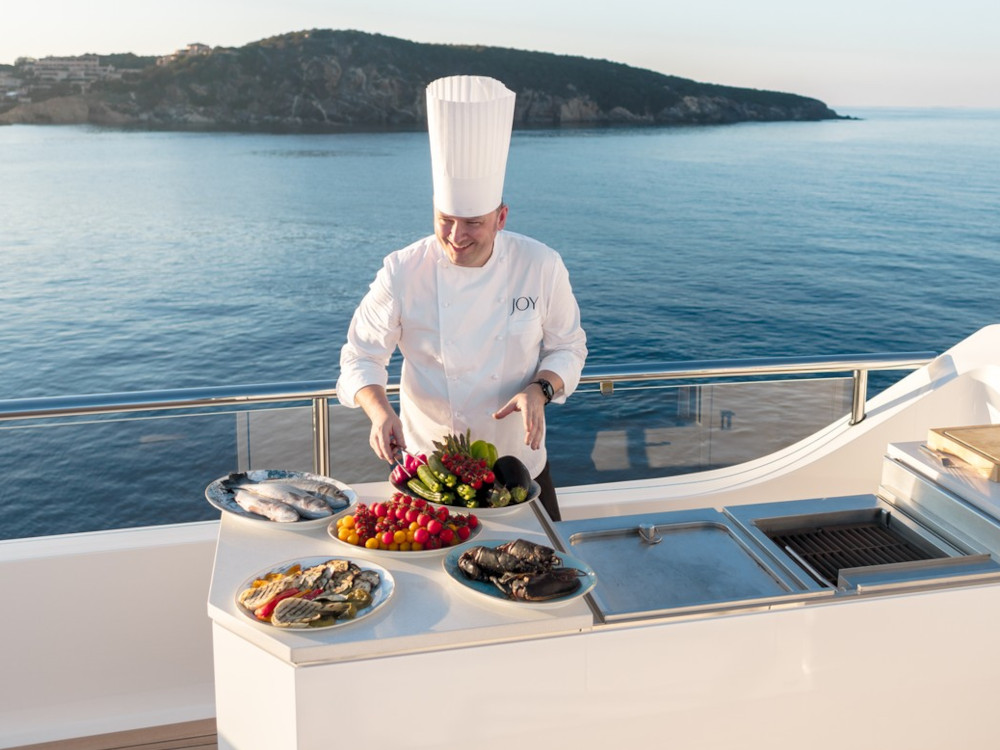
You’ll have a dinner curated by your private chef. The captain will come and discuss what’s possible for the next day. You’ll wake up to a brand-new anchorage, and have your coffee delivered to you on the aft deck while you enjoy breakfast. You can say: ‘I really love it here, the kids are enjoying the water sports. Let’s stay here for the afternoon.’ Or you can go back to the itinerary you originally discussed, and the captain will guide you through the day. Anything is possible.
How does chartering a yacht compare to other luxury vacations?
If you compared it to a villa—or taking 12 guests to a very luxurious hotel, with private transfers and all the restaurant bills and activities—it’s quite a compelling comparison. The privacy is unmatched. The experience is personalized. You’ve essentially got a moving hotel, so you can move somewhere new every single day. And instead of dealing with restaurants where the menu may not deliver, you’ve got a private chef who knows exactly what you love.
Once you experience that truly personalized service, the attention to detail, that level of luxury, it’s quite a magical experience that changes your way of travelling forever.
Cindy McGlynn is a Toronto-based writer and editor who frequently writes about business, culture and the arts. In addition to holding communications roles at tech startups and writing for consumer and B2B publications, Cindy has edited two national magazines and served as a long-time columnist for the Toronto Star’s Eye Weekly magazine. She has been contributing to Canadian Family Offices for four years.
The Canadian Family Offices newsletter comes out on Sundays and Wednesdays. If you are interested in stories about Canadian enterprising families, family offices and the professionals who work with them, you can sign up for our free newsletter here.
Please visit here to see information about our standards of journalistic excellence.