

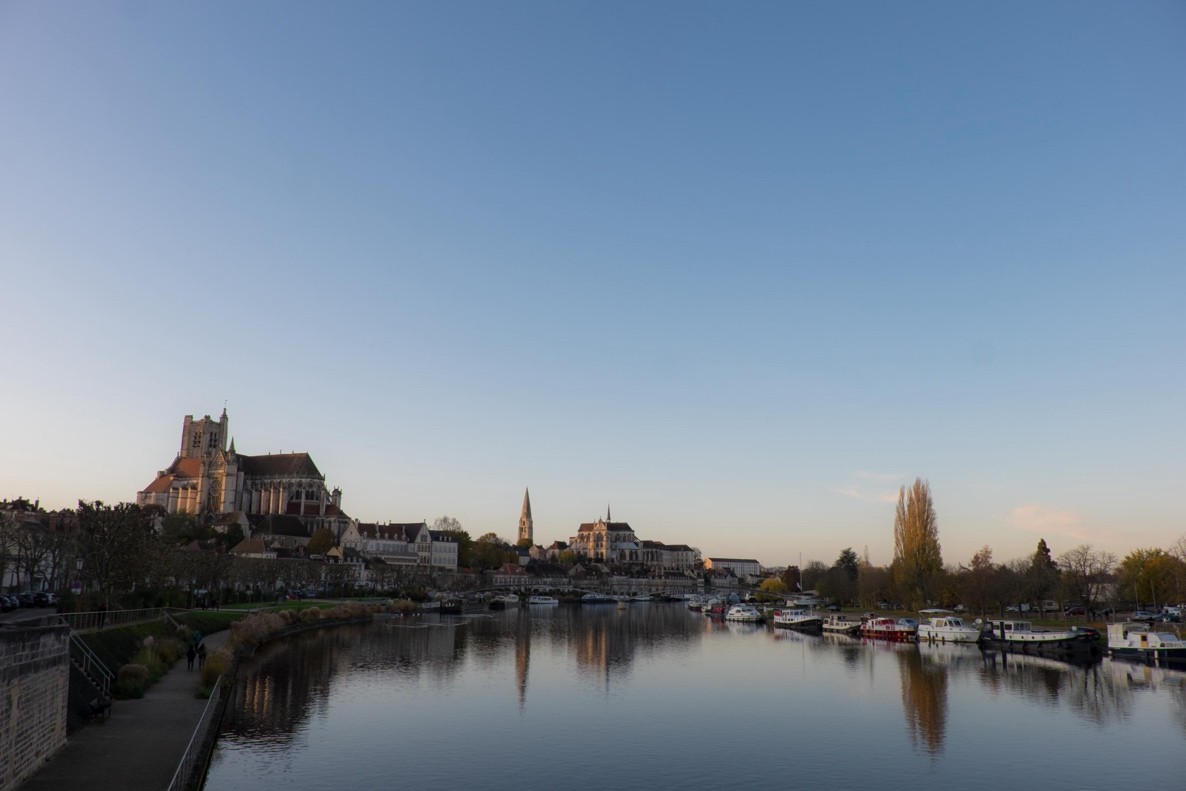
Every two years in Bourgogne, a marathon takes place. It’s not about running, but tasting, as hundreds of French wine producers from Chablis to Mâcon bring out their latest vintages for wine professionals and journalists to discuss, assess, review, purchase and, occasionally, simply enjoy. The first Grands Jours (Great Days) was launched in 1992 and has been held every two years in March ever since (save for the 2020 pandemic year). For fans of Burgundy wine, there is no other week like it.
But like a marathon, you need to come prepared. Dozens of main and side events run for five consecutive days and nights, with venues changing each day depending on the regional focus—from the Palais des Congrès in Beaune, large enough to accommodate over 250 exhibitors, to historic and intimate settings like the famed Clos de Vougeot and the Château de Rully. It’s like visiting a different wing of the Louvre every day, and it’s still impossible to take it all in.
For a wine writer, it’s the ultimate way to catch up with dozens of producers, take the pulse of the industry, and form a clear impression of the latest vintages. I’ve been travelling to Bourgogne on and off since my first visit in 1990 (professionally since 1998), and it’s the region that first introduced me to fine wine—my first love. Much has changed, most notably consistency, style, and where to find the intersections of quality and value, which was my self-imposed mission for this edition.
Some of the most gratifying wines of the week in value terms came from the once-overlooked fringes of Bourgogne: the Grand Auxerrois in the north, including Chablis; the Hautes Côtes above the Côte d’Or; the Côte Châlonnaise to the south, and the sprawling Mâconnais. Much has changed for the better in all these regions.
Following is a brief wrap of these regions with a handful of recommended producers from each. For collectors with their own lists of favourite producers, I also report on the main vintages shown—2022, 2023 and 2024—with ageability, terroir transparency and pleasure in mind, to help formulate your future Burgundy buying and drinking strategy.
Regions to watch
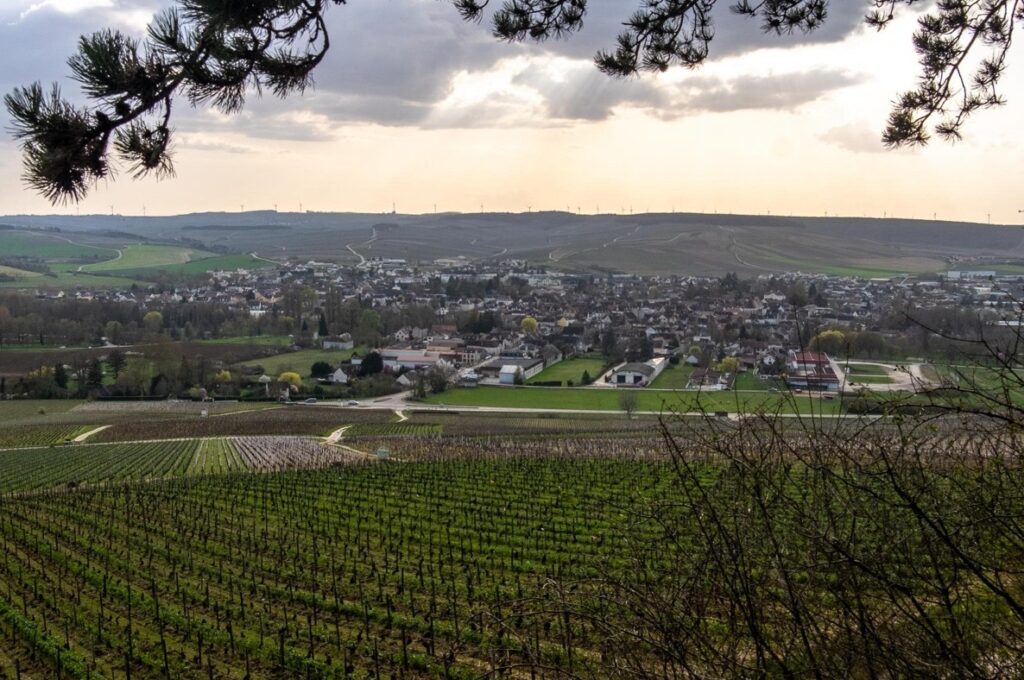
Chablis: Even better value in white Burgundy
That Chablis offers great value to white Burgundy lovers is hardly news to longtime collectors, but it’s perhaps truer than ever. Although prices have roughly doubled over the last decade, the top wines—premiers and grands crus included—remain very keenly priced compared to Côte d’Or equivalents. With a warming climate and infinitely better viticulture than in years past, what was once a highly variable region is now far more reliable and consistent in quality. Some will argue the wines are “less Chablis” than they once were—riper, softer—and this is true in certain cases, but it becomes a question of choosing producers and vintages that match your style preferences. For fans of the classic style, choose 2024 or 2023; for a little more flesh, go with 2022.
Recommended producers: Billaud-Simon, Samuel Billaud, Vincent Dauvissat, Oudin, Goisot, Christian Moreau, Fèvre, Chevallier, Courtault Michelet
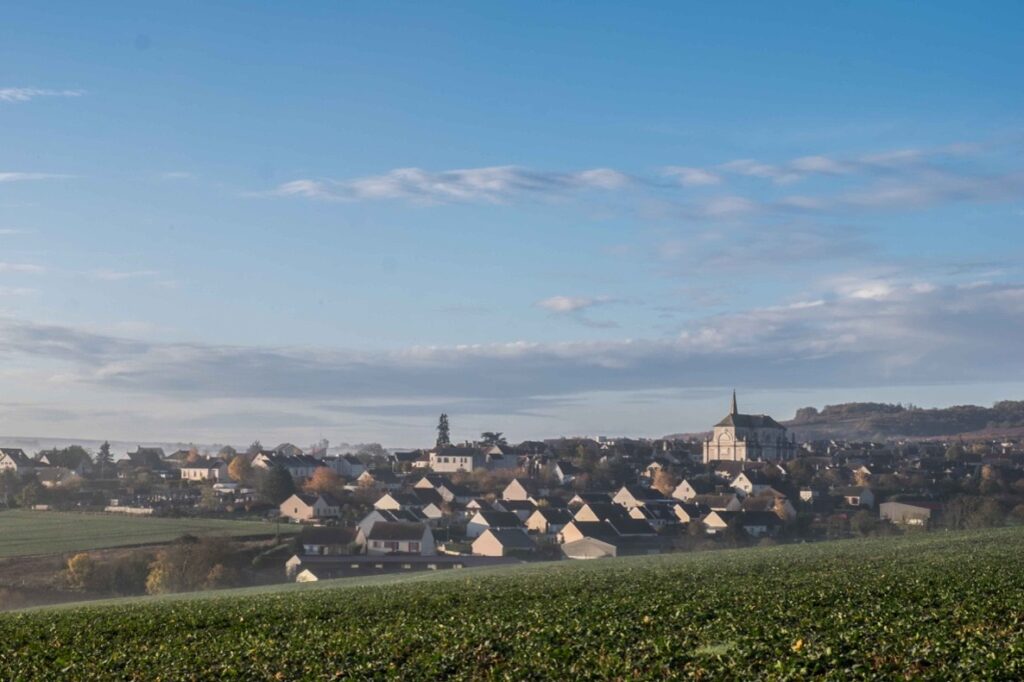
Grand Auxerrois: Classic reds, more than fair prices
The Yonne department around Chablis and Auxerre encompasses the Grand Auxerrois. In the pre-phylloxera 19th century, it was planted to over 40,000 hectares; today, barely more than 1,000 remain (excluding Chablis). But its fortunes are on the rise, as it is one of the few remaining sources of delicate, fragrant, classically styled red Burgundy in appellations such as Irancy, Côtes d’Auxerre, Vézelay, Coulanges-la-Vineuse, Epineuil and Tonnerre. Anyone seeking classic red Burgundy at more than fair prices would be well advised to sniff around these northern fringes.
Recommended producers: Dominique Gruhier, Clotilde Davenne, Goisot, Courtault Michelet, La Croix de Montjoie, Jean-Louis et Jean-Christophe Bersan, Clos du Roi
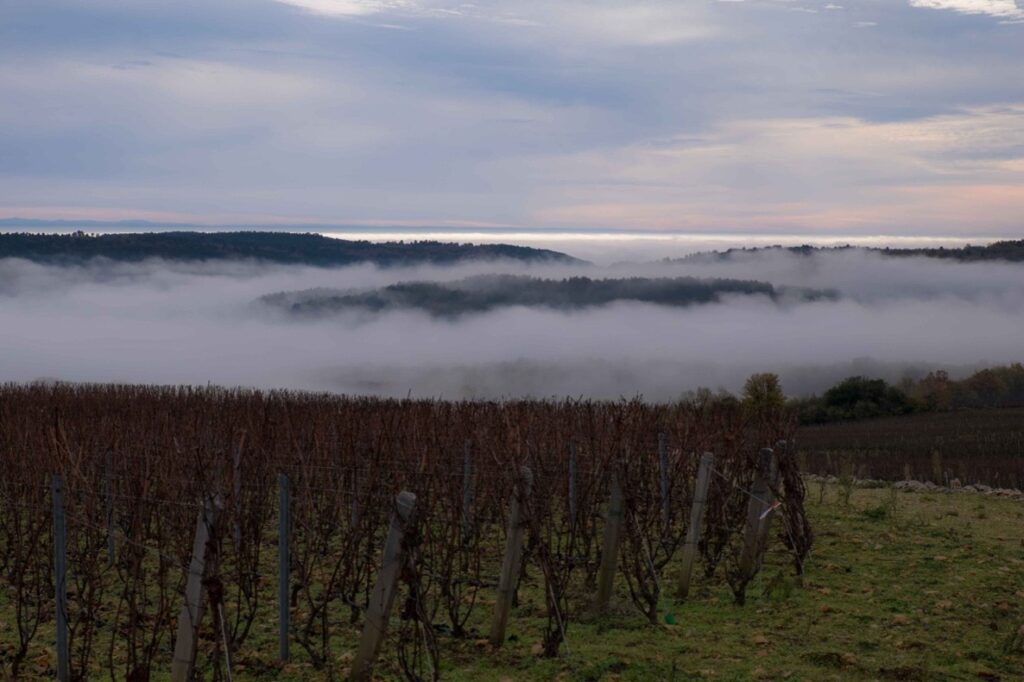
Hautes Côtes de Nuits and Beaune: Cooler elevations perform well
Travel up one of the many combes that cut through the Côte d’Or escarpment and the monoculture of vine gives way to forest, reappearing only in the upper hills of the Hautes Côtes, overlooking the Saône plain and the distant Alps. Historically considered marginal—higher in elevation, cooler, frost-prone and exposed—these areas once produced notably pale, light and thin wines. “Now harvest is only about five days later than the Côte d’Or,” says Alexandre Parigot, of Domaine Parigot Père & Fils in Meloisey.
And given the heat spikes of 2023 and the long, hot 2022 growing season, it’s precisely these cooler elevations that have performed particularly well. Many celebrated Côte d’Or producers—Leflaive, Gros, Cathiard, Pierre-Yves Colin, Vincent Dancer, Naudin, Boisson, Champy and others—have bought or leased vineyards here.
Recommended producers: Denis Carré, Boris Champy, Henri Naudin-Ferrand, Gaëtane and Martial Carré, Thevenot-Le Brun & Fils, Domaine Parigot
Côte Châlonnaise: The rise of small family estates
South of the Côte d’Or, the Côte Châlonnaise—and especially the village and premier cru wines of Rully, Mercurey, Givry and Montagny—has emerged as an excellent source of wines at relatively affordable prices, with the best reaching exceptional quality. Not much more than two decades ago, much of the region’s production disappeared into the generic Bourgogne Blancs or Crémants of the large négociant houses. Today, the rise of small family estates has allowed far closer inspection of the top terroirs, now bottled separately. Much of the fun lies in unearthing the future grands crus.
Recommended producers: Theulot-Juillot, Claudie Jobard, Aladme, Aline Beaune, Raquillet, Meix Foulot, Laurent Cognard, Danjean Berthoux, de Villaine, Joblot, Juillot, Vignerons de Buxy
Mâconnais: Bourogne’s most improved region
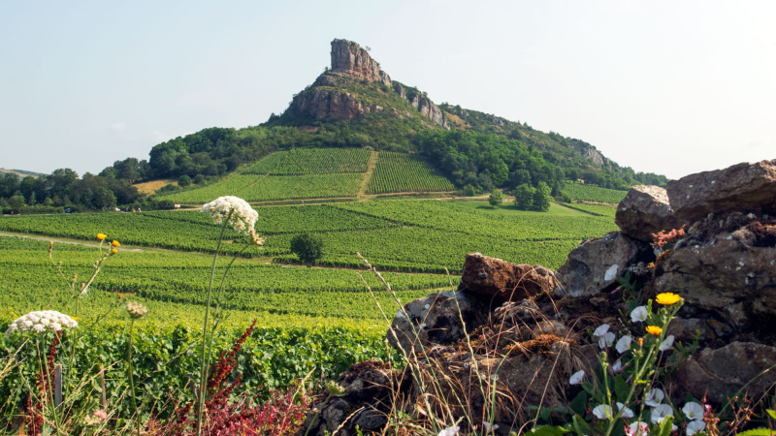
My pick for the most improved region of Bourgogne goes hands down to the Mâconnais—the most exciting tasting I attended overall for quality, value and diversity. Wines from this large area developed a middling reputation in North America through the 1970s and 1980s, when importers sought high-volume, low-priced alternatives to the increasingly expensive Côte d’Or whites. Quantity was unfortunately prized over quality, and the wines that reached our shores were, to be fair, very average. The Mâconnais thus had the steepest hill to climb in terms of perception—but the work in the vineyards and cellars has been done.
Celebrated Côte d’Or names such as Dominique Lafon and Domaine Leflaive have invested in these more affordable and available vineyards, elevating the overall seriousness of production. Another key development was the introduction in 2020 of premier crus in Pouilly-Fuissé—the first new premier crus recognized in a Burgundian appellation since 1943, the culmination of a 12-year application process. Twenty-two sites across the four communes of Chaintré, Fuissé, Solutré-Pouilly and Vergisson earned the distinction, and I can report that the wines are genuinely excellent and entirely deserving of their status.
The quality aspirations inspired by Pouilly-Fuissé’s successful petition appear to have stirred the whole region into action. The neighbouring Pouilly-Vinzelles gained four premier crus and Pouilly-Loché one in 2024, while Saint-Véran and Viré-Clessé are tapped as next in line for cru recognition.
The Mâconnais is a region to follow closely.
Recommended producers: Olivier Merlin, Morat, Roger Lassarat, Guillaume Curveux, Château de Beauregard, Saumaize-Michelin, Jacques Saumaize, La Soufrandière, Manciat-Poncet, Mathias, Château des Quarts, La Sarazinière, Eric Forest
Vintage reports: 2022, 2023, 2024
2022 vintage: The new, warm-climate paradigm, with long-term aging potential
The 2022 growing season was warm, dry and largely benevolent—what local growers call a “solar” year. Well-timed rainfall limited water stress, allowing vines to achieve consistent ripening across Pinot Noir and Chardonnay, while yields were high compared to recent years, contributing to both quality and availability.
Stylistically, the 2022s are generally dense and ripe, combining generous fruit with better-than-expected freshness. In Chablis, Didier Séguier of William Fèvre describes “generous yields and very healthy fruit … [The] wines are open but keep Chablis freshness.” Samuel Billaud confirms a “solar vintage, but not heavy—there is tension behind the ripeness.”
Overall, 2022 is a high-quality, accessible, rich, generous and structurally sound vintage.
In the Côte d’Or, Jeremy Seysses (Domaine Dujac) speaks of “a remarkably complete vintage—everything came together naturally,” and Louis-Michel Liger-Belair describes “a vintage where terroir speaks clearly despite the warmth.” For the whites of the Côte de Beaune, Jean-Marc Roulot notes, “We achieved ripeness without losing definition,” with Pierre-Yves Colin adding: “The balance is what defines 2022—richness with energy.”
Overall, 2022 is a high-quality, accessible, rich, generous and structurally sound vintage, producing wines with supple tannins, generous fruit concentration and strong aging potential—happily without the raisined character sometimes associated with hotter years. It stands as a modern reference point for balanced warm-climate Burgundy.
2023 vintage: High-yielding, high-quality, mid-term cellaring potential
The 2023 vintage was defined by abundance and warmth, one of the largest harvests on record. A late-season heat spike accelerated ripening and boosted sugar levels just before harvest, ensuring full phenolic maturity even in a high-yield year.
Despite early skepticism, the wines impress with their precision and energy—many 2023s were actually tasting better than their 2022 counterparts during the Grands Jours. Stylistically, 2023 reds are charming and fruity, with slightly higher acidity and more freshness than the 2022s, silky tannins and fruit in the red spectrum. Most producers feel cru definition is strong. Pascal Marchand calls it “une année incroyable [an incredible year], with better balance than 2022 overall.” Laurent Ponsot adds: “The wines are very transparent to terroir.” Denis Mortet more cautiously describes “a charming, early-drinking vintage”—certainly true where yields were kept high.
Whites benefited from ripeness but required careful handling to preserve acidity, meaning some variability exists. Jean-Philippe Bret acknowledges that “We worked hard to keep tension.” Pierre-Yves Colin agrees: “The challenge was preserving freshness.” Jean-Marc Roulot puts it most precisely: “Picking decisions were everything.”
In the end, 2023 is a high-yielding but surprisingly high-quality vintage—approachable, aromatically clear and finely structured, with the best examples rivalling top years. There’s less density than 2022, but more precision and immediate charm, making it more of a mid-term cellaring potential vintage.
2024 vintage: Burgundy like it’s the 1990s, for early enjoyment
The 2024 growing season, marked by persistent rainfall, high humidity, intense mildew pressure, frost and hail, stands in stark contrast to 2023. Yields were dramatically reduced—down as much as 50 to 80 per cent in places. This is a “year of the vigneron,” so expect heterogeneous quality.
On the bright side, the wines tend toward lighter structure, higher acidity and lower alcohol—the way Burgundy tasted in the 1990s. Marchand describes wines that are “really bright and lively,” while Liger-Belair notes “very low yields but precise wines.” The reds, particularly in the Côte de Nuits, showed hugely variable quality, with some downright disappointing. Mugnier offers a gentler take: “The wines are delicate, not powerful.”
The top whites, however, are genuinely exciting, with classical profiles making 2024 arguably the most terroir-transparent vintage of the 2022–2024 trilogy, and hands-down my favourite for whites. Their clarity, salinity, moderate alcohol and linearity make for a welcome departure from recent opulence. It will remain, nonetheless, a vintage that rewards careful selection by producer.
John Szabo is Canada’s first Master Sommelier and one of the best-known Canadian voices in wine. He’s a principal critic for WineAlign.com, where you’ll find all his latest articles, reviews and wine recommendations, and Curator-in-Chief for the WineAlign Exchange, which offers members a curated case of fine wine quarterly. Follow his adventures on Instagram @johnszaboms and Facebook.
The Canadian Family Offices newsletter comes out on Sundays and Wednesdays. If you are interested in stories about Canadian enterprising families, family offices and the professionals who work with them, but like your content aggregated, you can sign up for our free newsletter here.
Please visit here to see information about our standards of journalistic excellence.